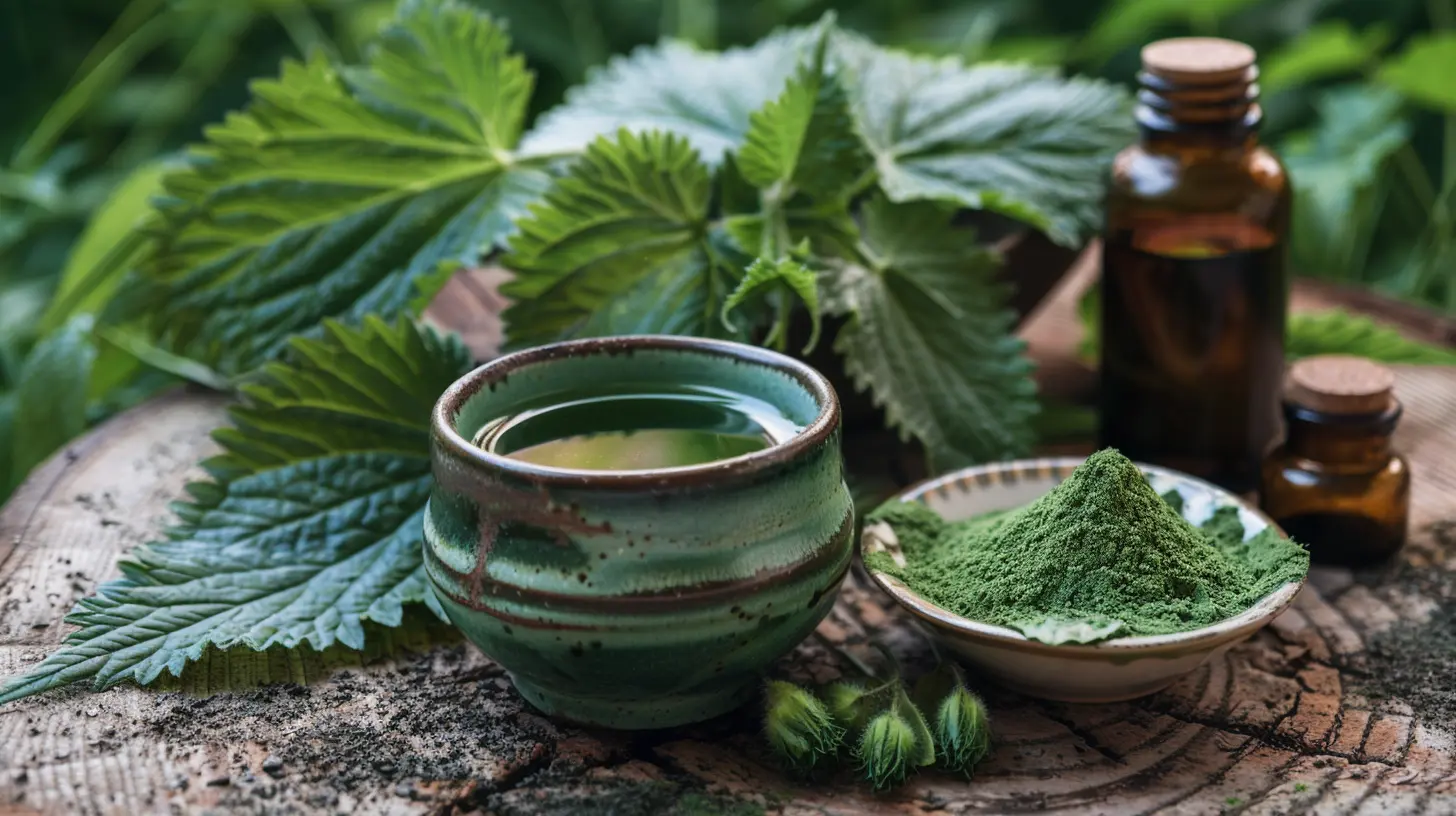
Nettle is a deeply nourishing green herb with a personality that is both generous and slightly prickly. Fresh nettle leaves are covered in tiny stinging hairs, but once dried, cooked, or properly prepared, the sting disappears and the plant becomes one of the classic mineral-rich herbs.
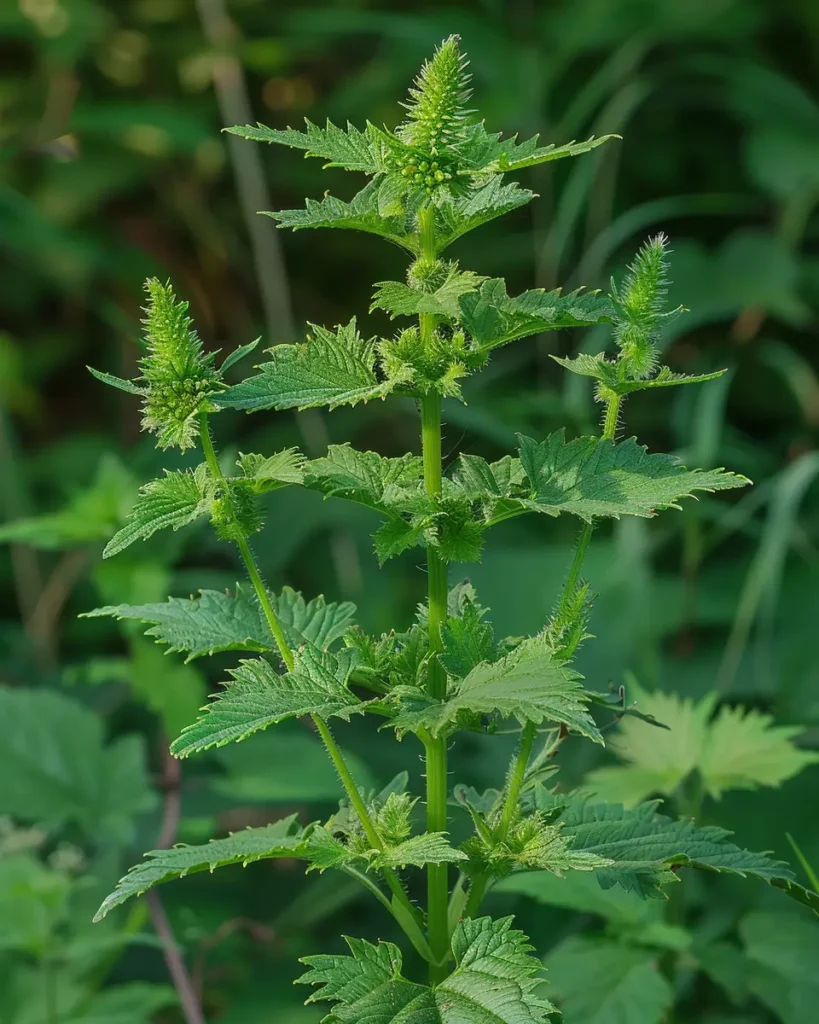
Nettle (Urtica dioica)
Traditional and modern herbal uses of nettle include:
Urinary Support: Nettle leaf has been traditionally used to support healthy urinary flow and fluid balance.
Seasonal Wellness: Herbalists often use nettle leaf in spring tonics and seasonal support formulas, especially when the body feels reactive to pollen-heavy seasons.
Mineral Nourishment: Nettle leaf is valued as a nutrient-rich herb containing minerals, chlorophyll, carotenoids, and plant compounds that make it a classic “green strength” herb.
Joint and Body Comfort: Nettle leaf has a history of use for general body comfort, especially in formulas focused on mobility and tissue support.
“Nettle may wear tiny armor, but underneath it is one of herbalism’s most generous green friends.”
Available Nettle Products
Dried Nettle Leaf
Dried nettle leaf is one of the most common market forms. It is used for tea, nourishing infusions, capsules, powders, and herbal blends. Good dried nettle should look green, smell fresh and grassy, and not appear brown, dusty, or dull.
Nettle Tea Bags
Nettle tea bags are convenient for everyday use. They may contain nettle alone or blends with herbs such as peppermint, dandelion leaf, raspberry leaf, oat straw, or red clover. Tea bags are easy, but loose dried nettle often gives a stronger and greener infusion.
Nettle Tincture
Nettle tincture is a liquid extract usually made with alcohol and fresh or dried nettle leaf, root, or seed. Leaf tinctures are commonly used for urinary and seasonal support, while root tinctures are usually marketed for men’s urinary and prostate-related wellness. Always check the label because nettle leaf, root, and seed are not the same herbal product.
Nettle Capsules
Nettle capsules may contain powdered leaf, powdered root, or concentrated extract. Capsules are practical for people who dislike the grassy flavor of nettle tea. Buyers should check the botanical name, plant part, serving size, and whether the product is leaf, root, seed, or extract.
Nettle Glycerite
Nettle glycerite is an alcohol-free liquid extract made with vegetable glycerin. It may be useful for people avoiding alcohol, though glycerin is not as strong as alcohol or hot water for extracting some minerals and plant compounds. It can be a gentle option when a sweet liquid extract is preferred.
Nettle Powder
Nettle powder is made from dried nettle leaf ground into a fine green powder. It is commonly added to smoothies, soups, broths, savory foods, capsules, and green powder blends. Because powder loses freshness faster than whole leaf, it should smell green and lively, not stale.
Nettle Root Products
Nettle root is usually sold as capsules, tincture, tablets, or dried cut root. It is traditionally used differently from nettle leaf, especially in relation to urinary flow in aging men. Do not assume nettle leaf and nettle root are interchangeable.
Nettle Seed
Nettle seed is a more specialized herbal product. It is traditionally used by some herbalists as a deeply nourishing seed preparation, often in small amounts. It is less common than leaf or root and should be used with more guidance.
Fresh Nettle
Fresh nettle is used as a cooked spring green in soups, sautés, pestos, broths, and vinegars. It must be handled carefully because the fresh plant stings. Cooking, drying, blending, or crushing neutralizes the sting.
Nettle Vinegar
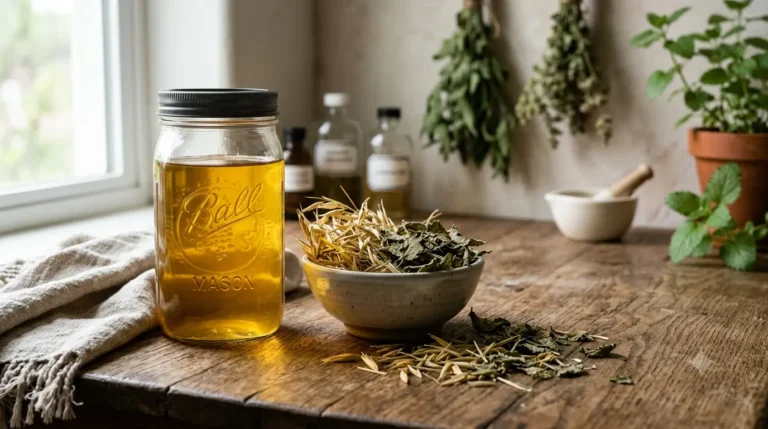
Nettle vinegar is made by steeping fresh or dried nettle leaf in apple cider vinegar. Vinegar is often used to extract minerals from leafy herbs. It can be used in salad dressings, cooked greens, marinades, or taken in small food-like amounts.
Key Herbal Actions
Nutritive
A nutritive herb supports the body with minerals and plant nutrients. Nettle leaf is traditionally considered a nutritive tonic because it contains minerals, chlorophyll, carotenoids, amino acids, and other green plant compounds. This makes nettle a classic herb for long infusions and food-like preparations.
Diuretic
A diuretic supports healthy urine flow. Nettle leaf is traditionally used as a gentle urinary herb and is recognized in European herbal monographs for urinary tract flushing. This does not mean it should be used to self-treat urinary disease, but it explains its traditional role.
Alterative
Alteratives are herbs traditionally used to support natural cleansing and elimination pathways over time. Nettle is often used as a spring tonic because it supports urinary flow, mineral nourishment, and general seasonal wellness. In plain language, herbalists often reach for nettle when the body seems to need steady green support.
Anti-inflammatory
Nettle leaf and root contain compounds studied for inflammation-modulating activity. This supports nettle’s traditional use in body-comfort and joint-support formulas. The research is interesting, but nettle should not be framed as a cure or replacement for medical care.
Astringent
Astringent herbs gently tone and tighten tissues. Nettle contains tannins and related compounds that contribute to this mild astringent quality. This action helps explain some of nettle’s traditional use in teas and topical preparations.
Antioxidant
Nettle contains phenolic acids, flavonoids, carotenoids, and other compounds with antioxidant activity in laboratory research. These compounds help protect plant tissues and may contribute to nettle’s broader wellness-supportive profile.
Mineral Tonic
A mineral tonic is an herb traditionally used to support mineral intake and tissue nourishment. Nettle leaf is especially valued for calcium, magnesium, potassium, iron, and other minerals, though exact amounts vary by growing conditions, harvest, drying, and preparation.
Active Compounds and Extraction
Minerals
Nettle leaf contains minerals such as calcium, potassium, magnesium, iron, phosphorus, and trace elements. This mineral-rich profile is one reason nettle is traditionally prepared as a long infusion rather than only a quick tea. Minerals are best extracted with water or vinegar.
Best extraction methods: long hot infusion, decoction, vinegar extract, food use.
How to make a nettle nourishing infusion: Use about 1 ounce dried nettle leaf per quart of just-boiled water. Cover and steep for 4–8 hours, then strain. This long steep extracts more minerals than a quick cup of tea.
How to make nettle vinegar: Fill a clean jar about halfway with dried nettle leaf or loosely with chopped fresh wilted nettle. Cover completely with apple cider vinegar, seal with a non-metal lid, and let sit for 2–4 weeks. Strain and use in food-like amounts.
Flavonoids
Nettle contains flavonoids such as quercetin, kaempferol, rutin, and related compounds. Flavonoids are plant pigments and antioxidants that are studied for inflammation-modulating and vascular-supportive activity. They contribute to nettle’s role in seasonal and tissue-support formulas.
Best extraction methods: hot water infusion, alcohol tincture.
How to extract flavonoids in tea: Use dried nettle leaf and hot water. Steep covered for at least 10–15 minutes for a standard tea, or longer for a more mineral-rich infusion.
Phenolic Acids
Nettle contains phenolic acids, including caffeic, chlorogenic, ferulic, and related compounds. These plant compounds are studied for antioxidant activity and tissue-protective effects. In whole-herb use, they support nettle’s broader green tonic profile.
Best extraction methods: hot water infusion, alcohol tincture, vinegar extract.
How to make a stronger nettle infusion: Use 1 tablespoon dried nettle leaf per cup of hot water and steep covered for 15–20 minutes. For a deeper tonic-style infusion, use the longer quart method described above.
Chlorophyll
Chlorophyll is the green pigment that helps plants capture sunlight. Nettle leaf is rich in chlorophyll, which contributes to its deep green color and traditional use as a nourishing spring herb. Chlorophyll is not a miracle compound, but it is part of nettle’s “green food” character.
Best extraction methods: food use, fresh juice, infusion, powder.
How to use nettle as food: Cook fresh nettle like spinach after carefully handling it with gloves. Add it to soups, omelets, sautés, broths, or pesto-style preparations. Cooking removes the sting.
Carotenoids
Nettle leaf contains carotenoids such as beta-carotene and lutein. These pigments are associated with antioxidant activity and are common in leafy green plants. They support nettle’s role as a nutrient-dense herb.
Best extraction methods: food use with fat, powder, cooked greens.
How to prepare nettle for carotenoids: Cook fresh nettle and serve with a small amount of healthy fat, such as olive oil. Carotenoids are fat-soluble, so food preparation matters.
Tannins
Nettle contains tannins, which are astringent plant compounds. Tannins gently tone tissues and contribute to nettle’s traditional use as a tissue-supportive herb. They may also interfere with iron absorption when taken at the same time as iron supplements.
Best extraction methods: hot water infusion, alcohol tincture.
How to extract tannins: Use hot water and steep for 10–20 minutes. Longer steeping extracts more astringency, which may make the tea taste stronger and slightly drying.
Lectins and Polysaccharides
Nettle root contains lectins and polysaccharides that have been studied in relation to urinary and prostate-related mechanisms. These compounds are more relevant to nettle root than nettle leaf. Root preparations are typically extracted differently and marketed for different uses than leaf.
Best extraction methods: alcohol tincture, decoction, standardized extract.
How to make nettle root decoction: Use dried cut nettle root and simmer gently for 15–20 minutes, covered. Strain and use according to product guidance or professional direction.
Lignans and Sterols
Nettle root contains lignans, sterols, and related compounds that are studied for prostate and urinary flow support. These constituents help explain why nettle root is often discussed separately from nettle leaf. Again, root and leaf should not be treated as the same preparation.
Best extraction methods: alcohol tincture, capsules, standardized extracts.
How to use nettle root products: Follow the product label carefully and make sure the label clearly says root, not leaf. People with prostate or urinary symptoms should consult a healthcare professional to rule out serious causes.
Histamine, Acetylcholine, Serotonin, and Formic Acid in Fresh Stinging Hairs
Fresh nettle’s sting comes from tiny hairs that can inject irritating compounds into the skin. These may include histamine, acetylcholine, serotonin, formic acid, and related substances. This is why fresh nettle should be handled with gloves.
Best preparation method: drying, cooking, crushing, blending, or steaming to neutralize the sting.
How to safely prepare fresh nettle: Wear gloves, harvest young tops, rinse carefully, and cook or dry before eating. Once cooked, nettle becomes a nourishing green rather than a botanical prank.
Harvesting and Storing Right
Nettle leaf is usually harvested in spring to early summer, before the plant flowers. Young tops are preferred because they are tender, mineral-rich, and less fibrous. Once nettle flowers and goes to seed, the leaf is generally considered less desirable for food and tea.
Harvest on a dry morning after dew has evaporated. Wear gloves, long sleeves, and use clean scissors or pruners. Cut the top 4–6 inches of healthy young plants.
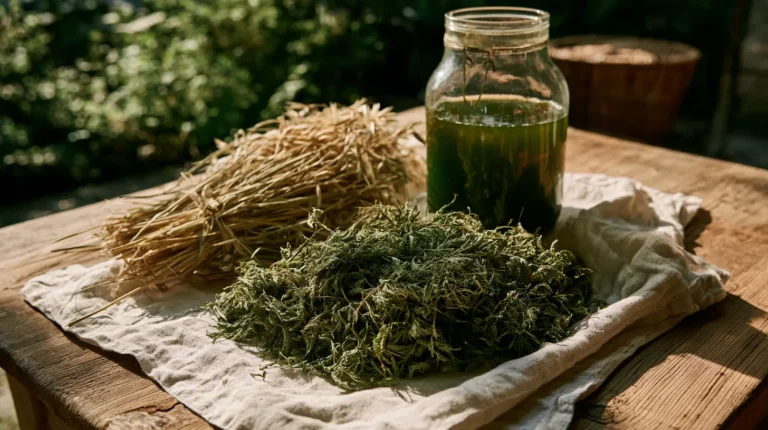
Dry nettle in a shaded, warm, well-ventilated place. Spread leaves loosely on screens or hang small bundles. Avoid direct sunlight, which can fade color and reduce quality.
Dried nettle should be stored in airtight containers away from heat, light, and moisture. Good dried nettle should remain green and fresh-smelling. It is best used within about 1 year.
Nettle powder should be used sooner, usually within 6–12 months, because it loses freshness faster. Nettle tincture is typically best within 2–3 years when stored in a cool, dark place. Nettle vinegar is often best within about 6–12 months, depending on preparation and storage.
Fresh nettle should be cooked or dried soon after harvest. Refrigerate briefly if needed, but do not let it sit wet in a bag for long, unless you enjoy compost experiments.
Body Functions Nettle Can Support
Urinary System
Nettle leaf is traditionally used to support healthy urinary flow and fluid balance. EMA monographs recognize nettle leaf for traditional use in flushing the urinary tract and nettle root for urinary symptoms related to benign prostatic hyperplasia after serious conditions have been ruled out. This is a key reason the leaf and root are both important but used differently.
Immune System
Nettle leaf is often used in seasonal wellness formulas, especially during pollen-heavy seasons. Its flavonoids, phenolic acids, minerals, and antioxidant activity help explain its traditional role in spring support. It does not “turn off allergies,” but it can be part of a thoughtful seasonal routine.
Skin
Nettle is traditionally used as an alterative and mineral-rich herb for skin support. Herbalists often include nettle in formulas when the skin seems to reflect overall nutritional or elimination stress. Its minerals, chlorophyll, flavonoids, and gentle diuretic action all contribute to this traditional use.
Muscles and Joint
Nettle leaf and root have been studied for inflammation-modulating activity, and nettle has a long history of use in joint and body-comfort formulas. Mineral content may also support general tissue nourishment. Fresh nettle has also historically been used externally in a practice called urtication, though this is not a casual home recommendation.
Circulation
Nettle contains flavonoids, minerals, and chlorophyll-rich green compounds that support its traditional use as a nourishing tonic. It is not a strong circulatory stimulant like ginger or cayenne, but it can support the body through mineral nourishment and antioxidant activity.
Energy and Vitality
Nettle is often used when someone feels depleted and needs steady nourishment rather than stimulation. Its mineral-rich profile makes it a classic herb for long infusions. It does not act like caffeine; it is more like quiet green nutrition.
Digestion System
Nettle is not primarily a digestive stimulant, but it can support digestion indirectly as a mineral-rich food herb. Cooked nettle can be used like a leafy green in soups, broths, and savory dishes. Its mild astringency may also contribute to traditional digestive use in some formulas.
Reproductive System Male
Nettle root is traditionally used for urinary flow support in aging men. EMA recognizes nettle root as a traditional herbal medicinal product for lower urinary tract symptoms related to benign prostatic hyperplasia after serious conditions have been excluded. Anyone with urinary changes should be evaluated by a healthcare professional rather than self-diagnosing.
Reproductive System Female
Nettle leaf is traditionally used as a mineral-rich tonic in women’s wellness formulas, especially where nourishment is the focus. It is often paired with raspberry leaf, oat straw, or alfalfa in traditional blends. Pregnancy use should be guided by a qualified professional.
Liver Support
Nettle is not a primary liver herb like milk thistle or dandelion root. However, as an alterative and nutritive herb, it is sometimes included in broader spring tonic formulas that support elimination pathways. Its role here is gentle and supportive, not liver-targeted treatment.
Brain
Nettle’s brain support is indirect, mainly through mineral nourishment, antioxidant compounds, and general vitality support. When the body is undernourished or depleted, mineral-rich herbs may support overall resilience. Nettle is not a strong cognitive herb, but it contributes to the foundation.
Safety and Practical Considerations
Fresh nettle stings. Wear gloves when harvesting or handling the raw plant. Drying, cooking, steaming, crushing, or blending neutralizes the sting.
Nettle leaf is generally used as tea, infusion, cooked green, powder, capsule, tincture, or vinegar. Nettle root is usually used as capsule, tincture, tablet, or decoction. The plant part matters because leaf and root are used for different purposes.
Nettle may cause mild stomach upset, diarrhea, sweating, rash, or urinary changes in some people. Start with small amounts if you are new to it.
Because nettle leaf has diuretic activity, people taking diuretic medications or managing kidney disease should consult a qualified healthcare professional before use. People with fluid restrictions should also be cautious.
Nettle may interact with blood pressure medications, diabetes medications, blood thinners, lithium, sedatives, and anti-inflammatory drugs. Interaction evidence varies, but caution is wise with concentrated products.
Nettle contains vitamin K, especially in leafy preparations, so people taking warfarin or other anticoagulant therapy should seek professional guidance before using it regularly.
Nettle tannins may interfere with iron absorption if taken at the same time as iron supplements. If using iron, separate nettle tea or infusion from iron supplementation unless your clinician advises otherwise.
Pregnant and breastfeeding people should consult a qualified healthcare professional before using nettle medicinally. Nettle appears in some traditional pregnancy teas, but safety depends on plant part, dose, timing, and individual situation.
Children, older adults, and sensitive individuals should use gentler amounts and avoid concentrated products unless guided by a professional.
For pets, nettle should be used only with veterinary guidance. Some animal herbalists use nettle leaf in carefully chosen forms, but dosing and safety depend on species, size, medications, and health status.
FAQ
What does nettle taste like?
Nettle tastes green, grassy, mineral-rich, and slightly earthy. Some people compare it to spinach or cooked greens. A strong nettle infusion tastes much deeper than a quick tea.
When is the best time to use nettle?
Nettle leaf is often used in spring tonic routines, seasonal wellness blends, and mineral-rich infusions. It can be used during the day because it is not sedating. Because it supports urination, some people prefer not to drink strong nettle infusion right before bed.
Is fresh or dried nettle better?
Fresh nettle is excellent as a cooked green, soup herb, or vinegar ingredient, but it must be handled carefully because it stings. Dried nettle is easier to store and ideal for tea, long infusions, capsules, and powders. Both are useful when prepared correctly.
Is nettle tea, tincture, or capsule better?
Nettle tea and long infusions are best when mineral nourishment is the goal. Tinctures are convenient but do not extract minerals as well as water. Capsules are practical, but they should clearly state whether they contain leaf, root, or seed.
Can nettle be used daily?
Many people use nettle leaf regularly as tea, food, or infusion. Concentrated nettle products or strong daily use may not be appropriate for people taking medications or managing kidney, blood pressure, blood sugar, or bleeding concerns. Daily use should be matched to the person and preparation.
How should nettle be stored?
Store dried nettle leaf in an airtight container away from heat, light, and moisture. It should stay green and fresh-smelling. If it turns brown, dull, or smells stale, it is time to replace it.
Does nettle combine well with other herbs?
Yes. Nettle combines well with oat straw, raspberry leaf, peppermint, dandelion leaf, red clover, alfalfa, horsetail, burdock root, elderflower, and rose hips. It is especially useful in mineral, seasonal, urinary, and spring tonic blends.
Is nettle safe for everyone?
No. Nettle may not be appropriate for people taking certain medications, managing kidney disease, using blood thinners, taking blood pressure or diabetes medications, or preparing for surgery. Pregnant or breastfeeding people should get professional guidance.
Can nettle be used for pets?
Nettle should only be used for pets with veterinary guidance. The correct form and amount depend on species, size, health status, and medications. Do not assume that a human nettle product is appropriate for an animal.
Can fresh nettle be eaten?
Yes, fresh nettle can be eaten after cooking, steaming, drying, or blending to neutralize the sting. It is commonly used like spinach in soups, sautés, omelets, and broths. Never eat raw unprocessed nettle leaves straight from the plant.
Disclaimer
This content is educational only. It is not medical advice, diagnosis, or treatment. Herbs may interact with medications or health conditions. People who are pregnant, breastfeeding, managing a medical condition, taking prescription medications, or preparing for surgery should consult a qualified healthcare professional before using herbs.
References
- EMA: Urticae folium Herbal Medicinal Product
- EMA: Urticae radix Herbal Medicinal Product
- EMA: Assessment Report on Urtica dioica and Urtica urens Leaf
- NCCIH: Benign Prostatic Hyperplasia and Complementary Approaches
- PubMed Central: Nutritional and Pharmacological Importance of Stinging Nettle
- PubMed Central: Stinging Nettle Nutritional Composition and Bioactive Compounds
- International Journal of Molecular Sciences: Chemical Constituents of Stinging Nettle
- American Botanical Council: Stinging Nettle Herb Profile
- Mount Sinai: Stinging Nettle