Acne is a common skin concern where clogged pores, oil, bacteria, and inflammation can all show up at the same tiny skin meeting.
Herbs may gently support acne-prone skin by helping calm the look of redness, supporting healthy skin balance, and soothing irritation. Some recipes below are topical, while others support digestion, hydration, stress balance, and overall wellness from the inside out.
Recipes & Remedies
Calendula & Chamomile Skin-Soothing Tea
Calendula and chamomile are traditionally used to support irritated skin and calm the body. This tea is gentle, simple, and useful when acne-prone skin feels connected to stress, sensitivity, or general inflammation.
Ingredients
- 1 teaspoon dried calendula flowers
- 1 teaspoon dried chamomile flowers
- 1 cup hot water
- Optional: 1 teaspoon raw honey
Preparation Instructions
- Add calendula and chamomile to a mug or teapot.
- Pour hot water over the herbs.
- Cover and steep for 10 minutes.
- Strain and add honey if desired.
How to Use
Drink 1 cup daily or a few times per week as a gentle skin-support tea. Avoid chamomile if you are allergic to plants in the daisy family.
Herbs Required for This Recipe
Green Tea Cooling Facial Compress
Green tea contains antioxidant polyphenols that have been studied for skin-supportive properties. As a cool compress, it may help refresh oily skin and calm the look of redness.
Ingredients
- 1 green tea bag or 1 teaspoon loose green tea
- 1 cup hot water
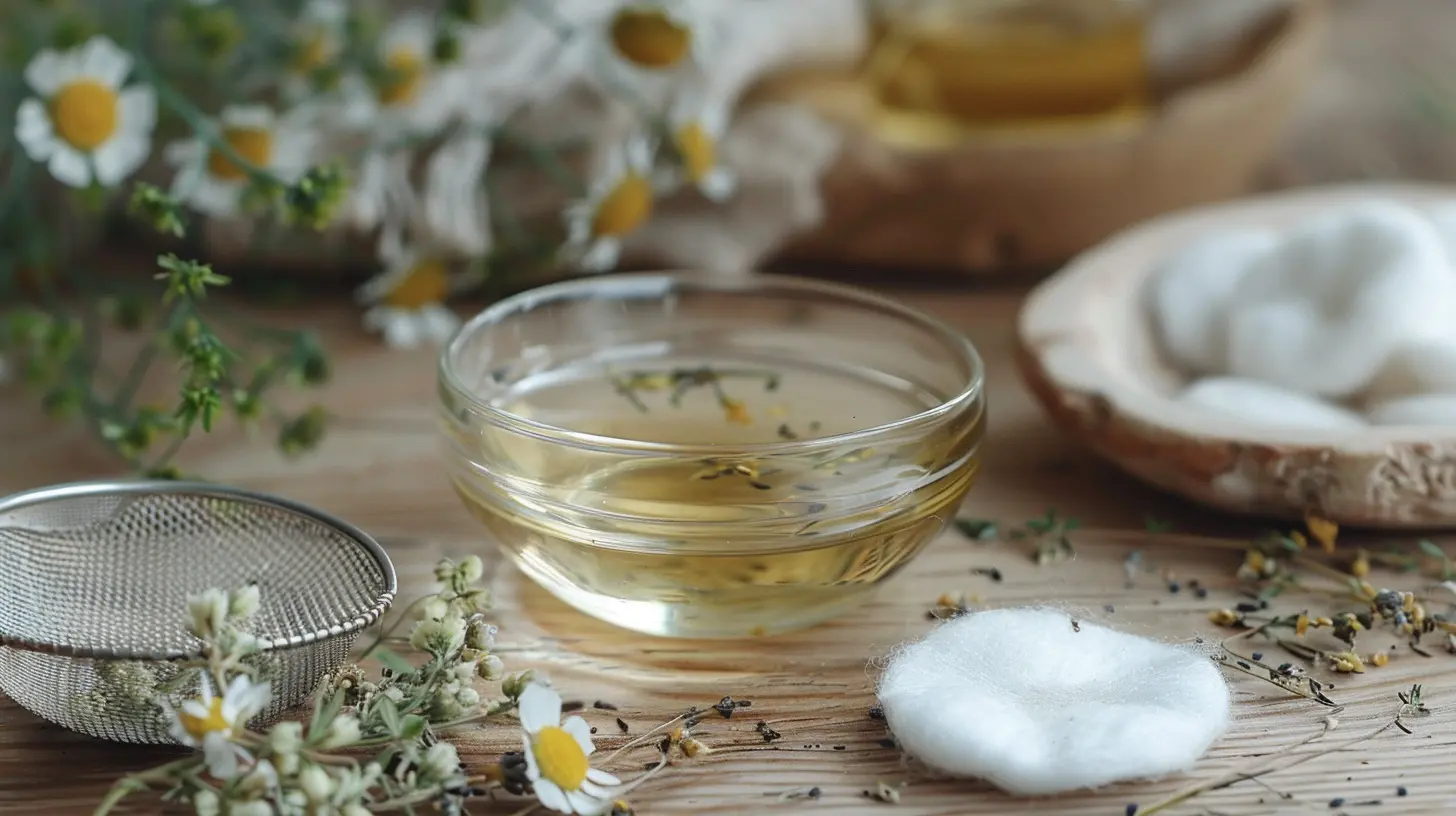
- Clean cotton cloth or reusable cotton pads
Preparation Instructions
- Steep green tea in hot water for 5 minutes.
- Let it cool completely.
- Soak a clean cloth or cotton pads in the tea.
- Gently squeeze out extra liquid.
How to Use
Apply to clean skin for 5–10 minutes. Use 2–3 times per week. Patch test first, and avoid broken, painful, or very irritated skin..
Herbs Required for This Recipe
Aloe & Calendula Gentle Face Gel
Aloe vera is commonly used to cool and hydrate the skin. Calendula adds traditional skin-soothing support, making this a gentle option for acne-prone skin that feels dry or irritated.
Ingredients
- 2 tablespoons pure aloe vera gel
- 1 teaspoon strong calendula tea, cooled
- Optional: ½ teaspoon vegetable glycerin
Preparation Instructions
- Make a strong calendula tea using 1 teaspoon dried calendula and ¼ cup hot water.
- Steep for 10 minutes.
- Strain and cool completely.
- Mix 1 teaspoon of calendula tea with aloe vera gel.
- Add glycerin if your skin feels dry.
How to Use
Apply a thin layer to clean skin once daily. Store in the refrigerator and use within 3 days. Patch test before applying to the face.
Herbs Required for This Recipe
- Calendula
- Aloe vera
Nettle and Burdock Skin Support Tea
Nettle is traditionally used as a mineral-rich tonic, while burdock root is often used in herbalism for skin and digestive support. This tea is more about steady internal support than quick cosmetic results.
Ingredients
- Nettle leaf – 1 teaspoon dried
- Burdock root – 1 teaspoon dried
- Water – 2 cups
Preparation Instructions
- Add burdock root and water to a small pot.
- Simmer gently for 15 minutes.
- Turn off the heat and add nettle leaf.
- Cover and steep for 10 minutes.
- Strain before drinking.
How to Use
Drink 1 cup daily, up to a few times per week. Start slowly to see how your body responds.
Avoid this recipe if you are pregnant, breastfeeding, taking diuretics, or managing kidney-related conditions unless your healthcare provider approves.
Herbs Required for This Recipe
- Nettle
- Burdock Root
Spearmint and Red Clover Tea
Spearmint is traditionally used as a refreshing digestive and cooling herb. Red clover has a long history of use in skin-focused herbal formulas, especially when the goal is gentle internal support.
Ingredients
- Spearmint leaf – 1 teaspoon dried
- Red clover blossoms – 1 teaspoon dried
- Hot water – 1 cup
Preparation Instructions
- Place the herbs in a cup or teapot.
- Pour hot water over the herbs.
- Cover and steep for 10 minutes.
- Strain before drinking.
How to Use
Drink 1 cup several times per week.
Avoid red clover during pregnancy, breastfeeding, hormone-sensitive conditions, or when taking blood-thinning medications unless approved by a healthcare professional.
Herbs Required for This Recipe
- Spearmint
- Red Clover
Aloe and Plantain Spot Comfort Gel
Aloe vera, plantain, and calendula are traditionally used for skin comfort and barrier support. This recipe is gentle and cooling, which may be helpful when acne-prone skin feels stressed or over-treated.
Ingredients
- Aloe vera gel – 1 tablespoon
- Plantain leaf infusion – 1 teaspoon, cooled
- Calendula infusion – 1 teaspoon, cooled
Preparation Instructions
- Prepare a small infusion by steeping plantain leaf and calendula in hot water for 10 minutes.
- Strain and cool completely.
- Mix 1 teaspoon of the cooled infusion with aloe vera gel.
- Make only a small amount at a time.
How to Use
Apply a tiny amount to clean skin where the skin feels hot or uncomfortable.
Do not apply to open, bleeding, or infected-looking areas. Patch test first.
Herbs Required for This Recipe
- Aloe Vera
- Plantain Leaf
- Calendula
Rose and Witch Hazel Gentle Toner
Rose is traditionally used to soften and refresh the skin, while witch hazel is a classic astringent. This toner may be useful for oily skin, but it should be used gently because over-drying can make the skin even more dramatic than it already wants to be.
Ingredients:
- Rose petals – 1 tablespoon dried
- Hot water – 1 cup
- Alcohol-free witch hazel – 1 tablespoon
Preparation Instructions:
- Pour hot water over the rose petals.
- Cover and steep for 10 minutes.
- Strain and let cool completely.
- Mix 3 tablespoons of rose infusion with 1 tablespoon alcohol-free witch hazel.
- Store in a clean bottle in the refrigerator.
How to Use:
Apply lightly to oily areas with a cotton pad.
Use a few times per week, not aggressively.
Avoid the eye area.
Patch test first and stop using if your skin feels dry, tight, itchy, or irritated.
Herbs Required:
- Rose,
- Witch Hazel
Oat Straw and Chamomile Facial Compress
Oat straw and chamomile are gentle, comforting herbs traditionally used when the skin feels sensitive or reactive. This compress can be a calming ritual for skin that needs less scrubbing and more kindness.
Ingredients:
- Oat straw – 1 tablespoon dried
- Chamomile flowers – 1 tablespoon dried
- Hot water – 2 cups
Preparation Instructions:
- Place the herbs in a large heat-safe bowl.
- Pour hot water over them.
- Cover and steep for 15 minutes.
- Strain and let the liquid cool until comfortably warm.
How to Use:
- Soak a clean washcloth in the warm infusion.
- Apply to the face for 5 to 10 minutes.
- Use once or twice per week.
- Always use a clean cloth and avoid broken or irritated skin.
Herbs Required:
- Oat Straw,
- Chamomile
Marshmallow Root Hydrating Skin Mist
Marshmallow root is rich in mucilage, giving it a slippery, soothing quality. It may help support the feel of dry or tight skin, especially when acne routines leave the skin barrier feeling overworked.
Ingredients:
- Marshmallow root – 1 tablespoon dried
- Cool water – 1 cup
- Aloe vera gel – 1 teaspoon, optional
Preparation Instructions:
- Place marshmallow root in a clean jar.
- Add cool water.
- Cover and let it infuse for 4 to 6 hours, or overnight in the refrigerator.
- Strain through a fine cloth.
- Stir in aloe vera gel if desired.
How to Use:
- Apply with clean hands or mist lightly onto clean skin.
- Use within 2 days and keep refrigerated.
- Patch test first.
Herbs Required:
- Marshmallow Root,
- Aloe Vera
Turmeric and Honey Clarifying Mask
Honey offers a soft, moisturizing base, aloe vera adds cooling comfort, and turmeric is traditionally valued for antioxidant and soothing support. This is a gentle mask, not a scrub, so no rubbing is needed.
Ingredients:
- Raw honey – 1 tablespoon
- Turmeric powder – 1/8 teaspoon
- Aloe vera gel – 1 teaspoon
Preparation Instructions:
- Mix honey, turmeric, and aloe vera gel into a smooth paste.
- Use only a very small amount of turmeric because it can stain.
- Prepare fresh each time.
How to Use:
- Apply a thin layer to clean skin.
- Leave on for 5 to 8 minutes.
- Rinse carefully with lukewarm water.
- Patch test first.
- Avoid clothing and towels that may stain.
- Do not use on broken, scratched, or highly irritated skin.
Herbs Required:
- Turmeric,
- Aloe Vera
Lavender and Green Tea Facial Steam
Green tea offers antioxidant support, while lavender brings a calming aromatic quality. A very short steam may help soften the skin before a gentle cleanse, but heat is not suitable for everyone.
Ingredients:
- Green tea – 1 tea bag or 1 teaspoon loose leaf
- Lavender flowers – 1 teaspoon dried
- Hot water – 4 cups
Preparation Instructions:
- Place green tea and lavender in a large heat-safe bowl.
- Pour hot water over the herbs.
- Let the steam cool for 1 to 2 minutes before using.
How to Use:
- Hold your face comfortably above the bowl, not too close.
- Steam for 3 to 5 minutes only.
- Keep your eyes closed.
- Do not use facial steam if you have very inflamed acne, rosacea-prone skin, broken capillaries, or skin that reacts strongly to heat.
Herbs Required:
- Green Tea,
- Lavender
Yarrow and Calendula Herbal Compress
Yarrow is traditionally used as an astringent herb, while calendula is known for skin-soothing herbal preparations. Together, they may support oily, acne-prone skin without harsh scrubbing.
Ingredients:
- Yarrow – 1 teaspoon dried
- Calendula flowers – 1 teaspoon dried
- Hot water – 1 cup
Preparation Instructions:
- Place yarrow and calendula in a cup.
- Pour hot water over the herbs.
- Cover and steep for 10 minutes.
- Strain and cool until lukewarm.
How to Use:
- Soak a clean cotton pad or cloth in the infusion.
- Apply gently to oily or congested areas for 5 minutes.
- Use once or twice per week.
- Patch test first.
- Avoid broken skin and avoid use if you are allergic to plants in the daisy family.
Herbs Required:
- Yarrow,
- Calendula
Dandelion, Licorice, and Burdock Root Tea
Dandelion root and burdock root are classic herbs for digestive and skin-support formulas. Licorice root adds a naturally sweet taste and is traditionally used for soothing support, but it requires extra safety care.
Ingredients:
- Dandelion root – 1 teaspoon dried
- Burdock root – 1 teaspoon dried
- Licorice root – 1/4 teaspoon dried
- Water – 2 cups
Preparation Instructions:
- Add the roots and water to a small pot.
- Simmer gently for 15 to 20 minutes.
- Strain before drinking.
How to Use:
- Drink 1 cup a few times per week.
- Do not use licorice root if you have high blood pressure, kidney disease, heart disease, low potassium, or if you take blood pressure medications, diuretics, corticosteroids, or heart medications unless approved by a healthcare professional.
- Avoid during pregnancy unless professionally guided.
Herbs Required:
- Dandelion Root,
- Burdock Root,
- Licorice Root
Herbs Required for All Recipes
Learn More & Shop Required Herbs
Calendula
Calendula is traditionally used in topical skin preparations to comfort irritated or sensitive skin. It may be useful for acne-prone skin when the goal is gentle soothing and skin-barrier support. Mainly used topically, though also used internally in some traditional formulas.
Chamomile
Chamomile is a calming herb often used for sensitive skin, stress support, and gentle digestive comfort. It may be useful when acne-prone skin feels red, reactive, or irritated. Used both internally and topically.
Green Tea
Green tea is rich in antioxidant compounds and has a naturally cooling, slightly astringent quality. It may support acne-prone skin by helping maintain a fresher, less oily feel. Used both internally and topically.
Aloe Vera
Aloe vera is a cooling, moistening plant commonly used in skin-care preparations. It may be useful for acne-prone skin that feels dry, tight, or irritated from cleansing or topical products. Mainly used topically.
Nettle
Nettle is a mineral-rich herb traditionally used as a nourishing tonic. It may be useful as part of internal skin-support routines, especially when someone wants a simple herbal tea. Mainly used internally.
Burdock Root
Burdock root is traditionally used in herbalism for skin, digestion, and elimination support. It may be useful in acne-focused formulas that take a slow, whole-body wellness approach. Mainly used internally.
Spearmint
Spearmint is a refreshing herb traditionally used for digestion and cooling support. It may be useful in internal acne-support routines, especially when a gentle, caffeine-free tea is preferred. Mainly used internally.
Red Clover
Red clover has a long history of use in traditional skin-support formulas. It may be useful when the goal is gentle internal support, but it is not appropriate for everyone. Mainly used internally.
Plantain Leaf
Plantain leaf is traditionally used in topical preparations for skin comfort. It may be useful for acne-prone skin that feels hot, tender, or easily irritated. Mainly used topically.
Rose
Rose petals are gently cooling, softening, and refreshing. They may be useful in mild toners or facial rinses for skin that needs a calm, pleasant herbal touch. Mainly used topically.
Witch Hazel
Witch hazel is a classic astringent often used in skin-care products. It may be useful for oily areas, but alcohol-free preparations are usually a better choice for sensitive or acne-prone skin. Mainly used topically.
Oat Straw
Oat straw is a gentle, nourishing herb traditionally used for nervous system and skin comfort. It may be useful in calming compresses when skin feels sensitive or overworked. Used both internally and topically.
Marshmallow Root
Marshmallow root contains mucilage, giving it a slippery and soothing texture. It may be useful for dry-feeling, tight, or irritated acne-prone skin. Mainly used topically in this post, though also used internally in herbalism.
Turmeric
Turmeric is traditionally valued for antioxidant and soothing support. It may be useful in very small amounts in topical masks, but it can stain and may irritate sensitive skin. Used both internally and topically, with safety considerations.
Lavender
Lavender is known for its calming aroma and traditional use in skin-care preparations. It may be useful in gentle facial steams or relaxation routines, though heat and fragrance are not suitable for all skin types. Mainly used topically or aromatically.
Yarrow
Yarrow is traditionally used as an astringent herb. It may be useful in small topical compresses for oily or congested areas, but it should be avoided by people sensitive to daisy-family plants. Mainly used topically.
Dandelion Root
Dandelion root is traditionally used for digestion and liver-support formulas. It may be useful in internal skin-support tea blends that focus on overall wellness. Mainly used internally.
Licorice Root
Licorice root is a sweet, soothing herb used in many traditional formulas. It may be useful in small amounts for internal support, but it has important medication and blood-pressure cautions. Mainly used internally.
FAQ
- How often should I make these herbal recipes?
Start with one or two recipes at a time instead of trying everything in one weekend. For topical recipes, a few times per week is usually enough. For teas, start with small amounts and pay attention to how your body responds.
- Can I store the topical recipes?
Most water-based herbal recipes should be stored in the refrigerator and used within 2 to 3 days. They do not contain preservatives, so they can spoil quickly. When in doubt, make a fresh batch.
- Are fresh herbs better than dried herbs?
Both can work well. Dried herbs are often easier to measure, store, and use consistently. Fresh herbs are lovely when available, but they contain more water, so you may need to use a larger amount.
- Should I use tea, tincture, or glycerite for acne support?
Tea is usually the gentlest and most beginner-friendly option. Tinctures are more concentrated and may not be appropriate for everyone. Glycerites can be useful for people avoiding alcohol, but they are still herbal preparations and should be chosen carefully.
- Do I need to patch test topical recipes?
Yes. Apply a small amount to the inner arm or behind the ear and wait 24 hours. If redness, itching, burning, or irritation appears, do not use it on your face.
- Are all these recipes suitable for teenagers?
Some gentle topical recipes may be suitable for teens, but internal herbs should be used more carefully. A parent, guardian, or qualified healthcare professional should be involved, especially if the teen takes medication or has a medical condition.
- Can I use these recipes with acne medication?
Be careful. Some acne medications can make skin more sensitive, dry, or reactive. Keep topical herbal recipes simple, avoid scrubbing, and ask a healthcare professional if you are using prescription acne treatments.
- Can these recipes replace my dermatologist or acne treatment?
No. These recipes are for gentle educational and wellness support only. If acne is painful, severe, cystic, scarring, or affecting your confidence, it is a good idea to speak with a dermatologist.
- Are these recipes safe during pregnancy or breastfeeding?
Not all of them. Some herbs, especially internal herbs such as red clover, licorice, and stronger root formulas, may not be appropriate during pregnancy or breastfeeding. Ask a qualified healthcare professional before using herbal preparations in these situations.
- Are these recipes safe for pets?
No, do not use these recipes on pets. Animals process herbs differently than humans, and some herbs that are fine for people may not be safe for cats, dogs, or other animals. Ask a veterinarian trained in herbal medicine before using herbs with pets.
Disclaimer
This article is for educational purposes only and is not medical advice, diagnosis, or treatment. Herbal recipes may not be suitable for everyone, especially during pregnancy, breastfeeding, childhood, chronic illness, allergies, or when taking prescription medications.
Always patch test topical preparations before applying them to the face. Stop using any recipe that causes irritation, burning, itching, redness, or discomfort. If acne is severe, painful, cystic, infected-looking, or causing scarring, speak with a qualified healthcare professional or dermatologist.
References
NCBI Bookshelf: Skin Care Advice for People With Acne Vulgaris
https://www.ncbi.nlm.nih.gov/books/NBK573057
NIAMS: Acne Types, Causes, and Risk Factors
https://www.niams.nih.gov/health-topics/acne
NCBI Bookshelf: Acne Vulgaris
https://www.ncbi.nlm.nih.gov/books/NBK459173
NCBI Bookshelf: Acne Vulgaris Management
https://www.ncbi.nlm.nih.gov/books/NBK573056
NCCIH: Turmeric, Usefulness and Safety
https://www.nccih.nih.gov/health/turmeric
PubMed: Spearmint Herbal Tea and Anti-Androgen Effects in Hirsutism
https://pubmed.ncbi.nlm.nih.gov/19585478
PubMed: Effect of Spearmint Tea on Androgen Levels
https://pubmed.ncbi.nlm.nih.gov/17310494
PubMed Central: Medicinal Plants for Acne Vulgaris
https://pmc.ncbi.nlm.nih.gov/articles/PMC12729506
PubMed Central: Moisturizers for Acne and Botanical Ingredients
https://pmc.ncbi.nlm.nih.gov/articles/PMC4025519
NCBI Bookshelf: Herbal Treatment for Dermatologic Disorders