How These Herbs Work in the Body
Seasonal immune sensitivity often involves increased inflammatory mediators and histamine-related responses. While these processes are protective, they can become exaggerated.
Flavonoids such as quercetin influence inflammatory signaling pathways and may help support balanced response. Beta-glucans in mushrooms like reishi interact with immune receptors in the gut and bloodstream, influencing immune communication.
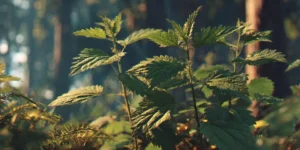
Minerals found in nettle contribute to enzymatic processes involved in inflammatory regulation. Nervine herbs help regulate stress pathways that intersect with immune signaling.
In traditional language, these herbs cool excess heat, calm irritation, and support proper elimination. In modern terms, they influence cytokine signaling and inflammatory mediators toward balance.
Herbal Preparations and Recipes
Preparation form matters when working with seasonal patterns.
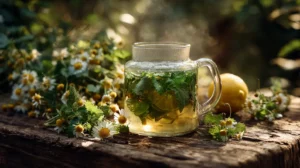
Infusions are commonly chosen for leaves and flowers such as nettle, elderflower, and chamomile. These preparations extract water-soluble flavonoids and minerals that support daily balance.
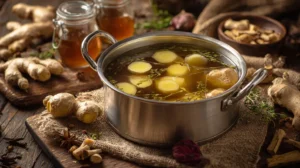
Decoctions are more appropriate for roots such as burdock. Tinctures may provide convenience and broader phytochemical extraction. Glycerites are sometimes chosen when a milder preparation is preferred.
If you are exploring this topic further, reviewing individual herb profiles and traditional preparation guides can clarify why certain preparations are favored during seasonal transitions. Blends are often formulated for harmony rather than intensity.
What Is Seasonal Immune Sensitivity?
Seasonal immune sensitivity refers to a pattern in which immune responses become heightened during specific times of year, often in response to environmental exposures such as pollen, mold, or temperature shifts.
It reflects immune vigilance that may be slightly overexpressed.
Why It Happens
Environmental exposures increase during certain seasons. Pollen counts rise, humidity changes, and microbial ecosystems shift.
The World Health Organization highlights how environmental factors influence global patterns of immune-related conditions. Genetic predisposition, stress levels, and nutrient status may also shape individual sensitivity.
The immune system is designed to respond. Seasonal sensitivity reflects an amplified version of that response.
How It Commonly Shows Up
People may notice nasal irritation, watery eyes, mild sinus congestion, skin reactivity, or digestive shifts during specific seasons.
Fatigue can accompany prolonged reactivity, especially when sleep is disrupted. Symptoms often fluctuate depending on environmental exposure.
Foundations of Support
Herbal support works best alongside foundational habits.
Maintaining regular sleep supports immune regulation. A diet rich in whole foods provides phytonutrients and micronutrients that contribute to balanced inflammatory signaling. Gentle movement encourages lymphatic circulation.
Stress reduction practices matter. The nervous and immune systems communicate continuously, and calming one often steadies the other.
Learning More
Educational overviews of immune-supportive nutrients can be found through the NIH Office of Dietary Supplements. Traditional use information for botanicals is available through the European Medicines Agency.
Understanding seasonal patterns as part of the body’s adaptive rhythm can shift perspective from frustration to informed support.
FAQ
Is seasonal immune sensitivity the same as allergies?
Not exactly. Seasonal immune sensitivity is a broader pattern description in herbalism and does not replace medical terminology.
Can herbs replace conventional care?
Herbs are traditionally used for supportive purposes and are not substitutes for professional medical guidance.
Why do symptoms seem worse during stress?
Stress influences inflammatory and immune signaling pathways, which can amplify seasonal patterns.
Are daily infusions safe for long-term use?
Many nutritive herbs are traditionally used daily, though individual considerations always matter.
Does immune sensitivity mean my immune system is weak?
No. It often reflects an active immune system that may simply be reacting more vigorously than necessary.
References
National Center for Complementary and Integrative Health (NCCIH):
https://www.nccih.nih.gov
NIH Office of Dietary Supplements:
https://ods.od.nih.gov
European Medicines Agency (EMA):
https://www.ema.europa.eu
PubMed Central:
https://www.ncbi.nlm.nih.gov/pmc/
World Health Organization (WHO):
https://www.who.int
American Herbal Pharmacopoeia (AHP):
http://www.herbal-ahp.org
This content is for educational purposes only. It does not diagnose, treat, or replace professional medical care. Always consult a qualified healthcare professional regarding personal health concerns.