
Stress-Influenced Immune Suppression: Herbal Perspective on Immune Resilience
There are seasons of life when stress feels like background noise. Deadlines, caregiving, travel, disrupted sleep, emotional strain. You manage it. You keep going. And then, quietly, your resilience slips.

Perhaps you notice you’re catching every passing cold. Minor infections linger. Recovery takes longer than it used to. This pattern is often described as stress-influenced immune suppression. It reflects the deep connection between the nervous system and immune function. In traditional herbalism, this is not viewed as weakness, but as a system that has been overextended.
Herbal Recipes for Stress-Influenced Immune Suppression
When stress and immune resilience intersect, herbalists often combine nervines and gentle immune tonics.
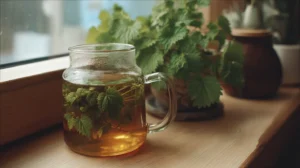
Gentle Morning Resilience Tea
Morning herbal teas were traditionally chosen to support steadiness without...
Read More
Evening Replenishing Stress Tea
Evening teas were traditionally used to mark the transition from...
Read MoreHerbal Support for Stress-Influenced Immune Suppression
Traditional Western herbalism recognizes that chronic stress diverts energy away from immune coordination. The body prioritizes immediate survival signals over long-term maintenance.
Several herbal categories are relevant.
Adaptogens, such as eleuthero (Eleutherococcus senticosus) and reishi mushroom (Ganoderma lucidum), are traditionally used to support stress adaptation. Eleuthero has been studied for its influence on stress physiology, with educational summaries available through the National Center for Complementary and Integrative Health. Reishi’s beta-glucans are explored in research indexed by PubMed Central.
Nervines, including oat straw (Avena sativa), lemon balm (Melissa officinalis), and chamomile (Matricaria chamomilla), are central when immune suppression appears linked to prolonged nervous system strain.
Immune tonics such as astragalus (Astragalus membranaceus) are traditionally used to support long-term resilience rather than short-term stimulation. Astragalus polysaccharides are studied for their immune-modulating effects in literature accessible through PubMed Central.
Mineral-rich herbs like nettle leaf (Urtica dioica) may also be included to replenish nutrients that support immune cell function, a topic discussed in immune-nutrient overviews by the NIH Office of Dietary Supplements.
The aim is not to force immune activity. It is to restore balance between stress signaling and immune coordination.
Herbs Used for Stress-Influenced Immune Suppression Support
Commonly referenced herbs include astragalus, eleuthero, reishi, oat straw, lemon balm, chamomile, skullcap, passionflower, burdock root, licorice root, schisandra, and nettle leaf.
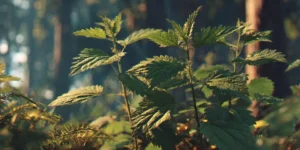
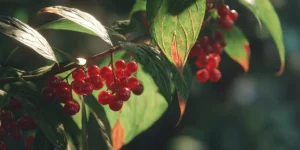
Schisandra
Schisandra: Traditional Uses, Actions, and Herbal Practice Schisandra is traditionally...
Read MoreHow These Herbs Work in the Body
Chronic stress elevates cortisol and other stress hormones. While helpful in short bursts, prolonged elevation can dampen aspects of immune response.
Adaptogens are studied for their influence on the hypothalamic-pituitary-adrenal axis, the central stress response system. By supporting balanced stress signaling, they may indirectly support immune resilience.
Polysaccharides in astragalus and reishi interact with immune cells in the gut and bloodstream, influencing communication rather than overstimulation. Flavonoids in chamomile and lemon balm contribute antioxidant and calming effects that help regulate inflammatory balance.
In practical terms, these herbs support the body’s ability to shift out of constant “fight-or-flight” and back into maintenance and repair.
Herbal Preparations and Recipes
Preparation form matters, particularly when the nervous system is involved.
Long infusions are often used for nutritive herbs such as oat straw and nettle, as extended steeping extracts minerals and supportive compounds. Decoctions are appropriate for roots and mushrooms like astragalus and reishi, where longer simmering releases polysaccharides.
Tinctures may be chosen for convenience or when digestion is compromised. Glycerites can provide a milder alternative when alcohol is not preferred.
If you are exploring this topic further, reviewing individual herb profiles and traditional preparation guides can clarify why certain preparations are favored for long-term resilience blends.
What Is Stress-Influenced Immune Suppression?
Stress-influenced immune suppression refers to a pattern in which prolonged psychological or physiological stress reduces immune responsiveness.
It is not necessarily a primary immune disorder. It reflects the body’s adaptive trade-offs under sustained strain.
Why It Happens
The immune and nervous systems are deeply interconnected. Stress hormones influence immune cell signaling, inflammatory mediators, and antibody production.
Research exploring stress and immune interaction is widely available through PubMed Central. The World Health Organization also highlights the global impact of chronic stress on overall health patterns.
When stress becomes chronic, immune coordination may be deprioritized in favor of immediate survival signaling.
How It Commonly Shows Up
People may notice increased frequency of colds, slower wound healing, lingering fatigue, or difficulty recovering after minor infections.
There may also be subtle signs: disrupted sleep, digestive changes, or a sense of being run down. Often, these patterns appear during periods of prolonged emotional or professional strain.
Foundations of Support
Herbs are supportive, but foundational practices are essential.
Consistent sleep helps recalibrate stress hormones. Balanced meals provide nutrients necessary for immune cell production. Gentle movement improves circulation and lymphatic flow.
Equally important is reducing unnecessary stressors when possible. Immune resilience returns more reliably when the nervous system feels safe.
Learning More
Educational resources on immune-supportive nutrients are available through the NIH Office of Dietary Supplements. Traditional herbal use classifications can be reviewed through the European Medicines Agency.
Understanding the interplay between stress and immunity provides context that reduces self-blame and encourages steady support.
FAQ
Can stress really weaken the immune system?
Yes. Chronic stress influences immune signaling and may reduce aspects of immune responsiveness.
Are adaptogens stimulating?
Traditionally, adaptogens are described as modulating rather than stimulating. They support balance in stress response.
How long does immune rebuilding take?
It varies depending on the duration of stress and overall health. Gradual improvement is typical.
Should immune herbs be taken daily during stress?
Many traditional tonics are used consistently during prolonged strain, though individual context always matters.
Is rest as important as herbs?
Absolutely. Herbal support works best alongside restorative sleep and reduced stress load.
References
National Center for Complementary and Integrative Health (NCCIH):
https://www.nccih.nih.gov
NIH Office of Dietary Supplements:
https://ods.od.nih.gov
European Medicines Agency (EMA):
https://www.ema.europa.eu
PubMed Central:
https://www.ncbi.nlm.nih.gov/pmc/
World Health Organization (WHO):
https://www.who.int
American Herbal Pharmacopoeia (AHP):
http://www.herbal-ahp.org
This content is for educational purposes only. It does not diagnose, treat, or replace professional medical care. Always consult a qualified healthcare professional regarding personal health concerns.