

Recipe Details
Preparation Type: Tincture
Ingredients
1/2 cup skullcap, dried, cut
1/4 cup lemon balm, dried
1/4 cup passionflower, dried
2 cups 80–100 proof vodka or brandy (40–50% alcohol)
Preparation
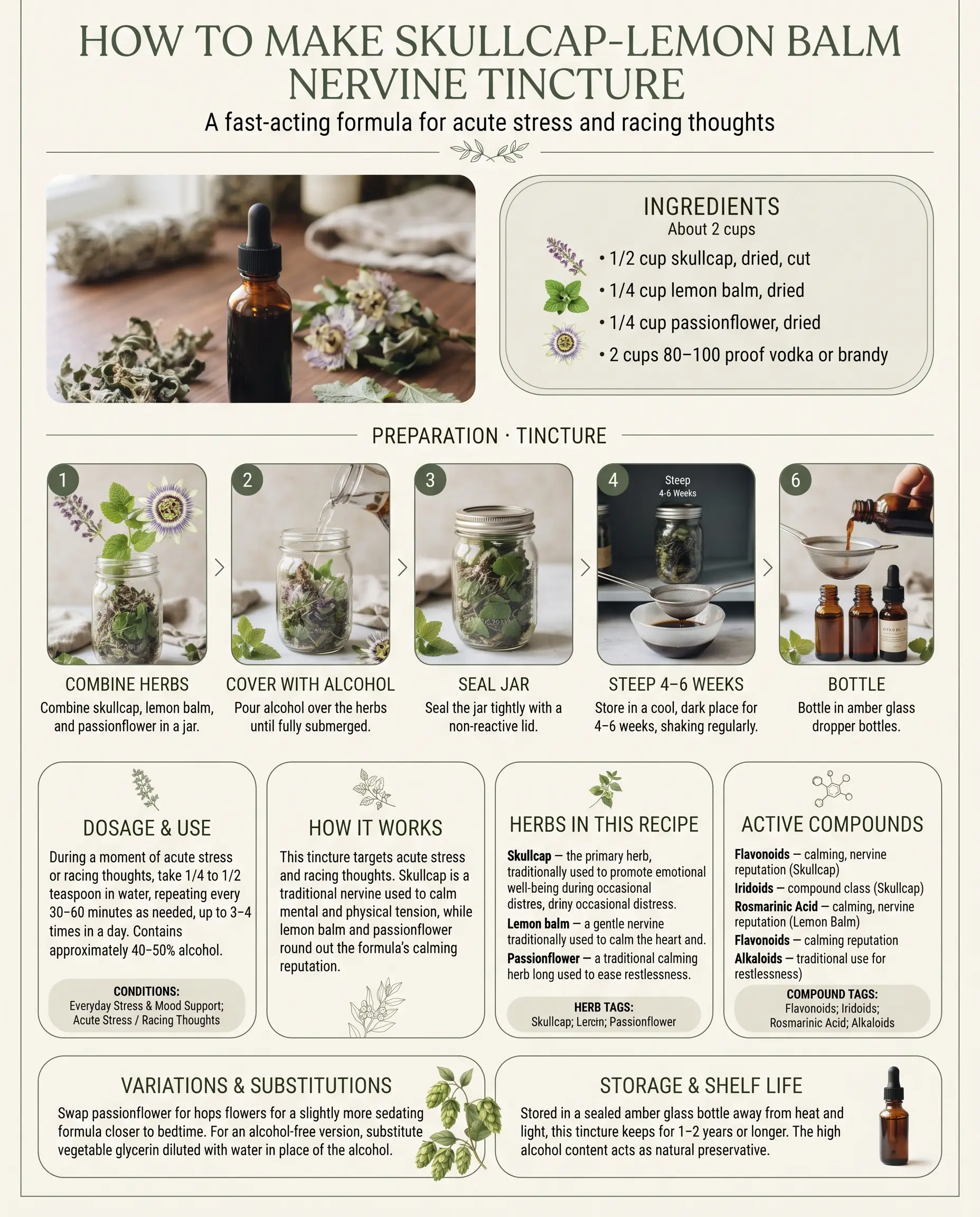
- Combine skullcap, lemon balm, and passionflower in a clean glass jar.
- Pour the alcohol over the herbs until fully submerged, with about an inch of liquid above the plant material.
- Seal the jar tightly with a non-reactive lid.
- Store in a cool, dark place for 4–6 weeks, shaking every few days.
- Strain through cheesecloth, pressing to extract as much liquid as possible.
- Bottle in amber glass dropper bottles.
Yield: About 2 cups
Preparation Steps
- Combine herbs in jar
- Cover fully with alcohol
- Seal jar tightly
- Steep 4–6 weeks, shaking regularly
- Strain through cheesecloth
- Bottle in dropper bottles
Dosage & Usage
During a moment of acute stress or racing thoughts, take 1/4 to 1/2 teaspoon (roughly 15–30 drops) in a small amount of water, repeating every 30–60 minutes as needed, up to 3–4 times in a day. Contains approximately 40–50% alcohol by volume.
Precautions & Contraindications
Not appropriate for anyone avoiding alcohol, including some pregnant or nursing individuals, without a healthcare practitioner’s guidance — an alcohol-free glycerite version can be made instead if needed. Use caution if taking barbiturates or other sedative medications, as skullcap and passionflower have traditionally been thought to potentiate the effects of some sedatives. Not recommended for continuous, long-term daily use without a healthcare practitioner’s guidance — this formula is intended for acute, in-the-moment use. Avoid driving or operating machinery until you know how this tincture affects you.
Health Conditions & How It Works
This tincture targets acute stress and racing thoughts, the kind of in-the-moment overwhelm that calls for something fast and discreet rather than a tea that takes time to prepare. Skullcap has a long tradition as a nervine used to calm mental and physical tension during times of occasional distress. Lemon balm and passionflower round out the formula with their own traditional calming reputations, offering a concentrated, portable option distinct from a slower daily tonic.


Herbs Used in This Recipe
Skullcap — the primary herb in this formula, traditionally used to promote emotional well-being during times of occasional distress.
Lemon balm — a gentle nervine traditionally used to calm the heart and body.
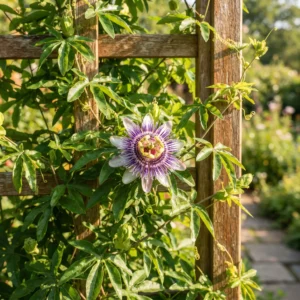
Passionflower — a traditional calming herb long used to ease restlessness and settle an overactive mind.
Active Compounds
- Flavonoids — including baicalein and baicalin, traditionally tied to skullcap’s calming, nervine reputation (Skullcap)
- Iridoids — a compound class present in skullcap alongside its flavonoids (Skullcap)
- Rosmarinic acid — a compound traditionally associated with lemon balm’s calming, nervine reputation (Lemon Balm)
- Flavonoids — a broader compound class present in passionflower, traditionally tied to its calming reputation (Passionflower)
- Alkaloids — compounds traditionally associated with passionflower’s traditional use for restlessness (Passionflower)
Ready-to-Use Product
Swanson Lemon Balm, Passion Flower, Skullcap Complex — a capsule formula built on the same three herbs in this tincture, designed to settle nerves and support relaxation (this ready-made version is a capsule rather than a fast-absorbing liquid tincture, so the format and speed of action differ from this recipe).
Variations & Substitutions
Swap passionflower for hops flowers if you want a slightly more sedating formula for use closer to bedtime — hops carries a stronger traditional sedative reputation than passionflower. For an alcohol-free version, substitute vegetable glycerin diluted with water (roughly 3:1 glycerin to water) in place of the alcohol, though extraction of some constituents will be somewhat less complete.
Storage & Shelf Life
Stored in a sealed amber glass bottle away from heat and light, this tincture keeps for 1–2 years or longer. The high alcohol content acts as a natural preservative.
FAQ
Why is a tincture better suited to acute stress than a tea? A tincture can be taken in seconds — a small dropperful in water — without needing to boil water, wait for a steep, or find a quiet moment to sit with a cup, making it more practical for a stressful moment that’s already underway.
How is this different from the Lemon Balm-Chamomile Infusion in this series? That tea is a gentle, ritual-based formula for winding down at the end of a day, while this tincture is a concentrated, fast-acting formula meant for genuinely acute moments of racing thoughts or overwhelm — the two serve different intensities of need.
Can I take this alongside the Ashwagandha-Rhodiola Decoction in this series? These are separate recipes meant to stand alone; if combining multiple herbal preparations, check in with a healthcare practitioner about your overall herb and alcohol intake.
How strong does this taste? Expect an earthy, slightly bitter taste from the skullcap and passionflower with a bright, lemony note from the lemon balm — diluting in water softens the intensity.
References
Mountain Rose Herbs: Skullcap Organic
Mountain Rose Herbs: Passionflower Organic
Disclaimer
This content is for educational purposes only and has not been evaluated by the FDA. It is not intended to diagnose, treat, cure, or prevent any disease. Consult a qualified healthcare practitioner before using herbal preparations, particularly if pregnant, nursing, or taking medication.