
Red Clover: Traditional Uses, Actions, and Herbal Practice
Red clover is traditionally used to support lymphatic movement, skin and tissue cleansing, and long-term immune resilience, especially where stagnation or congestion is present.
Latin (botanical) name: Trifolium pratense
Plant family: Fabaceae
Common names: Red clover, meadow clover
Traditional use overview:
Red clover has a long history in European and North American Western herbalism as a lymphatic and alterative herb. Traditionally, it was used to support the movement and elimination of metabolic waste, particularly through the skin and lymphatic system. Western herbalists often choose red clover for chronic or long-standing conditions where gentle cleansing and nourishment are preferred over aggressive intervention.
Herbal Actions
Red clover is traditionally associated with the following actions:
- Alterative – supports gradual cleansing and metabolic balance
- Lymphatic support – encourages movement of lymph and tissue fluids
- Immune tonic – supports baseline immune resilience
- Anti-inflammatory – helps calm low-grade inflammatory states
- Nutritive – provides gentle nourishment alongside cleansing
These actions describe traditional functional use rather than medical treatment.
Practical Uses
In Western herbal practice, red clover is most often used long term, particularly for skin conditions, lymphatic congestion, and overall constitutional support. Herbalists value it when symptoms are slow-moving, recurrent, or linked to stagnation rather than acute stress. It is commonly used as part of a broader restorative or cleansing program.
Product Forms
Red clover is available in several preparations:
- Dried flowers – used for infusions and teas
- Cut and sifted aerial parts – blended into formulas
- Tinctures – alcohol or hydroalcoholic extracts
- Capsules – powdered flower or aerial parts
- Topical preparations – washes or compresses, less common
Teas and tinctures remain the most traditional forms.
Traditional Herbal Recipes
- Red Clover Infusion
A long-steeped tea traditionally used for lymphatic and skin support. - Alterative Tonic Blend
Red clover combined with other gentle cleansing herbs. - Skin-Support Tea Formula
Used regularly over time rather than acutely. - Red Clover Tincture
Taken in small amounts for long-term use.
Parts Used
- Flowers and aerial parts, harvested during full bloom
Usage Forms & Shelf Life
Internal vs external use:
Primarily internal; occasionally external as washes or compresses.
Common preparations:
Infusions, tinctures, capsules
Shelf-life ranges:
- Dried herb: 1–2 years
- Tinctures: 3–5 years
- Capsules: 1–2 years
Safety & Considerations and Dosage Guidelines
Red clover is traditionally considered gentle and suitable for extended use. Herbalists emphasize patience and consistency rather than high amounts. It is often chosen for individuals who need long-term support rather than rapid change.
Side Effects & Contraindications
Red clover is generally well tolerated. Traditional sources advise caution in individuals with sensitivity to legumes. Because of its phytoestrogen content, it is often used thoughtfully and as part of a broader formula rather than in isolation.
Active Constituents
Isoflavones
- Compounds: genistein, daidzein, biochanin A, formononetin
- Traditional role: associated with endocrine balance and tissue nourishment
- Best extraction: alcohol or hydroalcoholic preparations
- Quantitative data: isoflavones typically comprise 0.5–1.5% of dried flower material
National Center for Biotechnology Information
Coumarins
- Traditional role: support circulatory and lymphatic movement
- Best extraction: alcohol-based preparations
Flavonoids
- Compounds: quercetin derivatives
- Traditional role: antioxidant and anti-inflammatory support
- Best extraction: water and alcohol
How It Works
Traditionally, red clover is understood to work by supporting lymphatic flow and gradual tissue cleansing, particularly through the skin and connective tissues. Modern research highlights its antioxidant and endocrine-modulating constituents, offering insight into its long-standing use for chronic, low-grade imbalance
Journal of Ethnopharmacology.
Processing Cautions
Red clover should be dried gently to preserve delicate isoflavones. Infusions are traditionally steeped for longer periods to fully extract constituents. Excessive heat may reduce nutritive value.
Quick Herb Overview
- Botanical family: Fabaceae
- Parts used: Flowers, aerial parts
- Energetics: Cooling, moistening
- Taste profile: Mildly sweet, grassy
Herb Identification
Visual traits:
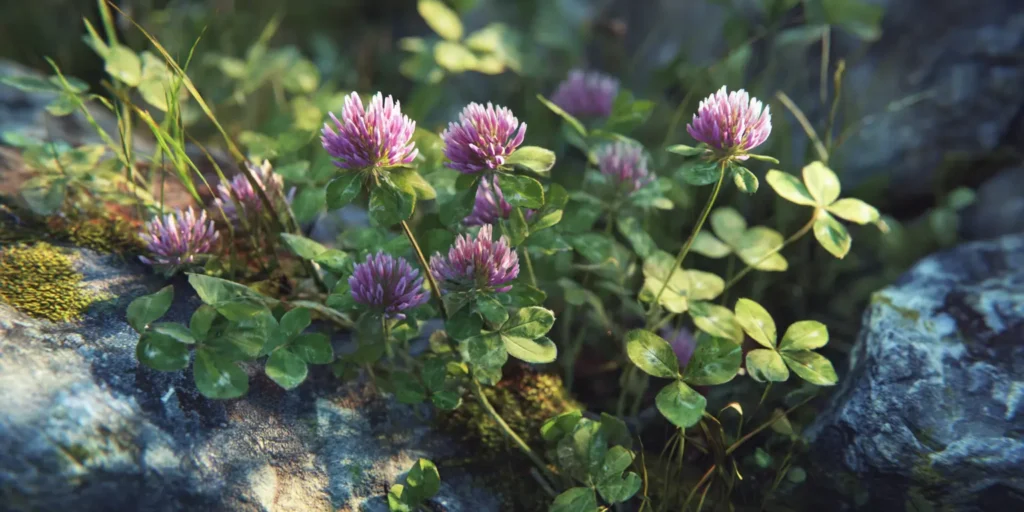
Pink to purple rounded flower heads with trifoliate leaves marked by pale chevrons.
Growth habit:
Perennial herb growing low to the ground.
Look-alikes and safety notes:
White clover (Trifolium repens) is related but differs in traditional use; correct species identification is important.
Selecting Quality Herb
Choose flowers that retain color and aroma. Dried red clover should not be brown or dusty. Products should clearly list Trifolium pratense and flowering tops.
Natural Growing Areas
Native to Europe and Western Asia; widely naturalized across North America in meadows and pastures.
Growing Tips
Red clover prefers full sun and well-drained soil. It is often grown as a cover crop and harvested during peak bloom for herbal use.
Frequently Asked Questions
Is red clover meant for daily use?
Yes. Traditionally, it is used consistently over weeks or months rather than short term.
Is red clover an immune stimulant?
No. It is considered an immune tonic and alterative that supports balance.
Does red clover work quickly?
Red clover works gradually, with effects developing over time.
Is red clover mainly for skin use?
While often used for skin support, it traditionally works systemically through lymphatic support.
Can red clover be combined with other herbs?
Yes. It is commonly blended with other alteratives and lymphatic herbs.
Is red clover warming or cooling?
It is traditionally considered cooling and moistening.
References
- National Center for Biotechnology Information
- Journal of Ethnopharmacology
- European Medicines Agency – Herbal Monographs
This content is for educational purposes only and reflects traditional herbal understanding. It is not intended to diagnose, treat, cure, or prevent any disease.