Jet lag happens when your internal body clock does not match the local time after crossing time zones. It can feel like your brain landed in one country, your stomach stayed in another, and your sleep schedule is still waiting at baggage claim.
Learn more about Jet Lag
Why It Happens
Jet lag happens because rapid travel disrupts circadian rhythm, the body’s internal 24-hour timing system. Light, darkness, meal timing, movement, and sleep habits all help set this clock.
Main Types in Plain Language
Eastward travel often feels harder because the body must fall asleep earlier than usual. Westward travel may feel easier for some people because staying awake later often feels more natural. Long flights, red-eye travel, dehydration, airport stress, and irregular meals can make either direction harder.
Common Triggers
Common triggers include crossing several time zones, poor sleep before travel, alcohol on flights, dehydration, caffeine at the wrong time, heavy meals, and bright light exposure at the wrong hour.
How It Shows Up Daily
Jet lag may cause insomnia, early waking, daytime sleepiness, poor focus, irritability, digestive changes, low appetite, headache, or general “why am I awake at 3 a.m.?” confusion.
Traditional Herbal View
Traditional herbalism often sees jet lag as a rhythm-disruption pattern with nervous system strain, digestive upset, dryness, and fatigue. Herbalists may choose calming nervines for sleep, digestive herbs for travel stomach, moistening herbs for dehydration, and gentle tonics for recovery.
Herbs do not reset time zones by magic, but they can support the body while light, sleep timing, and meals help the clock adjust.
How Herbs Can Help Jet Lag
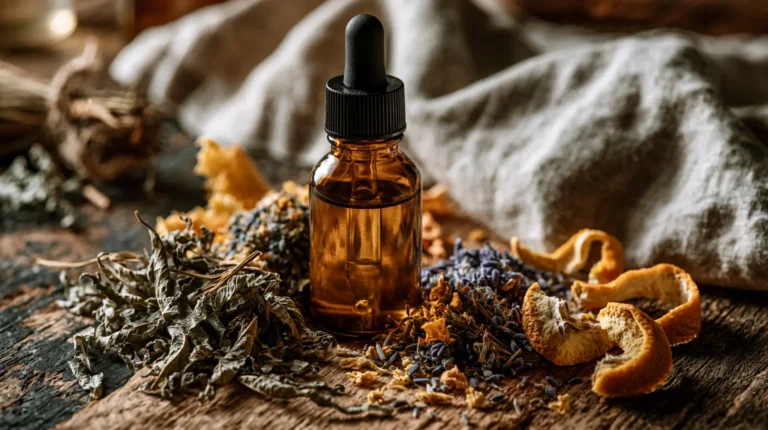
Herbalism usually sees jet lag as a disrupted rhythm pattern with nervous system tension, dryness from travel, digestive sluggishness, and tired-but-wired sleep trouble. Herbalists use nervines for relaxation, carminatives for digestion, adaptogens for travel stress, demulcents for dryness, and gentle aromatics for alertness. They choose calming herbs for nighttime rest, bright digestive herbs for travel meals, and nourishing herbs when the body feels depleted after flying. These are herbs traditionally used when jet lag happens: chamomile, lemon balm, ginger, peppermint, nettle, rosehips, oat straw, lavender, rosemary, spearmint, passionflower, skullcap, hibiscus, rose petals, turmeric, fennel seed, green tea, oats.
“Jet lag is what happens when your suitcase arrives before your circadian rhythm.”
Recipes & Remedies Jet Lag
Herbal Preparations
Lemon Balm, Chamomile, and Passionflower Travel Wind-Down Tea
This gentle evening tea supports relaxation after travel when the body feels tired but the mind refuses to read the local clock.
Ingredients
Dried lemon balm: 1 tablespoon
Dried chamomile flowers: 1 tablespoon
Dried passionflower: 1 teaspoon
Dried lavender flowers: ¼ teaspoon
Hot water: 1½ cups
Honey: 1 teaspoon, optional
Preparation Instructions
- Place lemon balm, chamomile, passionflower, and lavender in a mug or teapot.
- Pour hot water over the herbs.
- Cover and steep for 10 minutes.
- Strain well.
- Add honey if desired.
How to Use
Drink 1 cup in the evening at your destination, about 30 to 60 minutes before planned bedtime.
Avoid alcohol when using relaxing herbs.
Passionflower and lavender may cause drowsiness.
Use caution with sedatives, sleep medications, anxiety medications, antidepressants, pregnancy, breastfeeding, or before driving.
Food for support Jet Lag
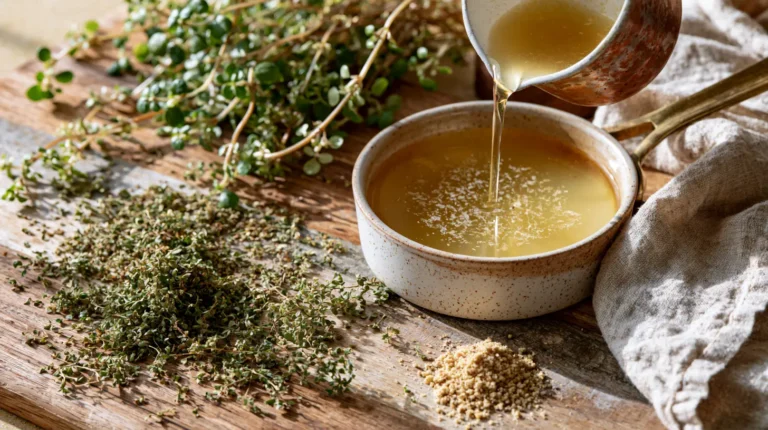
Ginger, Rice, and Vegetable Travel Recovery Soup
This simple soup supports hydration, digestion, warmth, and steady nourishment after long travel. It is gentle enough for a confused stomach and satisfying enough for a tired traveler.
Ingredients
Low-sodium vegetable or chicken broth: 4 cups
Cooked rice: ¾ cup
Fresh ginger root: 1 teaspoon grated
Carrot: 1 medium, thinly sliced
Spinach: 1 cup
Green onion: 2 tablespoons sliced
Fresh parsley: 2 tablespoons chopped
Olive oil: 1 teaspoon
Lemon juice: 1 teaspoon
Salt: ¼ teaspoon, or to taste
Preparation Instructions
- Add broth, ginger, carrot, and rice to a small pot.
- Simmer for 10 minutes.
- Stir in spinach and green onion.
- Cook for 2 minutes.
- Add olive oil, lemon juice, parsley, and salt.
- Serve warm.
How to Use
Eat 1 bowl after arrival or the next day when digestion feels slow or appetite feels off.
Keep evening portions light if heavy meals disturb your sleep.
Avoid strong ginger if it worsens reflux or if your clinician told you to avoid it.
What Herbs You Need
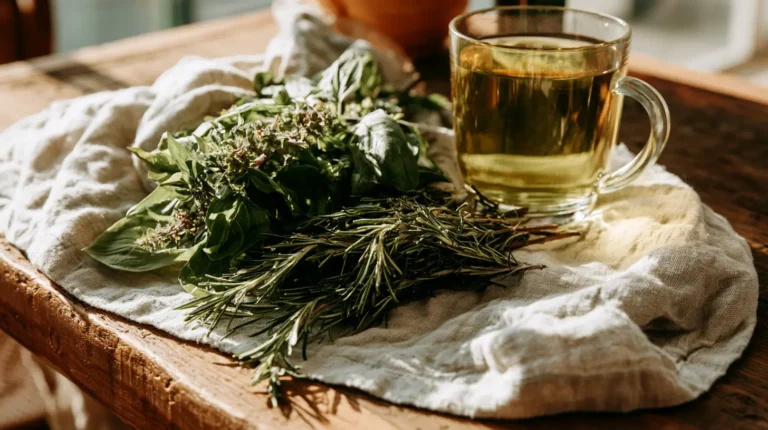
For jet lag, herbalists often consider lemon balm, chamomile, passionflower, lavender, ginger, peppermint, fennel, tulsi, oat straw, nettle, marshmallow root, rosemary, green tea, rosehip, parsley, and green onion. These herbs support comfort, hydration, digestion, relaxation, and travel recovery, but light timing and sleep timing still do the main circadian work.
Lemon Balm
Latin name: Melissa officinalis
Key herbal actions: Nervine, meaning it supports the nervous system. Carminative, meaning it eases digestive tension. Mild calming herb, meaning it supports relaxation without feeling too heavy for many people.
Key active compounds: Rosmarinic acid, citral, citronellal, flavonoids.
Chamomile
Latin name: Matricaria chamomilla
Key herbal actions: Nervine, meaning it supports relaxation. Carminative, meaning it supports digestion. Anti-inflammatory, meaning it may calm irritation.
Key active compounds: Apigenin, bisabolol, chamazulene, flavonoids.
Passionflower
Latin name: Passiflora incarnata
Key herbal actions: Nervine, meaning it supports calm. Sedative, meaning herbalists use it for restlessness and sleep support. Antispasmodic, meaning it may ease tension patterns.
Key active compounds: Flavonoids, vitexin, isovitexin, harmala alkaloids.
Lavender
Latin name: Lavandula angustifolia
Key herbal actions: Nervine, meaning it supports relaxation. Aromatic, meaning it contains fragrant volatile oils. Sleep-supportive, meaning herbalists use it in evening routines.
Key active compounds: Linalool, linalyl acetate, rosmarinic acid, flavonoids.
Ginger
Latin name: Zingiber officinale
Key herbal actions: Carminative, meaning it supports digestion. Warming, meaning it suits cold or sluggish patterns. Antiemetic, meaning it has traditional use for nausea.
Key active compounds: Gingerols, shogaols, zingerone, volatile oils.
Peppermint
Latin name: Mentha x piperita
Key herbal actions: Carminative, meaning it supports gas and bloating comfort. Cooling, meaning it feels refreshing. Aromatic, meaning it carries strong volatile compounds.
Key active compounds: Menthol, menthone, rosmarinic acid, flavonoids.
Fennel
Latin name: Foeniculum vulgare
Key herbal actions: Carminative, meaning it supports digestion after meals. Aromatic, meaning it contains fragrant volatile oils. Mild antispasmodic, meaning herbalists use it for digestive tension.
Key active compounds: Anethole, fenchone, estragole, flavonoids.
Tulsi
Latin name: Ocimum tenuiflorum
Key herbal actions: Adaptogen, meaning herbalists use it for stress resilience. Nervine, meaning it supports calm alertness. Aromatic, meaning it offers a bright, uplifting quality.
Key active compounds: Eugenol, ursolic acid, rosmarinic acid, flavonoids.
Oat Straw
Latin name: Avena sativa
Key herbal actions: Nervine tonic, meaning it supports nervous system resilience. Nutritive, meaning it provides gentle minerals. Restorative, meaning herbalists use it for depleted patterns.
Key active compounds: Avenanthramides, silicic acid, flavonoids, minerals.
Nettle
Latin name: Urtica dioica
Key herbal actions: Nutritive, meaning it provides minerals. Tonic, meaning herbalists use it for long-term vitality. Astringent, meaning it gently tones tissues.
Key active compounds: Minerals, chlorophyll, flavonoids, phenolic acids.
Marshmallow Root
Latin name: Althaea officinalis
Key herbal actions: Demulcent, meaning it moistens dry tissues. Cooling, meaning herbalists use it for dry heat. Emollient, meaning it softens irritated tissues.
Key active compounds: Mucilage polysaccharides, flavonoids, phenolic acids.
Rosemary
Latin name: Salvia rosmarinus
Key herbal actions: Aromatic, meaning it carries fragrant volatile compounds. Circulatory stimulant, meaning herbalists use it for warmth and movement. Uplifting herb, meaning it may suit sluggish travel fatigue.
Key active compounds: Rosmarinic acid, carnosic acid, carnosol, essential oil compounds.
Green Tea
Latin name: Camellia sinensis
Key herbal actions: Mild stimulant, meaning it supports alertness. Antioxidant, meaning it helps protect against oxidative stress. Astringent, meaning it gently tones tissues.
Key active compounds: Caffeine, L-theanine, epigallocatechin gallate, catechins.
Rosehip
Latin name: Rosa canina
Key herbal actions: Nutritive, meaning it provides plant nutrients. Antioxidant, meaning it supports protection against oxidative stress. Astringent, meaning it gently tones tissues.
Key active compounds: Vitamin C, carotenoids, flavonoids, polyphenols.
Parsley
Latin name: Petroselinum crispum
Key herbal actions: Nutritive, meaning it adds plant nutrients. Digestive, meaning it supports meal enjoyment. Aromatic, meaning it adds brightness to food.
Key active compounds: Apigenin, vitamin C, vitamin K, flavonoids.
Green Onion
Latin name: Allium fistulosum
Key herbal actions: Warming, meaning it gently supports cold patterns. Digestive, meaning it supports food flavor and appetite. Aromatic, meaning it adds light pungency.
Key active compounds: Sulfur compounds, flavonoids, quercetin, vitamin C.
Key Herbal Products for Jet Lag
Melatonin Tablets or Gummies
Melatonin is a hormone supplement, not an herb. People commonly use it short term to help shift sleep timing after crossing time zones.
Pros: Research suggests melatonin may help reduce jet lag for some travelers.
Cons: Timing matters, and it may cause drowsiness, vivid dreams, headache, or next-day grogginess.
Choose this only after reviewing safety, especially with epilepsy, blood thinners, pregnancy, children, autoimmune conditions, or sedating medications.
Passionflower Capsules or Tea
Passionflower products contain Passiflora incarnata herb. People commonly use them for restlessness, travel stress, and evening wind-down.
Pros: Tea feels gentle and travel-friendly.
Cons: It may cause drowsiness and may interact with sedatives or anxiety medications.
Choose tea for a mild evening ritual or capsules when convenience matters.
Lemon Balm Tea Bags
Lemon balm tea bags offer a simple travel option. People commonly use them for mild stress, digestion, and relaxation.
Pros: It tastes pleasant and packs easily.
Cons: It may feel too gentle for significant sleep disruption.
Choose this form when you want a low-fuss hotel-room tea.
Ginger Chews or Ginger Tea
Ginger travel products include chews, capsules, tea bags, and crystallized ginger. People commonly use them for nausea, motion discomfort, and sluggish travel digestion.
Pros: They work well for travel bags and airports.
Cons: Sugar content varies, and ginger may worsen reflux.
Choose this form when digestion feels unsettled after flights.
Magnesium Drink Powder
Magnesium powder is not an herb, but many travelers use it in evening routines. People commonly take it for muscle tension and relaxation support.
Pros: It may support relaxation and bowel regularity for some people.
Cons: It can cause loose stools and may not suit kidney disease or certain medications.
Choose this form when muscle tension and constipation appear after travel, with clinician guidance if needed.
FAQ
How long does jet lag usually last?
Jet lag often improves as your body clock adjusts to the new time zone. Many people need about one day per time zone, though this varies. Light exposure, meal timing, and sleep timing can influence adjustment.
Do herbs reset the body clock?
Herbs do not directly reset the circadian clock like light and darkness do. They may support sleep comfort, digestion, hydration, and stress resilience while your body adjusts. Think of herbs as travel support, not a time-zone remote control.
Is melatonin herbal?
No. Melatonin is a hormone that the body naturally makes, and supplements provide a synthetic or manufactured form. It may help with jet lag for some travelers, but timing and safety matter.
Can I drink calming tea on the plane?
Yes, gentle teas can work well on flights if they suit you. Avoid very sedating herbs with alcohol or sleep medications. Also avoid drinking so much tea that you spend the flight negotiating with the aisle.
Fresh herbs or dried herbs: which works better for travel?
Dried herbs usually work better for travel because they pack easily and store well. Tea bags, small tins, or travel sachets make preparation simple. Fresh ginger can also travel well for short trips.
How should I store travel herbs?
Keep dried herbs in airtight bags or small tins away from heat, light, and moisture. Label everything clearly. Avoid carrying loose powders or unlabeled herbs through airports because nobody needs that conversation with security.
Can children use jet lag herbs?
Children should not use sedating herbs or melatonin without pediatric guidance. For children, light exposure, meal timing, hydration, quiet routines, and gradual schedule shifts are safer starting points. Ask a pediatrician before using supplements.
Can pets use jet lag herbs?
Do not give travel herbs, sleep herbs, or melatonin to pets unless a veterinarian approves. Animals process herbs and supplements differently. Keep tea bags, tinctures, gummies, and powders out of reach.
References
CDC Yellow Book: Jet Lag Disorder
NCBI Bookshelf: Jet Lag Disorder, CDC Yellow Book
Mayo Clinic: Jet Lag Disorder Symptoms and Causes
Mayo Clinic: Jet Lag Disorder Diagnosis and Treatment
NCCIH: Melatonin, What You Need To Know
NCCIH: Complementary Health Approaches for Travelers
PubMed: Melatonin for the Prevention and Treatment of Jet Lag
PubMed Central: Melatonin for the Prevention and Treatment of Jet Lag
PubMed Central: Jet Lag, Current and Potential Therapies
Harvard Medical School: Jet Lag and Shift Work
Disclaimer
This article offers educational information only. It does not provide medical advice, diagnosis, or treatment.
Jet lag can overlap with sleep disorders, medication effects, anxiety, dehydration, illness, pregnancy-related fatigue, and travel-related stress. Please speak with a qualified healthcare professional if symptoms feel severe, persist, or affect safe driving or work.
Herbs and supplements may interact with medications, alcohol, pregnancy, breastfeeding, surgery, seizure disorders, bleeding disorders, autoimmune conditions, and chronic health concerns. Use sedating herbs cautiously and avoid combining them with alcohol, sleep medications, or other sedatives.