PMS discomfort includes the physical and emotional changes that can show up before a period. It may feel like bloating, cramps, breast tenderness, irritability, fatigue, cravings, or the strange experience of feeling annoyed by absolutely everything for no obvious reason.
Learn more about PMS Discomfort
Why It Happens
PMS usually happens during the luteal phase, which is the time after ovulation and before bleeding starts. Hormone shifts during this phase can affect mood, sleep, fluid balance, digestion, breast tissue, and pain sensitivity.
Main Types in Plain Language
Some people mainly notice physical symptoms, such as cramps, bloating, headaches, breast tenderness, and fatigue. Others notice emotional symptoms, such as irritability, sadness, anxiety, low patience, or feeling unusually sensitive. Many people experience a mix of both.
Common Triggers
Common triggers include poor sleep, skipped meals, high stress, caffeine, alcohol, low physical activity, and large swings in blood sugar. Symptoms may also feel worse during busy seasons, because the body rarely enjoys hormones and chaos at the same time.
How It Shows Up Daily
PMS discomfort may make clothes feel tighter, concentration harder, and patience shorter. Someone may feel hungry but picky, tired but restless, or crampy and emotionally dramatic enough to argue with a cereal box.
Traditional Herbal View
Traditional herbalism often looks at PMS through patterns of tension, stagnation, cramping, water retention, irritability, nervous system strain, and depletion. Herbalists may choose nervines for mood support, antispasmodics for cramping, carminatives for bloating, mineral-rich tonics for depletion, and cycle-supporting herbs when symptoms follow a clear monthly rhythm.
How Herbs Can Help PMS Discomfort
Herbalism traditionally sees PMS discomfort as a pattern of hormonal rhythm changes mixed with cramping, tension, fluid shifts, mood sensitivity, and nervous system strain. Nervines support calm, antispasmodics ease uterine and digestive tension, carminatives help with bloating, and nutritive herbs support everyday resilience. Herbalists choose between those actions by noticing whether the main picture feels crampy, bloated, irritable, weepy, tense, tired, or strongly cycle-timed. These are herbs traditionally used when PMS discomfort happens: chamomile, ginger, raspberry leaf, lemon balm, fennel, peppermint, passionflower, rose petals, nettle, oat straw, cramp bark, cinnamon, spearmint, hibiscus, chasteberry, lavender, oat, turmeric, dandelion leaf
“PMS has a talent for making normal life feel louder; herbs help turn the volume down a little.”
Recipes & Remedies PMS Discomfort
Herbal Preparations
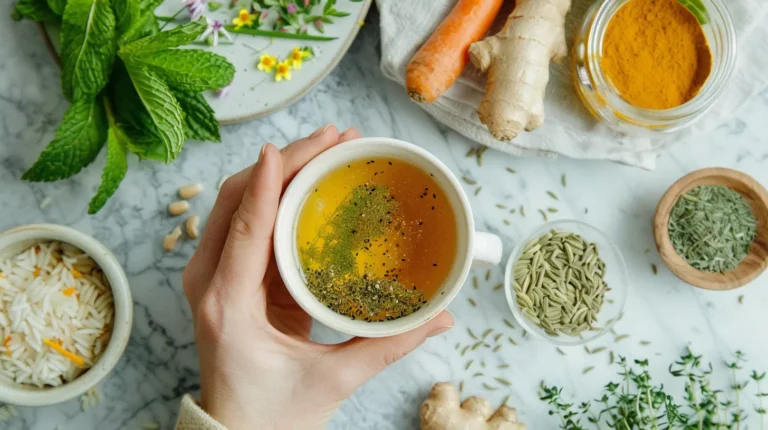
Cycle-Comfort Tea
This warming tea combines herbs traditionally used for cramping, bloating, and premenstrual tension. It suits the days when the body wants warmth, quiet, and fewer dramatic plot twists.
Ingredients with exact measurements
- 1 teaspoon dried chamomile flowers
- 1 teaspoon dried lemon balm
- 1 teaspoon dried raspberry leaf
- 1/2 teaspoon fennel seeds, lightly crushed
- 1/2 teaspoon freshly grated ginger or 1/4 teaspoon dried ginger
- 10 ounces hot water
- 1 teaspoon honey, optional
Step-by-step preparation instructions
- Add chamomile, lemon balm, raspberry leaf, fennel, and ginger to a mug or teapot.
- Pour 10 ounces hot water over the herbs.
- Cover the mug or pot.
- Steep for 10 to 15 minutes.
- Strain well.
- Add honey after the tea cools slightly, if desired.
How to use
Sip 1 cup once or twice daily during the premenstrual days when cramps, bloating, or tension tend to show up. Stop using any herb that does not suit you, and ask a clinician before using herbal blends with medications or during pregnancy.
Food for support PMS Discomfort
Magnesium-Rich Sweet Potato and Lentil Bowl
This simple meal offers steady carbohydrates, fiber, plant protein, and minerals that fit the “feed the nervous system and stop skipping meals” part of the plan.
Ingredients with exact measurements
- 1 medium sweet potato, peeled and diced
- 1 cup cooked lentils
- 1 cup chopped spinach
- 1 tablespoon pumpkin seeds
- 1 tablespoon olive oil
- 1 teaspoon lemon juice
- 1/4 teaspoon ground cumin
- 1/4 teaspoon sea salt
- Optional: 1 tablespoon chopped parsley
Step-by-step preparation instructions
- Steam or roast the sweet potato until tender.
- Warm the lentils in a small pan over low heat.
- Add the spinach and cook for 1 to 2 minutes until wilted.
- Stir in olive oil, lemon juice, cumin, and salt.
- Spoon the lentils and spinach into a bowl.
- Top with sweet potato, pumpkin seeds, and parsley.
How to use
Eat as a steady lunch or dinner during the week before your period. Pair it with hydration, regular meals, and reduced caffeine if caffeine worsens your symptoms.
What Herbs You Need
For PMS discomfort, traditional herbalism often uses chasteberry, chamomile, ginger, lemon balm, raspberry leaf, oat straw, nettle, cramp bark, and fennel. These herbs support different patterns, so the best fit depends on whether the main problem feels like cramps, bloating, irritability, fatigue, or a clear monthly rhythm.
Chasteberry
Latin name: Vitex agnus-castus
Key herbal actions:
Cycle-supporting herb: traditionally used when symptoms follow a predictable monthly pattern.
Endocrine-modulating herb: traditionally used in reproductive rhythm support.
Bitter-aromatic: supports digestive and hormonal routines through taste and plant compounds.
Key active compounds: iridoid glycosides, flavonoids, diterpenes, essential oils.
Chamomile
Latin name: Matricaria recutita
Key herbal actions:
Nervine: supports calm when tension or irritability rises.
Antispasmodic: helps ease cramping and tightness.
Carminative: helps ease gas and digestive discomfort.
Key active compounds: apigenin, alpha-bisabolol, chamazulene, flavonoids.
Ginger
Latin name: Zingiber officinale
Key herbal actions:
Warming carminative: supports digestion and helps with bloating.
Antispasmodic support: traditionally used when cramps feel cold and tight.
Anti-inflammatory support: contains compounds studied for pain and inflammatory pathways.
Key active compounds: gingerols, shogaols, zingiberene, paradols.
Lemon Balm
Latin name: Melissa officinalis
Key herbal actions:
Nervine: supports calm during emotional sensitivity.
Carminative: helps ease digestive tension.
Aromatic: offers fragrant volatile oils that support comfort.
Key active compounds: rosmarinic acid, citral, citronellal, flavonoids.
Raspberry Leaf
Latin name: Rubus idaeus
Key herbal actions:
Astringent tonic: traditionally used for tissue tone and menstrual support.
Uterine support herb: commonly used in cycle-related tea blends.
Nutritive herb: offers minerals and plant compounds in infusion form.
Key active compounds: tannins, flavonoids, ellagic acid, phenolic acids.
Oat Straw
Latin name: Avena sativa
Key herbal actions:
Nutritive nervine: supports the nervous system through gentle nourishment.
Tonic: traditionally used during depleted or frazzled states.
Mineral support: offers plant-based minerals in infusion form.
Key active compounds: avenanthramides, flavonoids, minerals, saponins.
Nettle
Latin name: Urtica dioica
Key herbal actions:
Nutritive: provides minerals and plant compounds for daily nourishment.
Tonic: traditionally used for steady rebuilding.
Alterative: traditionally used in long-term wellness routines.
Key active compounds: minerals, chlorophyll, flavonoids, carotenoids, phenolic acids.
Cramp Bark
Latin name: Viburnum opulus
Key herbal actions:
Antispasmodic: traditionally used for uterine and muscle tension.
Relaxant: supports the body when cramping and tightness take center stage.
Nervine support: often included when pain and tension overlap.
Key active compounds: coumarins, tannins, viburnine-related constituents, flavonoids.
Fennel
Latin name: Foeniculum vulgare
Key herbal actions:
Carminative: helps ease gas and bloating.
Aromatic digestive: supports digestion through fragrant volatile oils.
Antispasmodic: traditionally used when the gut feels tight.
Key active compounds: anethole, fenchone, estragole, flavonoids.
Key Herbal Products for PMS Discomfort
Chasteberry Capsules or Tincture
Chasteberry products use extracts or tinctures from Vitex berries. People commonly choose them when symptoms repeat in a clear monthly pattern, especially with mood shifts, breast tenderness, or cycle-related discomfort. This herb needs consistency and caution, and it may not suit hormonal birth control, pregnancy, or hormone-sensitive conditions. Someone might choose chasteberry when symptoms are rhythmic rather than random.
Cramp Bark Tincture
Cramp bark tincture is a concentrated liquid preparation traditionally used for menstrual cramping and muscular tension. People often choose it when pain feels tight, gripping, or spasm-like. It works as a classic cramp-support herb, but tinctures are not everyone’s favorite flavor experience. Someone might choose it when cramps matter more than mood or bloating.
Raspberry Leaf Tea
Raspberry leaf tea is a traditional cycle-support tea made from dried raspberry leaves. People commonly choose it as a gentle daily tea during the premenstrual week. It feels mild and practical, though it may be too subtle for stronger symptoms. Someone might choose it when they want a simple, food-like herbal ritual.
Chamomile Tea
Chamomile tea is one of the most common herbal options for tension, irritability, cramping, and poor sleep. It tastes soft and familiar, which helps when patience is in short supply. People with ragweed-family allergies should use caution. Someone might choose chamomile when stress and cramping overlap.
Magnesium and Herbal Blend Products
Some cycle-support products combine magnesium with herbs such as chamomile, lemon balm, or chasteberry. People often choose these blends when they want one product instead of several. The main advantage is convenience, while the downside is less flexibility if one ingredient does not suit them. Someone might choose a blend when they want a simple routine.
FAQ
Is PMS discomfort normal?
Many people notice some premenstrual changes, such as cramps, bloating, fatigue, or mood shifts. However, symptoms that strongly disrupt work, school, sleep, or daily life deserve medical attention. Severe symptoms are not something you need to “just deal with.”
What is the difference between PMS and PMDD?
PMS includes physical and emotional symptoms before a period. PMDD involves more severe mood symptoms that can greatly affect daily life. Anyone with hopelessness, severe depression, panic, rage, or suicidal thoughts should seek urgent help.
Can herbs reduce menstrual cramps?
Some herbs are traditionally used for cramping, especially chamomile, ginger, and cramp bark. They may support comfort routines, but they do not replace evaluation for severe pain, fainting, vomiting, or symptoms that keep getting worse. Strong cramps can also point to conditions like endometriosis or fibroids.
What foods help PMS discomfort?
Steady meals with protein, fiber, whole-food carbohydrates, and mineral-rich foods may help. Many people feel better when they reduce highly salty foods, alcohol, and excessive caffeine. Skipping meals often makes mood and cravings worse.
Is ginger good for PMS?
Ginger has a long traditional use for menstrual discomfort, especially when cramps and digestive discomfort overlap. Research has explored ginger for menstrual pain, though it does not replace professional care for severe symptoms. Use caution with supplements if you take medications or have medical conditions.
Can I use these herbs every month?
Some gentle herbs, like chamomile, raspberry leaf, lemon balm, nettle, and oat straw, often fit short-term monthly use for many adults. More targeted herbs, like chasteberry or cramp bark tincture, deserve more caution and better timing. If you use any herb regularly, check whether it still suits your body and medications.
Can pets use these remedies?
Do not give cycle or mood-related herbal products to pets without veterinary guidance. Human tinctures, teas, and supplements may not be appropriate for animals. If a pet seems uncomfortable, lethargic, or in pain, contact a veterinarian.
References
ACOG: Premenstrual Dysphoric Disorder
NCCIH: Chasteberry Usefulness and Safety
NCCIH: Chamomile Usefulness and Safety
NCCIH: Ginger Usefulness and Safety
NIH/PMC: Nutritional Diet Therapy in Premenstrual Syndrome
NIH/PMC: Magnesium and Vitamin B6 in Premenstrual Syndrome
NIH/PMC: Effect of Ginger for Dysmenorrhea and Menstrual Pain Reviews
User-provided article prompt
Disclaimer
This article is for educational purposes only and does not provide medical advice, diagnosis, or treatment. PMS discomfort can overlap with PMDD, endometriosis, fibroids, thyroid issues, anemia, medication effects, and other concerns. Seek medical care for severe pain, very heavy bleeding, fainting, vomiting, cycle changes that feel unusual, or mood symptoms that feel unsafe. Talk with a qualified healthcare professional before using herbs if you take medication, use hormonal birth control, are pregnant, are breastfeeding, are trying to conceive, or are preparing remedies for a child.