

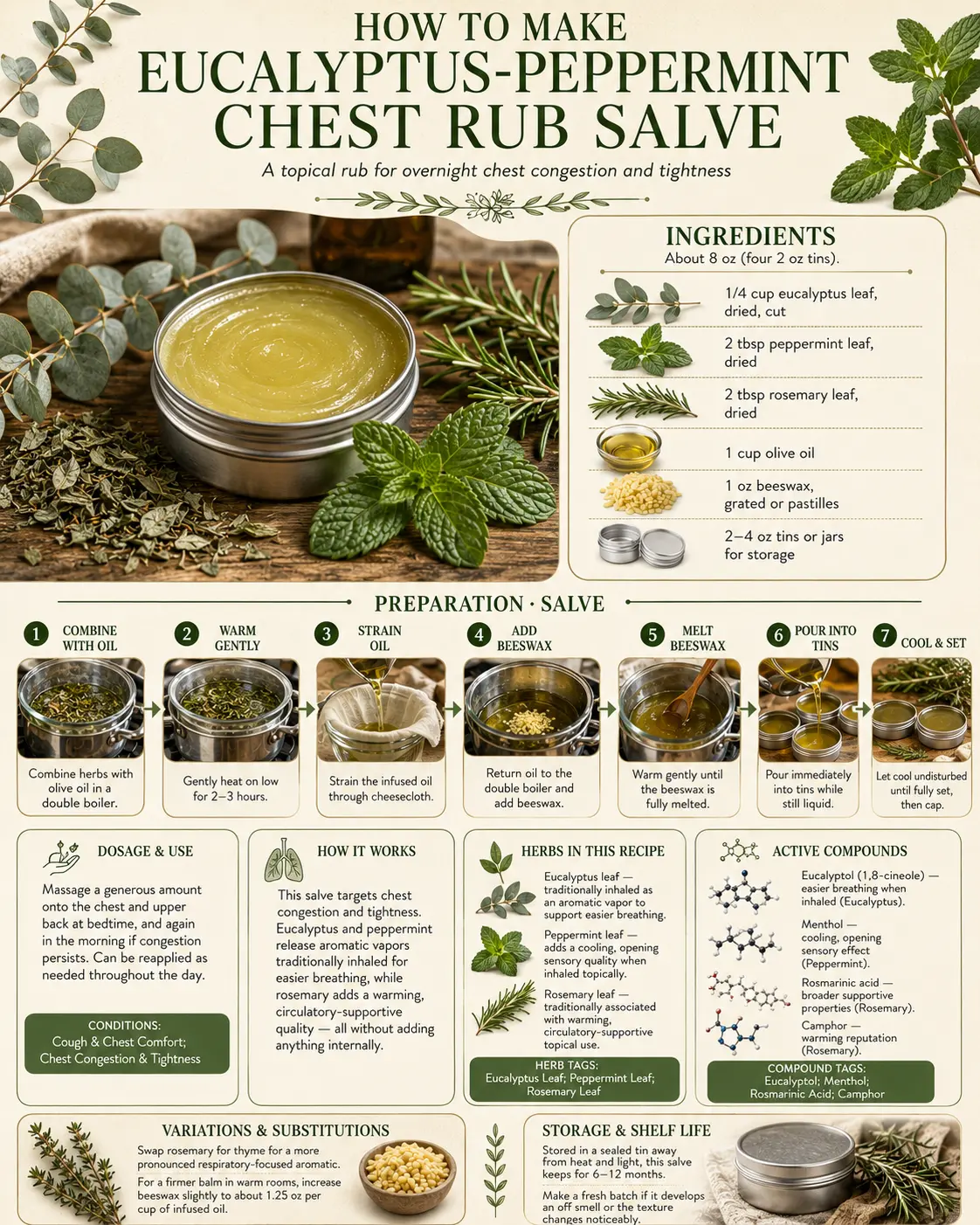
Recipe Details
Preparation Type: Salve
Ingredients
- 1/4 cup eucalyptus leaf, dried, cut
- 2 tbsp peppermint leaf, dried
- 2 tbsp rosemary leaf, dried
- 1 cup olive oil
- 1 oz beeswax, grated or pastilles
- 2–4 oz tins or jars for storage
Preparation
- Combine eucalyptus, peppermint, and rosemary with olive oil in a double boiler.
- Gently heat on low for 2–3 hours, keeping the oil warm but never simmering or smoking.
- Strain the infused oil through cheesecloth into a clean, heatproof measuring cup, pressing to extract as much oil as possible.
- Return the strained oil to the double boiler and add the beeswax.
- Warm gently until the beeswax is fully melted, stirring to combine.
- Pour immediately into tins while still liquid.
- Let cool undisturbed until fully set, then cap.
Yield: About 8 oz (four 2 oz tins)
Dosage & Usage
Massage a generous amount onto the chest and upper back at bedtime, and again in the morning if congestion persists. Can be reapplied as needed throughout the day.
Precautions & Contraindications
For external use only — do not ingest. Always perform a patch test on a small area of skin before broader use. Avoid applying near the eyes, nose, or mouth, and keep away from broken or irritated skin. Not appropriate for infants or young children, whose airways are more sensitive to concentrated eucalyptus vapors — consult a pediatric healthcare practitioner before use in children.
Health Conditions & How It Works
This salve targets chest congestion and tightness, particularly the kind that feels worse lying down at night. Applied to the chest, eucalyptus and peppermint traditionally release aromatic vapors that are inhaled continuously as body heat activates the oils, while rosemary adds a traditional warming, circulatory-supportive quality. Because it’s applied topically rather than taken internally, this formula offers relief without asking anything more of an already unsettled digestive system.


Herbs Used in This Recipe
Eucalyptus leaf — traditionally inhaled as an aromatic vapor to support easier breathing.
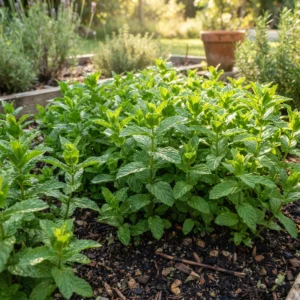
Peppermint leaf — adds a cooling, opening sensory quality when inhaled from a topical application.
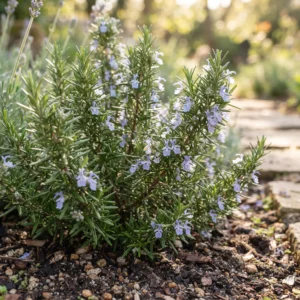
Rosemary leaf — traditionally associated with warming, circulatory-supportive topical use.
Active Compounds
- Eucalyptol (1,8-cineole) — the dominant volatile oil in eucalyptus, traditionally associated with easier breathing when inhaled (Eucalyptus)
- Menthol — traditionally associated with peppermint’s cooling, opening sensory effect (Peppermint)
- Rosmarinic acid — a compound traditionally associated with rosemary’s broader supportive properties (Rosemary)
- Camphor — a volatile compound contributing to rosemary’s traditional warming reputation (Rosemary)
Ready-to-Use Product
Badger Aromatic Chest Rub — an organic olive oil and beeswax balm with eucalyptus, peppermint, and rosemary among its essential oils, closely matching this formula’s chest-rub format and herb profile.
Variations & Substitutions
Swap rosemary for thyme if you want a more pronounced respiratory-focused aromatic alongside the eucalyptus and peppermint. For a firmer balm that holds up better in warm rooms, increase the beeswax slightly to about 1.25 oz per cup of infused oil.
Storage & Shelf Life
Stored in a sealed tin away from heat and light, this salve keeps for 6–12 months. Make a fresh batch if it develops an off smell or the texture changes noticeably.
FAQ
Why apply this at bedtime specifically?
Lying down at night is often when chest tightness and congestion feel most pronounced, and a chest rub applied before sleep releases its aromatic vapors continuously through the night, unlike a tea or tincture that’s only active for a limited window after dosing.
Can I use this on my feet instead of my chest?
Some people apply aromatic chest rubs to the soles of the feet as an alternative application site, though the direct chest and upper-back application is the traditional approach for this kind of vapor rub.
Why choose a topical salve over a tea or tincture for chest congestion?
When someone’s stomach is already unsettled from being sick, adding more liquid or herbs internally isn’t always appealing — a topical salve delivers the aromatic benefit without needing to be swallowed.
Is this the same as commercial vapor rubs?
It shares the same general concept and some overlapping herbs with commercial mentholated chest rubs, but this version uses whole dried herbs infused into olive oil rather than concentrated menthol or camphor extracts, giving a gentler, more traditional aromatic strength.
References
Mountain Rose Herbs: Eucalyptus Leaf Organic
Mountain Rose Herbs: Beeswax Pastilles
American Botanical Council: HerbalGram
Disclaimer
This content is for educational purposes only and has not been evaluated by the FDA. It is not intended to diagnose, treat, cure, or prevent any disease. Consult a qualified healthcare practitioner before using herbal preparations, particularly if pregnant, nursing, or taking medication.