

Best herbs: Thyme • Marshmallow Root • Mullein • Licorice Root• Ginger
Below, you’ll find how to match herbs to different cough patterns, useful combinations and preparations, ready-to-use forms, evidence limitations, and the symptoms that deserve medical attention.
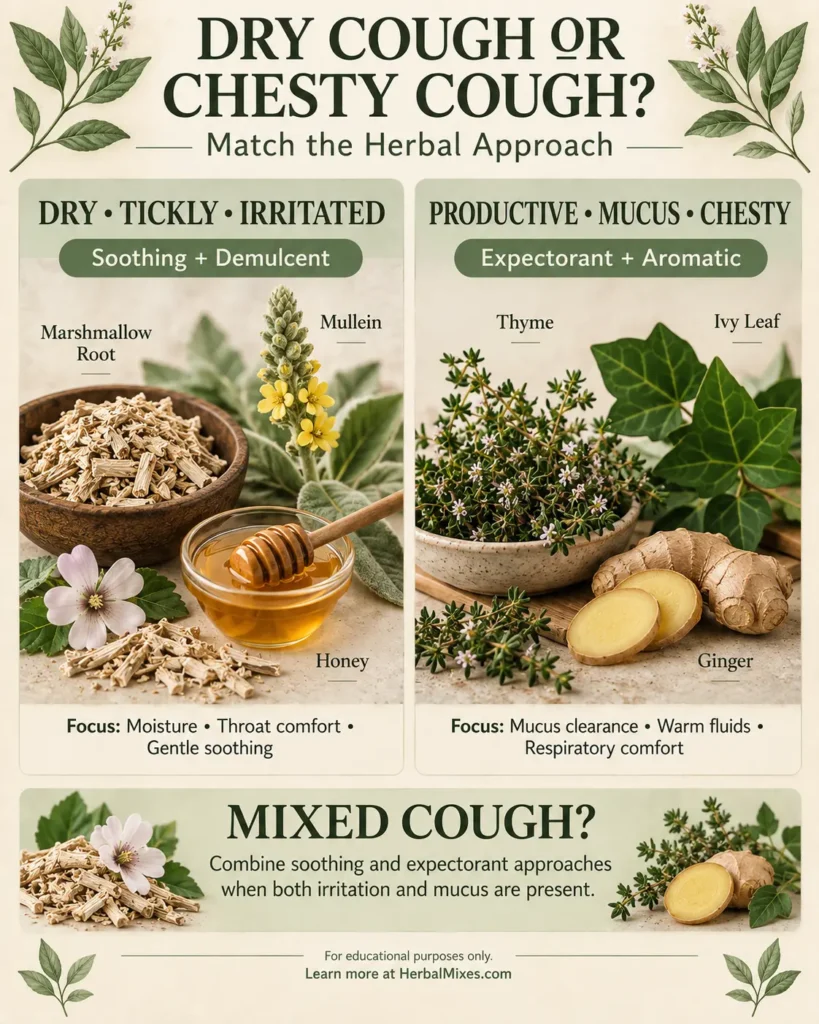
Available Ready-to-Use Products
Herbal Cough Tea
Best for: Warm hydration + mild respiratory support
A tea combining herbs such as thyme, mullein, ginger, or marshmallow root provides warmth and fluid along with water-soluble botanical constituents. The exact blend should depend on whether the cough is dry and irritated or productive and mucus-heavy.
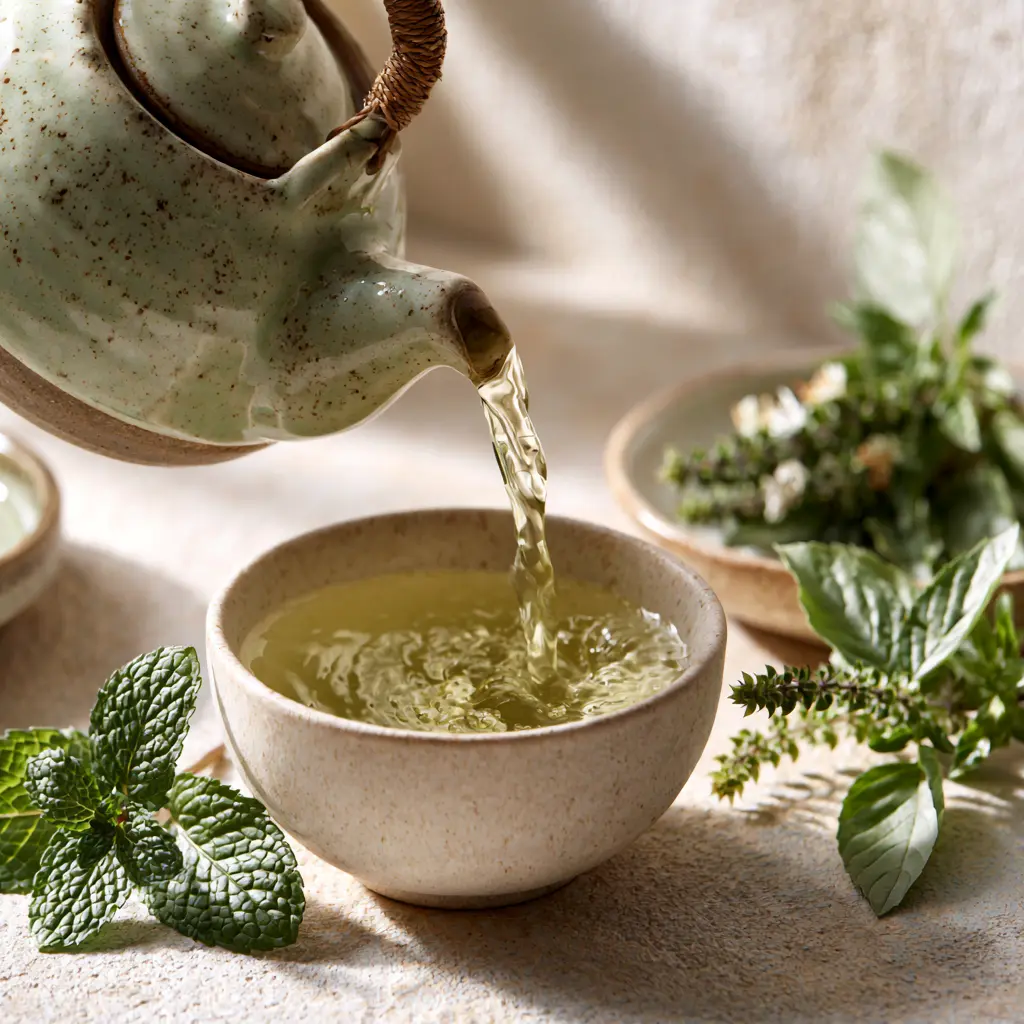
Thyme Respiratory Extract
Best for: Productive cough + aromatic respiratory support
Thyme preparations have a long history of use for productive cough associated with colds. The European Medicines Agency recognizes this use primarily on the basis of long-standing traditional use, while noting limitations in the clinical evidence.
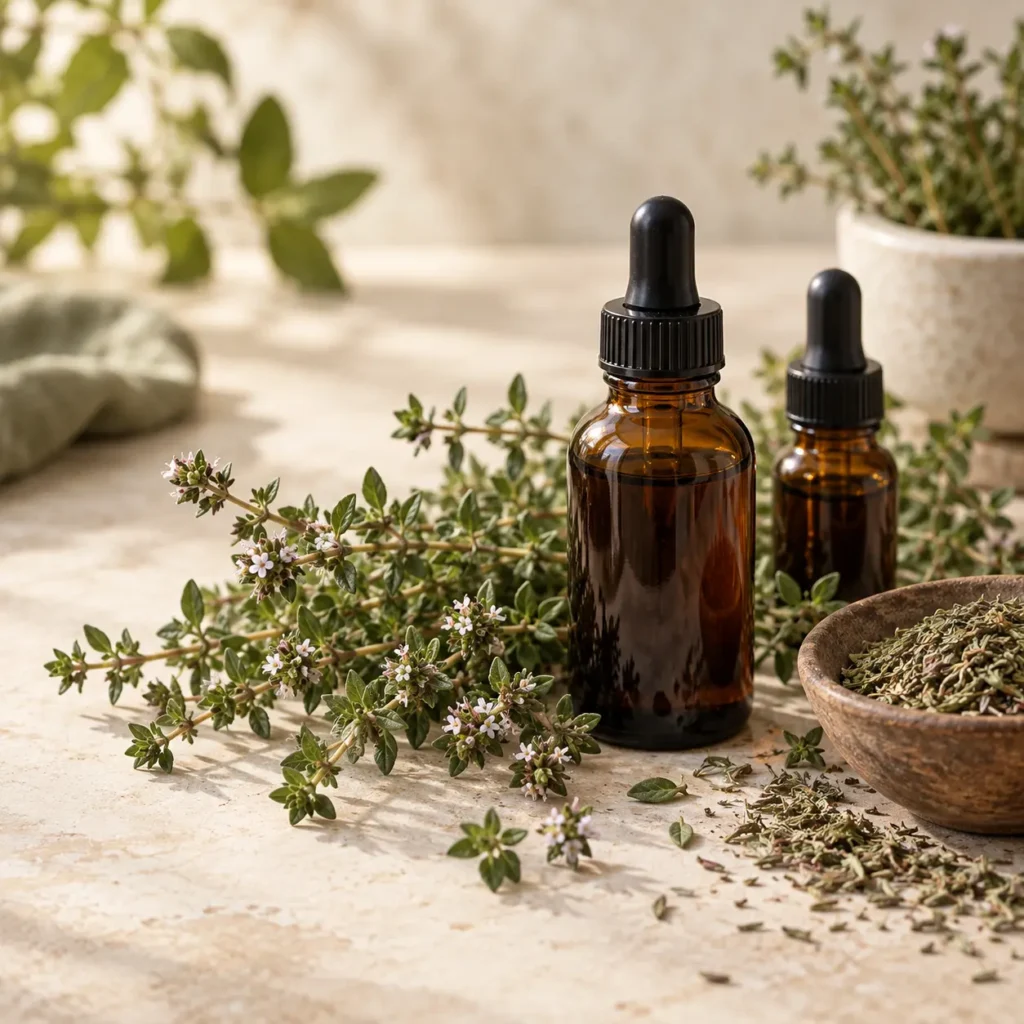
Marshmallow Root Tea
Best for: Dry cough + throat irritation
Marshmallow root is rich in mucilage and is traditionally used for irritation of the mouth or throat with an associated dry cough. Tea and syrup-style preparations keep the herb in direct contact with irritated tissues.

Herbal Throat Lozenges
Best for: Scratchy throat + cough triggered by throat irritation
Lozenges containing demulcent herbs such as marshmallow root or slippery elm can provide prolonged contact with the throat. Honey may also appear in soothing cough formulations.
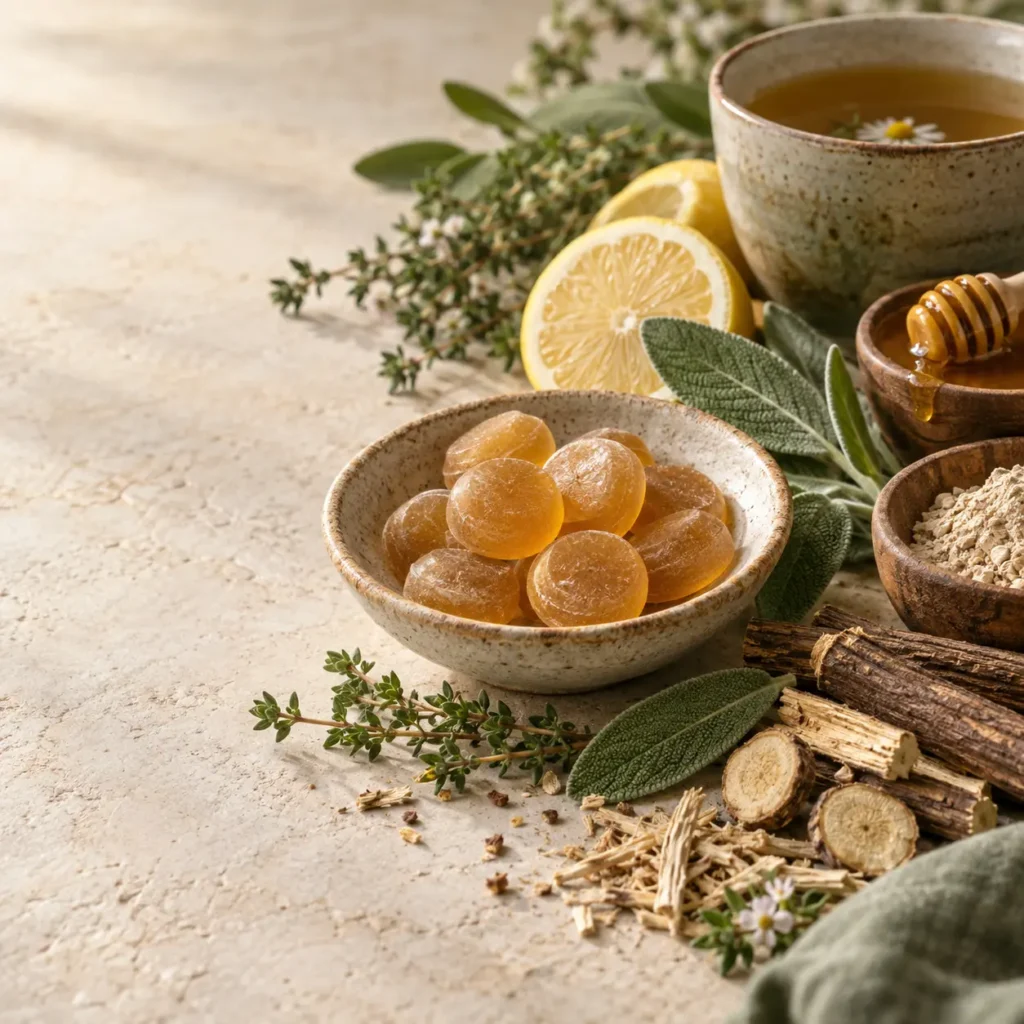
Ivy Leaf Extract
Best for: Productive cough + mucus clearance support
Ivy leaf is used in cough preparations intended to help bring up mucus. Clinical research exists, but systematic-review evidence suggests that any benefit for acute cough may be relatively small and of uncertain clinical importance.
Ginger Herbal Tea or Extract
Best for: Warming comfort + irritated throat + seasonal blends
Ginger adds warming pungency and works especially well as a supporting herb in respiratory teas rather than as the primary cough herb. It pairs naturally with thyme, honey, lemon, or soothing demulcents.
What Is Cough & Chest Discomfort?
A cough is a protective reflex. It helps the respiratory system respond to irritation and, when mucus is present, helps move secretions out of the airways.
That is why simply trying to suppress every cough isn’t always the best way to think about cough support.
A dry cough produces little or no mucus. It may feel tickly, scratchy, raw, or irritating and can sometimes be triggered by an irritated throat or upper airway.
A productive or chesty cough brings up mucus or phlegm. In this situation, the body’s cough reflex is participating in mucus clearance.
Cough can accompany common respiratory infections, postnasal drip, allergies, smoke or other irritants, reflux, asthma and other conditions. A persistent or unusual cough therefore deserves attention to the underlying cause rather than indefinite self-treatment.
Herbal support is best viewed as symptom comfort, not as a substitute for determining why a significant cough is occurring.
What Should Herbal Support Focus On?
Demulcent Support
Demulcent herbs become slippery or mucilaginous when prepared with water. They are most useful when dryness, scratchiness and throat irritation are prominent.
Marshmallow root is the clearest example. Mullein is also traditionally used in soothing respiratory preparations.
Expectorant Support
Expectorants are used to support the movement of respiratory secretions.
This approach makes more sense for a productive, chesty cough than for a purely dry cough. Thyme, ivy leaf and primula root are examples found in traditional or regulated European herbal cough preparations.
Aromatic Respiratory Support
Aromatic herbs contain volatile constituents and have traditionally been used in warm respiratory teas.
Thyme is particularly relevant here. Ginger and peppermint may play supporting roles depending on the overall symptom pattern.
Moisture and Hydration
Warm fluids can be valuable regardless of whether herbs are used. A warm tea also creates a convenient preparation for herbs whose desired constituents extract well in water.
For very mucilage-rich herbs such as marshmallow root, a cool or cold infusion may be preferable when the goal is to emphasize the slippery polysaccharides.
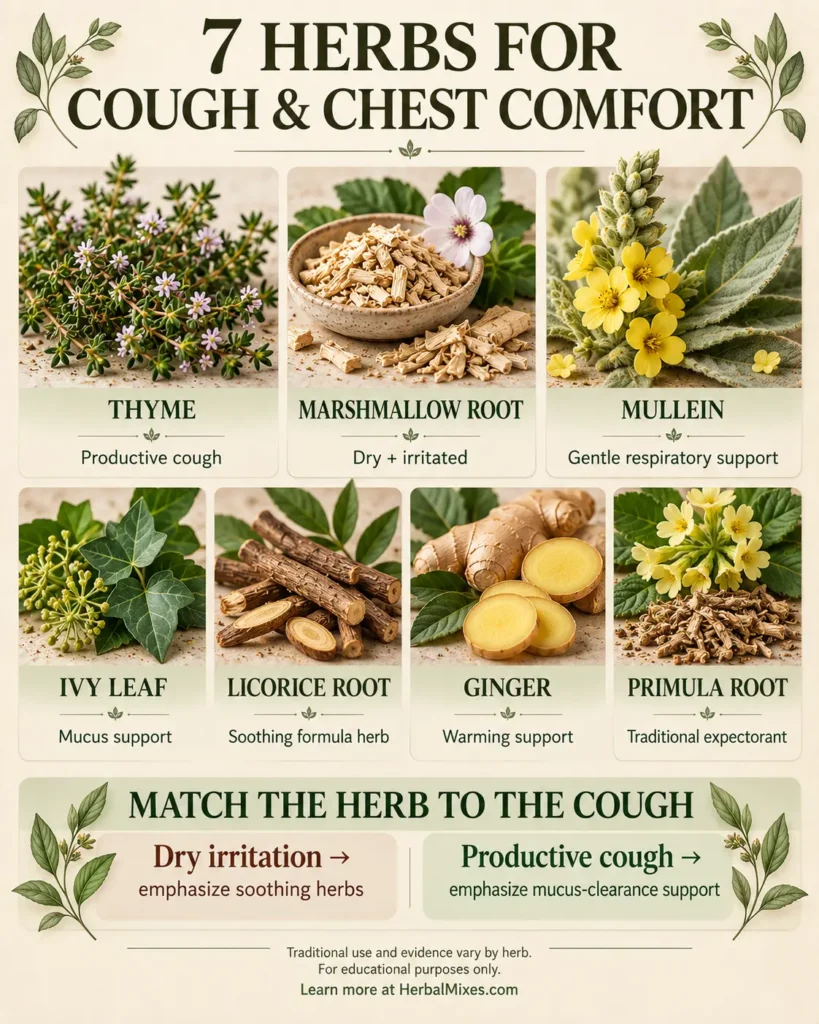
7 Best Herbs for Cough & Chest Comfort
1. Thyme (Thymus vulgaris, Thymus zygis)
Best role: Productive cough + aromatic expectorant support

Thyme is one of the better-established traditional European respiratory herbs. The European Medicines Agency’s herbal committee concluded that thyme preparations can be used for productive coughs associated with colds based on long-standing traditional use.
Clinical evidence for thyme alone remains limited. However, certain thyme-and-primula preparations have a stronger European evidence basis for expectorant use in productive cough.
Thyme contains aromatic constituents including thymol and carvacrol, but drinking thyme tea should not be confused with ingesting concentrated thyme essential oil.
Best preparation: Covered tea • Liquid extract • Standardized oral preparation
Pairs well with: Primula • Ginger • Mullein
Use with care: Avoid casual internal use of concentrated thyme essential oil. Follow age restrictions and directions on standardized products.
[INTERNAL LINK → Herb Profile: Thyme]
2. Marshmallow Root (Althaea officinalis)
Best role: Dry cough + irritated throat

Marshmallow root is rich in mucilage—polysaccharides that produce a slippery texture in water.
The European Medicines Agency recognizes traditional use of marshmallow-root preparations for mouth or throat irritation and associated dry cough. This is based on long-standing use rather than strong modern clinical-trial evidence.
That distinction makes marshmallow especially appropriate when the cough feels dry, tickly or scratchy, rather than when the main problem is thick mucus deep in the chest.
Best preparation: Cold infusion • Tea • Syrup-style preparation • Lozenge
Pairs well with: Honey • Mullein • Ginger
Use with care: Follow product-specific age guidance. Because mucilage can potentially affect absorption of oral medicines, separating it from medications is a sensible precaution.
[INTERNAL LINK → Herb Profile: Marshmallow Root]
3. Mullein (Verbascum thapsus)
Best role: Gentle traditional respiratory support

Mullein leaf has a long tradition in respiratory teas and is commonly described by herbalists as both soothing and expectorant.
Compared with thyme or standardized ivy preparations, however, modern human clinical evidence for mullein is sparse. Its place in this article is therefore based primarily on traditional herbal use, not proven treatment of respiratory disease.
Mullein’s soft-looking leaves contain tiny hairs, so homemade tea should be filtered very carefully.
Best preparation: Well-strained tea • Tincture
Pairs well with: Thyme • Marshmallow Root • Licorice Root
Use with care: Filter tea through very fine cloth, paper or a fine filter to remove irritating leaf hairs.
[INTERNAL LINK → Herb Profile: Mullein]
4. Ivy Leaf (Hedera helix)
Best role: Productive cough + mucus support
Ivy leaf is commonly used in standardized European cough preparations.
A 2021 systematic review identified randomized and observational studies of ivy preparations for acute respiratory infections and bronchitis. Although studies generally reported improvement, the reviewers concluded that the effects were minimal at best and of uncertain clinical importance, with generally low reporting quality and substantial risk of bias.
This makes ivy a good example of why “clinically studied” should not automatically be translated into “clinically proven.”
Best preparation: Standardized commercial extract
Pairs well with: Use according to standardized formulation rather than improvising homemade ivy remedies
Use with care: Ivy leaf is not a casual DIY tea herb. Use properly manufactured oral preparations and follow label age and dosing instructions.
5. Licorice Root (Glycyrrhiza glabra)
Best role: Soothing formula component

Licorice has a long history of traditional use for coughing and respiratory complaints and has a naturally sweet, soothing character that makes it useful in throat and respiratory blends.
However, NCCIH states that there is not enough high-quality evidence to clearly support licorice for any health condition.
More importantly, ordinary licorice containing glycyrrhizin can cause serious adverse effects when consumed in excessive amounts or for prolonged periods. It can affect potassium, blood pressure and heart rhythm and deserves particular caution in people with hypertension, heart or kidney conditions.
Best preparation: Small amounts in professionally formulated tea or extract blends
Pairs well with: Marshmallow Root • Mullein • Thyme
Use with care: High blood pressure • Heart disease • Kidney disease • Pregnancy • Corticosteroids • prolonged/high-dose use
[INTERNAL LINK → Herb Profile: Licorice Root]
6. Ginger (Zingiber officinale)
Best role: Warming supporting herb
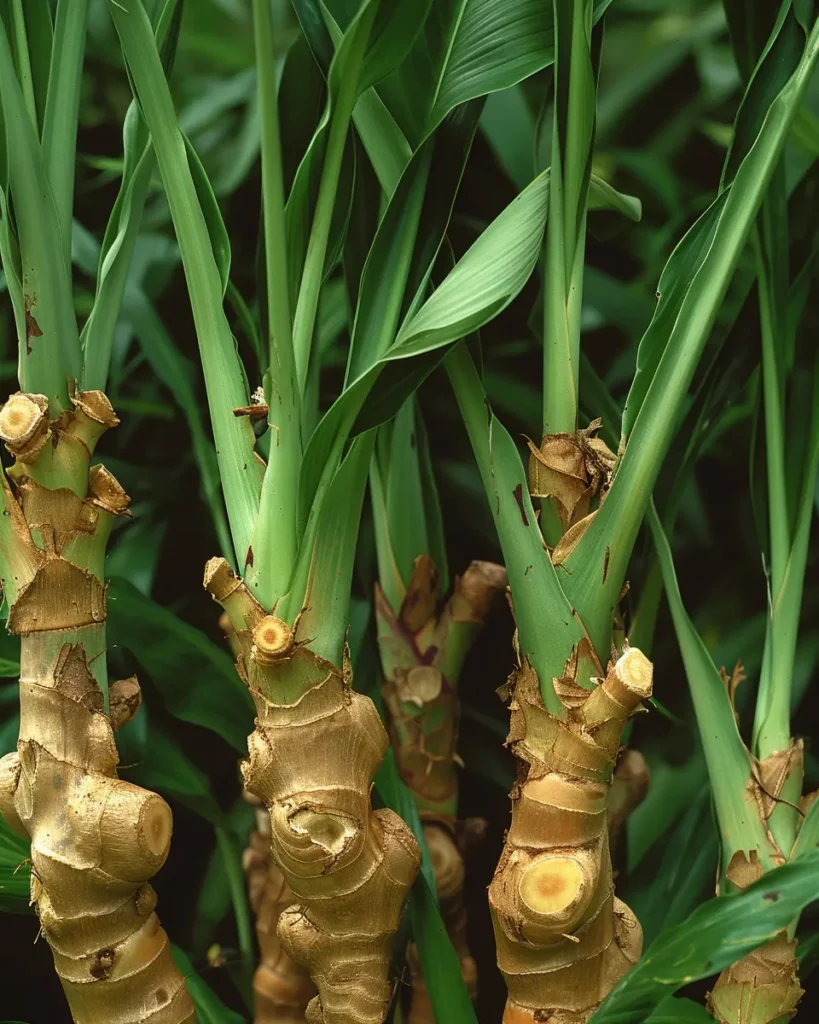
Ginger is not primarily an expectorant or cough suppressant. Its value here is as a supporting aromatic herb in warm seasonal preparations.
Fresh ginger brings pungency and warmth and pairs especially well with honey, lemon, thyme and soothing roots. It can make a respiratory tea more pleasant while adding its own familiar digestive and warming qualities.
The evidence for ginger specifically treating cough is limited, so it should not be presented as a proven cough medicine.
Best preparation: Fresh tea • Decoction • Food • Extract
Pairs well with: Thyme • Honey • Marshmallow Root
Use with care: Concentrated products deserve caution with medications or conditions affecting bleeding.
[INTERNAL LINK → Herb Profile: Ginger]
7. Primula Root (Primula veris / Primula elatior)
Best role: Productive cough when used in established thyme combinations
Primula root is particularly interesting because the evidence is not simply based on folk tradition.
The European Medicines Agency concluded that certain thyme + primula root preparations have well-established use as expectorants for productive cough in adults, based on bibliographic and clinical evidence. Other preparations are recognized on the basis of traditional use.
That evidence applies to particular preparations and should not be generalized to every homemade thyme-and-primula mixture.
Best preparation: Standardized thyme + primula formulation
Pairs well with: Thyme
Use with care: Follow the specific product’s instructions and age restrictions.
Best Herbal Combinations for Cough & Chest Comfort
Marshmallow Root + Honey + Ginger
Best for: Dry, scratchy throat + irritating cough
Marshmallow provides mucilage-rich soothing support, honey coats the throat, and ginger adds warming flavor.
Best preparation: Marshmallow cold infusion combined with a small amount of freshly prepared ginger tea; add honey after the liquid has cooled somewhat.
Thyme + Mullein + Ginger
Best for: Productive cough + seasonal chest discomfort
Thyme supplies the strongest traditional expectorant rationale, mullein contributes gentle traditional respiratory support, and ginger adds warmth.
Best preparation: Covered hot infusion. Strain exceptionally well because of mullein’s fine hairs.
[NEW SYNERGY OPPORTUNITY → Thyme + Mullein + Ginger]
Marshmallow Root + Mullein
Best for: Dryness + throat irritation + frequent coughing
This combination emphasizes soothing rather than aggressively stimulating mucus movement.
Best preparation: Strong infusion or mixed extraction. A cool marshmallow infusion can be combined with a separately prepared, carefully filtered mullein tea.
Thyme + Primula Root
Best for: Productive cough
This combination deserves separate attention because certain standardized preparations have an established European medicinal-use basis for expectorant support.
Best preparation: Prefer a standardized preparation rather than trying to reproduce clinically evaluated extracts at home.
Thyme + Marshmallow Root
Best for: Mixed pattern—mucus plus throat irritation
Thyme fits the productive side of the pattern while marshmallow provides soothing support when repeated coughing leaves the throat dry and irritated.
Best preparation: Prepare the herbs separately—covered hot thyme tea and cool marshmallow infusion—then combine.
Licorice Root + Marshmallow Root + Mullein
Best for: Dry, irritated respiratory pattern
This is a classic soothing-style combination, but licorice substantially changes the safety profile.
Best preparation: Tea or professionally formulated syrup.
Important: This is not an appropriate routine blend for everyone. People with hypertension, cardiovascular or kidney disease, pregnancy, or interacting medications should avoid medicinal licorice unless a healthcare professional says it is appropriate.
Choosing the Right Preparation
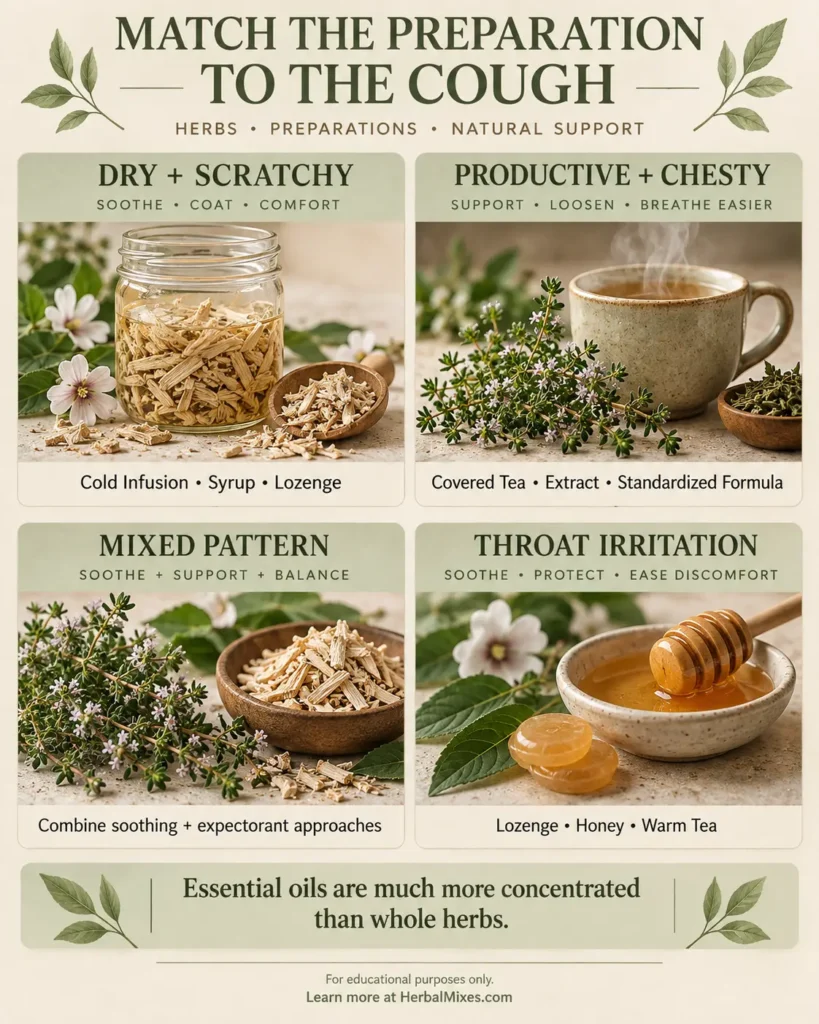
For a Dry, Tickly Cough
Favor preparations that maximize contact with irritated tissues:
Cold-infused marshmallow root
Demulcent lozenges
Honey-based preparations
Well-strained mullein tea
The goal is comfort and moisture rather than aggressively stimulating expectoration.
For a Productive, Chesty Cough
Consider preparations traditionally used to support mucus clearance:
Thyme tea or extract
Standardized ivy leaf extract
Standardized thyme + primula preparations
A productive cough is performing a useful clearing function, so the objective is not necessarily to eliminate the cough reflex completely.
For a Mixed Cough
A cough may begin mucus-heavy and later become dry and irritated—or repeated coughing itself may make the throat sore.
This is where combining an expectorant-oriented herb such as thyme with a demulcent such as marshmallow root can make practical sense.
Tea, Tincture, Syrup or Lozenge?
Tea: Best when warmth, hydration and frequent gentle dosing are desirable.
Cold infusion: Particularly useful for mucilage-rich marshmallow root.
Tincture/extract: Convenient and concentrated, but not automatically more appropriate than tea.
Syrup: Useful because it coats the throat and can combine herbal extracts with honey or another syrup base.
Lozenge: Useful when throat irritation is triggering repeated coughing.
Standardized extract: Particularly important for herbs such as ivy leaf, where a manufactured preparation is preferable to DIY use.
What About Honey?
Honey is not an herb, but it deserves a place in cough comfort preparations because its thick texture can soothe an irritated throat and it is easy to combine with herbal teas.
Do not give honey to an infant younger than 12 months because of the risk of infant botulism.
Honey also shouldn’t distract from investigating persistent, severe or unusual cough.
Essential Oils: More Is Not Better
Respiratory herbs such as thyme and peppermint are often associated with essential oils, but an essential oil is far more concentrated than the herb itself.
Drinking thyme tea is not equivalent to swallowing thyme essential oil.
Do not casually add concentrated essential oils to tea or take them internally simply because the corresponding culinary herb is safe. Children, pets, pregnancy, asthma and medication use can add additional safety concerns.
What the Evidence Actually Says
Herbal cough research is uneven.
Thyme: European regulators recognize traditional use of thyme preparations for productive cough associated with colds. Evidence for thyme alone is not strong enough to treat this as a proven modern therapy.
Thyme + primula: Certain preparations have a stronger evidence base and are recognized by the EMA for expectorant use in productive cough in adults.
Marshmallow root: European recognition is based on long-standing traditional use for throat irritation with associated dry cough, not robust clinical trials.
Ivy leaf: Human trials exist, but a systematic review concluded that benefits appear small and of uncertain clinical importance.
Mullein: Widely used in traditional herbalism, but high-quality clinical evidence for cough is lacking.
Licorice: Traditional respiratory use is extensive, but NCCIH notes insufficient high-quality evidence for health-condition claims, and glycyrrhizin-containing licorice has meaningful safety concerns.
That means the most responsible approach is to use herbs for comfort and supportive care, while avoiding claims that they treat pneumonia, asthma, influenza, COVID-19, or another underlying disease.
When to Get Medical Help
A cough isn’t always a minor seasonal problem.
Seek urgent medical care for symptoms such as:
- severe or worsening difficulty breathing;
- chest pain or pressure;
- blue, gray or unusually pale lips or skin;
- confusion, fainting or severe weakness;
- coughing up blood;
- signs of a severe allergic reaction.
Medical evaluation is also appropriate when:
- a cough is persistent or worsening rather than gradually improving;
- fever is high, persistent or returns after improvement;
- breathing becomes wheezy or unusually difficult;
- you have significant underlying heart or lung disease;
- symptoms suggest pneumonia or another lower respiratory infection;
- a child is very young or appears unusually ill;
- coughing repeatedly disrupts sleep or normal activity;
- you are unsure whether the cough is related to asthma, reflux, medication, allergies or infection.
Herbs should not delay appropriate evaluation when symptoms are severe, unusual or persistent.
Frequently Asked Questions
What is the best herb for a dry cough?
Marshmallow root is one of the most logical traditional choices when dryness and throat irritation dominate because its mucilage produces a soothing texture in water. The EMA recognizes its traditional use for throat irritation with associated dry cough.
What is the best herb for a chesty cough?
Thyme has one of the clearest traditional-use rationales for a productive cough associated with a cold. Certain standardized thyme + primula preparations have a stronger evidence basis than thyme alone.
Is mullein good for coughing?
Mullein has a long history in respiratory herbalism and is commonly used in soothing and expectorant-style teas. However, modern clinical evidence is limited, so its use should be described as traditional rather than proven.
Does thyme loosen mucus?
Thyme is traditionally used in preparations for productive cough, and some thyme-containing combinations are used as expectorants. That does not mean every thyme tea has been clinically proven to loosen mucus.
Is ivy leaf effective for cough?
Ivy leaf has been studied in people with acute respiratory infections and bronchitis. A systematic review found that studies generally favored ivy preparations but concluded that the clinical effects appear small and of uncertain importance.
Can marshmallow root and thyme be used together?
They have complementary traditional roles. Thyme is more appropriate for productive cough, while marshmallow root emphasizes soothing dry or irritated tissues. A mixed cough pattern may therefore make the combination reasonable.
Can I use licorice root for a cough?
Licorice has traditional respiratory uses, but it isn’t appropriate for everyone. Glycyrrhizin-containing licorice can raise blood pressure, lower potassium and cause serious cardiovascular effects, especially with excessive or prolonged use.
Should I suppress a productive cough?
Not necessarily. Coughing helps clear mucus from the respiratory tract. A productive cough should be considered differently from a dry, irritating cough. Seek medical advice when mucus production is accompanied by significant breathing problems, chest pain, persistent fever, blood or worsening illness.
How long should I use herbal cough preparations?
Follow the directions for the specific preparation. Persistent or worsening symptoms should not simply lead to longer self-treatment. EMA monographs for several traditional cough herbs advise seeking professional evaluation when symptoms persist beyond roughly a week during use.
References
European Medicines Agency — Thyme (Thymi herba)
European Medicines Agency — Marshmallow Root (Althaeae radix)
European Medicines Agency — Ivy Leaf (Hederae helicis folium)
European Medicines Agency — Thyme + Primula Root
NCCIH — Licorice Root: Usefulness and Safety
PubMed — Ivy Leaf for Acute Upper Respiratory Tract Infections: Systematic Review
Cochrane — Pelargonium sidoides for Acute Respiratory Tract Infections
Disclaimer
This article is for educational purposes only and is not medical advice. Herbal products are not substitutes for professional evaluation, diagnosis or treatment. A cough can have many causes, and persistent, severe or worsening respiratory symptoms should be evaluated by a qualified healthcare professional.
Talk with a healthcare professional before using concentrated herbal products if you are pregnant or breastfeeding, are giving herbs to a child, have heart, lung, kidney or liver disease, or take prescription medication.