

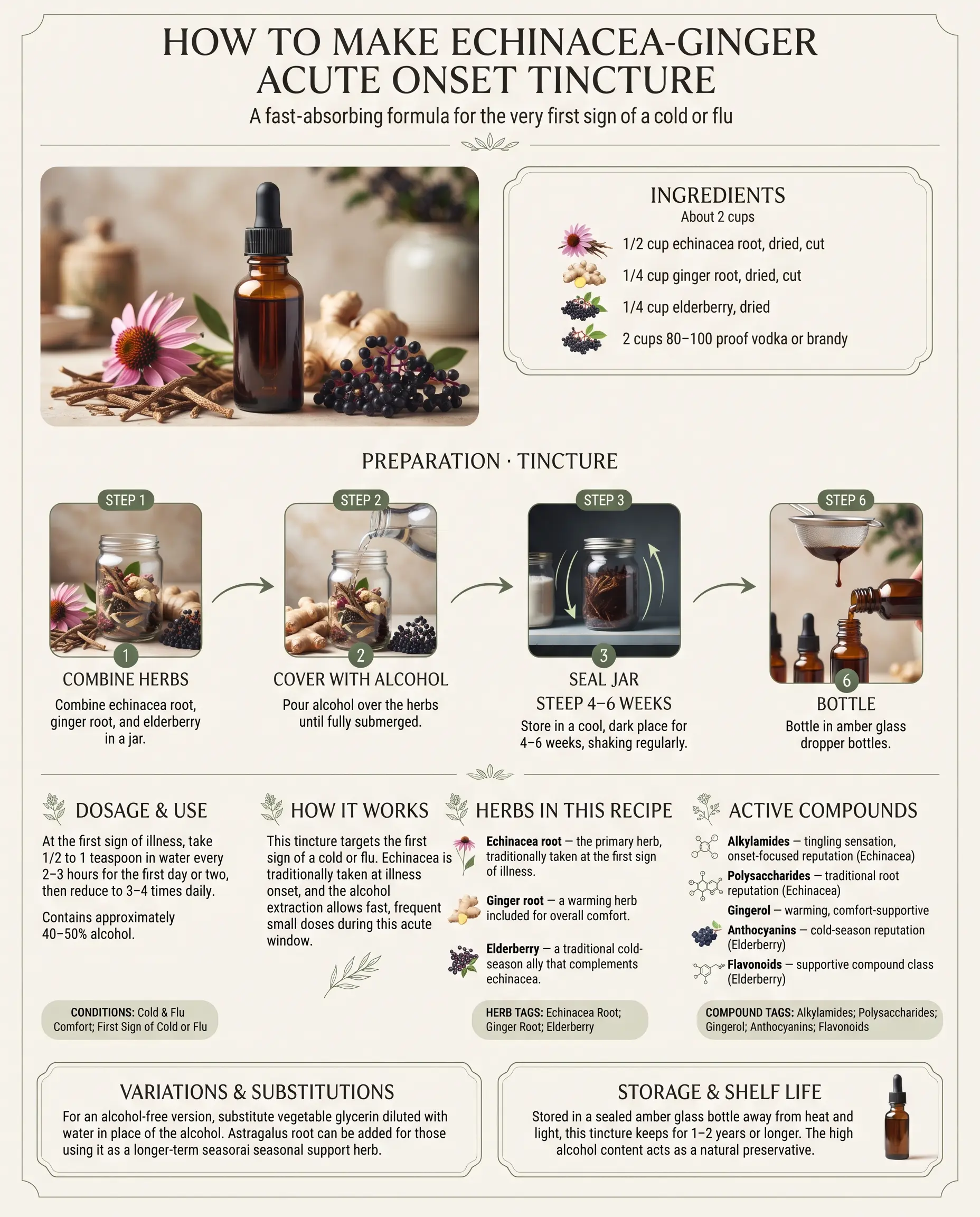
Recipe Details
Preparation Type: Tincture
Ingredients
1/2 cup echinacea root, dried, cut
1/4 cup ginger root, dried, cut
1/4 cup elderberry, dried
2 cups 80–100 proof vodka or brandy (40–50% alcohol)
Preparation
- Combine echinacea root, ginger root, and elderberry in a clean glass jar.
- Pour the alcohol over the herbs until fully submerged, with about an inch of liquid above the plant material.
- Seal the jar tightly with a non-reactive lid.
- Store in a cool, dark place for 4–6 weeks, shaking every few days.
- Strain through cheesecloth, pressing to extract as much liquid as possible.
- Bottle in amber glass dropper bottles.
Yield: About 2 cups
Preparation Steps
- Combine roots and berries in jar
- Cover fully with alcohol
- Seal jar tightly
- Steep 4–6 weeks, shaking regularly
- Strain through cheesecloth
- Bottle in dropper bottles
Dosage & Usage
At the first sign of illness, take 1/2 to 1 teaspoon (roughly 30–60 drops) in a small amount of water every 2–3 hours for the first day or two, then reduce to 3–4 times daily as symptoms progress. Contains approximately 40–50% alcohol by volume.
Precautions & Contraindications
Not appropriate for anyone avoiding alcohol, including some pregnant or nursing individuals, without a healthcare practitioner’s guidance — an alcohol-free glycerite version can be made instead if needed. Avoid if allergic to plants in the Asteraceae (daisy) family, which includes echinacea. Not recommended for continuous, long-term daily use — reserve for acute onset and short-term illness support. Consult a healthcare practitioner before use if you have an autoimmune condition.
Health Conditions & How It Works
This tincture targets the first sign of a cold or flu, when timing the response matters most. Echinacea has a long tradition of use right at the onset of illness, and the concentrated alcohol extraction allows for fast absorption and frequent small doses during this acute window. Ginger and elderberry round out the formula with their own traditional roles in cold-season support and overall comfort.


Herbs Used in This Recipe
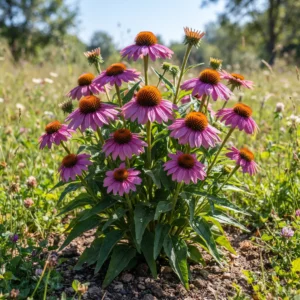
Echinacea root — the primary herb in this formula, traditionally taken at the first sign of illness.
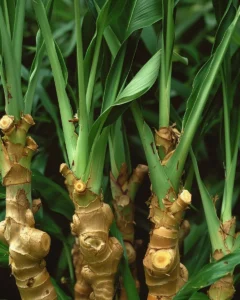
Ginger root — a warming herb traditionally included in cold and flu formulas for overall comfort.
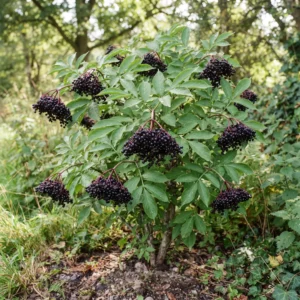
Elderberry — a traditional cold-season ally that complements echinacea’s onset-focused reputation.
Active Compounds
- Alkylamides — compounds traditionally associated with echinacea’s characteristic tingling sensation and onset-focused reputation (Echinacea)
- Polysaccharides — a broader compound class traditionally tied to echinacea root’s reputation (Echinacea)
- Gingerol — traditionally associated with warming, comfort-supportive effects (Ginger)
- Anthocyanins — the deep pigment compounds tied to elderberry’s traditional cold-season reputation (Elderberry)
- Flavonoids — a supportive compound class present in elderberry (Elderberry)
Ready-to-Use Product
Herb Pharm Rapid Immune Boost — a fast-absorbing liquid extract built on echinacea, ginger, and elderberry among other onset-focused herbs, closely matching this formula’s intent.
Variations & Substitutions
For an alcohol-free version, substitute vegetable glycerin diluted with water (roughly 3:1 glycerin to water) in place of the alcohol, though extraction of some constituents will be somewhat less complete. Astragalus root can be added alongside echinacea for those who use it as a longer-term seasonal support herb, though astragalus is traditionally used more for ongoing prevention than acute onset.
Storage & Shelf Life
Stored in a sealed amber glass bottle away from heat and light, this tincture keeps for 1–2 years or longer. The high alcohol content acts as a natural preservative.
FAQ
Why does timing matter so much with this tincture?
Echinacea’s traditional reputation is specifically tied to onset-phase use — taking it right when symptoms first appear is the classic window in which herbalists have traditionally reached for it, rather than after illness is already established.
Why use dried herbs instead of fresh for this tincture?
Dried echinacea root, ginger, and elderberry are widely available and produce a consistent, storable tincture; some herbalists prefer fresh echinacea root specifically, but dried root works well for a home preparation like this one.
Can I take this alongside the syrup or tea recipes in this series?
These are separate recipes meant to stand alone; if combining multiple herbal preparations during an illness, check in with a healthcare practitioner about your overall herb and alcohol intake.
How strong does this taste?
Expect an earthy, slightly bitter taste from the echinacea with a warming ginger bite and a subtle berry sweetness from the elderberry — diluting in water softens the intensity.
References
Mountain Rose Herbs: Echinacea purpurea Herb Organic
Disclaimer
This content is for educational purposes only and has not been evaluated by the FDA. It is not intended to diagnose, treat, cure, or prevent any disease. Consult a qualified healthcare practitioner before using herbal preparations, particularly if pregnant, nursing, or taking medication.