

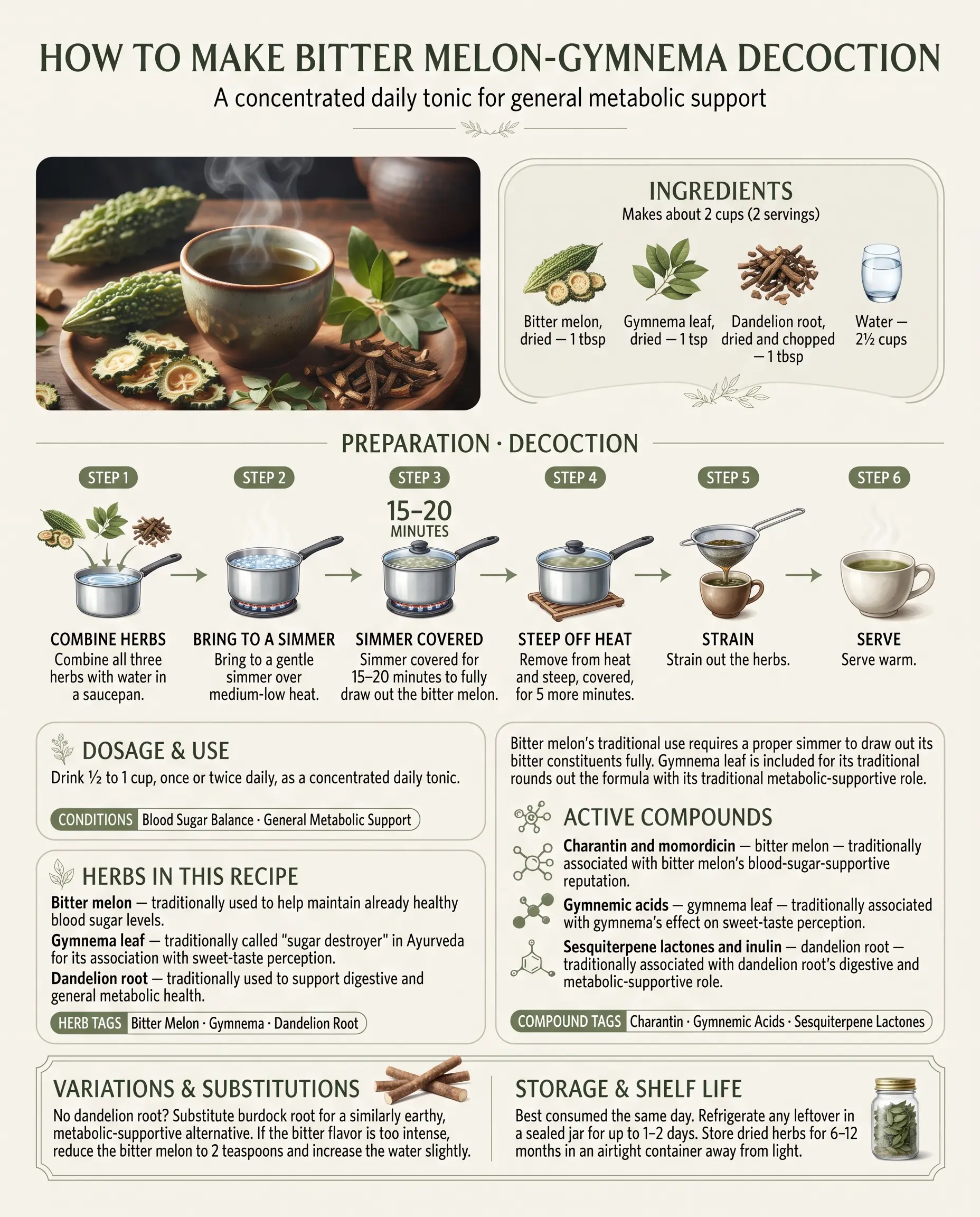
Recipe Details
Preparation Type: Decoction
Ingredients
Bitter melon, dried: 1 tablespoon
Gymnema leaf, dried: 1 teaspoon
Dandelion root, dried and chopped: 1 tablespoon
Water: 2½ cups
Preparation
- Combine the bitter melon, gymnema leaf, and dandelion root with the water in a small saucepan.
- Bring to a gentle simmer over medium-low heat.
- Simmer covered for 15–20 minutes to fully draw out the bitter melon’s constituents.
- Remove from heat and steep, covered, for 5 more minutes.
- Strain and drink warm.
Yield: Makes about 2 cups (2 servings)
Dosage & Usage
Drink ½ to 1 cup, once or twice daily, as a concentrated daily tonic. Because of its intensity, this is better suited to a smaller, more concentrated daily dose than a large-volume everyday tea.
Precautions & Contraindications
Consult a healthcare practitioner before use if taking blood sugar-lowering medication, as bitter melon and gymnema may both have an additive effect and can increase the risk of low blood sugar. Avoid during pregnancy, as bitter melon has a traditional reputation as an emmenagogue. Dandelion root should be used with caution if allergic to plants in the daisy/ragweed family, or if you have gallbladder obstruction.
Health Conditions & How It Works
This decoction is built as a concentrated daily metabolic tonic rather than a light everyday sipping tea. Bitter melon’s traditional use requires a proper simmer to draw out its bitter constituents fully — a quick steep isn’t enough. Gymnema leaf is included for its traditional Ayurvedic association with sweet-taste perception, and dandelion root rounds out the formula with its traditional role in general metabolic and digestive support.


Herbs Used in This Recipe
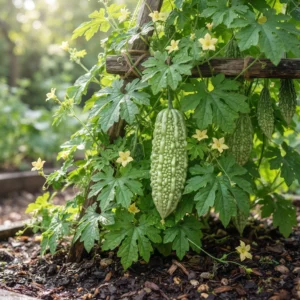
Bitter melon — traditionally used to help maintain already healthy blood sugar levels.
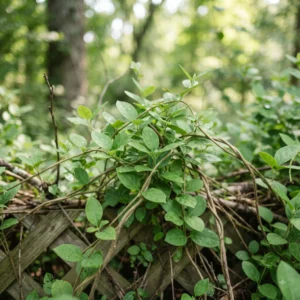
Gymnema leaf — traditionally called “sugar destroyer” in Ayurveda for its association with sweet-taste perception.
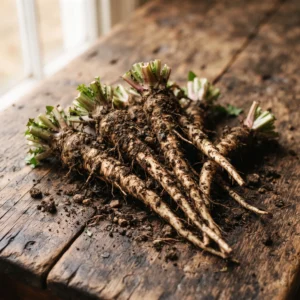
Dandelion root — traditionally used to support digestive and general metabolic health.
Active Compounds
Charantin and momordicin — traditionally associated with bitter melon’s blood-sugar-supportive reputation (bitter melon).
Gymnemic acids — traditionally associated with gymnema’s effect on sweet-taste perception and metabolic support (gymnema leaf).
Sesquiterpene lactones and inulin — traditionally associated with dandelion root’s digestive and metabolic-supportive role (dandelion root).
Ready-to-Use Product
Bitter Melon (Planetary Herbals) — a concentrated bitter melon fruit extract capsule for daily metabolic support.
SystemSupport Glycemic Health (Gaia Herbs) — a liquid phyto-cap blend built around cinnamon and bitter melon (does not include gymnema or dandelion root).
Bitter Melon Tincture (HerbEra) — a liquid alcohol extract of dried bitter melon fruit for blood sugar support.
Variations & Substitutions
No dandelion root on hand? Burdock root makes a similarly earthy, metabolic-supportive substitute. If the bitter flavor is too intense, reduce the bitter melon to 2 teaspoons and increase the water slightly.
Storage & Shelf Life
Decoctions are best consumed the same day; refrigerate any leftover in a sealed jar for up to 1–2 days. Store the dried herbs themselves for 6–12 months in an airtight container away from light.
FAQ
Why does bitter melon need to be simmered instead of steeped? Its tough, dried texture holds onto its bitter constituents more than a soft leaf or flower would — a proper simmer is needed to extract them fully.
Is this safe to drink every day? It’s designed as a daily tonic, but because bitter melon and gymnema can both affect blood sugar, check in with a healthcare practitioner regularly if using this long-term, especially alongside medication.
Can I sweeten this to cut the bitterness? A small amount of honey can help, though traditionally the bitterness itself is considered part of the preparation’s role.
References
Diabetes and Dietary Supplements: What You Need To Know — NCCIH
Dandelion: Usefulness and Safety — NCCIH
Bitter Melon: Herb, Food, and Bitter Ally — Mountain Rose Herbs
Disclaimer
This information is for educational purposes only and is not intended to diagnose, treat, cure, or prevent any disease. Consult a qualified healthcare practitioner before using herbal preparations, particularly if pregnant, nursing, or taking medications, and especially if you take blood sugar medication.