


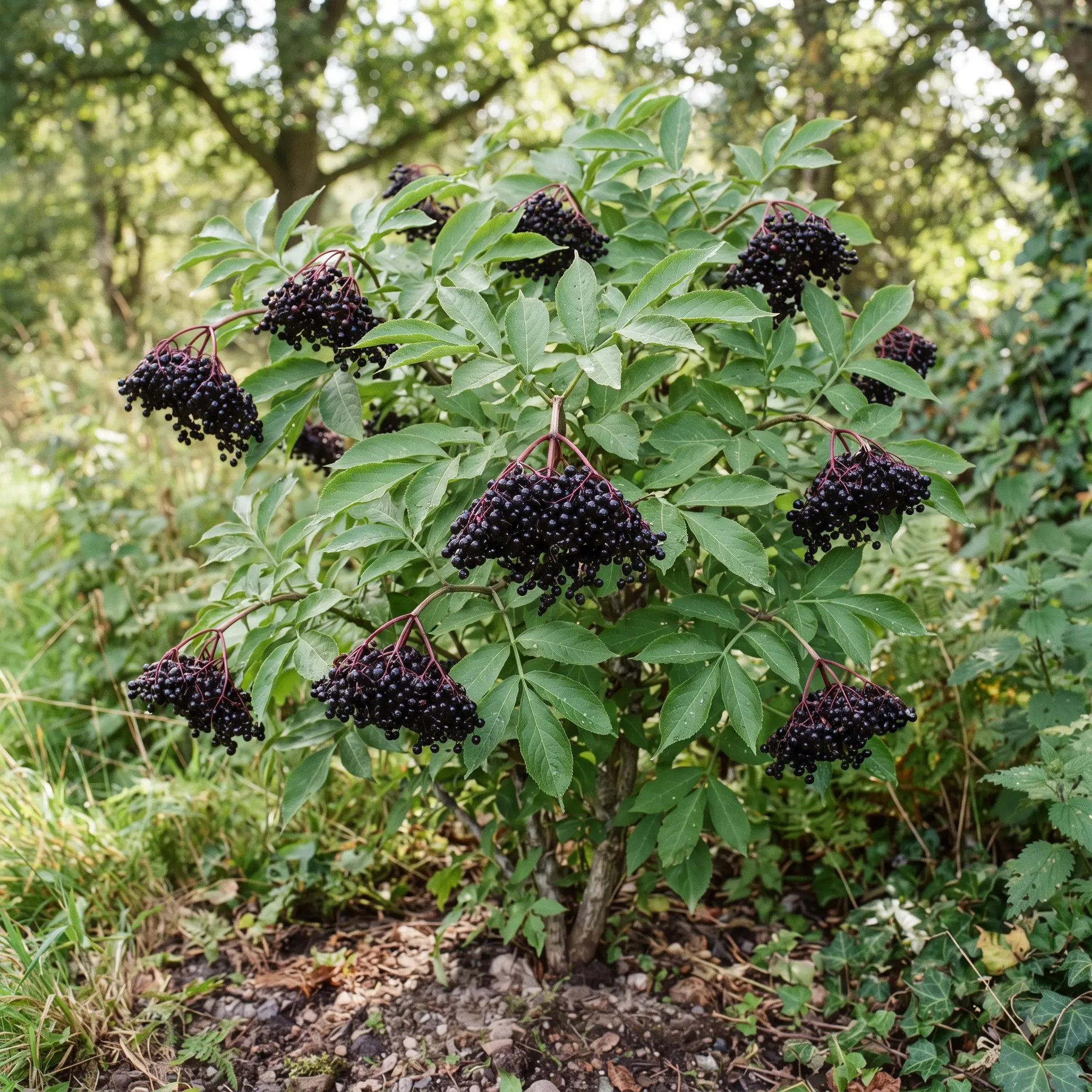
Traditionally, elderberry has been used primarily as an immune-supporting herb, especially during cold and flu season. It is commonly prepared as a cooked syrup, tea, gummy, or standardized extract made from properly cooked, ripe berries — raw or unripe elderberries should never be eaten (see Safety & Precautions).
Common Name: Elderberry Latin Name: Sambucus nigra Alternate Names: Black Elder
- Parts used: Ripe berries, always cooked before use
- Primary properties: Antibacterial, antiviral, immunostimulant, immunomodulant
- Common preparations: Cooked syrup, tea, gummies, standardized extract
- Best known for: Traditional cold and flu season immune support
What It Helps With
Health conditions this herb is commonly used to support.
Related Buying Guides
Featured Recipes
Explore and try simple ways to prepare and use this herb at home.
Active Compounds
The tiny plant chemistry doing all the heavy lifting.
Key Herbal Properties
What this herb is known for, herbally speaking.




Herbal Synergies
Other herbs that pair especially well with this one — together, their combined properties work better than either herb does alone.
Health Conditions Elderberry Helps With
- Cold and flu season support — Elderberry’s central and best-known traditional use, taken during periods of increased seasonal illness exposure.
- Recovery support during illness — Traditionally used throughout a cold or seasonal illness, not just at the very onset.
- General immune wellness — Some traditional use includes elderberry as part of a broader everyday immune-support routine.
Compounds
- Anthocyanins — Deep purple pigment compounds contributing to elderberry’s traditional immune-supporting and antioxidant reputation.
- Flavonoids — Plant compounds associated with elderberry’s general wellness and antioxidant profile.
Properties
- Antibacterial — Traditionally used to support the body during minor bacterial concerns.
- Antiviral — Traditionally associated with supporting the body’s resistance during viral exposure.
- Immunostimulant — Traditionally used to encourage immune activity.
- Immunomodulant — Traditionally understood to help support balanced immune function.
Recipes Using Elderberry
- Classic elderberry syrup — Ripe elderberries simmered with water and honey, a traditional cooked preparation taken by the spoonful during cold season.
- Elderberry immune tea — Dried, properly processed elderberries steeped with ginger for a warming immune-support tea.
- Elderberry gummies — Cooked elderberry syrup set into a gummy form, a kid-friendly (in age-appropriate doses) way to take it.
Products Featuring Elderberry
- Syrup — The most traditional and popular form, taken by the spoonful.
- Gummies — A convenient, palatable option, especially appreciated by children.
- Standardized capsules or extract — A concentrated, consistent-dose option.
Synergies
- Echinacea — A classic pairing for cold and flu season support, frequently combined with elderberry.
- Astragalus — Complements elderberry’s immune-supporting traditional profile.
- Ginger — Often paired with elderberry for a warming, complementary cold-comfort blend.
Safety & Precautions
Raw or unripe elderberries, along with the leaves, stems, bark, and raw seeds of the elderberry plant, contain compounds that can cause nausea, vomiting, or diarrhea if eaten without proper preparation — this is a genuinely important safety point specific to elderberry. Only fully ripe berries, properly cooked (simmered, as in a traditional syrup), should be eaten; raw elderberries or any other raw part of the plant should not be consumed.
Because elderberry has an immune-stimulating traditional use, people with autoimmune conditions (such as lupus, rheumatoid arthritis, or multiple sclerosis) should use caution and check with a healthcare provider before use, and anyone taking immunosuppressant medication should also consult a provider first, since elderberry may work against the intended effect of those medications. There isn’t well-established safety data for concentrated use during pregnancy or breastfeeding, so professional guidance is recommended in that context. Properly prepared elderberry products are generally considered appropriate for children in age-appropriate doses, but checking product labeling and, when in doubt, a pediatrician’s guidance is a reasonable precaution.
There isn’t well-established traditional guidance for using elderberry with pets, and raw plant material should never be given to an animal; a properly cooked, human-formulated product still shouldn’t be given to a pet without veterinary guidance.
Q&A
Is it true that raw elderberries are toxic?
Yes, this is genuinely important to know. Raw or unripe elderberries, along with the plant’s leaves, stems, bark, and raw seeds, contain compounds that can cause nausea, vomiting, or diarrhea if eaten without proper cooking. Only fully ripe berries that have been properly cooked, as in a traditional simmered syrup, should be eaten.
If you’re foraging elderberries yourself, make sure you’re harvesting only fully ripe berries and always cook them thoroughly before eating; never eat them raw off the plant.
Can elderberry be used every day?
Elderberry is traditionally used daily during cold and flu season, and some people continue a lower daily amount for general immune support beyond acute illness, though many traditional approaches favor cycling use with breaks rather than truly indefinite daily use. This is fairly typical of immune-supporting herbs generally.
Anyone with an autoimmune condition or on immunosuppressant medication should check with a healthcare provider before starting regular use.
Should elderberry be taken at the first sign of illness, or throughout?
Traditionally, elderberry is taken both ways: many people start it right at the first sign of a cold, and it’s also commonly continued throughout the illness rather than being limited to the very earliest window, unlike some other immune herbs. This makes it a fairly flexible addition to a cold-season routine.
Keeping elderberry syrup on hand throughout the season, rather than only reaching for it once symptoms start, is a common traditional approach.
Is elderberry safe for children?
Properly prepared, cooked elderberry products (like commercial syrups or gummies) are generally considered appropriate for children in age-appropriate doses, following the product’s labeled guidance. Raw elderberries or any raw part of the plant should never be given to a child.
If you have questions about dosing for a specific child, a pediatrician can help confirm an appropriate amount for their age and size.
Does elderberry interact with medications?
Elderberry’s immune-stimulating traditional use means it may work against the intended effect of immunosuppressant medications, so anyone with an autoimmune condition or taking these medications should check with a healthcare provider before use.
If you take any prescription medication regularly, it’s worth mentioning elderberry to your healthcare provider, especially for regular or concentrated use.
References
- Plants of the World Online: Sambucus nigra
- PubMed: Scientific Literature on Sambucus nigra
- National Library of Medicine: Chemical Constituents from Sambucus nigra
- Wikipedia: Sambucus nigra
- ScienceDirect Topics: Sambucus nigra Research
- Memorial Sloan Kettering Cancer Center: About Herbs — Elderberry
- PubMed: Raw Elderberry Toxicity and Cyanogenic Glycosides
This information is for educational purposes only and is not intended as medical advice. Consult a qualified healthcare professional before using any herb, especially if pregnant, breastfeeding, taking medications, or managing a health condition.