An herbal elixir takes a standard alcohol tincture and finishes it with honey or glycerin, transforming a sharp, bitter extract into a smooth, enjoyable daily tonic. It’s a favorite format for adaptogens and other herbs meant to be taken consistently over time.
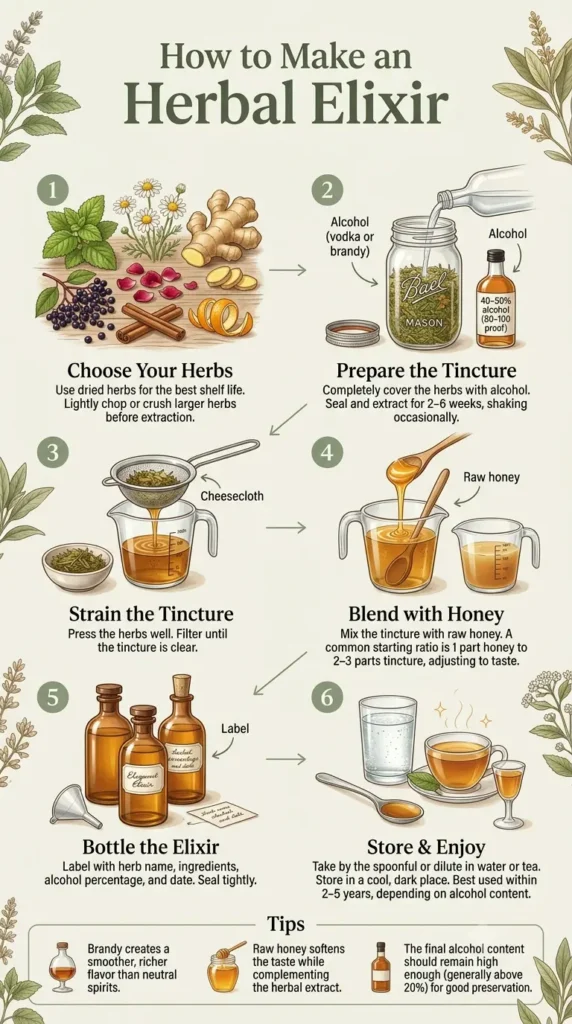
- Prepare a standard tincture by soaking chopped or powdered herb in high-proof alcohol for 4–6 weeks, then straining (see the tincture-making guide for full details).
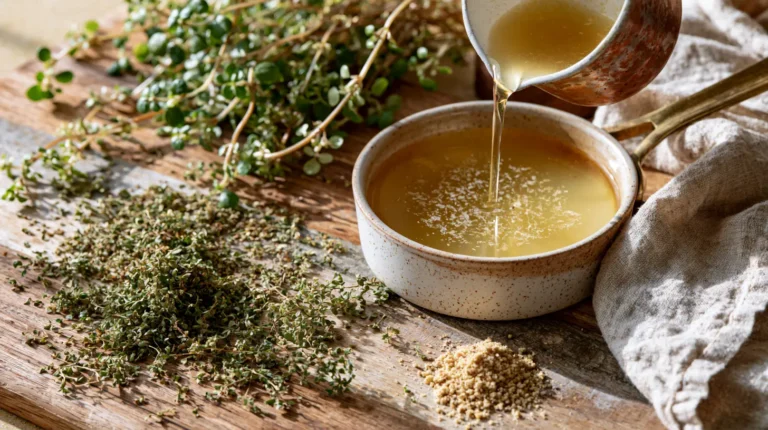
- Warm a small amount of honey gently (never boiling) to thin it slightly, or use glycerin as-is.
- Combine the strained tincture with the honey or glycerin at a ratio of roughly 3:1 to 1:1 alcohol-extract-to-sweetener, adjusting to your taste.
- Bottle and label, shaking well before each use since the two liquids can naturally separate over time.
Secret Tips
- Elixirs are especially useful for herbs that taste sharp, bitter, or medicinal on their own — the honey or glycerin doesn’t just add flavor, it makes daily consistency far more realistic.
- Gently warming honey before combining (never boiling) helps it blend smoothly into the alcohol base instead of clumping or separating unevenly.
- Add a splash of a complementary flavor, like a bit of vanilla extract or citrus zest tincture, if you want to further improve the taste of a particularly bitter herb.
Herb Examples Best Suited to Elixir
- Ashwagandha — an earthy adaptogen that benefits from a flavor boost for daily use.
- Dandelion Root — a bitter root well suited to being softened into an elixir.
- Ginger — makes a warming, palatable daily tonic in elixir form.
- Elderberry — commonly turned into an elixir for a smooth, enjoyable immune-supportive tonic.
Q&A
Q: How is an elixir different from a tincture? A: A tincture is the straight alcohol extract, while an elixir is that same tincture blended with honey or glycerin afterward for better flavor and easier daily use.
Q: Does adding honey or glycerin weaken the tincture? A: It dilutes the concentration somewhat, but the core extracted compounds from the tincture remain present — the tradeoff is slightly lower potency per drop in exchange for better taste and easier daily use.
Q: How long does an elixir last? A: Typically 1–3 years in a cool, dark place, with shelf life generally governed more by the honey or glycerin portion than by the alcohol.
Q: Do I need to shake an elixir before using it? A: Yes — honey or glycerin and alcohol can separate over time, so a good shake before each use ensures an even dose.
Q: Can I make an alcohol-free elixir? A: Some herbalists use a glycerite as the base instead of an alcohol tincture, then sweeten further with honey, though this results in a milder, less concentrated final product.
Safety Tips
- Because elixirs still contain alcohol from the base tincture, treat them with the same precautions as tinctures around pregnancy, nursing, and alcohol sensitivity.
- Consult a healthcare provider before using elixirs medicinally, especially if on prescription medication.
Disclaimer
This content is for educational purposes only and is not a substitute for professional medical advice, diagnosis, or treatment.