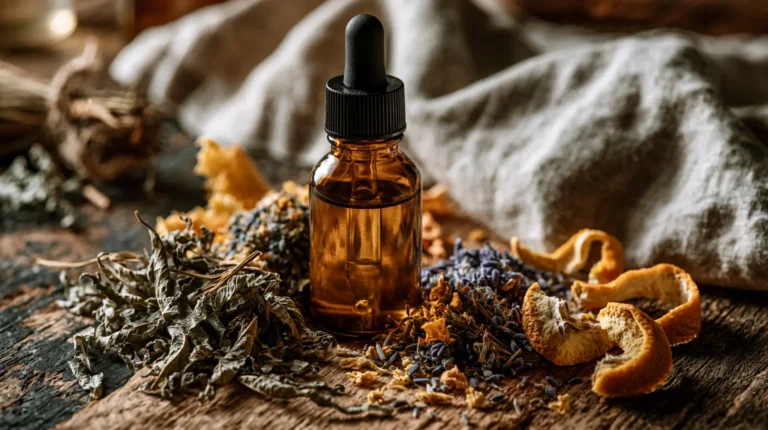
An oil infusion uses a carrier oil to pull out fat-soluble plant compounds, making it the foundation for most homemade salves, balms, and topical body oils. It’s a slow, gentle process that transforms simple oil into a skin-nourishing herbal extract.
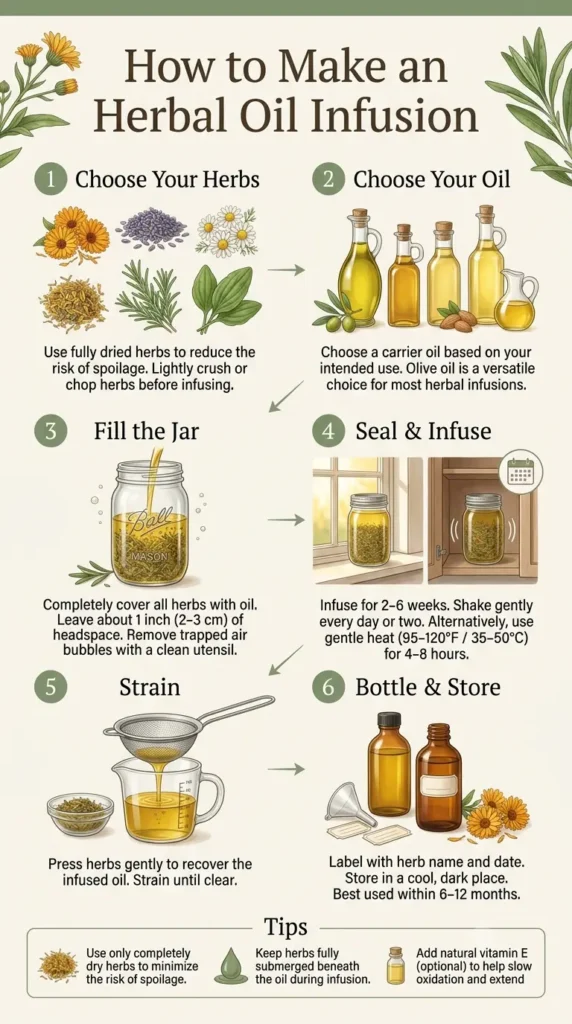
- Fully dry your herb (or wilt fresh herb for 24 hours) to reduce moisture and prevent mold.
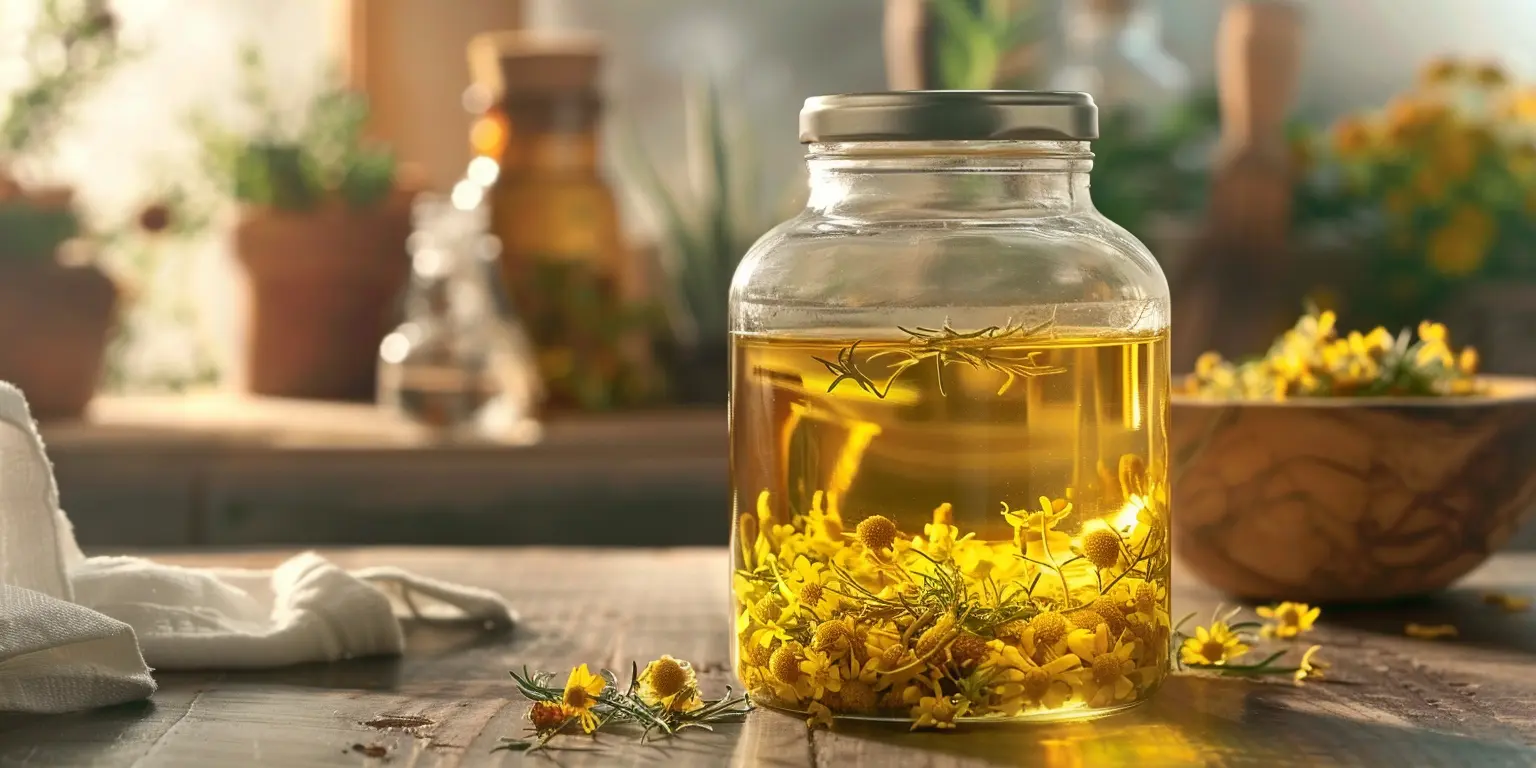
- Fill a clean glass jar with the dried herb.
- Cover completely with a carrier oil, such as olive or sweet almond oil, making sure the herb is fully submerged.
- Seal and place in a warm, sunny windowsill for 2–4 weeks, shaking occasionally.
- Strain through cheesecloth, pressing out as much oil as possible.
- Bottle in a dark glass container.
How to Make an Oil Infusion (Quick/Heat Method)
- Combine dried herb and oil in a double boiler.
- Gently warm on low heat for 2–5 hours, never letting the oil simmer or bubble.
- Strain and bottle as above.
Secret Tips
- Moisture is the biggest risk factor for oil infusions — even slightly damp fresh herb can introduce mold, so always use fully dried plant material or properly wilted fresh herb.
- If using the heat method, keep the temperature low and steady; oil that gets too hot can degrade the very compounds you’re trying to preserve.
- Adding a small amount of vitamin E oil to the finished infusion can help extend shelf life and prevent rancidity.
- Label your jar with a start date, and check periodically for any signs of cloudiness or off smell, which can indicate contamination.
Herb Examples Best Suited to Oil Infusion
- Calendula — a classic skin-soothing flower widely used in salves and balms.
- St. John’s Wort — infused into oil for its traditional topical use, turning the oil a deep red.
- Comfrey — a popular choice for topical body oils and balms.
- Plantain Leaf — commonly infused for soothing topical preparations.
Q&A
Q: Why does my infused oil need to be made with dried herb? A: Fresh herb contains water, which can introduce mold risk into an oil infusion since oil and water don’t mix and moisture can get trapped inside.
Q: How long does an infused oil last? A: Typically 6 months to 1 year when stored in a cool, dark place; adding vitamin E oil can help extend this.
Q: Which is better — the slow method or the heat method? A: The slow method is gentler and better preserves more delicate compounds, while the heat method is faster and useful when you don’t have weeks to wait.
Q: Can I use any oil for an infusion? A: Olive oil and sweet almond oil are popular for their stability and mild scent, but other oils like jojoba or sunflower oil also work well.
Q: How do I know if my infused oil has gone bad? A: Signs include a rancid or off smell, cloudiness, or visible mold — if any of these are present, discard the batch.
Safety Tips
- Always fully dry or properly wilt herb material before infusing to prevent mold.
- Store finished oils in a cool, dark place away from direct sunlight and heat.
- Patch-test any topical oil on a small area of skin before broader use, especially for sensitive skin.
- Consult a healthcare provider before using infused oils medicinally, especially for open wounds or sensitive skin conditions.
Disclaimer
This content is for educational purposes only and is not a substitute for professional medical advice, diagnosis, or treatment.