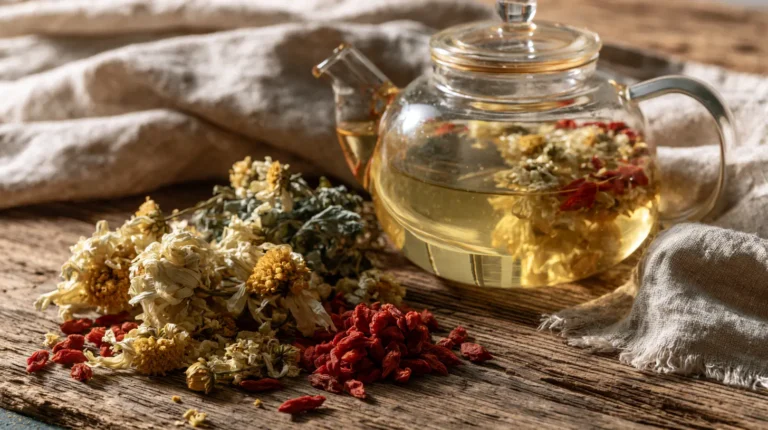
Traditionally, agrimony has been used for digestive tone, mild diarrhea patterns, throat comfort, skin washes, and liver-support formulas. It is not a dramatic herb, and that is part of its charm. Agrimony works more like a thoughtful cup of tea than a trumpet fanfare.
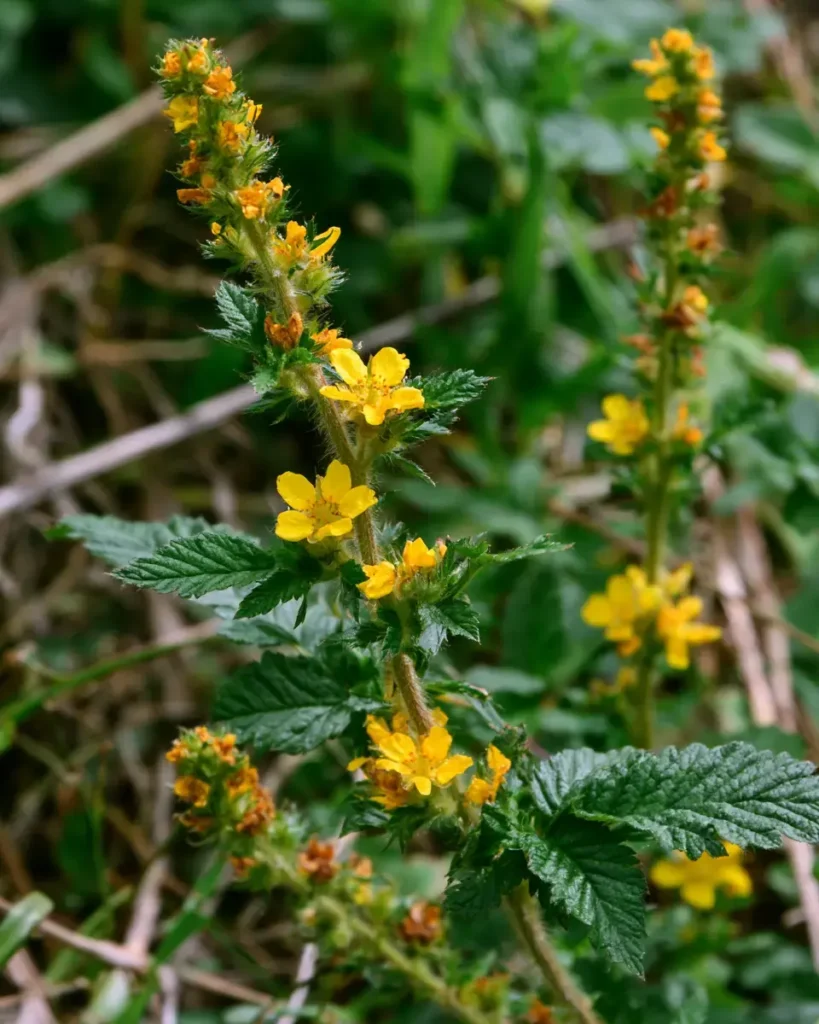
Agrimony (Agrimonia eupatoria)
Agrimony is traditionally connected with these wellness areas:
Digestive Support: Agrimony’s tannins give it an astringent quality, traditionally used when digestion feels loose, irritated, or unsettled.
Throat and Oral Comfort: Agrimony tea has a long tradition as a gargle for mild throat irritation and mouth discomfort.
Skin Support: External washes and compresses made from agrimony have traditionally been used for minor skin irritation and small surface concerns.
Liver and Gallbladder Traditions: In European herbalism, agrimony has been used in gentle liver and bile-support formulas, especially when digestion and elimination feel sluggish.
“Agrimony is the meadow herb that brings a gentle sense of order when tissues feel a little too dramatic.”
Available Agrimony Products
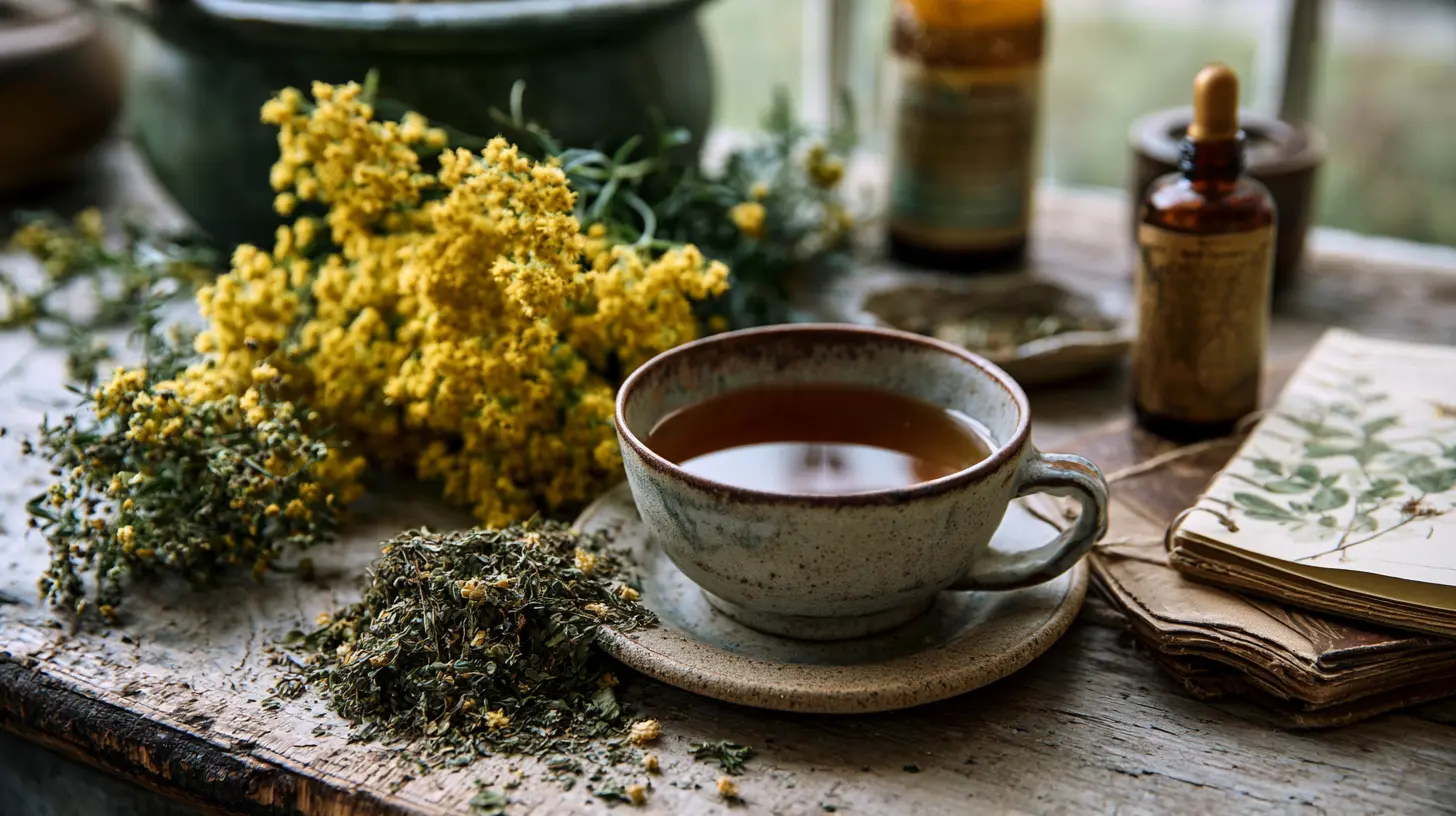
Dried Agrimony
Dried agrimony aerial parts are the most common form. They are used for teas, infusions, gargles, washes, compresses, and herbal blends. Good dried agrimony should look green to olive-green with some yellow flower material, smell mildly herbaceous, and not appear brown, dusty, or moldy.
Agrimony Tea
Agrimony tea is a classic preparation. It tastes mildly bitter, earthy, slightly sweet, and astringent. It may be used as a drink, gargle, or cooled external wash.
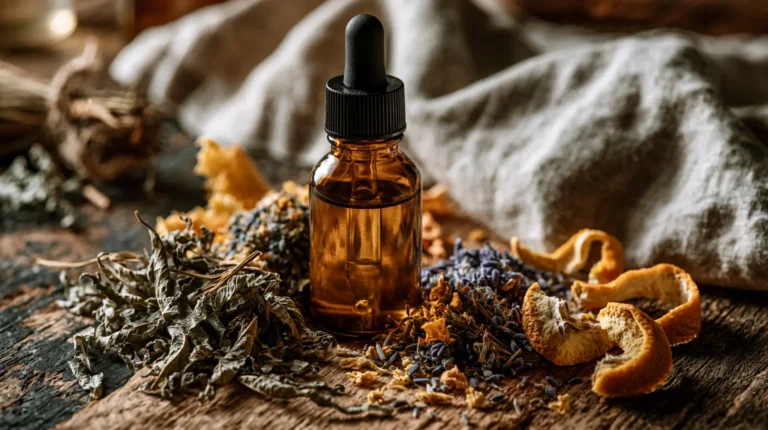
Agrimony Tincture
Agrimony tincture is a convenient liquid form. It may be chosen when a person wants the herb in a compact preparation rather than drinking several cups of tea. Labels should list the plant part, alcohol percentage, herb ratio, and serving size.
Agrimony Capsules
Capsules may contain powdered agrimony herb or extract. They are convenient for people who dislike the taste, but they do not provide the same direct contact with mouth and throat tissues as tea or gargle preparations.
Agrimony Powder
Agrimony powder may be used in capsules or herbal formulas. Since leafy powders lose freshness quickly, they should be stored tightly sealed and used sooner than cut dried herb.
Agrimony Gargle
Agrimony gargle is usually made from a strong tea. It is traditionally used for mild throat and mouth comfort. The liquid should be cooled before use and not swallowed in large amounts.
Agrimony Compress or Wash
A cooled agrimony infusion can be used externally as a skin wash or compress. This is one of the most traditional topical uses of tannin-rich herbs. Use only on clean, minor skin concerns and avoid deep or infected wounds.
Key Herbal Actions
Agrimony is known as an astringent, vulnerary-support herb, digestive tonic, mild bitter tonic, hepatic support herb, cholagogue-support herb, anti-inflammatory-support herb, antioxidant, and mild diuretic.
Astringent
An astringent herb tightens and tones tissues. Agrimony’s tannins explain its classic use for mild looseness in the digestive tract, throat gargles, and topical washes. This is its most important herbal action.
Vulnerary-Support Herb
A vulnerary herb is traditionally used to support the body’s natural repair process in minor skin issues. Agrimony washes and compresses have been used for small scrapes, irritated skin, and mild surface discomfort. Serious wounds need medical care.
Digestive Tonic
Agrimony is traditionally used to support digestive tone. Its astringent and mildly bitter nature makes it useful when digestion feels weak, loose, or irritated. It is not a strong laxative or strong bitter like gentian.
Mild Bitter Tonic
Agrimony has a gentle bitter quality that may support appetite and digestive secretions. This action is softer than stronger bitters, making agrimony more suitable for people who need mild digestive encouragement.
Hepatic Support Herb
In European herbal traditions, agrimony has been used in liver-support formulas. This does not mean it cleanses or treats liver disease. It simply reflects traditional use around digestion, bile flow, and elimination.
Cholagogue-Support Herb
Cholagogue herbs are traditionally used to support bile flow. Agrimony is milder than herbs like artichoke leaf or dandelion root, but it has a history in gentle bile-support formulas.
Anti-Inflammatory-Support Herb
Agrimony contains flavonoids, tannins, and phenolic compounds that help explain its traditional use for irritated tissues. It should be described as supportive, not as a treatment for inflammatory disease.
Antioxidant
Agrimony contains flavonoids and phenolic compounds studied for antioxidant activity. These compounds contribute to the plant’s overall protective profile.
Mild Diuretic
Agrimony has some traditional use as a mild diuretic, meaning it may support normal fluid elimination. This action is gentle and should not be used as a substitute for care in kidney, heart, or fluid-retention conditions.
Active Compounds and Extraction
Agrimony contains tannins, flavonoids such as quercetin, kaempferol, luteolin, and apigenin derivatives, phenolic acids, triterpenes including tormentic acid and euscaphic acid, volatile oil traces, bitter compounds, and small amounts of minerals.
Tannins
Tannins are the key compounds behind agrimony’s astringent action. They bind to proteins on tissue surfaces, creating a tightening and drying effect. This explains agrimony’s traditional use for loose stools, gargles, and topical washes.
Best extraction methods:
Hot infusion: Add 1–2 teaspoons dried agrimony to 1 cup hot water. Steep covered for 10–15 minutes, then strain.
Strong gargle infusion: Use 1 tablespoon dried agrimony per cup of hot water. Steep 15–20 minutes, cool completely, strain well, and use as a gargle.
External wash: Prepare a strong infusion, cool it, strain carefully, and apply with a clean cloth to intact skin.
Flavonoids
Agrimony contains flavonoids such as quercetin, kaempferol, luteolin, and apigenin-related compounds. Flavonoids are widely studied for antioxidant and tissue-supportive activity. They help round out agrimony’s soothing and protective profile.
Best extraction methods:
Hot infusion: Flavonoids extract reasonably well into hot water, making tea a practical preparation.
Hydroalcoholic tincture: A water-and-alcohol tincture can capture a broader flavonoid range than water alone.
Phenolic Acids
Phenolic acids are antioxidant plant compounds found in many herbs. In agrimony, they contribute to its overall antioxidant and tissue-supportive qualities.
Best extraction methods:
Tea: A 10–15 minute infusion is suitable for simple daily-style use.
Tincture: Alcohol-water extraction may provide a broader phenolic profile.
Triterpenes
Agrimony contains triterpenes such as tormentic acid and euscaphic acid. These compounds are studied in relation to antioxidant and tissue-supportive activity. They are part of agrimony’s deeper phytochemical profile, though not usually the main reason home herbalists choose the herb.
Best extraction methods:
Hydroalcoholic tincture: Alcohol-water extraction is better suited than plain water for a broader triterpene profile.
Commercial extract: Standardized or professionally prepared extracts may offer more consistency than homemade preparations.
Bitter Compounds
Agrimony’s mild bitterness contributes to its digestive tonic action. Bitter compounds stimulate taste receptors and may encourage digestive readiness.
Best extraction methods:
Tea before meals: A small cup of agrimony tea 10–20 minutes before food is a traditional way to experience its bitter effect.
Tincture: A small amount of tincture diluted in water allows the bitter taste to contact the tongue.
Volatile Oil Traces
Agrimony contains small amounts of volatile aromatic compounds. It is not mainly an essential-oil herb, but these traces contribute to its gentle aroma.
Best extraction methods:
Covered infusion: Cover the cup while steeping to preserve delicate aromatic compounds.
Fresh herb tincture: Experienced herbalists may use fresh flowering tops in tincture to capture more aromatic character.
Harvesting and Storing Right
Agrimony aerial parts are usually harvested when the plant is flowering, often from early to mid-summer depending on climate. The flowering tops and leaves are the main parts used.
The best time of day to harvest is after morning dew has dried but before strong afternoon heat. Choose clean plants growing away from roadsides, sprayed fields, industrial areas, and polluted soil.
Cut the upper flowering stems rather than pulling up the whole plant. This allows the perennial root system to continue growing.
Storage tips:
Fresh herb: Use quickly for tincture or dry soon after harvest.
Dried herb: Store in an airtight jar away from heat, light, and moisture. Best used within 1 year.
Powder: Store tightly sealed and use within 3–6 months.
Tincture: Store in dark glass in a cool place. Alcohol tinctures may keep for several years.
Prepared tea or wash: Refrigerate and use within 24–48 hours. Discard if cloudy, moldy, or off-smelling.
Body Functions Agrimony Can Support
Agrimony can support digestion system, liver support, dental oral, skin, urinary system, lymphatic system, circulation, and energy and vitality.
Digestion System
Agrimony is most strongly connected with digestive tone. Its tannins make it traditionally useful when the digestive tract feels loose, irritated, or unsettled. People with constipation should use it cautiously because astringent herbs can feel drying.
Liver Support
Agrimony has a long tradition in gentle liver and bile-support formulas. Its mild bitter quality may support digestive secretions and bile-related digestive function. It should not be used as a treatment for liver disease.
Dental Oral
Agrimony tea has been used traditionally as a gargle or mouth rinse. Its astringent tannins may help tone tissues in the mouth and throat. Use only cooled, well-strained tea and avoid swallowing large amounts.
Skin
Agrimony washes and compresses are classic external preparations. The herb’s tannins and flavonoids make it useful in traditional skin-toning formulas. It should only be used on minor, clean skin concerns, not deep wounds or infections.
Urinary System
Agrimony has traditional use as a mild diuretic herb. It may support normal fluid elimination in gentle formulas. Anyone with kidney disease, urinary pain, fever, or blood in urine should seek medical care.
Lymphatic System
Agrimony may be included in traditional formulas where tissue tone, fluid balance, and mild swelling are part of the herbal picture. Its astringent action is more about tissue toning than direct lymph drainage.
Circulation
Agrimony’s flavonoids and tannins support its traditional role in tissue and vessel tone. It is not a primary circulation herb like hawthorn or horse chestnut, but it may support capillary and tissue integrity in formulas.
Energy and Vitality
Agrimony does not stimulate energy like caffeine. Its role in vitality is indirect, through digestion, tissue tone, and gentle liver-support traditions. Sometimes feeling better organized inside is its own kind of energy.
Safety and Practical Considerations
Agrimony is generally considered a gentle herb when used in moderate amounts, but its astringent tannins make it unsuitable for everyone.
People with constipation, very dry tissues, or a tendency toward hard stools should use agrimony cautiously. Astringent herbs can worsen dryness or tightness in some people.
People taking medications should separate agrimony tea or supplements from medications by at least a couple of hours unless a healthcare professional advises otherwise. Tannins may reduce absorption of some medicines or minerals.
People taking diabetes medications should be cautious because some traditional and early research discussions connect agrimony with blood sugar effects. Professional guidance is wise if blood sugar is being medically managed.
Pregnant and breastfeeding people should avoid medicinal amounts of agrimony unless guided by a qualified healthcare professional. Safety data is limited.
People with kidney disease, liver disease, bleeding disorders, or serious digestive conditions should seek professional guidance before using agrimony.
Topical use may irritate sensitive skin. Patch-test before using agrimony washes or compresses over a larger area.
Children, older adults, and sensitive individuals should use mild preparations and small amounts only with appropriate guidance.
FAQ
What does agrimony taste like?
Agrimony tastes mildly bitter, earthy, slightly sweet, and astringent. The astringency creates a drying or puckering feeling in the mouth. It is usually more pleasant than very bitter herbs like gentian.
When is the best time to use agrimony?
Agrimony is often used after meals for digestive comfort or as a gargle when the throat feels mildly irritated. If using it as a bitter digestive herb, it may be taken shortly before meals. Follow label directions or professional guidance.
Is fresh or dried agrimony better?
Both can be useful. Fresh flowering tops are often used for tincture by experienced herbalists. Dried agrimony is easier to store and is the most practical form for tea, gargles, and washes.
Is agrimony tea, tincture, or capsule better?
Tea is the most traditional and flexible form because it can be used internally, as a gargle, or externally as a wash. Tincture is more concentrated and convenient. Capsules are easy to take but do not provide the same direct contact with mouth and throat tissues.
Can agrimony be used daily?
Agrimony may be used short-term in moderate amounts, but it is not ideal as an open-ended daily herb for everyone. People with constipation, medication use, pregnancy, breastfeeding, or medical conditions should seek guidance before regular use.
How should agrimony be stored?
Store dried agrimony in an airtight jar away from heat, light, and moisture. Use within about 1 year for best quality. Tinctures should be kept tightly closed in dark glass.
Does agrimony combine well with other herbs?
Yes. Agrimony combines well with raspberry leaf, plantain leaf, marshmallow root, licorice root, chamomile, yarrow, meadowsweet, dandelion root, burdock root, and calendula depending on the formula. For throat gargles, it pairs nicely with sage or thyme.
Is agrimony safe for everyone?
No. Agrimony may not be suitable for people with constipation, very dry digestion, pregnancy, breastfeeding, medication use, diabetes medications, or serious kidney, liver, or digestive conditions. Sensitive people should start with mild preparations.
Can agrimony be used externally?
Yes. Agrimony is traditionally used externally as a wash or compress for minor skin irritation. Use cooled, well-strained tea on intact skin only. Do not apply to deep wounds, infected skin, or serious burns.
Can agrimony be used for pets?
Agrimony should not be given to pets without guidance from a veterinarian trained in herbal medicine. Pets process herbs differently from humans, and astringent herbs may not be appropriate for every animal.
Disclaimer
This content is educational only. It is not medical advice, diagnosis, or treatment. Herbs may interact with medications or health conditions. People who are pregnant, breastfeeding, managing a medical condition, taking prescription medications, or preparing for surgery should consult a qualified healthcare professional before using herbs.
References
Kew Science: Plants of the World Online – Agrimonia eupatoria
Encyclopaedia Britannica: Agrimony
PubMed: Antimicrobial Assays of Native British Plants Used in Anglo-Saxon Wound Healing Formulations
PubMed: Agrimonia eupatoria Phytochemical and Biological Research
PubMed: Agrimonia eupatoria Flavonoids and Polyphenols
Plants: Agrimonia eupatoria L. as a Source of Bioactive Compounds