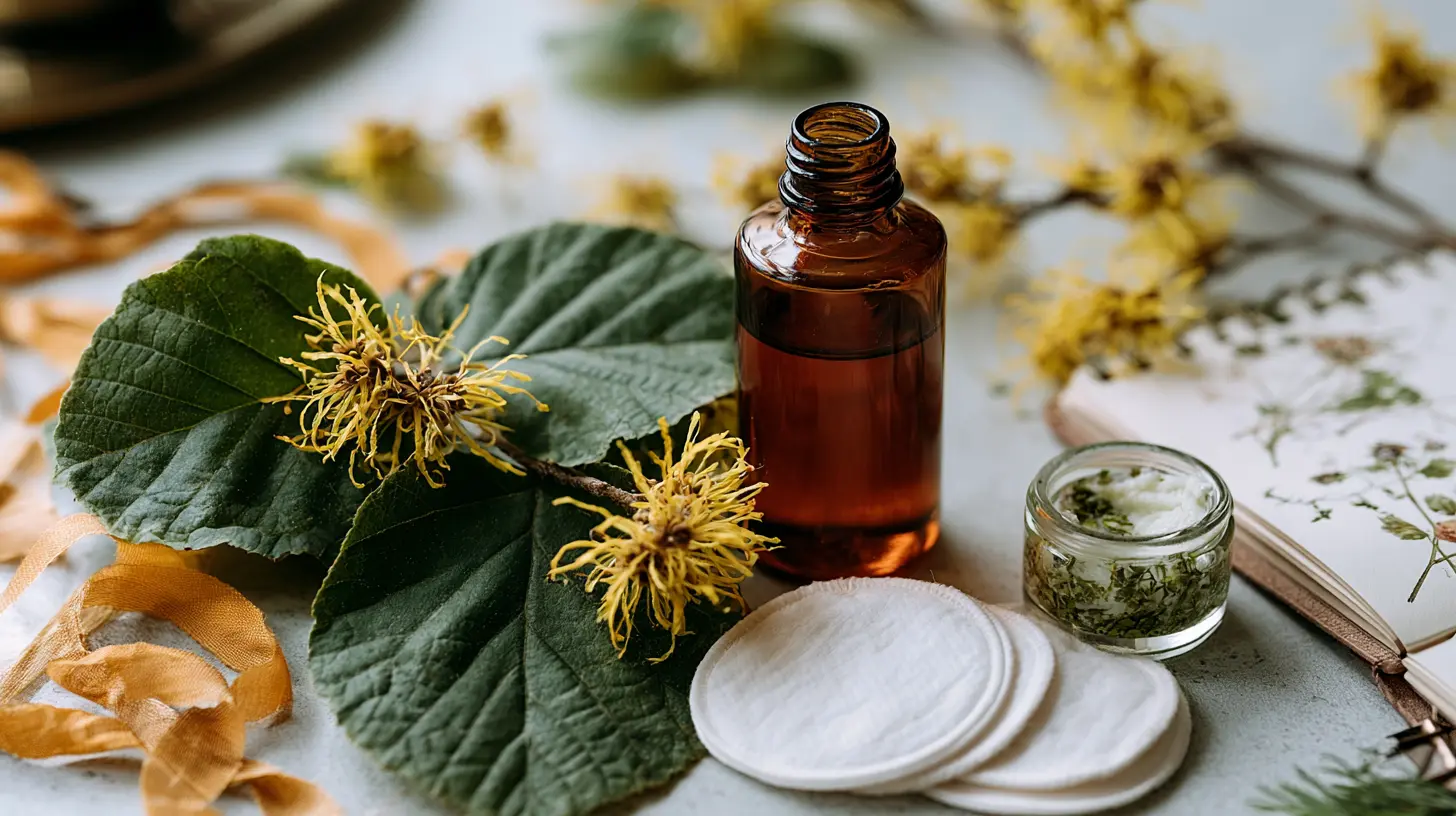
Witch hazel is a small North American tree or shrub with oval leaves, smooth gray-brown bark, and curious yellow ribbon-like flowers that bloom when much of the garden is winding down. Traditionally, witch hazel leaf, bark, and distilled preparations have been used externally for skin toning, minor irritation, hemorrhoid comfort, oily skin, and vein support. It is one of the best-known herbal astringents in home care and natural skincare.
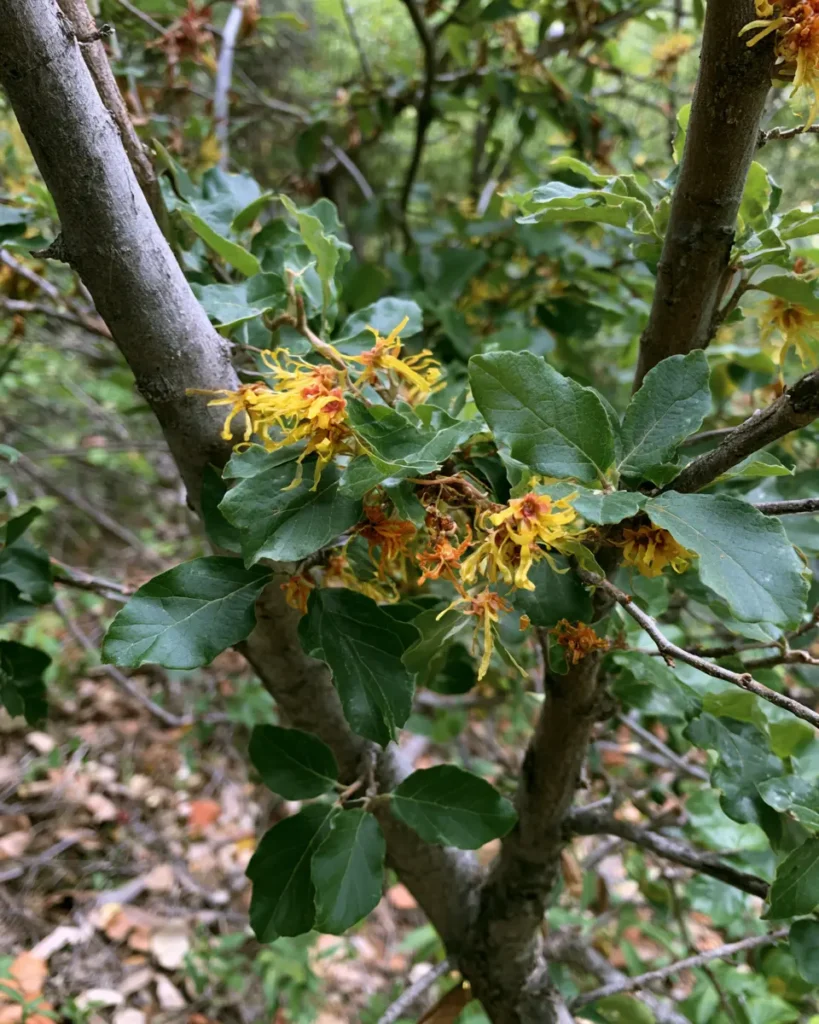
Witch Hazel (Hamamelis virginiana)
Witch hazel is traditionally connected with these wellness areas:
Skin Support: Witch hazel is best known as a topical astringent for oily skin, minor irritation, small scrapes, and after-cleansing skin care.
Vein and Circulation Support: Witch hazel has traditional use in topical formulas for varicose-looking veins, hemorrhoids, heavy-feeling legs, and tissue tone.
Minor Wound Care Traditions: The bark and leaf have been used externally for small cuts, insect bites, and irritated skin.
Oral and Throat Traditions: Diluted preparations have historically been used as gargles or mouth rinses, though internal use requires caution and should not be casual.
“Witch hazel is the herbal splash of cool water when skin needs to settle down and behave.”
Available Witch Hazel Products
Witch Hazel Distillate
Witch hazel distillate is the most common market form. It is usually made by steam-distilling the bark, twigs, or leaves. Many commercial distillates contain alcohol as a preservative, so people with dry or sensitive skin should check labels carefully.
Alcohol-Free Witch Hazel
Alcohol-free witch hazel products are popular for sensitive, dry, or easily irritated skin. They may use glycerin, water-based extraction, or other preservatives. These are often gentler than alcohol-heavy toners.
Witch Hazel Toner
Witch hazel toner is used after cleansing, especially for oily or combination skin. Some toners include aloe vera, rose water, calendula, cucumber, or glycerin to make the formula less drying.
Witch Hazel Gel
Witch hazel gel is commonly used for localized skin comfort, hemorrhoid care, insect bites, or after-shaving irritation. Gel formulas may be easier to apply than watery distillates.
Witch Hazel Ointment or Cream
Creams and ointments are used externally for dry, irritated, or sensitive areas where a liquid toner might feel too drying. These may combine witch hazel with soothing herbs such as calendula, chamomile, plantain leaf, or aloe.
Witch Hazel Pads
Pre-moistened witch hazel pads are common for hemorrhoid care, postpartum comfort, and gentle cleansing of irritated skin. They are convenient but should be fragrance-free and used only as directed.
Dried Witch Hazel Leaf
Dried witch hazel leaf can be used for external washes, compresses, and traditional topical infusions. It is less common than commercial distillate but useful for herbal preparations.
Dried Witch Hazel Bark
Dried bark is rich in tannins and is usually prepared as a decoction for external use. Because the bark is tough, it needs simmering rather than simple steeping.
Key Herbal Actions
Witch hazel is known as an astringent, vulnerary-support herb, anti-inflammatory-support herb, venotonic topical herb, antioxidant, hemostatic-support herb, antipruritic herb, and mild antimicrobial topical herb.
Astringent
An astringent herb tightens and tones tissues. Witch hazel is a classic astringent because its bark and leaves contain tannins. This explains its traditional use for oily skin, minor weeping irritation, hemorrhoids, and tissue tone.
Vulnerary-Support Herb
A vulnerary herb is traditionally used to support the body’s natural repair process in minor skin issues. Witch hazel is often used externally for small scrapes, shaving irritation, and everyday skin discomfort. It should not be used as a substitute for medical care for deep, infected, or serious wounds.
Anti-Inflammatory-Support Herb
Witch hazel preparations are traditionally used to calm the appearance and feeling of minor redness or irritation. Tannins, flavonoids, and other polyphenols help explain this traditional use.
Venotonic Topical Herb
A venotonic herb supports healthy vein tone. Witch hazel is used topically in products for hemorrhoids, varicose-looking veins, and tired legs because of its tightening, cooling, and tissue-toning qualities.
Antioxidant
Witch hazel contains polyphenols, including tannins and flavonoids, which are studied for antioxidant activity. This supports its role in topical skin-care formulas.
Hemostatic-Support Herb
A hemostatic-support herb is traditionally used to support the body’s natural response to minor surface bleeding. Witch hazel’s astringent tannins help explain this traditional use. Serious bleeding requires medical attention.
Antipruritic Herb
Antipruritic means itch-soothing. Witch hazel is commonly used in topical preparations for insect bites, hemorrhoid irritation, and mild skin itch. Alcohol-containing products may worsen itching in dry or sensitive skin.
Mild Antimicrobial Topical Herb
Witch hazel compounds have shown antimicrobial activity in laboratory research. This does not mean it works like a disinfectant or antibiotic, but it supports its traditional use in minor skin-care preparations.
Active Compounds and Extraction
Witch hazel contains tannins such as hamamelitannin and gallotannins, proanthocyanidins, flavonoids, phenolic acids, small amounts of volatile compounds, gallic acid derivatives, catechins, and trace essential oil constituents.
Tannins
Tannins are the main compounds behind witch hazel’s strong astringent action. They bind to proteins on the skin surface, creating a temporary tightening and drying effect. This is why witch hazel is popular for oily skin, minor irritation, and hemorrhoid products.
Best extraction methods:
Decoction for bark: Add 1 teaspoon dried witch hazel bark to 1 cup water. Simmer gently for 10–15 minutes, cool, strain, and use externally as a wash or compress.
Infusion for leaf: Add 1–2 teaspoons dried witch hazel leaf to 1 cup hot water. Steep covered for 10–15 minutes, cool, strain, and use externally.
Compress: Soak a clean cloth in cooled witch hazel tea or diluted distillate and apply briefly to intact skin.
Hamamelitannin
Hamamelitannin is one of the signature tannins found in witch hazel. It is studied as part of witch hazel’s astringent and antioxidant profile. It contributes to the drying, tightening quality of bark and leaf preparations.
Best extraction methods:
Bark decoction: Simmering bark in water helps pull out tannins such as hamamelitannin.
Hydroalcoholic extract: Alcohol-water extraction can capture tannins and other polyphenols, but strong extracts should usually be used in formulated topical products.
Proanthocyanidins
Proanthocyanidins are antioxidant polyphenols also found in grape seed, pine bark, and many astringent herbs. In witch hazel, they contribute to tissue-toning and antioxidant activity.
Best extraction methods:
Water extraction: Hot water extracts many polyphenols from leaf and bark.
Topical extract: Commercial witch hazel extracts may be formulated into creams, gels, and toners for skin use.
Flavonoids
Witch hazel contains flavonoids such as quercetin-related compounds. Flavonoids contribute antioxidant and skin-supportive qualities. They help round out the plant’s activity beyond tannins alone.
Best extraction methods:
Leaf infusion: Hot water infusion works well for many flavonoids.
Hydroalcoholic extract: Water-alcohol extraction may capture a broader range of flavonoids than water alone.
Phenolic Acids and Gallic Acid Derivatives
Phenolic acids and gallic acid derivatives contribute antioxidant and astringent properties. These compounds are common in tannin-rich herbs and support witch hazel’s traditional topical use.
Best extraction methods:
Decoction or infusion: Hot water is suitable for many phenolic compounds.
Distillate plus extract formulas: Some products combine distilled witch hazel with added botanical extracts for a broader compound profile.
Volatile Compounds
Witch hazel distillate contains some volatile aromatic compounds, though many tannins are not carried over strongly during simple distillation. This is why witch hazel distillate may be milder and less tannin-rich than a bark decoction or hydroalcoholic extract.
Best extraction methods:
Steam distillation: Commercial distillation produces witch hazel water or distillate.
Covered infusion: If preparing leaf tea externally, covering the cup helps preserve delicate aromatic compounds.
Harvesting and Storing Right
Witch hazel leaves are usually harvested in spring or early summer when they are fresh, green, and healthy. Bark is typically harvested from small branches in spring or autumn, but harvesting bark requires care because overharvesting can injure or kill the plant.
The best time of day to harvest leaves is after morning dew has dried but before intense afternoon heat. Bark should be taken only from pruned branches, not stripped from the trunk.
Because witch hazel is slow-growing in some areas, responsible harvesting matters. Use cultivated or reputable commercial material when possible.
Storage tips:
Dried leaf: Store in an airtight jar away from heat, light, and moisture. Best used within 1 year.
Dried bark: Store airtight and dry. Best used within 1–2 years.
Witch hazel distillate: Store according to the label. Keep tightly closed and avoid contamination.
Alcohol-free toners: Refrigerate if the label recommends it and use before expiration.
Creams and gels: Keep clean, closed, and away from heat.
Homemade washes: Use within 24–48 hours if refrigerated, and discard if cloudy, moldy, or off-smelling.
Body Functions Witch Hazel Can Support
Witch hazel can support skin, circulation, lymphatic system, dental oral, muscles and joint, reproductive system female, and urinary system.
Skin
Witch hazel is most strongly associated with skin support. Its tannins create an astringent effect that can temporarily tighten tissue and reduce excess oiliness. It is best suited for intact skin, minor irritation, shaving discomfort, and oily skin care.
Circulation
Topical witch hazel is traditionally used in products for hemorrhoids, varicose-looking veins, and tired legs. Its tissue-toning and cooling qualities make it relevant to vein-support formulas. It should not be used for sudden swelling, severe pain, ulcers, or suspected clots.
Lymphatic System
Witch hazel may be included in topical formulas where tissues feel puffy, heavy, or congested. Its astringent action can create a tightening sensation on the skin surface. It does not “drain lymph” in a medical sense.
Dental Oral
Diluted witch hazel has historical use as a mouth rinse or gargle because of its astringent tannins. However, many commercial witch hazel products contain alcohol or are labeled for external use only. Only use oral products specifically intended for mouth care.
Muscles and Joint
Witch hazel may appear in topical rubs for bruised-feeling, tired, or overworked areas. Its cooling, astringent effect may feel soothing after activity. It should not be applied to deep injuries, broken skin, or unexplained pain.
Reproductive System Female
Witch hazel pads are commonly used externally for postpartum perineal comfort and hemorrhoid care. Use only fragrance-free, appropriate products and follow professional guidance after birth or surgery. Do not use internally.
Urinary System
Witch hazel is not a urinary herb in the internal sense. Its relevance is limited to external cleansing and comfort around irritated skin. Burning urination, pelvic pain, fever, or blood in urine requires medical care.
Safety and Practical Considerations
Witch hazel is mainly a topical herb. Internal use is not recommended unless under professional guidance and using a product specifically intended for that purpose.
Many witch hazel distillates contain alcohol, which can dry or sting sensitive skin. People with eczema-prone, very dry, cracked, or inflamed skin may prefer alcohol-free formulas or avoid witch hazel altogether.
Do not apply witch hazel to deep wounds, serious burns, infected skin, severe rashes, open ulcers, or large areas of broken skin. Seek medical care for serious or worsening skin issues.
Patch-test before using witch hazel on the face or sensitive areas. Stop use if burning, rash, itching, swelling, or worsening irritation occurs.
Avoid getting witch hazel in the eyes. It can sting and irritate delicate eye tissue.
Pregnant and breastfeeding people should use witch hazel externally only with appropriate guidance, especially postpartum or near sensitive tissue. Avoid internal use.
Children and babies have more sensitive skin. Use only pediatric-appropriate products and consult a healthcare professional for diaper rash, bleeding, or persistent irritation.
People with known sensitivity to tannin-rich plants or topical astringents should use caution.
Pets should not be treated with witch hazel unless a veterinarian approves the exact product. Alcohol-containing formulas can be irritating or unsafe for animals.
FAQ
What does witch hazel smell like?
Witch hazel distillate smells mildly woody, clean, and slightly medicinal. Alcohol-containing versions may smell sharper. Dried leaf and bark smell earthy and tannic.
When is the best time to use witch hazel?
Witch hazel is usually used after cleansing, after shaving, after insect bites, or when skin feels oily or mildly irritated. For hemorrhoid pads or postpartum products, follow the product label or professional guidance.
Is witch hazel leaf, bark, or distillate better?
Bark and leaf contain more tannins, while distillate is the most common and convenient topical product. Distillate may be milder but often contains alcohol. The best form depends on skin type and purpose.
Is witch hazel tea, tincture, toner, or gel better?
For most people, toner, gel, pads, or cream are the practical forms. Witch hazel tea or decoction is usually for external washes. Internal tea use is not recommended casually.
Can witch hazel be used daily?
Some people use witch hazel toner daily, especially on oily skin. However, daily use can dry or irritate sensitive skin, especially if the product contains alcohol. Start slowly and watch how your skin responds.
How should witch hazel be stored?
Store witch hazel distillate, toner, gels, and creams according to the label. Keep bottles closed and avoid contaminating them with fingers. Dried leaf and bark should be kept airtight, dry, and away from light.
Does witch hazel combine well with other herbs?
Yes. Witch hazel combines well with aloe vera, calendula, chamomile, plantain leaf, rose water, lavender, yarrow, oak bark, and horse chestnut in topical formulas. Sensitive skin usually does better with simple, fragrance-free blends.
Is witch hazel good for acne-prone skin?
Witch hazel may help oily skin feel temporarily tighter and less greasy. However, alcohol-heavy formulas can over-dry the skin and make irritation worse. It should be used gently and not as a cure for acne.
Is witch hazel safe for everyone?
No. Witch hazel may irritate dry, sensitive, broken, eczema-prone, or inflamed skin. Internal use is not recommended. Children, pregnant people, breastfeeding people, and people with serious skin concerns should use extra caution.
Can witch hazel be used for pets?
Do not use witch hazel on pets without veterinary guidance. Some products contain alcohol, fragrance, or other ingredients that may irritate animal skin or be unsafe if licked.
Disclaimer
This content is educational only. It is not medical advice, diagnosis, or treatment. Herbs may interact with medications or health conditions. People who are pregnant, breastfeeding, managing a medical condition, taking prescription medications, or preparing for surgery should consult a qualified healthcare professional before using herbs.
References
European Medicines Agency: Hamamelis Leaf
European Medicines Agency: Hamamelis Bark
Kew Science: Plants of the World Online – Hamamelis virginiana
PubMed: Hamamelis virginiana and Skin Pharmacology