


Traditionally, valerian root has been used to support relaxation, sleep rhythm, nervous system calm, and patterns of physical tension. It is one of the better-known nighttime herbs, but it is also one of those plants that works best when used thoughtfully, not casually by the handful.
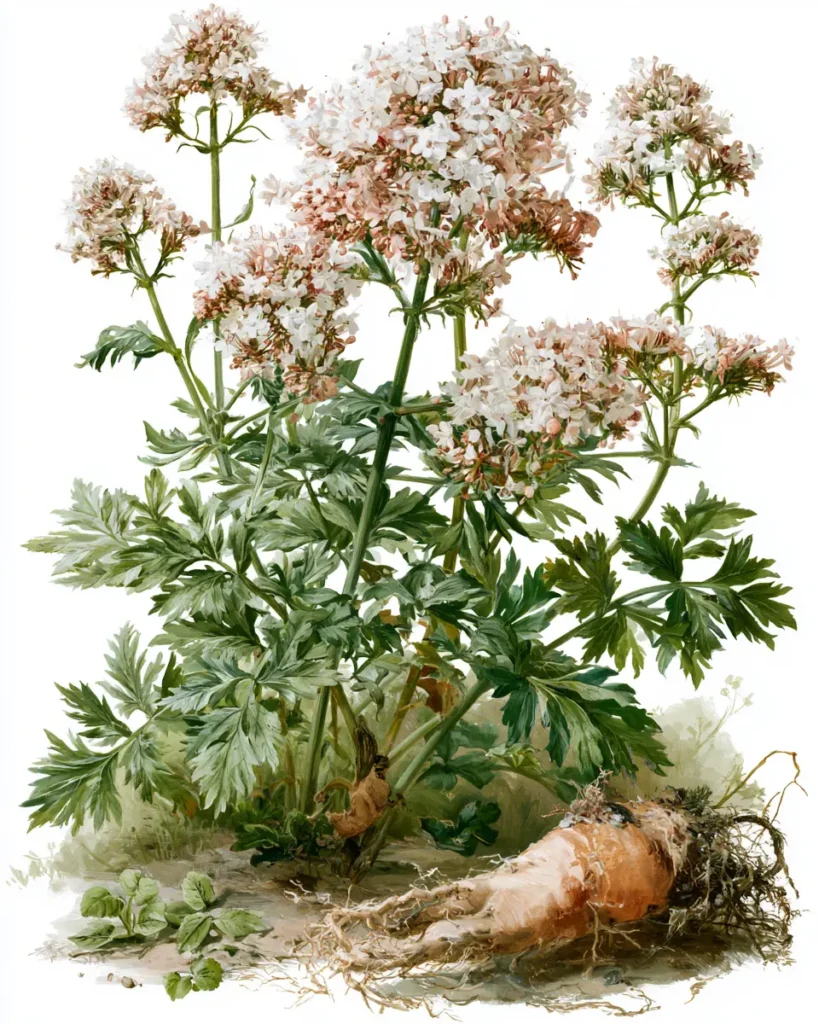
Valerian (Valeriana officinalis)
Traditional Uses of Valerian
Sleep Support: Valerian root is traditionally used in evening formulas to support the body’s natural transition into rest.
Stress Support: Herbalists often use valerian as a stronger nervine when tension, worry, or restlessness makes it difficult to settle.
Muscle Tension: Valerian has a traditional antispasmodic reputation, especially when nervous tension seems connected with tightness in the body.
Digestive Tension: It has also been used when stress and digestive discomfort appear together, especially in people who carry tension in the gut.
“Valerian is not a delicate bedtime whisper; it is more like a firm herbal suggestion to please relax already.”
Available Valerian Products
Dried Valerian Root
Dried valerian root is the classic form used for tea, decoctions, and herbal blends. It should smell strong, earthy, and unmistakably valerian-like. If it smells flat, dusty, or moldy, it is not a good choice.
Valerian Tea
Valerian tea is common, though the flavor is not everyone’s favorite. It is often blended with better-tasting calming herbs such as lemon balm, chamomile, passionflower, lavender, or peppermint.
Valerian Tincture
Valerian tincture is one of the most practical forms because valerian’s key aromatic compounds extract well in alcohol-water mixtures. Tinctures are convenient when someone does not want to brew a strong-smelling tea before bed.
Valerian Capsules
Capsules are popular because they avoid the taste and smell. They are often standardized to valerenic acid content, and labels may list amounts such as 300–600 mg per serving, depending on the product.
Valerian Tablets
Tablets are another common market form, especially in European-style herbal preparations. As with capsules, it is important to check the serving size, extract type, and whether the product is standardized.
Valerian Glycerite
Valerian glycerite is an alcohol-free liquid extract made with vegetable glycerin. It may be useful for people avoiding alcohol, but glycerites are usually milder and may not extract the same range of constituents as alcohol-based tinctures.
Valerian Powder
Valerian powder is dried root ground into a fine form, often used in capsules or custom blends. Because powdered roots lose aroma faster than whole root, it should be stored carefully and used while still fresh-smelling.
Valerian Essential Oil
Valerian essential oil exists, but it is not a casual home remedy product. Essential oils are highly concentrated and should be used with care, properly diluted, and not taken internally unless supervised by a qualified professional.
Key Herbal Actions
Valerian is known as a nervine, mild sedative, hypnotic, antispasmodic, carminative, analgesic-supportive herb, and aromatic bitter.
Nervine
A nervine is an herb traditionally used to support the nervous system. Valerian is considered a stronger nervine compared with gentle herbs like oat straw or linden.
Mild Sedative
A mild sedative herb supports relaxation and calm. Valerian is often used in the evening because many people find it settling, though responses can vary from person to person.
Hypnotic
In herbal language, a hypnotic is an herb traditionally used to support sleep. Valerian is one of the best-known herbal hypnotics, especially when sleep difficulty is linked with restlessness or tension.
Antispasmodic
Antispasmodic herbs are traditionally used to ease patterns of tightness, gripping, or spasm. Valerian’s antispasmodic reputation is one reason it appears in formulas for muscle tension and nervous digestive discomfort.
Carminative
Carminative herbs support comfortable digestion, especially when gas or bloating is related to tension. Valerian is not as classic a carminative as fennel or peppermint, but it has a traditional role when nervous tension affects digestion.
Analgesic-Supportive Herb
Valerian has been traditionally used in formulas where discomfort and tension overlap. This does not mean it replaces pain care, but it explains why herbalists may include it in calming, tension-focused blends.
Aromatic Bitter
Valerian root has a strong aromatic bitterness. Bitter and aromatic herbs can stimulate digestive awareness and may support digestive secretions, although valerian is usually chosen more for nervous system support than as a primary digestive bitter.
Active Compounds and Extraction
Valerian contains valerenic acids, volatile oils, valepotriates, lignans, flavonoids, GABA-related compounds, alkaloids in trace amounts, and organic acids.
Valerenic Acids
Valerenic acid, acetoxyvalerenic acid, and hydroxyvalerenic acid are sesquiterpene compounds considered important markers in valerian root quality. Valerenic acid has been studied for activity related to GABA-A receptors, which are involved in calming nervous system signaling.
Best extraction: Alcohol-water tincture or standardized extract.
To make a simple valerian tincture, cover dried chopped valerian root with an alcohol-water mixture in a clean jar. Let it macerate for several weeks, shaking regularly, then strain and store in a dark glass bottle.
Volatile Oils
Valerian root contains volatile oils that contribute to its strong smell and traditional relaxing action. The amount can vary by plant material, drying method, storage, and growing conditions.
Best extraction: Tincture or covered hot infusion.
For tea, always cover the cup while steeping. This helps keep aromatic compounds from escaping with the steam, which is especially important with strong-smelling roots.
Valepotriates
Valepotriates are iridoid-type compounds found in valerian. They are chemically unstable and may break down during drying, storage, or processing, so their presence varies widely between products.
Best extraction: Fresh preparations or carefully made extracts.
Fresh valerian tincture may preserve more delicate constituents than old dried material. For market products, quality control and proper storage matter.
Lignans
Lignans are plant compounds studied for various biological effects. In valerian, some lignans have been researched for nervous system-related activity, though they are only one part of the plant’s overall chemistry.
Best extraction: Alcohol-water extract.
A tincture or standardized extract is usually better than plain tea for pulling a broader range of lignans and less water-soluble compounds.
Flavonoids
Flavonoids are antioxidant plant compounds. In valerian, compounds such as linarin and related flavonoids are studied as part of the herb’s calming profile.
Best extraction: Hot water infusion or tincture.
A covered infusion can extract water-soluble flavonoids. Tinctures may capture a wider range of compounds when the product is well prepared.
GABA-Related Compounds
Valerian contains small amounts of gamma-aminobutyric acid, commonly called GABA, and related compounds. GABA is a calming neurotransmitter in the human nervous system, though the way valerian works in the body is more complex than simply “contains GABA.”
Best extraction: Water and alcohol-water extracts.
A tea extracts water-soluble compounds, while tinctures provide a broader extract. This is one reason both tea and tincture forms have long histories of use.
Organic Acids
Valerian contains organic acids, including isovaleric acid, which contributes to its strong odor. These compounds are part of valerian’s unmistakable personality, for better or worse.
Best extraction: Tincture or covered infusion.
A strong covered infusion can capture some aromatic acids, while tincture offers a broader extraction. Either way, the smell is part of the package.
Harvesting and Storing Right
Valerian root is usually harvested in autumn after the aerial parts begin to die back, or in early spring before strong new growth begins. At these times, the plant’s energy is concentrated in the roots.
Harvest mature roots from clean, unsprayed soil. Wash gently, chop while fresh, and dry in a warm, airy place away from direct sunlight. Valerian root has a powerful odor while drying, so choose the drying location wisely unless everyone in the house has agreed to participate in the experience.
Store dried valerian root in an airtight container away from heat, light, and moisture. Whole dried root is best used within about 1 year for strongest aroma and quality. Powdered valerian should be used faster, often within 6 months. Tinctures usually keep for several years when properly made and stored, while glycerites often have a shorter shelf life of about 1–2 years.
Body Functions Valerian Can Support
Valerian can support sleep, stress support, nervous system, muscles and joint comfort, digestion system, brain, reproductive system female, and adrenal stress response.
Sleep
Valerian is best known for supporting sleep routines, especially when restlessness or tension is part of the pattern. Research findings are mixed, so it is better described as a traditional sleep-support herb rather than a guaranteed sleep solution.
Stress Support
Valerian’s nervine and mild sedative actions make it a traditional choice for stress-related tension. It may be especially useful in formulas where the goal is to help the body settle in the evening.
Nervous System
Valerian is traditionally understood as a warming, relaxing nervine. Its valerenic acids and other compounds are studied for effects on GABA-related pathways, which helps explain why it is associated with calm and relaxation.
Muscles and Joint
Because valerian is traditionally considered antispasmodic, it is sometimes used when muscle tightness appears connected to nervous tension. It is not a joint-repair herb, but it may support comfort when the body feels wound up.
Digestion System
Valerian may support digestion when nervous tension contributes to gripping, cramping, or unsettled feelings. It is often paired with digestive herbs rather than used alone for digestion.
Brain
Valerian’s traditional use centers on the brain and nervous system, especially rest, calm, and sleep rhythm. Its studied interaction with GABA-related signaling is one reason it continues to attract scientific interest.
Reproductive System Female
Valerian has traditional use for menstrual discomfort where tension and cramping are part of the pattern. It should be used cautiously and professionally during pregnancy or breastfeeding.
Adrenal Stress Response
Valerian is not an adaptogen, but it may support the “come down” side of stress by encouraging rest and relaxation. For people who feel tired but wired at night, valerian is sometimes considered in evening herbal routines.
Safety and Practical Considerations
Valerian is stronger than many gentle tea herbs and should be used with respect. Some people find it calming, while others feel groggy, mentally dull, restless, or oddly stimulated. A small test amount in the evening is wise before regular use.
Valerian should not be combined with alcohol, sedatives, sleeping pills, anti-anxiety medications, muscle relaxants, or other substances that cause drowsiness unless guided by a qualified healthcare professional. People taking prescription medications, managing liver conditions, preparing for surgery, or using multiple supplements should seek professional guidance.
Short-term use appears generally safe for many adults, but long-term safety is less clear. Some people report headache, stomach upset, vivid dreams, uneasiness, or morning grogginess. Abruptly stopping after heavy or long-term use may cause uncomfortable symptoms in some people.
Pregnant or breastfeeding people should avoid valerian unless specifically guided by a qualified professional. Children, older adults, sensitive individuals, and people with complex health conditions need extra caution.
Valerian is commonly used dried, tinctured, powdered, or encapsulated. Fresh root can be used by experienced herbalists, but correct plant identification and clean harvesting are essential.
FAQ
What does valerian taste like?
Valerian tastes earthy, bitter, musky, and somewhat sharp. Many people prefer it blended with better-tasting herbs like lemon balm, chamomile, peppermint, or lavender.
Why does valerian smell so strong?
Valerian root contains aromatic compounds and organic acids that create its famous odor. Some people dislike the smell, while cats may find it fascinating.
When is the best time to use valerian?
Valerian is most often used in the evening because it may feel relaxing or sleep-supportive. It is best tested when you do not need to drive, work, or be highly alert afterward.
Is fresh or dried valerian better?
Fresh valerian may contain more delicate constituents, but dried valerian root is easier to find and more commonly used. Good dried valerian should still smell strong and characteristic.
Is valerian tea, tincture, or capsule better?
Tea is traditional but strong-tasting. Tincture is convenient and extracts many important aromatic compounds. Capsules avoid the taste and smell, but quality and standardization vary.
Can valerian be used daily?
Valerian is often used short term or occasionally. For regular daily use, especially longer than a few weeks, it is best to consult a qualified healthcare professional.
How should valerian be stored?
Store dried valerian root in a sealed container away from heat, light, and moisture. Keep it separate from delicate herbs, because its aroma can spread like an enthusiastic houseguest.
Does valerian combine well with other herbs?
Yes, valerian is often blended with passionflower, lemon balm, chamomile, hops, skullcap, lavender, or magnesium-containing evening formulas. The best combination depends on the person and the goal.
Is valerian safe for everyone?
No. Valerian may not be appropriate for pregnant or breastfeeding people, children, people taking sedatives or alcohol, people with liver concerns, or anyone preparing for surgery.
Can valerian be used for pets?
Valerian can strongly affect some animals, especially cats, but pet use should be guided by a veterinarian or qualified animal herbalist. Never assume a human valerian dose is appropriate for a pet.
Disclaimer
This content is educational only. It is not medical advice, diagnosis, or treatment. Herbs may interact with medications or health conditions. People who are pregnant, breastfeeding, managing a medical condition, taking prescription medications, or preparing for surgery should consult a qualified healthcare professional before using herbs.
References
EMA: Valerian Root Herbal Monograph
EMA: Valerian Root Assessment Report
PubMed: Valerian for Sleep – Systematic Review and Meta-Analysis
PubMed: Herbal Medicine for Insomnia – Systematic Review and Meta-Analysis
PubMed: Does Valerian Work for Insomnia? Umbrella Review
PubMed: Valerenic Acid and GABA-A Receptor Activity