


Arnica has a long history of external use, but it is not a casual tea herb. is a bright yellow mountain flower from the daisy family, traditionally used in topical preparations for bumps, bruises, sore muscles, and overworked joints. It is sometimes called mountain arnica, leopard’s bane, or mountain tobacco.
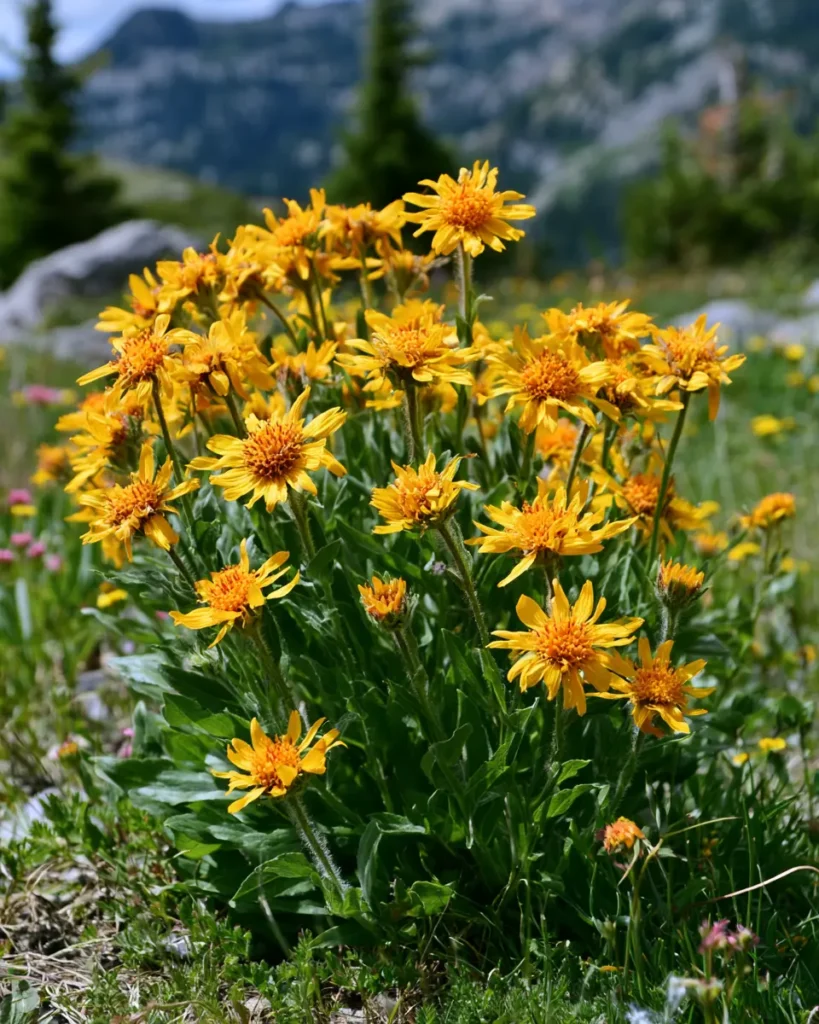
Arnica (Arnica montana)
Traditional Uses of Arnica
Muscle and Joint Comfort: Arnica is traditionally used externally in creams, gels, oils, and salves for areas that feel sore after strain, exertion, or minor bumps.
Bruise and Bump Support: Topical arnica has a long folk reputation for use after minor knocks and bruises, as long as the skin is not broken.
Circulation at the Surface: Herbalists traditionally describe arnica as stimulating to local surface circulation when applied externally.
Sports and Recovery Traditions: Arnica appears often in massage oils and rubs for athletes, hikers, gardeners, and anyone who occasionally forgets they are not 22 anymore.
“Arnica is the golden flower you keep for bumps and bruises — useful, respected, and definitely not invited to tea.”
Available Arnica Products
Here’s the list for Arnica — note that arnica is used almost exclusively topically/homeopathically (it’s toxic if taken orally in undiluted form), so the formats reflect that:
Arnica Gel — Topical Gel
A fast-absorbing, non-greasy gel applied to skin for relief of joint pain, muscle soreness, and swelling from bruises or minor injuries.
Buy Arnica Gel
Arnica Cream — Topical Cream
A fast-absorbing cream massaged into the skin to help ease joint pain, muscle stiffness, and bruise-related discoloration.
Buy Arnica Cream
Arnica Massage Oil — Massage/Body Oil
An arnica-infused body oil designed for massage, used to help ease sore muscles, tension, and post-exercise soreness.
Buy Arnica Massage Oil
Arnica Roll-On — Roll-On
A portable, mess-free roll-on formula combining arnica with cooling agents like menthol for on-the-go relief of muscle, joint, and back pain.
Buy Arnica Roll-On
Arnica Homeopathic Pellets — Homeopathic Pellets
A homeopathic oral remedy made from diluted arnica (Arnica montana), traditionally used for muscle pain, stiffness, and swelling from injuries or bruises.
Buy Arnica Homeopathic Pellets
Arnica Pain Relief Patches — Topical Patches
Adhesive patches infused with arnica and other botanicals, worn on the skin over the affected area for extended, gradual pain relief throughout the day.
Buy Arnica Pain Relief Patches
⚠️ Important: Arnica is for external/topical use only (or highly diluted homeopathic oral pellets) — undiluted arnica is toxic if ingested and should never be taken as a tea, tincture, or raw herb internally. Do not apply to broken or irritated skin, and avoid use during pregnancy or breastfeeding without consulting a healthcare provider. Discontinue if irritation occurs.
Key Herbal Actions
Arnica is known as a topical vulnerary, rubefacient, anti-inflammatory-supportive herb, analgesic-supportive herb, antimicrobial-supportive herb, and circulatory stimulant.
Topical Vulnerary
A vulnerary herb is traditionally used to support tissue comfort and recovery. Arnica is a classic topical vulnerary for minor bumps and overuse, but only when the skin is intact.
Rubefacient
A rubefacient is an herb that increases surface warmth and redness by stimulating local circulation. Arnica can create this warming, moving effect on the skin, which is why it is used in rubs and liniments.
Anti-Inflammatory-Supportive Herb
Arnica contains sesquiterpene lactones, especially helenalin, that have been studied for effects on inflammatory pathways. This supports its traditional topical use, but it also explains why arnica can irritate skin and should not be taken internally.
Analgesic-Supportive Herb
Topical arnica is traditionally used where temporary comfort is desired for muscles and joints. Evidence is mixed, and it should not replace medical care for injury, severe pain, swelling, or trauma.
Antimicrobial-Supportive Herb
Arnica extracts and constituents have shown antimicrobial activity in laboratory studies. This does not mean arnica should be used on open wounds, because broken skin can increase irritation and absorption risk.
Circulatory Stimulant
Arnica is traditionally considered stimulating to local circulation. This is why it appears in massage oils and external rubs for areas that feel stiff or overworked.
Active Compounds and Extraction
Arnica contains sesquiterpene lactones, helenalin, dihydrohelenalin esters, flavonoids, phenolic acids, thymol derivatives, volatile oils, coumarins, tannins, carotenoids, and polysaccharides.
Sesquiterpene Lactones
Sesquiterpene lactones are one of arnica’s most important compound groups. Helenalin and dihydrohelenalin esters are especially associated with arnica’s activity and irritation potential.
These compounds are studied for effects on inflammatory signaling, but they are also responsible for much of arnica’s toxicity risk. This is why arnica is used externally and cautiously.
Best extraction: infused oil, alcohol tincture for liniment, topical extract, and commercial standardized topical products.
To make arnica infused oil, place dried arnica flowers in a clean jar and cover with olive oil or another carrier oil. Infuse for 2–4 weeks in a warm place out of direct sunlight, then strain very well. Use only externally on unbroken skin.
Helenalin
Helenalin is a key sesquiterpene lactone in arnica. It is biologically active and also potentially toxic and irritating.
Best extraction: alcohol-based liniment, topical extract, infused oil, and commercial topical preparations.
Because helenalin can irritate skin, homemade arnica preparations should be mild and patch-tested. Do not apply arnica to cuts, scrapes, ulcers, burns, rashes, or broken skin.
Dihydrohelenalin Esters
Dihydrohelenalin esters are related arnica compounds that contribute to the plant’s topical activity. Their levels can vary depending on species, growing conditions, and processing.
Best extraction: alcohol-water topical extracts, infused oil, and commercial topical products.
Commercial arnica products are often safer for beginners because they are formulated for skin use and labeled with directions.
Flavonoids
Arnica flowers contain flavonoids that contribute antioxidant and tissue-supportive activity. These compounds work alongside sesquiterpene lactones rather than replacing them.
Best extraction: infused oil, alcohol-water extract, and topical preparations.
Flavonoids can be extracted into hydroalcoholic preparations, while some plant compounds transfer into infused oils used for salves.
Phenolic Acids
Phenolic acids are antioxidant compounds found in many herbs. In arnica, they add to the plant’s broader topical-support profile.
Best extraction: alcohol-water liniment, topical extract, and infused oil.
A topical liniment can extract phenolic compounds, but liniments should not be applied to irritated or broken skin.
Thymol Derivatives and Volatile Oils
Arnica contains small amounts of volatile compounds, including thymol derivatives. These contribute to aroma and antimicrobial research interest.
Best extraction: alcohol-based liniment, topical extract, infused oil, and commercial preparations.
Keep infused oils and salves away from high heat, because heat can degrade delicate aromatic compounds.
Coumarins
Coumarins are aromatic plant compounds found in many herbs. In arnica, they contribute to the plant’s complex chemistry and are part of the reason caution is advised with bruising, bleeding, and surgery contexts.
Best extraction: alcohol-water extract and topical preparations.
People using blood thinners or preparing for surgery should be cautious even with topical use, especially over large areas.
Tannins
Tannins add mild astringent qualities. In arnica, they are secondary to sesquiterpene lactones but still contribute to tissue-toning character.
Best extraction: topical liniment, infused oil, and external wash in professionally prepared forms.
Again, arnica washes should not be used on open wounds. External use does not automatically mean risk-free.
Carotenoids
Carotenoids give many yellow-orange flowers part of their color. Arnica’s golden petals carry these pigments, which contribute to its visual and chemical identity.
Best extraction: infused oil and topical preparations.
Oil infusion is a traditional way to capture some lipophilic flower constituents for external use.
Harvesting and Storing Right
Arnica flowers are harvested when fully open and vibrant yellow, usually in late spring to summer depending on region and elevation. The best time of day is late morning after dew has dried.
Wild arnica populations can be vulnerable, and Arnica montana is protected or restricted in some regions. Ethical sourcing matters. For most people, buying cultivated dried arnica from a reputable supplier is better than wild harvesting.
Dry the flower heads quickly in a shaded, well-ventilated place. Flower heads can hold moisture, so they should be dried thoroughly to prevent mold.
Store dried arnica flowers in an airtight container away from heat, light, and moisture. Use within about 1 year for best quality.
Arnica infused oil should be stored in a clean, dry bottle away from heat and light. It usually keeps for 6–12 months depending on the carrier oil and storage conditions.
Arnica creams, gels, salves, and liniments should be stored according to product labels. Discard products that smell rancid, separate oddly, or are past expiration.
Body Functions Arnica Can Support
Arnica can support Muscles and joint, Skin, Circulation, and Spine and bones.
Muscles and Joint
Arnica is best known for topical use on sore muscles and overworked joints. Its sesquiterpene lactones and traditional rubefacient action explain why it appears in gels, creams, and massage oils.
It should not be used as a substitute for medical care after a serious injury. Severe pain, swelling, deformity, numbness, loss of function, or pain after a fall should be evaluated.
Skin
Arnica is used externally on intact skin only. It is traditionally applied for minor bumps, bruises, and tissue discomfort where the skin surface is not broken.
Because arnica can irritate skin, patch testing is wise. People sensitive to daisies, ragweed, chamomile, calendula, or other Asteraceae-family plants should be especially cautious.
Circulation
Arnica is traditionally considered a surface circulatory stimulant. When used topically, it may create warmth, redness, or a feeling of increased local movement.
This is not appropriate for everyone. Avoid using arnica over varicose veins, broken capillaries, open wounds, inflamed rashes, or large areas without professional guidance.
Spine and Bones
Arnica is often used topically around areas of musculoskeletal discomfort, including the back, neck, shoulders, knees, and ankles. This use is for temporary comfort around soft tissues, not for treating bone injury.
Do not use arnica to self-treat suspected fractures, serious sprains, head injuries, or spinal trauma. Medical evaluation is important in those situations.
Safety and Practical Considerations
Arnica is for external use only unless it is a properly prepared homeopathic product under appropriate guidance. Non-homeopathic internal arnica can be toxic and may cause vomiting, diarrhea, dizziness, heart rhythm problems, shortness of breath, organ damage, or worse.
Do not apply arnica to broken skin, cuts, scrapes, burns, ulcers, rashes, infected skin, surgical wounds, or mucous membranes. Broken skin can increase irritation and absorption.
Do not use arnica near the eyes, mouth, genitals, or inside the nose. Wash hands after applying topical products.
People allergic to plants in the Asteraceae family should avoid or patch-test carefully. This family includes ragweed, daisies, chamomile, calendula, echinacea, and yarrow.
People taking blood thinners, antiplatelet medications, NSAIDs, blood pressure medication, heart medication, or multiple prescriptions should ask a qualified healthcare professional before using arnica, especially over large areas or repeatedly.
Avoid arnica during pregnancy and breastfeeding unless a qualified clinician approves. Avoid use before and after surgery unless cleared by a healthcare professional.
Children, older adults, and sensitive individuals should use extra caution. Arnica products should be kept away from pets, and pet use should only be guided by a veterinarian.
Stop using arnica if redness, itching, rash, blistering, burning, swelling, or worsening pain occurs.
FAQ
What does arnica taste like?
Arnica should not be tasted or used as tea. It is not a safe internal herb in normal herbal doses.
When is the best time to use arnica?
Topical arnica is traditionally used after minor bumps, overworked muscles, or occasional joint strain, as long as the skin is unbroken. It should not be used on serious injuries without medical guidance.
Is fresh or dried arnica better?
Dried arnica flowers are the most common form used by herbalists for infused oils and salves. Fresh arnica is less commonly used and should only be handled by experienced practitioners.
Is arnica cream, gel, or oil better?
Gel is light and absorbs quickly, cream is balanced and easy to apply, and infused oil or salve stays on the skin longer. The best form depends on preference and the area of use.
Can arnica be used daily?
Arnica is usually best for short-term topical use. Daily or long-term use may increase the risk of skin irritation and should be discussed with a qualified professional.
How should arnica be stored?
Store dried arnica flowers in an airtight container away from heat, light, and moisture. Store creams, gels, oils, and salves according to the product label.
Does arnica combine well with other herbs?
Yes, in topical formulas arnica is often combined with calendula, comfrey leaf, St. John’s wort oil, chamomile, lavender, ginger, cayenne, or menthol. Each of these herbs has its own safety considerations.
Is arnica safe for everyone?
No. Arnica is not safe for internal use in normal herbal preparations and may not be appropriate for people with allergies, pregnancy, breastfeeding, blood thinner use, medication use, broken skin, or sensitive skin.
Is arnica the same as homeopathic arnica?
No. Herbal arnica and homeopathic arnica are very different. Homeopathic products are highly diluted, while herbal arnica extracts, oils, and tinctures contain active plant compounds and require more caution.
Can arnica be used for pets?
Pet use should only be guided by a veterinarian. Arnica can be toxic if ingested, and animals may lick topical products from their skin or fur.
Disclaimer
This content is educational only. It is not medical advice, diagnosis, or treatment. Herbs may interact with medications or health conditions. People who are pregnant, breastfeeding, managing a medical condition, taking prescription medications, or preparing for surgery should consult a qualified healthcare professional before using herbs.
References
Memorial Sloan Kettering Cancer Center: Arnica
European Medicines Agency: Arnica Flower
PubMed: Arnica montana and Postoperative Recovery Meta-analysis
PubMed: Arnica for Pain and Bruising Research
PubMed: Arnica montana Phytochemistry Helenalin
PubMed: Topical Herbal Therapies for Osteoarthritis