


Skullcap is a gentle-looking mint-family herb with small blue-purple flowers and a long history in North American and Western herbal traditions. The part most commonly used is the aerial portion of the plant: leaves, stems, and flowering tops.
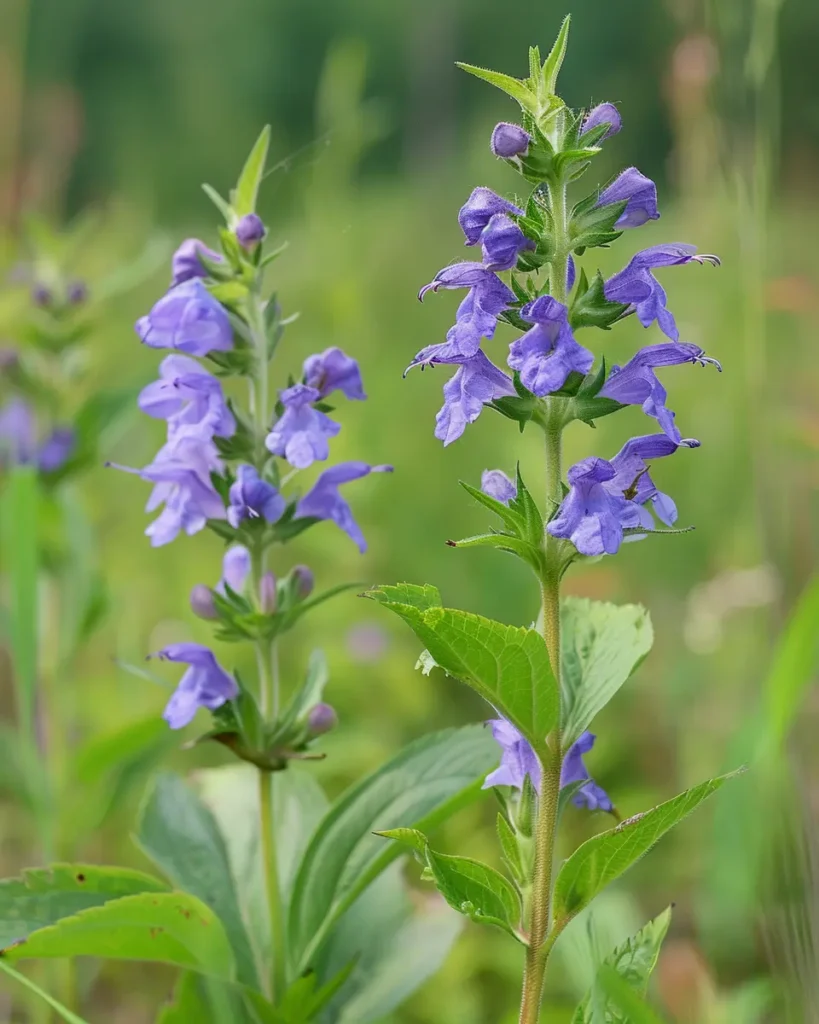
Skullcap (Scutellaria lateriflora) – Common names include American skullcap, blue skullcap, mad-dog skullcap, side-flowering skullcap, and hoodwort. This post focuses on American skullcap, Scutellaria lateriflora, not Chinese skullcap root, Scutellaria baicalensis, which is a different herb with different traditional uses and chemistry.
Traditionall uses of skullcap:
Nervous System Support: Skullcap is traditionally used as a calming nervine, especially when the nervous system feels tense, jumpy, overstimulated, or worn thin.
Stress Support: Herbalists often choose skullcap when stress shows up as restlessness, irritability, muscle tension, or difficulty settling.
Sleep Rhythm Support: Skullcap is commonly included in evening tea blends when the mind and body need help shifting into a quieter state.
Muscle Tension Support: As a relaxing nervine and mild antispasmodic, skullcap is traditionally used when tension seems to live in the shoulders, jaw, neck, or belly.
Skullcap is not flashy. It is the herb equivalent of someone gently dimming the lights and saying, “Maybe we do not need to solve every life problem at 11:47 p.m.”
“Skullcap is a soft hand on the shoulder of an overworked nervous system.”
Available Skullcap Products
Dried Skullcap
Dried skullcap aerial parts are one of the most common forms. They are used in teas, tinctures, capsules, sleep blends, stress-support formulas, and relaxing herbal combinations. Good dried skullcap should look green to olive-green with bits of leaf, stem, and sometimes flower.
Quality matters with skullcap because adulteration with germander species has been reported historically. Choose reputable suppliers that clearly identify Scutellaria lateriflora and use proper quality testing.
Skullcap Tea
Skullcap tea is a traditional preparation for nervous system support. It has a mild, green, slightly bitter, earthy taste. It blends well with lemon balm, passionflower, oat straw, chamomile, lavender, rose, and motherwort.
A simple skullcap tea can be made with 1–2 teaspoons dried herb per cup of hot water. Cover, steep for 10–15 minutes, then strain.
Skullcap Tincture
Skullcap tincture is one of the most popular forms. It is convenient, shelf-stable, and commonly used in nervous system formulas. Fresh skullcap tincture is especially valued by many herbalists because the fresh aerial herb has a lively quality that can be difficult to preserve fully in dried form.
Skullcap Capsules
Skullcap capsules may contain powdered herb or dry extract. They are convenient for people who do not enjoy tea or tinctures. Labels should clearly identify Scutellaria lateriflora, the aerial part, serving size, and whether the product is whole herb or extract.
Skullcap Glycerite
Skullcap glycerite is an alcohol-free liquid preparation. It may be useful for people avoiding alcohol, though glycerites may be milder than tinctures. Because skullcap is often used for gentle nervous system support, a glycerite can be a pleasant and practical option.
Skullcap Powder
Skullcap powder is used in capsules, powdered blends, and some tea formulas. It loses freshness faster than cut herb and can be harder to assess visually for quality. Buy small amounts from trusted suppliers.
Fresh Skullcap
Fresh skullcap is commonly tinctured shortly after harvest. Fresh plant tinctures are valued in Western herbalism for skullcap’s relaxing nervine qualities. Proper identification is essential because several mint-family plants can look somewhat similar to beginners.
Skullcap Extract
Skullcap extracts may appear in sleep, mood, relaxation, and stress-support supplements. Extracts are more concentrated than tea and should be used with more caution, especially when combined with sedatives, alcohol, or medications that affect the nervous system.
Skullcap Essential Oil
Skullcap essential oil is not a standard herbal product. Skullcap is mainly used as tea, tincture, capsules, glycerite, powder, or extract. If a product is labeled “skullcap oil,” read carefully because it may be an infused oil, fragrance oil, or a blend rather than a true essential oil.
Key Herbal Actions
Skullcap is known as a nervine, mild sedative, antispasmodic, relaxant, trophorestorative, anxiolytic-supportive herb, bitter tonic, and mild analgesic-supportive herb.
Nervine
A nervine is an herb traditionally used to support the nervous system. Skullcap is one of the classic relaxing nervines in Western herbalism. It is often used when stress feels edgy, tense, reactive, or overstimulating.
Mild Sedative
A mild sedative supports relaxation and sleepiness without being as forceful as stronger sedative herbs. Skullcap is commonly included in evening formulas, especially when sleeplessness is tied to tension or mental overactivity. It may cause drowsiness in some people.
Antispasmodic
An antispasmodic herb is traditionally used to ease mild spasms or tension. Skullcap is used when nervous tension appears in muscles, the digestive system, or general body tightness. Its action is gentle and relaxing rather than numbing.
Relaxant
Relaxant herbs help the body shift out of a held, braced state. Skullcap is especially known for relaxing the nervous system. This makes it useful in formulas where the goal is to soften tension rather than stimulate energy.
Trophorestorative
A trophorestorative is traditionally understood as an herb that nourishes or restores a specific tissue or system over time. Skullcap is often described as a nervous system trophorestorative. This is a traditional herbal concept, not a claim that skullcap repairs nerve disease.
Anxiolytic-Supportive Herb
Skullcap has been studied in humans for effects on mood and anxiety-related symptoms, including a small randomized, placebo-controlled crossover study using Scutellaria lateriflora. Results suggest possible calming effects, but the research base remains limited. It should not replace mental health care.
Bitter Tonic
Skullcap has a mild bitter taste. Bitter herbs can gently stimulate digestive secretions through taste. In skullcap, this is secondary to its nervine action but may still support digestion when stress and tension affect the belly.
Mild Analgesic-Supportive Herb
Skullcap is sometimes used in traditional formulas when discomfort is linked with tension or nervous system irritation. It is not a strong pain-relieving herb. Its role is more about relaxation and nervous system support.
Active Compounds and Extraction
Skullcap contains flavonoids, baicalin, baicalein, scutellarin, wogonin, apigenin, luteolin, phenolic acids, diterpenes, tannins, volatile compounds, minerals, and polysaccharides.
Flavonoids
Flavonoids are the most discussed compound group in skullcap. They include baicalin, baicalein, scutellarin, wogonin, apigenin, and luteolin derivatives. These compounds are studied for antioxidant, nervous system, and inflammation-related activity.
Best extraction: Hot infusion, tincture, glycerite.
To make skullcap tea, use 1–2 teaspoons dried herb per cup of hot water. Cover and steep 10–15 minutes, then strain. Covering helps preserve delicate aromatic qualities.
Baicalin
Baicalin is a flavone glycoside found in skullcap species. It is more famously abundant in Chinese skullcap root, but American skullcap also contains related flavonoids. Baicalin is studied for nervous system, antioxidant, and inflammation-related activity.
Best extraction: Hot infusion, tincture, standardized extract.
A hot infusion extracts water-soluble flavonoid glycosides reasonably well. A tincture may extract a broader range of related compounds.
Baicalein
Baicalein is the aglycone form related to baicalin. It is studied for antioxidant and neurological effects, mostly in laboratory and preclinical research. In skullcap, it contributes to the broader flavonoid profile rather than acting alone.
Best extraction: Alcohol-water tincture, extract.
Baicalein is less water-soluble than some glycosides, so alcohol-water extraction may capture it better than tea alone.
Scutellarin
Scutellarin is a flavonoid associated with several Scutellaria species. It is studied for antioxidant and vascular-related effects in preclinical research. In American skullcap, it is one of several flavonoids that help define the plant chemically.
Best extraction: Hot infusion, tincture.
A covered infusion or tincture is suitable for general whole-herb use. For everyday herbal tea, avoid boiling the aerial parts aggressively.
Wogonin
Wogonin is another flavonoid found in skullcap species. It has been studied for GABA-related and anti-inflammatory mechanisms in early research. This may help explain why skullcap is traditionally used as a calming nervine, though human evidence is still limited.
Best extraction: Alcohol-water tincture, extract.
A tincture is often preferred for a broader flavonoid extraction. Concentrated extracts should be used more cautiously than tea.
Apigenin
Apigenin is a flavonoid also found in chamomile and other calming herbs. It is studied for interactions with nervous system pathways and antioxidant activity. In skullcap, apigenin contributes to its relaxing herb profile.
Best extraction: Hot infusion, tincture, glycerite.
Tea is a gentle way to extract apigenin-containing compounds. A glycerite may be useful for alcohol-free preparations.
Luteolin
Luteolin is a flavonoid found in many herbs and vegetables. It is studied for antioxidant and inflammation-related activity. In skullcap, it adds to the whole-plant calming and tissue-supportive chemistry.
Best extraction: Hot infusion, tincture.
A standard infusion extracts some luteolin derivatives. Tinctures may capture a broader range.
Phenolic Acids
Phenolic acids are antioxidant plant compounds. They contribute to skullcap’s broader tissue-supportive activity. They are not the main reason skullcap is famous, but they support the whole-herb profile.
Best extraction: Hot infusion, tincture, glycerite, vinegar.
A skullcap vinegar is less common than tea or tincture, but vinegar can extract some minerals and phenolic compounds. For nervous system use, tea and tincture remain more typical.
Tannins
Tannins are astringent compounds that gently tone tissues. Skullcap contains modest tannins, giving the herb a slightly drying or bitter edge. This action is secondary to its nervine profile.
Best extraction: Hot infusion, tincture.
If skullcap tea tastes too bitter or drying, steep it for less time or blend it with lemon balm, oat straw, or rose.
Volatile Compounds
Skullcap has a mild aroma compared with strongly aromatic herbs like lavender or peppermint. Its volatile compounds are subtle, but they contribute to the sensory character of fresh and dried herb. They are best protected by covered infusions and gentle drying.
Best extraction: Covered hot infusion, fresh tincture.
Do not hard-boil skullcap leaf and flowering tops. Treat it like a delicate aerial herb.
Harvesting and Storing Right
Skullcap aerial parts are usually harvested when the plant is in flower, often in mid to late summer depending on region. The leaves, stems, and flowering tops are gathered. Flowering helps confirm identity and captures the plant at a strong herbal stage.
Harvest in late morning after dew has dried but before strong afternoon heat. Choose healthy, unsprayed plants from clean areas. Since skullcap often grows in moist meadows, stream edges, and damp places, dry it carefully to prevent mold.
Spread the aerial parts loosely in a shaded, well-ventilated area. Dry quickly but gently. Once fully dry, store in an airtight container away from heat, light, and moisture.
Dried skullcap is usually best used within 1 year. Powder is best used within 6 months. Fresh skullcap tincture can remain stable for several years when properly made and stored. Prepared tea should be used fresh.
Body Functions Skullcap Can Support
Skullcap can support the nervous system, stress support, sleep, brain, muscles and joint, digestion system, energy and vitality, and adrenal support.
Nervous System
Skullcap is primarily a nervous system herb. Its traditional use centers on tension, overstimulation, irritability, and nervous exhaustion. Flavonoids such as baicalin, baicalein, wogonin, apigenin, and related compounds help explain modern interest in its calming effects.
Stress Support
Skullcap is often used when stress feels tense, reactive, or “wired.” A small human trial found that Scutellaria lateriflora had measurable effects on mood in healthy volunteers, though more research is needed. In herbal practice, it is usually used as part of a broader stress-support plan.
Sleep
Skullcap is commonly included in evening blends for occasional sleeplessness related to tension or mental overactivity. It is not a strong knockout herb. It is better understood as a gentle relaxant that may help the body settle.
Brain
Skullcap’s flavonoids are studied for nervous system and GABA-related activity, mostly in laboratory and preclinical models. Traditional herbalism uses skullcap when the mind feels overstimulated or restless. This is supportive, not a treatment for neurological disease.
Muscles and Joint
Skullcap’s antispasmodic and relaxant actions make it relevant when muscle tension is connected with stress. It may be used in formulas for tight shoulders, jaw tension, or tension-related body discomfort. It is not a primary joint herb like turmeric, boswellia, or rosehip.
Digestion System
Stress often affects digestion, and skullcap may help when digestive discomfort is tied to nervous tension. Its mild bitter and antispasmodic qualities support this traditional use. It blends well with lemon balm, chamomile, fennel, and peppermint.
Energy and Vitality
Skullcap does not stimulate energy directly. Instead, it may support vitality by helping an overworked nervous system rest. Sometimes the most energizing thing is finally getting out of emergency mode.
Adrenal Support
In herbal language, skullcap may be used in stress formulas that support adrenal resilience indirectly through nervous system relaxation. This does not mean it treats adrenal disease. It is best viewed as part of a calming and restorative herbal approach.
Safety and Practical Considerations
Skullcap should be used thoughtfully, especially because product quality and correct identification matter.
Skullcap has been linked to rare cases of liver injury, usually in products containing multiple herbs or where adulteration was suspected. Historical concerns include adulteration with germander species, which are known to be potentially hepatotoxic. Choose reputable suppliers with quality testing and clear botanical identification.
Do not combine skullcap with alcohol, sedatives, sleep medications, anti-anxiety medications, opioids, muscle relaxants, or other central nervous system depressants unless supervised by a qualified healthcare professional. Skullcap may increase drowsiness.
People taking antidepressants, psychiatric medications, seizure medications, liver-metabolized medications, or blood pressure medications should consult a qualified healthcare professional before using skullcap regularly.
Pregnant or breastfeeding people should avoid medicinal skullcap unless guided by a qualified healthcare professional. Safety data is limited. Children, older adults, and sensitive individuals may respond more strongly and should use only mild preparations with guidance.
Avoid driving, operating machinery, or doing tasks requiring full alertness after using skullcap until you know how it affects you. Stop using it and seek medical advice if symptoms such as unusual fatigue, dark urine, yellowing skin or eyes, severe nausea, or upper right abdominal pain occur.
Do not confuse American skullcap aerial parts with Chinese skullcap root. They are different herbs with different uses, plant parts, and safety considerations.
FAQ
What does skullcap taste like?
Skullcap tastes mild, green, earthy, slightly bitter, and somewhat grassy. It is not strongly aromatic. Many people prefer it blended with lemon balm, oat straw, passionflower, chamomile, or rose.
When is the best time to use skullcap?
Skullcap is often used in the evening or during times of nervous tension. Some people use small amounts during the day, but it may cause drowsiness. Try it first when you do not need to drive or focus intensely.
Is fresh or dried skullcap better?
Both can be useful. Fresh skullcap is especially valued for tinctures by many herbalists. Dried skullcap is more common and practical for tea.
Is skullcap tea, tincture, or capsule better?
Tea is gentle and traditional. Tincture is convenient and often preferred when a stronger or faster preparation is desired. Capsules are practical but depend heavily on product quality and correct botanical identity.
Can skullcap be used daily?
Some herbalists use skullcap daily for short periods, but regular use should be thoughtful. People taking medications, pregnant or breastfeeding people, and those with liver concerns should seek professional guidance. Product quality is especially important.
How should skullcap be stored?
Store dried skullcap in an airtight container away from heat, light, and moisture. Use dried herb within about 1 year for best quality. Fresh tincture should be stored tightly closed in a cool, dark place.
Does skullcap combine well with other herbs?
Yes. Skullcap combines well with passionflower, lemon balm, oat straw, chamomile, lavender, rose, motherwort, hops, and valerian. For digestive tension, it can pair with fennel, peppermint, or chamomile.
Is skullcap safe for everyone?
No. Skullcap may not be appropriate for people taking sedatives, psychiatric medications, seizure medications, or liver-metabolized medications. It is also not recommended for pregnancy or breastfeeding unless professionally guided.
Can skullcap be used for pets?
Skullcap appears in some animal calming formulas, but pet use should be guided by a veterinarian or qualified animal herbalist. Animals metabolize herbs differently than humans. Do not give skullcap tinctures, extracts, or blends to pets without professional guidance.
Is American skullcap the same as Chinese skullcap?
No. American skullcap is usually Scutellaria lateriflora, and the aerial parts are used as a calming nervine. Chinese skullcap is usually Scutellaria baicalensis, and the root is used in Traditional Chinese Medicine for different purposes. They should not be substituted casually.
Disclaimer
This content is educational only. It is not medical advice, diagnosis, or treatment. Herbs may interact with medications or health conditions. People who are pregnant, breastfeeding, managing a medical condition, taking prescription medications, or preparing for surgery should consult a qualified healthcare professional before using herbs.
References
PubMed: American Skullcap Scutellaria lateriflora Randomised Controlled Crossover Study
PubMed: Skullcap and Germander: Preventing Potential Toxicity Through Improved Quality Control
PMC: Comparison of the Phenolic Component Profiles of Skullcap and Germander
PubMed: Scutellaria lateriflora as a Medicinal Plant with Anxiolytic Properties
American Herbal Pharmacopoeia: Skullcap Aerial Parts
American Botanical Council: Adulteration of Skullcap with American Germander