Itchy skin, also called pruritus, is that irritating skin sensation that makes you want to scratch. It may show up in one small area or across larger parts of the body, and it can feel mild, prickly, burning, dry, or deeply annoying.
Learn more about Itchy Skin
Why It Happens
Itchy skin can happen for many reasons, including dryness, eczema, allergic reactions, insect bites, irritation from soaps, plant exposure, heat, stress, medications, or certain internal health conditions.
Main Types in Plain Language
Dry itching often comes with tight, flaky, rough skin. Irritated itching may follow contact with detergents, fragrances, wool, plants, or skincare products. Rash-related itching may appear with bumps, redness, hives, or inflamed patches. Whole-body itching without a clear rash needs extra attention because it can sometimes reflect deeper health changes.
Common Triggers
Common triggers include hot showers, dry air, sweating, harsh soaps, fragrance, new lotions, laundry detergents, certain fabrics, bug bites, stress, and scratching itself. Scratching may feel satisfying for two glorious seconds, then it often makes the skin angrier.
How It Shows Up Daily
Itchy skin may disrupt sleep, distract attention, and make clothing feel irritating. Some people scratch without noticing, especially at night. Others feel a crawling, prickling, or burning sensation that keeps pulling their attention back to the skin.
Traditional Herbal View
Traditional herbalism often looks at itchy skin through patterns of dryness, heat, irritation, allergic reactivity, or poor skin barrier comfort. Herbalists may choose cooling herbs for hot, red skin, demulcents for dryness, vulneraries for irritated skin, and gentle nervines when stress seems to worsen the itch.
How Herbs Can Help Itchy Skin
Herbalism traditionally sees itchy skin as a pattern of dryness, heat, irritation, or over-reactive skin that needs calming from the outside and support from within. Demulcents help soften dry tissues, vulneraries support skin comfort, anti-inflammatory herbs calm visible irritation, and nervines support stress-related skin tension. Herbalists choose between those actions by noticing whether the skin feels dry, hot, rashy, sensitive, stress-triggered, or irritated by contact. These are herbs traditionally used when itchy skin happens: calendula, chamomile, oat straw, rolled oats, lavender, plantain leaf, aloe vera, nettle, burdock root, green tea, witch hazel, chickweed, licorice root, marshmallow root, spearmint, peppermint, red clover, dandelion root, shea butter, turmeric, neem leaf, lemon balm, tulsi, rose petals.
“Itchy skin is the body’s tiny alarm bell; herbs help you answer calmly instead of scratching like you owe the skin an apology.”
Recipes & Remedies Itchy Skin
Herbal Preparations
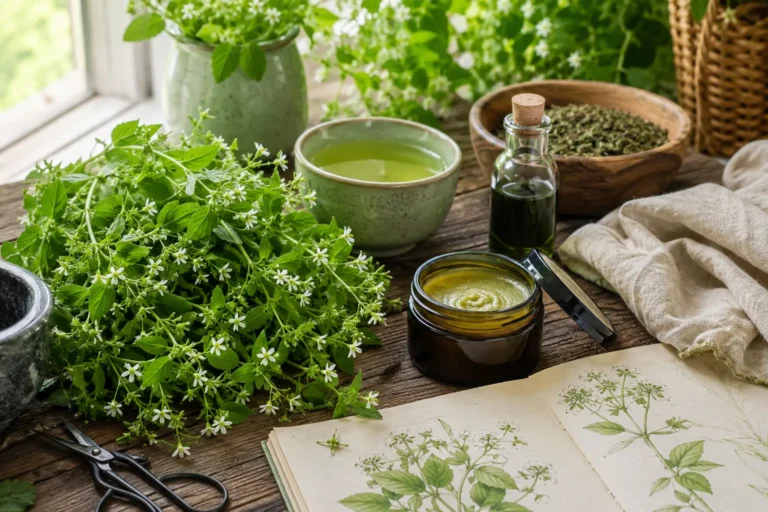
Cooling Oat and Calendula Skin Compress
This simple topical preparation uses oats, calendula, and chickweed for skin that feels itchy, dry, warm, or irritated.
Ingredients with exact measurements
- 2 tablespoons rolled oats
- 1 tablespoon dried calendula flowers
- 1 tablespoon dried chickweed
- 2 cups hot water
- Clean cotton cloth or soft washcloth
Step-by-step preparation instructions
- Add oats, calendula, and chickweed to a heat-safe bowl.
- Pour 2 cups hot water over the mixture.
- Cover and steep for 20 minutes.
- Strain through a fine mesh strainer or clean cloth.
- Let the liquid cool to room temperature.
- Soak a clean cloth in the liquid.
- Apply the cloth to the itchy area for 10 to 15 minutes.
- Pat the skin dry gently.
How to use
Use once or twice daily as needed for mild, non-broken itchy skin. Do not apply to open wounds, infected-looking skin, or severe rashes. Stop using it if the skin stings, burns, or looks worse.
Food for support Itchy Skin
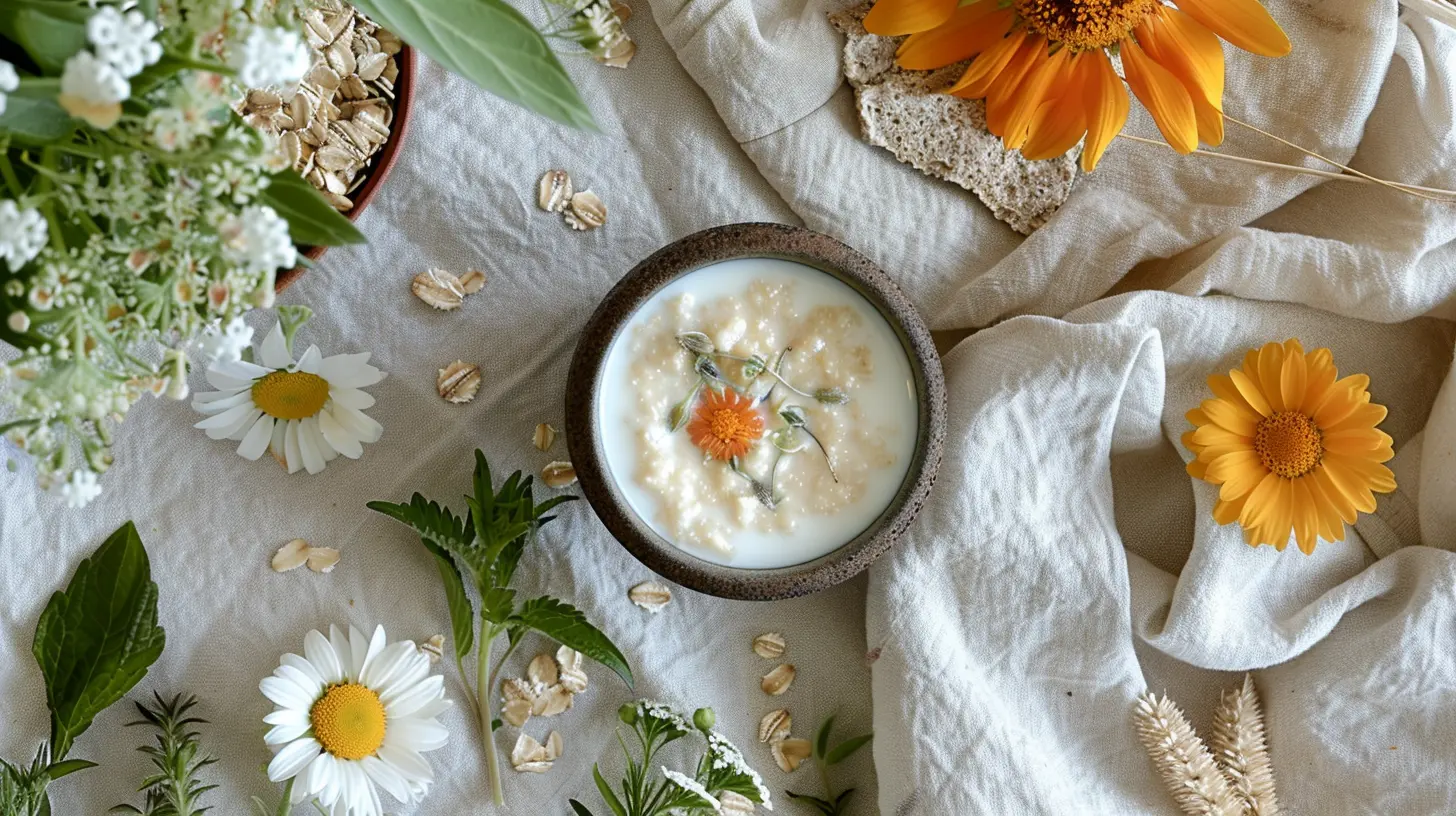
Skin-Comfort Oatmeal with Blueberries and Ground Flax
This gentle meal supports everyday nourishment with oats, berries, and healthy fats. It works well when the skin feels dry and the body wants breakfast without drama.
Ingredients with exact measurements
- 1/2 cup rolled oats
- 1 cup water or unsweetened oat milk
- 1/2 cup blueberries
- 1 tablespoon ground flaxseed
- 1 teaspoon honey, optional
- 1/4 teaspoon cinnamon, optional
- Pinch of salt
Step-by-step preparation instructions
- Add oats, water or oat milk, and salt to a small pot.
- Bring to a gentle simmer.
- Cook for 5 to 7 minutes, stirring often.
- Add blueberries during the final 2 minutes.
- Remove from heat.
- Stir in ground flaxseed.
- Add honey and cinnamon if desired.
How to use
Eat warm as a simple breakfast or snack. Pair it with water and gentle skincare habits, especially during dry seasons. Avoid any ingredient that you know triggers your skin.
What Herbs You Need
For itchy skin, traditional herbalism often uses calendula, chamomile, oat, chickweed, aloe vera, plantain leaf, marshmallow root, nettle, and lemon balm. These herbs do not replace evaluation for severe, spreading, infected, persistent, or unexplained itching.
Calendula
Latin name: Calendula officinalis
Key herbal actions:
Vulnerary: traditionally used to support skin comfort and repair.
Anti-inflammatory: helps calm visible irritation.
Lymphatic: traditionally used when skin feels congested or slow to settle.
Key active compounds: triterpenoids, flavonoids, carotenoids, polysaccharides.
Chamomile
Latin name: Matricaria recutita
Key herbal actions:
Anti-inflammatory: supports calmer-looking irritated skin.
Nervine: traditionally used when stress worsens discomfort.
Antispasmodic: helps ease tension and tightness.
Key active compounds: apigenin, alpha-bisabolol, chamazulene, flavonoids.
Oat
Latin name: Avena sativa
Key herbal actions:
Demulcent: creates a soft, soothing feel on dry or irritated skin.
Nutritive: provides gentle mineral-rich support.
Anti-itch skin protectant: colloidal oatmeal has recognized use for temporary relief of itching and irritation.
Key active compounds: beta-glucans, avenanthramides, starches, proteins, saponins.
Chickweed
Latin name: Stellaria media
Key herbal actions:
Cooling herb: traditionally used when skin feels hot or prickly.
Demulcent: offers a moistening, soothing quality.
Vulnerary: traditionally used for irritated surface tissues.
Key active compounds: flavonoids, saponins, mucilage, phenolic acids.
Aloe Vera
Latin name: Aloe barbadensis miller
Key herbal actions:
Cooling topical herb: traditionally used when skin feels hot or sun-exposed.
Demulcent: offers a moist, gel-like coating.
Vulnerary: traditionally used for minor skin comfort.
Key active compounds: polysaccharides, acemannan, anthraquinones, sterols.
Plantain Leaf
Latin name: Plantago major or Plantago lanceolata
Key herbal actions:
Vulnerary: traditionally used for minor skin irritation.
Demulcent: helps soothe dry or rough tissues.
Astringent: gently tones weepy or irritated surfaces.
Key active compounds: aucubin, allantoin, mucilage, flavonoids, tannins.
Marshmallow Root
Latin name: Althaea officinalis
Key herbal actions:
Demulcent: provides a slippery, soothing texture.
Moistening herb: traditionally used when dryness drives discomfort.
Mucous membrane support: supports irritated internal and external tissues.
Key active compounds: mucilage polysaccharides, flavonoids, phenolic acids.
Nettle
Latin name: Urtica dioica
Key herbal actions:
Nutritive: provides mineral-rich herbal support.
Alterative: traditionally used in long-term skin wellness routines.
Astringent: gently tones tissues.
Key active compounds: flavonoids, chlorophyll, minerals, phenolic acids.
Lemon Balm
Latin name: Melissa officinalis
Key herbal actions:
Nervine: supports calm when stress worsens itching.
Aromatic: contains fragrant volatile oils that support comfort.
Carminative: helps ease digestive tension that may accompany stress patterns.
Key active compounds: rosmarinic acid, citral, citronellal, flavonoids.
Key Herbal Products for Itchy Skin
Colloidal Oatmeal Bath
Colloidal oatmeal is finely ground oat prepared for bath or skincare use. People commonly use it when itching feels dry, widespread, or related to skin barrier discomfort. It feels gentle and practical, but it can make tubs slippery. Someone might choose it over tea when the skin needs direct topical comfort.
Calendula Cream or Salve
Calendula creams and salves use calendula-infused oil or extracts in a topical base. People commonly use them for dry, rough, or mildly irritated skin. Salves feel richer but may feel greasy, while creams absorb faster. Someone might choose calendula when dryness and surface irritation appear together.
Aloe Vera Gel
Aloe vera gel is a cooling topical product from the aloe leaf. People commonly use it when skin feels hot, prickly, or sun-exposed. Some products contain alcohol or fragrance, which may irritate sensitive skin. Someone might choose aloe when they want a light, cooling gel instead of a heavy salve.
Chamomile Skin Cream
Chamomile creams contain chamomile extract or infused oil. People commonly choose them for sensitive-looking, irritated skin or stress-related skin discomfort. Chamomile can trigger reactions in people allergic to ragweed-family plants. Someone might choose it when they want a gentle botanical cream with a soft scent.
Chickweed Salve
Chickweed salve is a traditional topical product made with chickweed-infused oil and wax. People often use it for hot, prickly, or dry itchy skin. It can feel soothing, but salves may not suit oily or acne-prone areas. Someone might choose chickweed when the skin feels warm, scratchy, and uncomfortable.
FAQ
When should I worry about itchy skin?
Get medical guidance if itching lasts more than two weeks, spreads widely, disrupts sleep, or comes with fever, weight loss, night sweats, yellow skin, or severe fatigue. Also seek help if the skin looks infected, painful, swollen, or oozing. Itching without a rash can sometimes need deeper evaluation.
Can herbs stop itching immediately?
Herbs should not be presented as instant itch-stoppers. Topical herbs may support comfort when itching comes from mild dryness or irritation. Strong, persistent, or unexplained itching needs proper care.
Is oatmeal good for itchy skin?
Colloidal oatmeal has a long history of use for temporary relief of itching and irritation. It may feel especially helpful when skin feels dry, tight, or rough. Use plain products without fragrance if your skin reacts easily.
Can I put herbal tea directly on my skin?
You can use some mild herbal teas as a cooled compress on intact skin. Always patch test first on a small area. Do not apply herbal preparations to open, infected, or severe rashes without professional guidance.
Is fresh aloe better than store-bought aloe gel?
Fresh aloe feels simple and cooling, but it must come from a clean, correctly identified plant. Store-bought gel can work well if it avoids fragrance, dyes, and alcohol. Avoid oral aloe latex products unless supervised by a professional.
Can itchy skin come from stress?
Stress can worsen itching for some people, especially when sleep drops and scratching increases. Nervine herbs like lemon balm or chamomile may support relaxation routines. Still, stress does not explain every itch.
Can pets use these remedies?
Do not use human herbal skin products on pets without veterinary guidance. Pets lick their skin and can ingest ingredients that may not suit them. Persistent itching in pets needs a veterinarian, especially with hair loss, wounds, or fleas.
References
American Academy of Dermatology: Atopic Dermatitis Overview
Mayo Clinic: Itchy Skin Symptoms and Causes
National Kidney Foundation: Pruritus and Itchy Skin
NIH/PMC: Mechanisms and Management of Itch in Dry Skin
NCCIH: Chamomile Usefulness and Safety
NIH/PMC: Calendula officinalis Review
User-provided article prompt
Disclaimer
This article is for educational purposes only and does not provide medical advice, diagnosis, or treatment. Itchy skin can come from dryness, allergies, eczema, infection, medication reactions, liver or kidney conditions, nerve issues, and other causes. Seek medical care for severe itching, widespread itching, itching without a clear cause, signs of infection, or symptoms that persist. Talk with a qualified healthcare professional before using herbs if you take medication, have allergies, have a skin condition, are pregnant, are breastfeeding, or are preparing remedies for a child.