

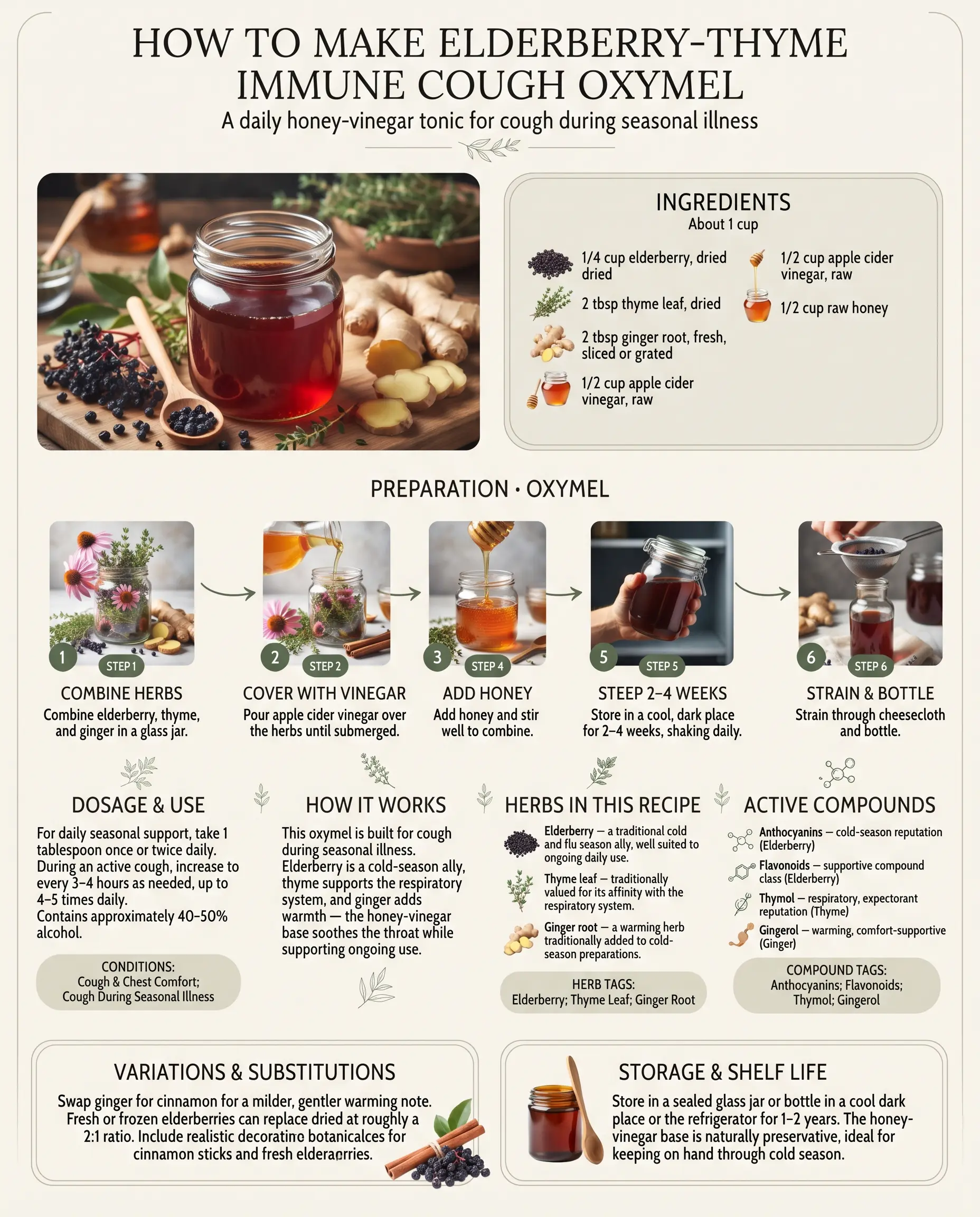
Recipe Details
Preparation Type: Oxymel
Ingredients
1/4 cup elderberry, dried
2 tbsp thyme leaf, dried
2 tbsp ginger root, fresh, sliced or grated
1/2 cup apple cider vinegar, raw
1/2 cup raw honey
Preparation
- Combine elderberry, thyme, and ginger in a clean glass jar.
- Pour apple cider vinegar over the herbs until fully submerged.
- Add honey and stir well to combine.
- Seal with a non-metal lid (or place parchment paper under a metal lid) and shake to mix.
- Store in a cool, dark place for 2–4 weeks, shaking daily.
- Strain through cheesecloth, pressing to extract the liquid, and bottle.
Yield: About 1 cup
Dosage & Usage
For daily seasonal support, take 1 tablespoon once or twice daily. During an active cough, increase to 1 tablespoon every 3–4 hours as needed, up to 4–5 times daily. Can be taken straight, stirred into warm water, or added to tea.
Precautions & Contraindications
Not for children under one year old due to the raw honey. The vinegar base can be hard on tooth enamel over time — consider diluting in water or rinsing your mouth after taking it. Only cooked (decocted) or properly macerated elderberry should be used; raw, uncooked elderberries can cause gastrointestinal upset. Avoid if allergic to plants in the Lamiaceae family (thyme). Consult a healthcare practitioner before use if you have acid reflux, as the vinegar may aggravate symptoms.
Health Conditions & How It Works
This oxymel is built for cough that shows up during a broader seasonal illness, when ongoing, day-after-day support matters more than a single dose. Elderberry has a long tradition of use throughout cold and flu season, thyme is traditionally regarded as supportive of the respiratory system and a lingering cough, and ginger adds warmth and traditional comfort during illness. The honey-vinegar base does double duty — soothing the throat directly on contact while also serving as the traditional delivery format for these seasonal-support herbs.


Herbs Used in This Recipe
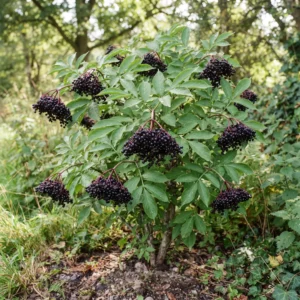
Elderberry — a traditional cold and flu season ally, well suited to ongoing daily use.
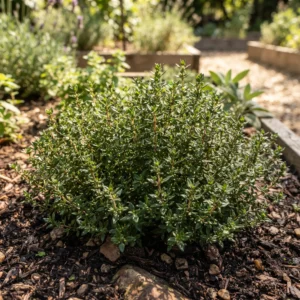
Thyme leaf — traditionally valued for its affinity with the respiratory system and its role in supporting a lingering cough.
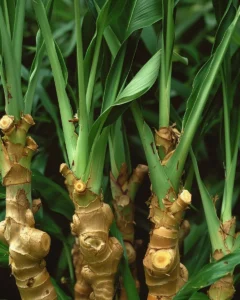
Ginger root — a warming herb traditionally added to cold-season preparations for overall comfort.
Active Compounds
- Anthocyanins — the deep purple flavonoid pigments elderberry is best known for, traditionally tied to its cold-season reputation (Elderberry)
- Flavonoids — a broader class of compounds present alongside anthocyanins in elderberry (Elderberry)
- Thymol — a volatile oil traditionally associated with thyme’s respiratory and expectorant reputation (Thyme)
- Gingerol — traditionally associated with warming, comfort-supportive effects (Ginger)
Ready-to-Use Product
Paradise Farms Elderberry Ginger Oxymel — an apple cider vinegar and honey oxymel built on organic elderberry and ginger, closely aligned with this formula’s daily seasonal-support format (this ready-made version doesn’t include thyme, so it’s a partial rather than exact match).
Variations & Substitutions
Swap ginger for cinnamon if you prefer a milder warming note — cinnamon offers a related, gentler seasonal-support flavor. Fresh elderberries (frozen or fresh) can replace dried at a roughly 2:1 ratio if available in season.
Storage & Shelf Life
Store the finished oxymel in a sealed glass jar or bottle in a cool, dark place (or the refrigerator) for 1–2 years. The honey-vinegar base is naturally preservative, making it well suited to being kept on hand throughout an entire cold season.
FAQ
Why is this recipe meant for daily use rather than just acute dosing?
Unlike a tincture reserved for the first sign of illness, this oxymel’s honey-vinegar base and gentler herb profile make it suitable for ongoing, once- or twice-daily use throughout the whole cold season, stepping up the frequency only when a cough is actively present.
Why must elderberries be cooked or properly macerated before use?
Raw, uncooked elderberries and other parts of the plant contain a compound that can cause nausea or digestive upset — the extended vinegar maceration in this oxymel addresses this, but a quick, uncooked exposure to raw berries should still be avoided.
Can I take this alongside the Echinacea-Ginger tincture or other cold-season recipes?
These are separate recipes meant to stand alone; if combining multiple herbal preparations during cold season, check in with a healthcare practitioner about your overall herb and vinegar intake.
How strong does this taste?
Expect a tangy, tart vinegar base balanced by sweet honey, with a warming ginger bite and a subtle berry and herbal note from the elderberry and thyme — diluting in warm water softens the intensity.
References
Mountain Rose Herbs: Herbal Oxymel Recipes & Benefits
Mountain Rose Herbs: Thyme Leaf Organic
American Botanical Council: HerbalGram
Disclaimer
This content is for educational purposes only and has not been evaluated by the FDA. It is not intended to diagnose, treat, cure, or prevent any disease. Consult a qualified healthcare practitioner before using herbal preparations, particularly if pregnant, nursing, or taking medication.