

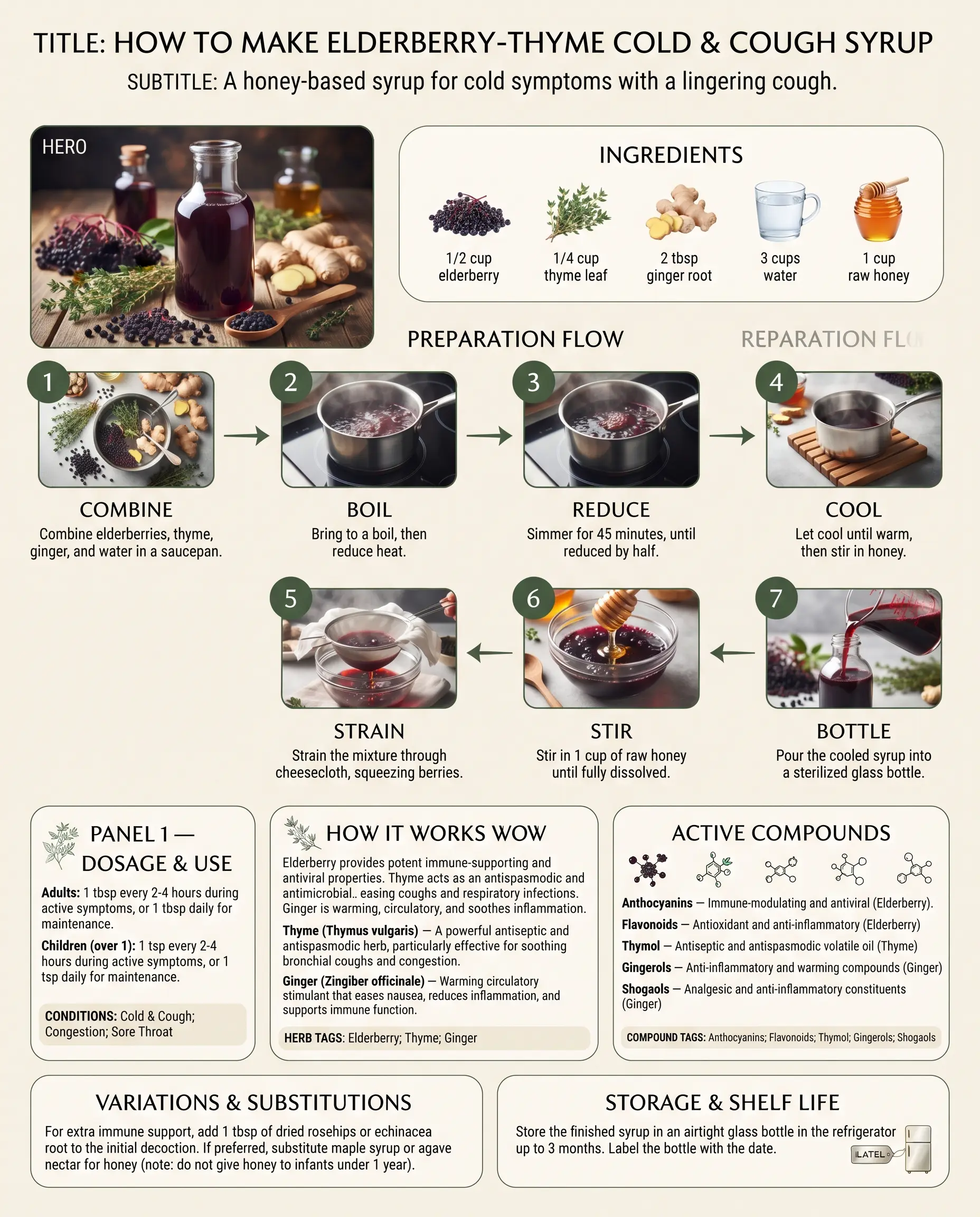
Recipe Details
Preparation Type: Syrup
Ingredients
1/2 cup elderberry, dried
1/4 cup thyme leaf, dried
2 tbsp ginger root, dried, cut
3 cups water
1 cup raw honey
Preparation
- Combine elderberry, thyme, and ginger with water in a saucepan.
- Bring to a boil, then reduce to a simmer.
- Simmer, partially covered, until the liquid reduces by about half (roughly 30–40 minutes).
- Remove from heat and let cool until safe to handle.
- Strain through cheesecloth into a measuring cup, pressing to extract the liquid.
- Measure the strained liquid and stir in an equal or slightly lesser amount of raw honey.
- Pour into a clean glass bottle.
Yield: About 1.5 cups
Preparation Steps
- Combine herbs and water
- Bring to a boil, then simmer
- Reduce liquid by half
- Cool until safe to handle
- Strain through cheesecloth
- Stir in raw honey
- Bottle the finished syrup
Dosage & Usage
Take 1 tablespoon every 2–4 hours as needed for cold symptoms and cough, up to 4–5 times daily. Can be taken straight off the spoon or stirred into warm water or tea.
Precautions & Contraindications
Not for children under one year old due to the raw honey. Avoid if allergic to plants in the Caprifoliaceae/Adoxaceae family (elderberry) or Lamiaceae family (thyme). Only cooked elderberry preparations should be used — raw, uncooked elderberries and other plant parts contain a compound that can cause gastrointestinal upset. Consult a healthcare practitioner before use if you have an autoimmune condition, as elderberry’s traditional immune-supportive reputation warrants extra caution in that context.
Health Conditions & How It Works
This syrup targets cold symptoms accompanied by cough. Elderberry has a long tradition of use at the onset of colds and flu, thyme is traditionally regarded as supportive of the respiratory system and helpful for lingering coughs, and ginger adds warmth and traditional support for overall comfort during illness. The honey base itself has a long folk history of soothing throat irritation.


Herbs Used in This Recipe
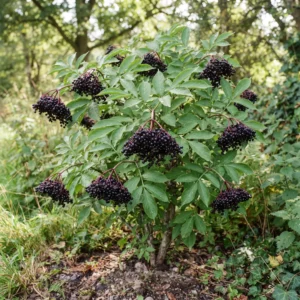
Elderberry — a traditional cold and flu season ally, taken at the first sign of illness.
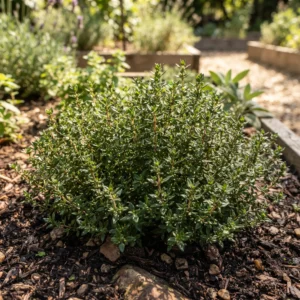
Thyme leaf — traditionally valued for its affinity with the respiratory system and its role in supporting a lingering cough.
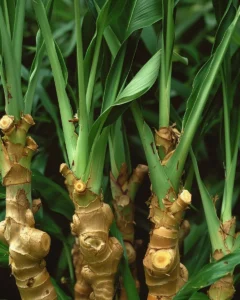
Ginger root — a warming herb traditionally added to cold-season preparations for overall comfort.
Active Compounds
- Anthocyanins — the deep purple flavonoid pigments elderberry is best known for, traditionally tied to its cold-season reputation (Elderberry)
- Flavonoids — a broader class of compounds present alongside anthocyanins in elderberry (Elderberry)
- Thymol — a volatile oil traditionally associated with thyme’s respiratory and expectorant reputation (Thyme)
- Carvacrol — a related aromatic compound contributing to thyme’s traditional properties (Thyme)
- Gingerol — traditionally associated with warming, comfort-supportive effects (Ginger)
Ready-to-Use Product
Wooden Spoon Herbs Elderberry Syrup — an organic elderberry-based syrup with supportive respiratory herbs, close in spirit to this homemade version.
Gaia Herbs Cough Syrup — a honey-based syrup featuring elderberry and thyme essential oil for cough comfort.
Variations & Substitutions
Swap thyme for rosemary if you prefer a milder, less pungent aromatic note — rosemary offers a related, gentler respiratory-supportive profile. Fresh elderberries (frozen or fresh) can replace dried at a roughly 2:1 ratio if available in season.
Storage & Shelf Life
Store the finished syrup in the refrigerator in a sealed glass bottle for up to 2–3 months. For longer shelf life, the syrup can also be frozen in ice cube trays and thawed in small portions as needed.
FAQ
Why must elderberries be cooked before use?
Raw, uncooked elderberries and other parts of the plant contain a compound that can cause nausea or digestive upset — simmering neutralizes this, which is why this syrup always starts with a decoction step.
Why add the honey after the liquid has cooled?
Adding raw honey to a liquid that’s still very hot can degrade some of honey’s more delicate properties, so letting the decoction cool first helps preserve more of what raw honey offers.
Can I make this a stronger cough remedy?
Increasing the proportion of thyme slightly, or steeping it longer within the decoction, will intensify its traditional respiratory-supportive character, though the flavor will also become more pronounced.
Is this the same as store-bought elderberry syrup?
It shares the same core ingredient and honey-based format as many commercial elderberry syrups, but this version adds thyme and ginger specifically for the cough-with-cold use case.
References
Mountain Rose Herbs: Thyme Leaf Organic
Mountain Rose Herbs: Elder Berry Powder
American Botanical Council: HerbalGram
Disclaimer
This content is for educational purposes only and has not been evaluated by the FDA. It is not intended to diagnose, treat, cure, or prevent any disease. Consult a qualified healthcare practitioner before using herbal preparations, particularly if pregnant, nursing, or taking medication.