

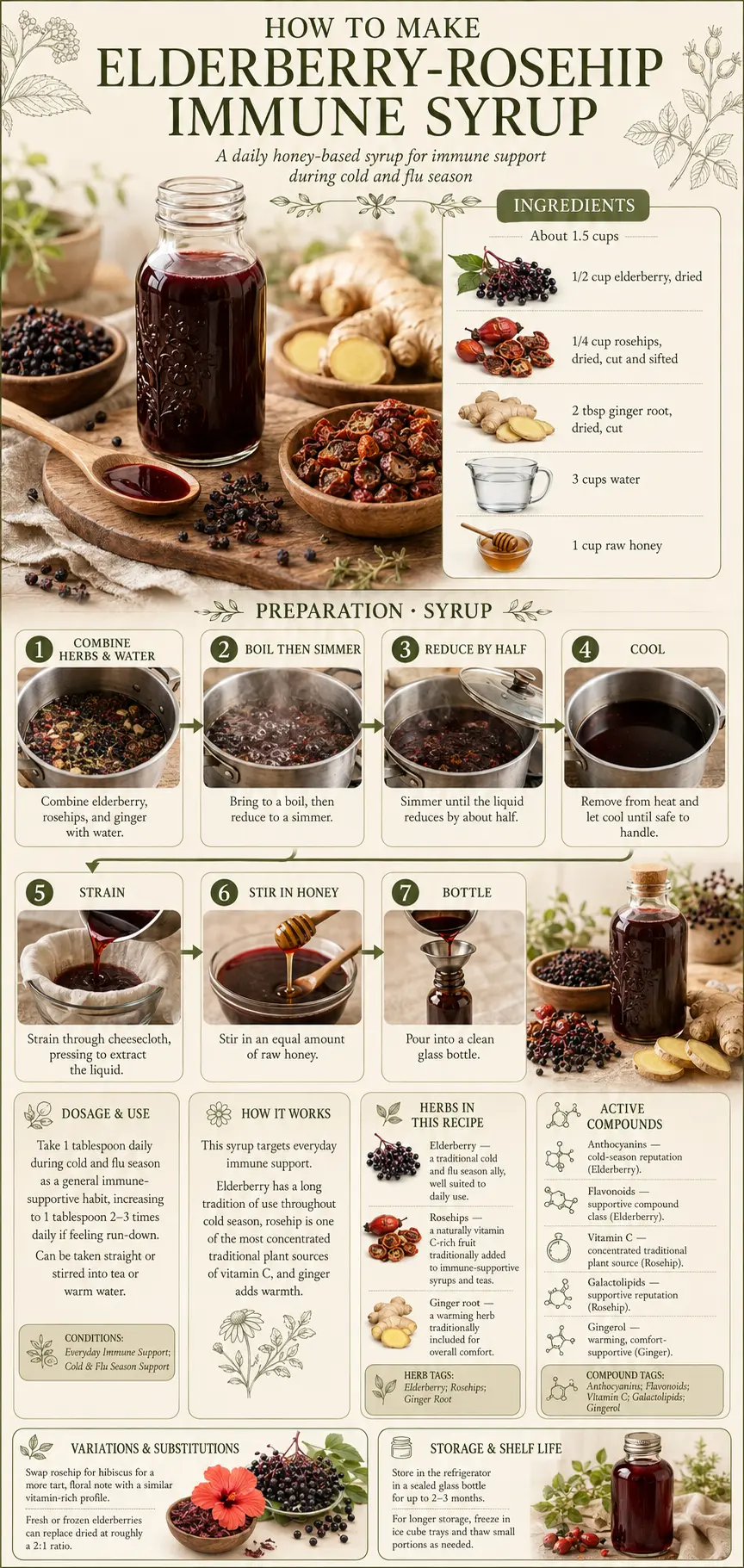
Recipe Details
Preparation Type: Syrup
Ingredients
1/2 cup elderberry, dried
1/4 cup rosehips, dried, cut and sifted
2 tbsp ginger root, dried, cut
3 cups water
1 cup raw honey
Preparation
- Combine elderberries, rosehips, and ginger in a saucepan.
- Add 4 cups of filtered water.
- Bring to a gentle simmer.
- Reduce heat and simmer partially covered for approximately 30–40 minutes.
- Remove from heat and strain thoroughly.
- Return the liquid to the saucepan.
- Simmer uncovered until reduced to approximately 2 cups.
- Allow to cool until warm rather than hot.
- Stir in the honey until completely dissolved.
- Bottle in a clean glass container.
Yield
Approximately 2½ cups, depending on reduction and straining losses.
Dosage & Usage
For a traditional food-style serving, use approximately 1 tablespoon once daily.
During cold-and-flu season, some herbal traditions use elderberry preparations more frequently, but there is not enough evidence to establish a standardized therapeutic dose for homemade syrup.
Precautions & Contraindications
- Do not eat raw, unripe elderberries or raw elderberry plant material. Proper cooking is important.
- People who are pregnant, breastfeeding, taking immunosuppressive medications, or managing an autoimmune condition should discuss elderberry use with a qualified healthcare professional.
- Honey should not be given to children under 12 months.
- Ginger may aggravate reflux or gastrointestinal sensitivity in some people.
- Rosehips contain fine hairs inside the fruit that can be irritating; strain the finished preparation carefully.
- This syrup is not a substitute for vaccination, appropriate medical care, or treatment of an infection.
Health Conditions & How It Works
This syrup targets everyday immune support, the kind of gentle, ongoing habit people build during cold and flu season rather than reaching for only when already sick. Elderberry has a long tradition of use throughout the cold season, and rosehip is one of the most concentrated traditional plant sources of vitamin C, adding a tart, nutritive note to the formula. Ginger rounds out the blend with its own traditional warming, comfort-supportive reputation.


Herbs Used in This Recipe
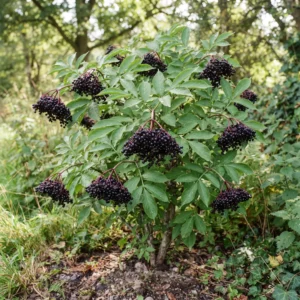
Elderberry — a traditional cold and flu season ally, well suited to daily use.
Rosehips — a naturally vitamin C-rich fruit traditionally added to immune-supportive syrups and teas.
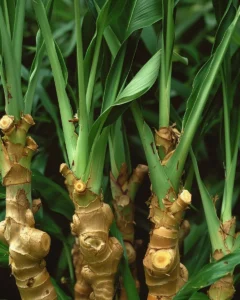
Ginger root — a warming herb traditionally included for overall comfort during cold season.
Active Compounds
- Anthocyanins — the deep purple flavonoid pigments elderberry is best known for, traditionally tied to its cold-season reputation (Elderberry)
- Flavonoids — a broader class of compounds present alongside anthocyanins in elderberry (Elderberry)
- Vitamin C — one of the most concentrated traditional plant sources, giving rosehip its tart flavor and nutritive reputation (Rosehip)
- Galactolipids — compounds traditionally associated with rosehip’s supportive reputation beyond its vitamin C content (Rosehip)
- Gingerol — traditionally associated with warming, comfort-supportive effects (Ginger)
Ready-to-Use Product
Sambucol Black Elderberry Original Syrup — a commercial elderberry syrup.
Gaia Herbs Black Elderberry Syrup — elderberry-based seasonal wellness syrup.
Traditional Medicinals Organic Elderberry Syrup — commercial elderberry preparations and seasonal wellness products.
Variations & Substitutions
- Rosehip → hibiscus: creates a similarly tart, colorful syrup.
- Ginger → cinnamon: gives a warmer seasonal flavor.
- Honey → maple syrup: possible for flavor, although the resulting product is no longer a traditional honey-based syrup.
Storage & Shelf Life
Refrigerate immediately after preparation.
Because this is a homemade, water-containing preparation without validated commercial preservatives, use within approximately 2–3 weeks and discard if mold, fermentation, bubbling, or an unusual odor develops.
For longer storage, freezing small portions is preferable.
FAQ
Can I make elderberry syrup with fresh elderberries?
Yes, but the recipe and water content need adjustment. Dried elderberries are easier to standardize for a homemade recipe.
Does elderberry prevent colds or flu?
The evidence does not justify claiming that it prevents respiratory infections. Research has investigated elderberry for symptom duration and severity, but results are not sufficiently consistent to make strong therapeutic claims.
Why add rosehips?
Rosehips provide tart flavor and contribute vitamin C and other plant compounds.
Can children take this syrup?
Honey should never be given to children under one year of age. For older children, discuss herbal preparations with a pediatric healthcare professional, particularly when medications or chronic conditions are involved.
References
Mountain Rose Herbs: Rosehips Organic
Mountain Rose Herbs: Elder Berry Powder
American Botanical Council: HerbalGram
Disclaimer
This recipe is provided for educational purposes and reflects traditional herbal and food practices. It is not intended to diagnose, treat, cure, or prevent disease.