

Aromatic
Love the smell of fresh herbs? Aromatic herbs gently support digestion through the same fragrant compounds you notice.


Aromatic simply describes an herb whose strong, distinctive scent is actually part of how it works, not just a pleasant side effect. In herbal medicine, aromatic refers to herbs rich in volatile oils — naturally occurring plant compounds that evaporate easily and carry that recognizable smell, like the scent of fresh mint or crushed fennel seeds. These same volatile oils are often responsible for supporting digestion, which is why aromatic herbs show up so often in the digestive category.
In the body, aromatic herbs primarily engage the digestive system, and their scent is actually part of the mechanism. When you smell or taste an aromatic herb, it can trigger the release of digestive secretions even before food arrives, similar in spirit to how bitter herbs work, just through aroma and flavor together rather than bitterness alone. Once consumed, those same volatile oils are thought to gently relax the smooth muscle of the digestive tract, which can ease general tension and support more comfortable digestion. It’s the tiny plant chemistry doing all the heavy lifting, quite literally carried on the air by that distinctive scent.
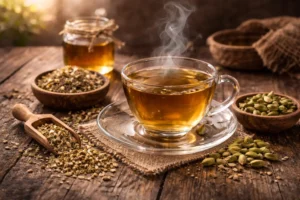
People typically reach for aromatic herbs in familiar, everyday moments — wanting a little extra digestive support after a meal, brewing a fragrant tea as part of a calming after-dinner ritual, or simply enjoying the comforting, familiar scent of herbs like mint or fennel as part of a cooking or tea routine. These are pleasant, everyday moments rather than anything tied to a specific concern.
One honest safety note: because aromatic herbs are often taken as concentrated essential oils in addition to teas, it’s worth remembering that essential oils are much more potent and shouldn’t be taken internally without professional guidance, while herbal teas made from the same aromatic plants are generally a gentler, more approachable way to enjoy their benefits. As always, start with a small amount to see how it feels for you.
Suggested herbs: Peppermint, Fennel, Chamomile, Lavender, Lemon Balm, Cardamom, Caraway, Anise
Herbs With This Effect
Explore herbs commonly valued for this property.
Featured Recipes
Recipes that put this property to use.
Available Herbal Products
Explore and shop ready-made products offering this benefit.
Explore herbs commonly valued for their gentle aromatic support.
References
- NIH National Center for Complementary and Integrative Health
- Mount Sinai Health Library — Herbal Medicine
- Cleveland Clinic
- Mayo Clinic
Frequently Asked Questions
Q: What makes an herb "aromatic" versus just tasty?
A: It comes down to volatile oils — naturally occurring plant compounds that evaporate easily and carry a strong scent, which also happen to be involved in supporting digestion, unlike herbs valued mainly for flavor alone.
Q: Is it safe to use essential oils from aromatic herbs the same way as the tea?
A: No — essential oils are much more concentrated than tea and generally shouldn't be taken internally without professional guidance, while herbal tea made from the same plant is a gentler everyday option.
Q: Can aromatic herbs help with an upset stomach after eating?
A: Many people brew a cup of peppermint or fennel tea after a meal, since the volatile oils in these aromatic herbs are thought to support digestion and ease general tension in the gut.
Q: Why do so many digestive herbs have a strong smell?
A: That distinctive scent usually comes from volatile oils, the same plant compounds thought to support digestive function, so aroma and digestive benefit tend to go hand-in-hand in this category.
This information is for educational purposes only and is not intended as medical advice. Consult a qualified healthcare professional before using any herb, especially if pregnant, breastfeeding, taking medications, or managing a health condition.