

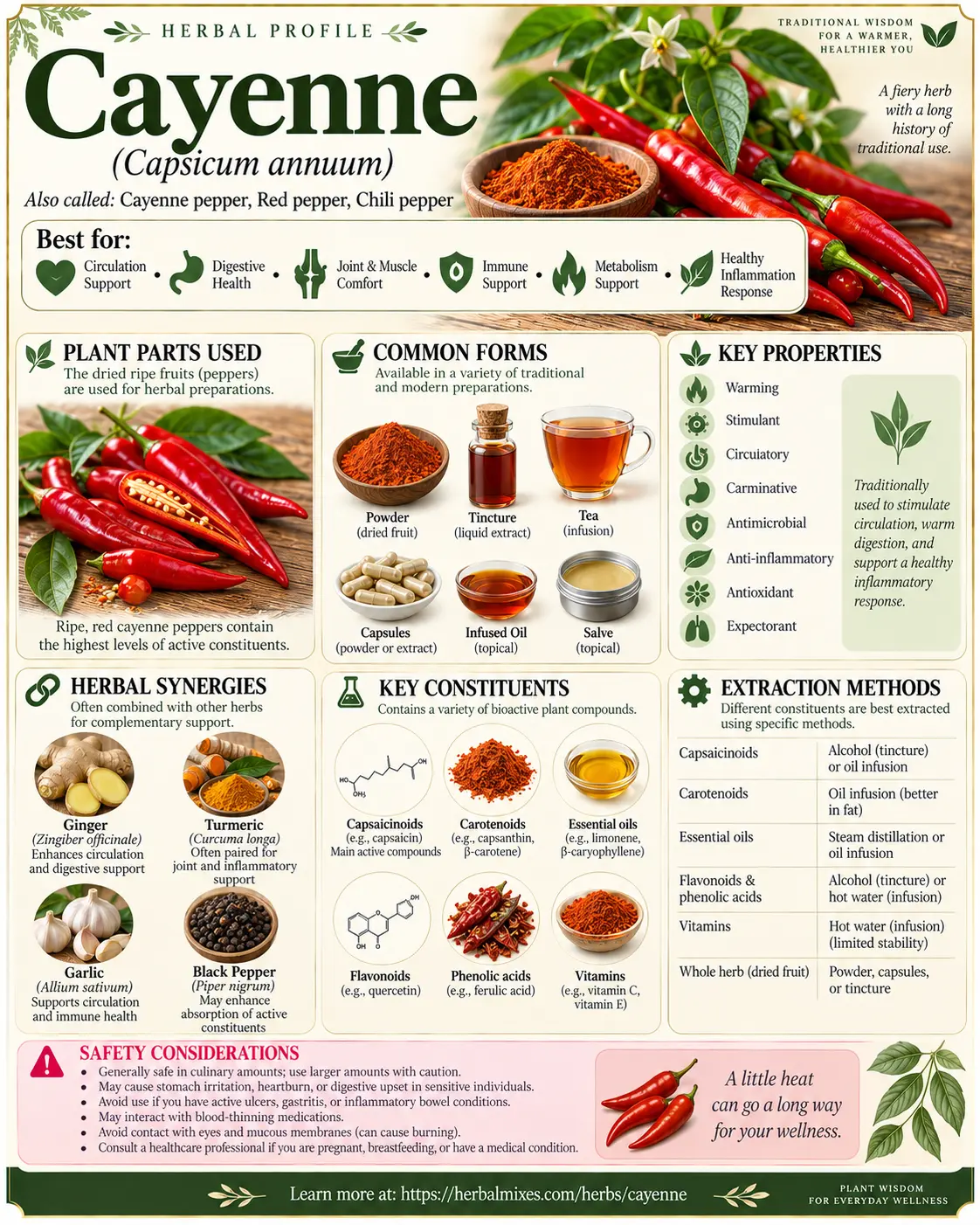
What Cayenne Is Good For
Circulatory Stimulation & Heart Health — Cayenne is a premier circulatory stimulant traditionally used to encourage robust blood flow, warm cold extremities, and support healthy cardiovascular function.
Topical Pain Relief (Capsaicin) — Active capsaicin binds to nerve receptors to deplete substance P, providing powerful, targeted relief for sore muscles, arthritic joints, and nerve discomfort.
Digestive Fire & Enzyme Output — Stimulates gastric secretions and salivary flow, “stoking digestive fire” to enhance nutrient absorption and break down heavy meals.
Metabolism & Thermogenic Support — Encourages normal metabolic rate and thermogenesis, supporting energy expenditure and internal warmth.
Immune Defense & Congestion Clearing — Its pungent warmth opens nasal passages, thwarts microbial activity, and induces mild sweating during seasonal chills.
Available Herbal Products
Buying Guides for Available Cayenne Products
Organic Ground Cayenne Pepper (40,000 to 90,000 HU) – Premium dried red pepper powder. An authentic, traditional choice for culinary flavoring, warming teas, or compounding custom liniments. Seller: Mountain Rose Herbs – View Mountain Rose Herbs Cayenne Pepper →
Cayenne Liquid Extract – Hydroalcoholic tincture. A fast-absorbing liquid format that allows for precise drop-by-drop dosing to deliver rapid circulatory warming. Seller: Herb Pharm – View Herb Pharm Cayenne Extract →
Capsaicin Pain-Relieving Topical Cream – Medicated ointment. Formulated with standardized capsaicin extract to provide targeted, drug-free relief for arthritic joints and muscular aches. Seller: Capzasin – View Capzasin Pain Relief Creams →
Warming Circulatory Capsules – Encapsulated cayenne fruit powder. A convenient, taste-free option for individuals seeking daily cardiovascular and metabolic support. Seller: Nature’s Way – View Nature’s Way Cayenne Formulas →
Herbal Synergies
Cayenne pairs especially well with Ginger Root, Hawthorn Berry, and Turmeric Root, depending on the goal of the formula.
Cayenne Pepper + Ginger Root – Best for: Deep circulatory warming, cold extremities, and digestive stimulation Cayenne acts as an immediate systemic vascular stimulant that drives blood to the periphery, while ginger provides warming carminative oils that ignite core digestive fire. Together, they create the ultimate warming botanical duo. Best extraction: Simmered tea decoction or tincture blend. Both pungent roots release their active capsaicinoids and gingerols efficiently into alcohol and hot water.
Cayenne Pepper + Hawthorn Berry – Best for: Comprehensive cardiovascular support, blood pressure maintenance, and heart health Cayenne enhances overall vascular tone and circulation speed, whereas hawthorn berry delivers bioflavonoids that nourish heart muscle tissue and support healthy coronary blood flow. Best extraction: Tincture combination. Blending these extracts ensures rapid systemic delivery of both vascular stimulants and cardiac tonics.
Cayenne Pepper + Turmeric Root – Best for: Enhanced bioavailability, joint comfort, and systemic inflammatory balance Cayenne supplies capsaicin, which inhibits hepatic glucuronidation and significantly boosts the absorption and bioavailability of turmeric’s active curcuminoids. Best extraction: Capsule blend or golden milk tonic. Combining these spices maximizes therapeutic synergy.
Key Herbal Properties
Circulatory Stimulant — Accelerates blood flow and dilates peripheral blood vessels, delivering warmth and nutrients throughout the body.
Counterirritant / Analgesic — Depletes substance P in nerve endings to block pain signals when applied topically.
Digestive Stimulant — Increases gastric juice production and salivary flow to support digestive vigor.
Thermogenic — Stimulates cellular metabolic rate and internal heat production.
Rubefacient — Draws blood to the surface of the skin when applied externally, easing deep muscular tension.





Active Compounds
Capsaicinoids (including Capsaicin, Dihydrocapsaicin, and Nordihydrocapsaicin) Found mainly in: Placental ribs and seeds of the dried fruit The primary bioactive pungent alkaloids responsible for cayenne’s heat, pain-relieving properties, circulatory stimulation, and metabolic effects. (Pungency is measured in Scoville Heat Units – HU). Best extraction: High-proof alcohol tincture or lipid oil infusion. Capsaicinoids are fat-soluble and dissolve exceptionally well in high-proof alcohol and warm carrier oils.
Carotenoids (including Capsanthin and Beta-Carotene) Found mainly in: Bright red pericarp Antioxidant pigments that protect cells from oxidative stress and provide vitamin A precursors. Best extraction: Alcohol-water extract or oil maceration. Soluble in alcohol and lipid solvents.
Vitamins C and E Found mainly in: Fresh and dried pods Antioxidant nutrients that support vascular integrity and immune defense. Best extraction: Aqueous extraction or whole fruit consumption. Water-soluble and heat-sensitive.
-
FAQ
What is cayenne best used for? Cayenne is primarily used to stimulate circulation, provide topical relief for sore joints, and stoke digestive fire.
How does capsaicin relieve pain? When applied topically, capsaicin temporarily depletes substance P—a neurotransmitter that transmits pain signals to the brain—effectively blocking local pain perception.
Can cayenne burn the stomach if taken in capsules? Yes, taking large amounts of raw cayenne powder on an empty stomach can cause a burning sensation or gastric irritation; always take capsules with food and plenty of water.
How is cayenne measured for heat? Cayenne potency is measured in Scoville Heat Units (HU), which quantifies the concentration of capsaicin present in the pods (typically ranging from 30,000 to 100,000 HU for medicinal use).
Can cayenne stop bleeding in an emergency? Traditional herbal folklore suggests packing cayenne onto minor bleeding cuts to coagulate blood rapidly due to its powerful vascular-constricting and clotting action, though modern antiseptic methods are preferred.
Safety & Precautions
Mucous Membranes & Eyes: Avoid touching eyes, nose, or sensitive mucous membranes after handling cayenne powder or fresh peppers; wash hands thoroughly with soap and oil if necessary.
Gastrointestinal Sensitivity: Excessive internal consumption can irritate the stomach lining, cause heartburn, or trigger acid reflux in sensitive individuals.
Open Wounds: Never apply capsaicin creams or high-heat liniments to broken skin, fresh cuts, or raw abrasions, as it will cause intense, painful burning.
Medication Interactions: Exercise caution if you take blood-thinning medications (anticoagulants), as large amounts of circulatory stimulants may interact.
Surgical Discontinuation: Discontinue high-dose therapeutic cayenne supplements at least two weeks prior to scheduled surgeries.
Consult a qualified healthcare professional before using cayenne therapeutically, especially if you manage underlying medical conditions or take prescription drugs.
References
National Center for Complementary and Integrative Health (NCCIH)
PubMed Central – Capsicum annuum (Cayenne) Capsaicinoids and Analgesic Pharmacology
National Library of Medicine – Capsaicin Mechanism in Pain Management and Circulation
World Health Organization (WHO) Monographs on Selected Medicinal Plants
Mountain Rose Herbs Cayenne Pepper Monograph
Disclaimer
Disclaimer: This article is for educational purposes only and is not intended to diagnose, treat, cure, or prevent any disease. Herbal products can cause side effects and interact with medications. Consult a qualified healthcare professional before using herbs therapeutically, especially if you are pregnant, breastfeeding, taking prescription medications, or managing a medical condition.