Ashwagandha: A Grounded Western Herbalist’s Guide to Calm, Resilience, and Rest
Ashwagandha is one of those herbs that rarely makes a dramatic entrance. It works quietly, over time, and tends to show its value when stress has lingered long enough to affect sleep, energy, and emotional steadiness. In traditional herbal practice, it’s viewed less as a stimulant and more as a restorative ally—something that helps rebuild capacity rather than override fatigueNational Center for Complementary and Integrative Health.
Adaptogen Traditionally described as supporting the body’s ability to respond to physical and emotional stress over time, helping maintain equilibrium rather than forcing stimulationNational Center for Complementary and Integrative Health.
Nervine (restorative) Used to nourish and steady the nervous system when tension and mental fatigue have become chronic, without acting as a sedativeNIH Office of Dietary Supplements.
Sleep support (traditional) Often included in evening routines when sleep feels shallow or inconsistent, with research measuring sleep quality rather than inducing sleep directlyNIH Office of Dietary Supplements.
Tonic Considered a strengthening herb used consistently to support overall vitality during recovery from prolonged stressAmerican Herbal Products Association.
Practical Uses
In Western herbal practice, ashwagandha is commonly considered when stress and fatigue occur together. It’s often chosen for people who feel worn down but have difficulty fully resting, particularly when stress begins to affect sleep patternsNational Center for Complementary and Integrative Health.
Human clinical studies summarized by the NIH Office of Dietary Supplements report that standardized ashwagandha extracts, typically used in daily amounts ranging from approximately 240 to 1,250 mg, have been studied for perceived stress, sleep quality, and related markers such as cortisol. These studies generally examined short-term use over several weeks rather than immediate effectsNIH Office of Dietary Supplements.
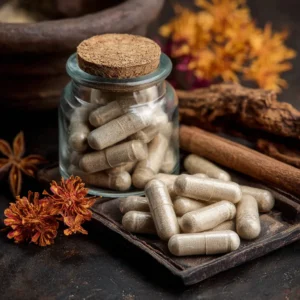
Ashwagandha capsules are made from dried ashwagandha root, traditionally used in Western and Ayurvedic herbal practice as a tonic and adaptogen. This form provides a measured, plant-based option that fits easily into daily routines without the taste or preparation required for teas or liquid extracts.
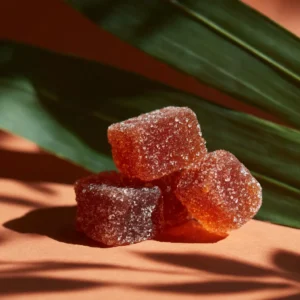
Ashwagandha gummies are a chewable form made with ashwagandha root, designed for those who prefer a flavorful option over pills or tinctures. They fit easily into daily routines and are often chosen for their convenience and approachable format.
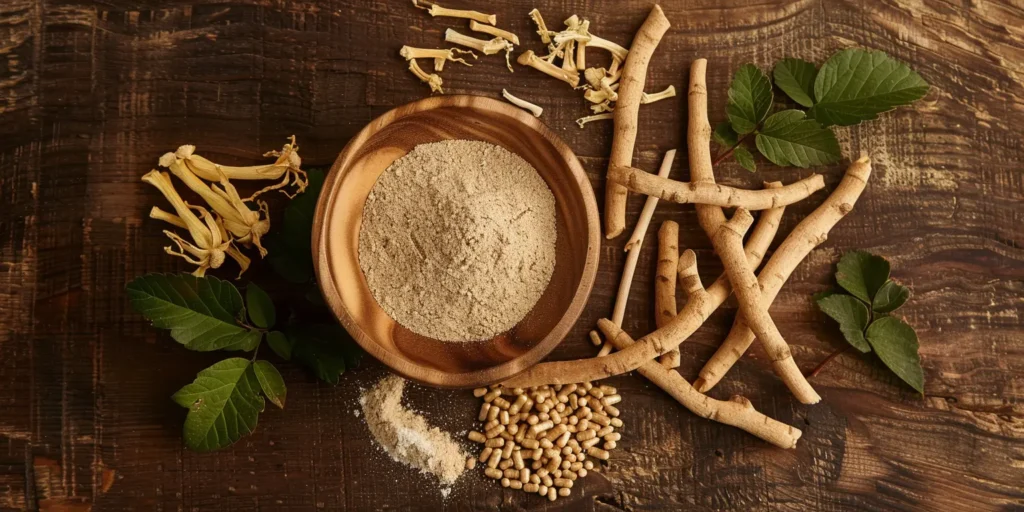
Ashwagandha powder is produced by drying and finely milling the root, creating a flexible option that can be mixed into warm drinks, smoothies, or foods. This traditional format is often chosen by those who prefer to customize how they prepare and use their herbs.
Ashwagandha syrup is made by combining ashwagandha root with a sweet liquid base, creating a smooth, palatable option often preferred over capsules or powders. This traditional-style preparation is commonly used for its convenience and pleasant taste, especially for those who prefer liquid herbs.
The root is the primary part used. Leaves are sometimes included in extracts but differ significantly in chemical profile and should be clearly identified on labelsNIH Office of Dietary SupplementsScienceDirect.
Usage Forms & Shelf Life
Ashwagandha is primarily used internally. Topical use exists but is uncommon in Western herbal practice.
Common forms: Powdered root Capsules or tablets Tincture or fluid extract Standardized extract
Shelf life: Dried root is generally best used within one to two years when stored properly. Alcohol-based tinctures often retain quality for two to five years. Powders typically lose potency more quickly than intact dried rootsHerbal Academy.
Active Constituents
Ashwagandha contains several groups of naturally occurring compounds.
Withanolides and withanosides These steroidal lactones are the most studied constituents. Analytical studies show wide variation depending on plant part, cultivar, harvest timing, and extraction methodPubMed Central.
Measured data demonstrate this variability. For example, withanolide A in dried root has been reported around 1.9 mg per gram in specific samples, while leaves may contain significantly higher levels of withaferin A than rootsPubMed CentralScienceDirect.
These compounds are most efficiently extracted using hydroalcoholic methods, which explains why many standardized products rely on alcohol-based extractionNIH Office of Dietary Supplements.
Alkaloids Ashwagandha also contains alkaloids in smaller amounts. While less emphasized commercially, they are traditionally considered part of the plant’s overall activity and are more soluble in alcohol-based preparationsUSP–NF.
How It Works
Modern research explores ashwagandha’s influence on stress-response pathways and sleep-related outcomes. Studies commonly measure changes in subjective stress scores, sleep quality, and sometimes hormone markers such as cortisolNIH Office of Dietary Supplements.
Differences in plant part used and extraction method help explain why products and study results can vary significantlyPubMed Central.
Ashwagandha is generally avoided during pregnancy and breastfeeding due to insufficient safety data. Caution is also advised for individuals with thyroid disorders, autoimmune conditions, or those preparing for surgery. Potential interactions have been noted with sedatives, immunosuppressants, thyroid medications, and some blood pressure or blood sugar drugsNational Center for Complementary and Integrative Health.
Rare case reports have linked certain ashwagandha supplements to liver injury, emphasizing the importance of sourcing and product qualityNIH Office of Dietary Supplements.
Frequently Asked Questions
Is ashwagandha safe for daily use? Short-term use (up to about 3 months) is described as generally well tolerated in NIH sources, but long-term safety is not well established. Some people experience drowsiness or digestive upset. If you take medications or have thyroid/autoimmune concerns, it’s worth getting individualized guidance.
How long does ashwagandha take to “work”? Many studies ran for weeks, not days, and measured changes over time (often 6–12 weeks for stress/sleep outcomes in trials). In practice, it’s usually treated as a steady-support herb rather than an instant switch.
What does ashwagandha taste like? The root is commonly described as earthy and bitter, and the flavor can be noticeable in powders mixed into drinks. Extract capsules avoid the taste entirely, which many people consider an underrated feature.
Is root better than leaf? They’re different materials. Some data show leaves can contain much higher withaferin A than roots, and products vary widely in chemistry depending on plant part and extraction. Many traditional products emphasize the root, and many modern extracts specify whether they’re root-only or root+leaf.
Can pets use ashwagandha? Some people do, but evidence is limited and sensitivity varies by species. Because interaction and safety cautions exist even for humans (sedatives, thyroid concerns, pregnancy), it’s best treated as a professional-only decision for animals.
How long does ashwagandha last in storage? Dried herbs are often best used within 1–2 years for good potency, and tinctures can last several years with proper storage. Powders generally lose potency faster than intact dried plant material.
This information is shared for educational purposes only and reflects traditional herbal use. It is not intended to diagnose, treat, or replace professional medical care.