
Orange Peel: Aromatic Bitter for Digestive Movement and Gentle Circulatory Support
Orange peel is one of those humble kitchen ingredients that quietly doubles as a refined herbal ally. In traditional Western herbalism, it supports digestive movement, stimulates mild secretion, and restores coordinated warmth in sluggish digestion.
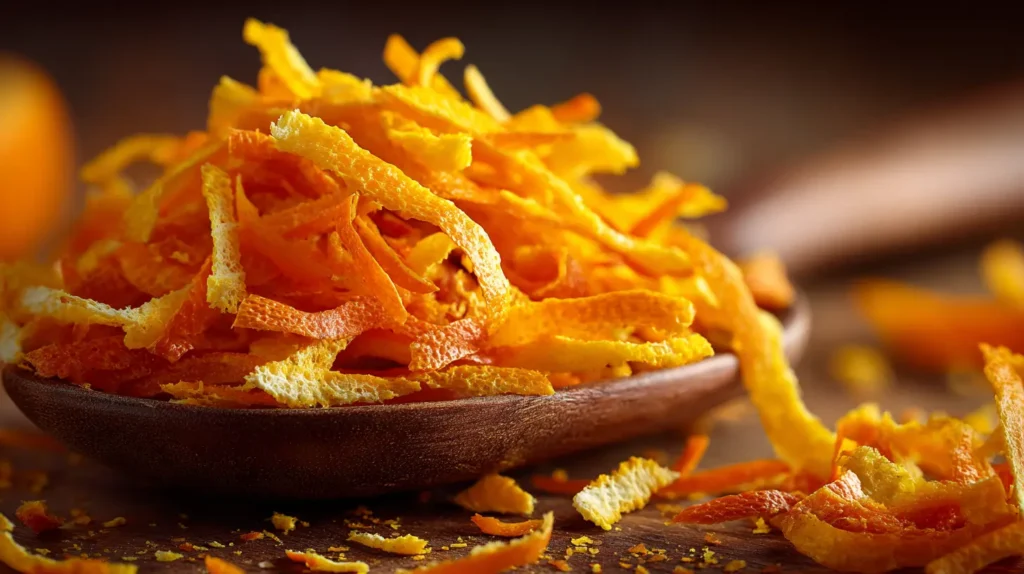
Latin (botanical) name: Citrus sinensis (sweet orange), Citrus aurantium (bitter orange)
Plant family: Rutaceae
Common names: Sweet orange peel, bitter orange peel, dried orange rind
Both sweet and bitter orange peels have been used traditionally in European apothecaries. Bitter orange peel, in particular, appears in classic digestive bitters formulas.
Traditional herbal use centers on digestive sluggishness, mild bloating, and lack of appetite. Bitter orange peel is included in official herbal monographs, including documentation from the European Medicines Agency (EMA).
Herbal Actions
Orange peel is traditionally described as:
- Mild aromatic bitter
- Carminative
- Digestive stimulant
- Gentle circulatory support
Its actions reflect the combination of volatile oils and flavonoids in the peel.
Practical Uses
In Western herbal practice, orange peel is often chosen when digestion feels slow but not deeply depleted. It is frequently added to bitters formulas to improve flavor while enhancing digestive signaling.
It is particularly helpful when there is bloating associated with sluggish secretion rather than sharp irritation. Because of its pleasant taste, it often makes digestive blends more approachable.
Product forms
Orange peel is available as:
- Dried cut peel
- Powder
- Tincture
- Glycerite
- Essential oil (external use only)
- Included in digestive bitters and tea blends
Whole dried peel retains volatile oils better than powdered forms.
Traditional herbal recipes
Orange peel is commonly infused in digestive teas alongside gentian or dandelion root. It has also historically been included in tonic wines and bitter tinctures.
Lightly crushing the dried peel before infusion improves extraction of aromatic compounds.
Parts Used
The dried outer peel (pericarp), often excluding the white pith when stronger bitterness is not desired.
Usage Forms & Shelf Life
Internal use: Infusion, tincture, powder
External use: Essential oil diluted for aromatic or topical applications
Common preparations:
Hot infusion
Alcohol tincture
Powder in capsules
Shelf-life ranges:
Dried peel: 1–2 years
Powder: 1 year
Tincture: 4–6 years
Proper storage in airtight containers preserves volatile oils.
Safety & Considerations and Dosage Guidelines
Sweet orange peel is generally regarded as gentle in traditional culinary and herbal amounts. Bitter orange peel contains additional alkaloids and is typically used in modest quantities within blended formulas.
Essential oil should not be ingested and must be diluted for topical use.
Usage guidance for bitter orange peel is outlined in documentation from the European Medicines Agency (EMA).
Side Effects & Contraindications
In typical culinary and traditional herbal amounts, side effects are uncommon. Concentrated extracts of bitter orange may have stimulating properties due to compounds such as synephrine, which are documented in pharmacological reviews available through PubMed Central.
Individuals sensitive to stimulants traditionally use bitter orange peel with awareness.
Active Constituents
Volatile Oils (0.5–2.5%)
Sweet orange peel contains approximately 0.5–2.5% essential oil, primarily composed of limonene (up to 90% of the oil fraction), along with linalool and citral, according to phytochemical analyses summarized through PubMed Central.
Traditional role: Stimulate digestion, support circulation, enhance aroma
Best extraction method: Infusion of crushed peel or alcohol extraction
Flavonoids
Includes hesperidin, naringin (higher in bitter orange), and other flavanones.
Traditional role: Support vascular tone and antioxidant balance
Best extraction method: Alcohol extraction or hot water infusion
Alkaloids (primarily in bitter orange)
Includes synephrine.
Traditional role: Mild stimulant properties
Best extraction method: Alcohol extraction
How It Works
The bitter taste receptors in the mouth and upper digestive tract respond to compounds in orange peel, signaling digestive secretion and motility. Volatile oils such as limonene influence smooth muscle activity and enhance aromatic stimulation.
Research discussing citrus peel flavonoids and volatile oils is available through PubMed Central.
In traditional herbal terms, orange peel restores gentle movement where digestion feels cool or stagnant.
Processing Cautions
Peels should be dried promptly to prevent mold. Powdered peel loses volatile oils more rapidly than whole pieces.
Essential oil is highly concentrated and not interchangeable with dried peel.
Quick Herb Overview
Botanical family: Rutaceae
Parts used: Dried peel
Energetics (traditional): Warm, slightly dry
Taste profile: Sweet-bitter, aromatic
Herb Identification
Citrus sinensis and Citrus aurantium are small evergreen trees with glossy leaves and fragrant white blossoms. The peel contains oil glands visible as tiny dots.
Bitter orange peel tends to have a stronger aroma and more pronounced bitterness compared to sweet orange.
Selecting Quality Herb
High-quality dried orange peel should retain a bright orange color and noticeable citrus aroma. Dull brown peel with weak scent suggests age.
Organic sourcing is preferred due to potential pesticide residues on citrus skins.
Natural Growing Areas
Oranges are cultivated worldwide in subtropical and tropical climates, including the Mediterranean region, the United States, Brazil, and parts of Asia.
Growing Tips
Orange trees require warm temperatures, well-drained soil, and full sun. They are sensitive to frost and thrive in Mediterranean-style climates.
Peel intended for herbal use should be dried carefully to preserve essential oils.
Frequently Asked Questions
Is sweet orange peel the same as bitter orange peel?
They are related but differ in bitterness and alkaloid content. Bitter orange peel is stronger and more stimulating.
Why is orange peel used in bitters?
Its mild bitterness and aroma enhance digestive signaling while improving taste.
Can orange peel be used daily?
In culinary or traditional herbal amounts, it is commonly used regularly.
Does orange peel contain essential oil?
Yes. Limonene is the primary volatile compound.
Is orange peel warming?
In traditional energetics, it is considered gently warming and drying.
Can the essential oil replace the dried peel?
No. Essential oil is highly concentrated and used differently.
References
Community Herbal Monograph on Citrus aurantium L., fructus — European Medicines Agency (EMA)
Phytochemical and pharmacological review of Citrus species — PubMed Central
Review of synephrine-containing products — PubMed Central
This content is provided for educational purposes only and reflects traditional Western herbal practice and publicly available research. It is not intended to diagnose, treat, cure, or prevent any disease and does not replace professional medical care or individualized guidance.