
Horseradish: Traditional Uses, Actions, and Herbal Practice
Horseradish is traditionally used to stimulate circulation, support respiratory clarity, and encourage immune responsiveness, especially where congestion and stagnation are present.
Latin (botanical) name: Armoracia rusticana
Plant family: Brassicaceae
Common names: Horseradish, red cole
Traditional use overview:
Horseradish has a long history in European and Western folk herbalism as a warming stimulant and respiratory herb. Traditionally, it was used to help clear thick mucus, stimulate circulation, and support the body’s response during cold, damp conditions. Western herbalists often choose horseradish for short-term use when systems feel sluggish rather than depleted.
Herbal Actions
Horseradish is traditionally associated with the following actions:
- Circulatory stimulant – encourages blood flow and warmth
- Respiratory stimulant – supports clearance of congestion
- Expectorant – helps loosen and move thick secretions
- Antimicrobial support – traditionally used to discourage unwanted microbes
- Digestive stimulant – promotes digestive fire and appetite
These actions describe traditional functional use rather than medical treatment.
Practical Uses
In Western herbal practice, horseradish is typically used short term, especially for respiratory congestion, sinus pressure, and cold-related sluggishness. Herbalists value it for its immediacy and intensity, often combining it with gentler herbs to balance its stimulating nature. It is rarely used as a standalone long-term tonic.
Product Forms
Horseradish is available in several preparations:
- Fresh root – grated or macerated for immediate use
- Tinctures – alcohol extracts of fresh root
- Syrups – often combined with honey for respiratory support
- Vinegar extracts – traditional food-medicine preparations
- Capsules – powdered root, less common
Fresh root preparations are considered the most active.
Traditional Herbal Recipes
- Fresh Horseradish Root Tincture
Prepared from freshly grated root for circulatory and respiratory stimulation. - Horseradish & Honey Syrup
Traditionally used to support sinus and chest clarity. - Warming Vinegar Extract
Used in small amounts to stimulate digestion and circulation. - Respiratory Support Blend
Horseradish combined with gentler expectorant herbs.
Parts Used
- Root, harvested fresh for highest activity
Usage Forms & Shelf Life
Internal vs external use:
Primarily internal; occasional external use in poultices.
Common preparations:
Fresh root, tinctures, syrups, vinegars
Shelf-life ranges:
- Fresh root: several weeks refrigerated
- Tinctures: 3–5 years
- Syrups: 3–6 months refrigerated
Safety & Considerations and Dosage Guidelines
Horseradish is traditionally used in small amounts and for short durations. Herbalists emphasize moderation due to its strong stimulating nature. It is typically avoided for continuous daily use.
Side Effects & Contraindications
Horseradish may cause irritation to sensitive digestive or respiratory tissues if used excessively. It is traditionally avoided in cases of active inflammation, ulcers, or heat-dominant conditions. External contact may irritate skin.
Active Constituents
Glucosinolates & Isothiocyanates
- Compounds: sinigrin, allyl isothiocyanate
- Traditional role: associated with antimicrobial, circulatory, and respiratory stimulation
- Best extraction: fresh root tincture or vinegar
- Quantitative data: sinigrin content varies widely but can reach 1–2% of fresh root weight
National Center for Biotechnology Information
Volatile Oils
- Traditional role: pungent aroma linked to sinus-clearing action
- Best extraction: fresh preparations
Flavonoids
- Traditional role: antioxidant support
- Best extraction: alcohol and vinegar
How It Works
Traditionally, horseradish is understood to work by rapidly increasing circulation and stimulating mucus movement, helping clear congestion and restore flow. Modern research supports its antimicrobial and circulatory effects, aligning with its historical use for short-term respiratory and immune support
Journal of Ethnopharmacology.
Processing Cautions
Horseradish loses potency quickly once dried. Fresh processing is essential to preserve volatile isothiocyanates. Grating releases active compounds rapidly and should be done in well-ventilated areas.
Quick Herb Overview
- Botanical family: Brassicaceae
- Parts used: Root
- Energetics: Hot, drying
- Taste profile: Sharp, pungent, spicy
Herb Identification
Visual traits:
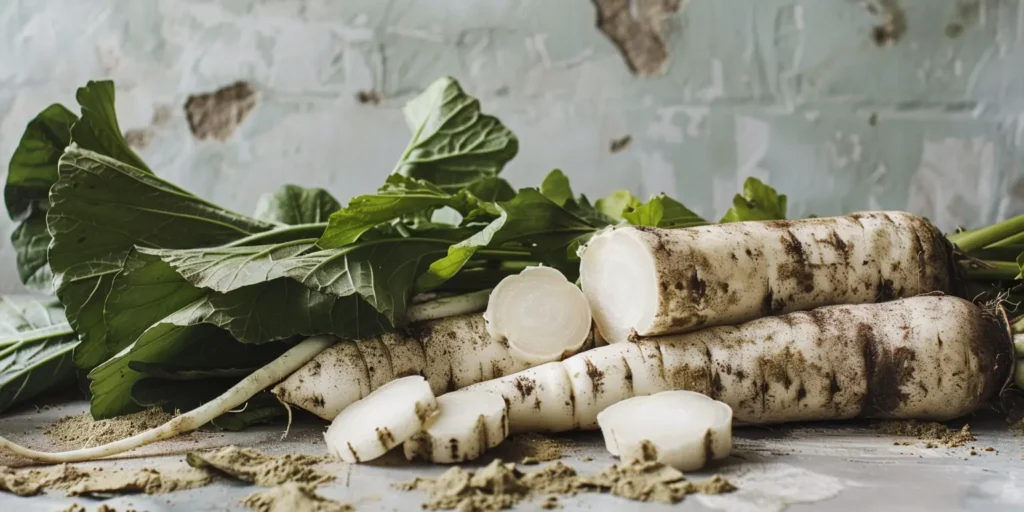
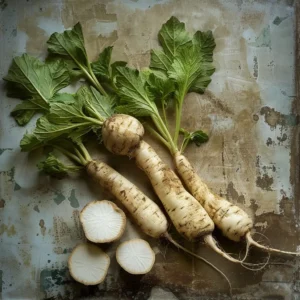
Large green leaves and thick white roots with a strong pungent aroma when cut.
Growth habit:
Perennial plant with spreading roots.
Look-alikes and safety notes:
Distinct odor and pungency help differentiate horseradish from other root vegetables.
Selecting Quality Herb
Choose firm, heavy roots with a strong aroma and no soft spots. Freshness is key. Products should clearly list Armoracia rusticana and root preparation type.
Natural Growing Areas
Native to Eastern Europe; widely cultivated and naturalized throughout temperate regions.
Growing Tips
Horseradish grows easily in deep, loose soil. Roots spread aggressively and should be harvested annually to maintain quality.
Frequently Asked Questions
Is horseradish a tonic herb?
No. It is traditionally used as a short-term stimulant rather than a daily tonic.
Does horseradish support immunity?
It is traditionally used to stimulate immune responsiveness, not to nourish immunity long term.
Is fresh horseradish stronger than dried?
Yes. Fresh root contains volatile compounds that are lost with drying.
Can horseradish help with congestion?
Traditionally, yes—especially for thick or stubborn congestion.
Is horseradish warming or cooling?
It is considered strongly warming and drying.
Can horseradish be combined with other herbs?
Yes. It is often paired with gentler herbs to balance its intensity.
References
- National Center for Biotechnology Information
- Journal of Ethnopharmacology
- European Medicines Agency – Herbal Monographs
This content is for educational purposes only and reflects traditional herbal understanding. It is not intended to diagnose, treat, cure, or prevent any disease.