


👉 Jump straight to Where to Buy Ajwain Tea
Ajwain tea, sometimes called ajwain water, is a warming herbal infusion made from the seeds of Trachyspermum ammi, also known as carom seeds. A staple of Ayurvedic and South Asian folk tradition, this pungent, thyme-like tea is most often brewed after meals to support digestion.
Quick Facts
| Botanical name | Trachyspermum ammi |
| Plant part used | Seeds (fruits) |
| Traditional uses | Supporting digestion, easing occasional bloating and gas, soothing coughs |
| Typical dosage range | 1 tsp seeds (or 1 tea bag) per cup, 1–2 cups daily |
What Is Ajwain Tea?
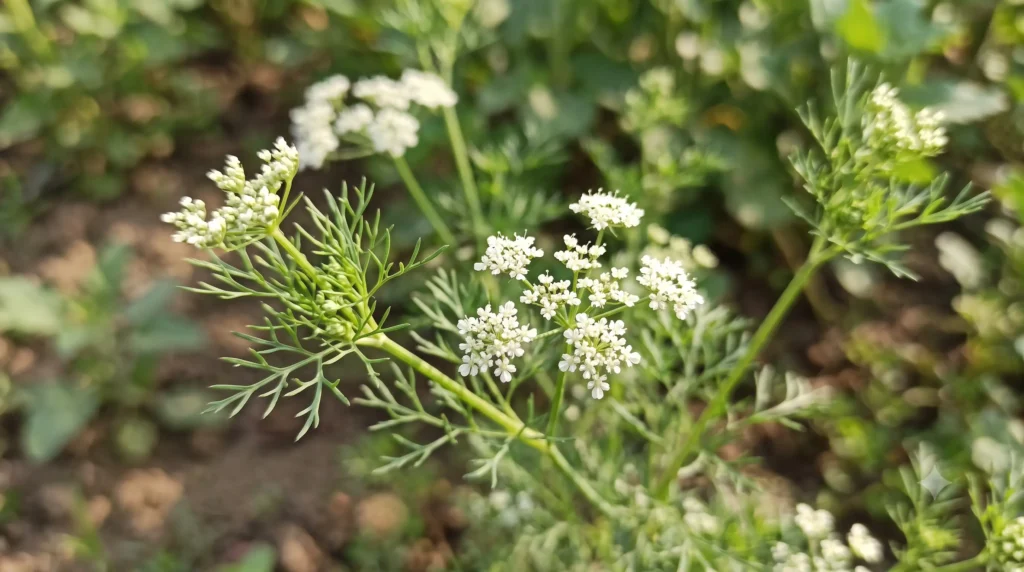
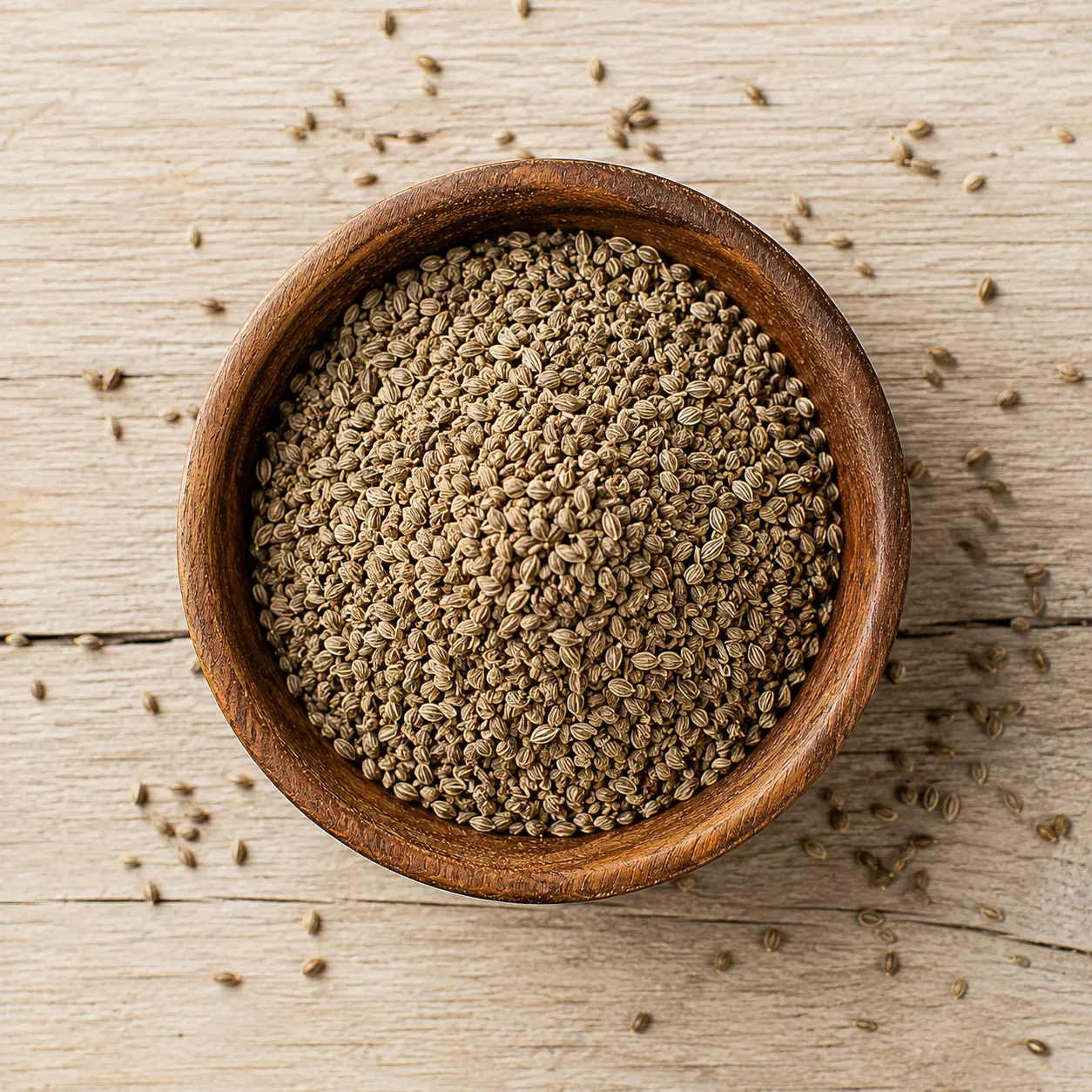
Ajwain, also called carom seeds, bishop’s weed, or ajowan, is a small plant in the parsley family native to the Indian subcontinent and the Middle East. Its tiny seeds carry an intensely aromatic, slightly bitter flavor, often compared to a combination of thyme and oregano, thanks to their high thymol content.
![Image: fresh ajwain plant with small white flower clusters growing outdoors]
Ajwain tea is made by steeping (or lightly simmering) the whole seeds in hot water, releasing their pungent oils into a warming, slightly bitter infusion. It’s a long-standing home remedy across South Asian households, commonly brewed after a heavy meal or when digestion feels sluggish.
Ajwain tea can be prepared as:
- A simple infusion — seeds steeped directly in hot water
- A light decoction — seeds gently simmered for a stronger brew
- A tea bag preparation — using pre-portioned bags for convenience
Key Traditional Uses & Benefits
- Digestive support — traditionally used to ease occasional bloating, gas, and indigestion after meals
- Respiratory comfort — used in folk practice to soothe an occasional cough or congestion
- Warming, carminative properties — valued in Ayurvedic tradition for its warming, gas-relieving qualities
- Postpartum tradition — used in some South Asian cultures as part of traditional postpartum recovery practices
- Caffeine-free — a naturally caffeine-free option suitable for any time of day
Note: these are traditional and folk uses. Ajwain is not intended to diagnose, treat, cure, or prevent any disease.
How It’s Made (Commercial Process)
Commercially available ajwain tea is typically produced by:
- Harvesting and cleaning the seeds of the Trachyspermum ammi plant
- Drying the seeds to reduce moisture for storage and shelf stability
- Packaging the whole seeds loose, or portioning them into individual tea bags
- Sealing in airtight, resealable packaging to preserve the seeds’ strong aromatic oils
How to Make Ajwain Tea Yourself (DIY)
Making ajwain tea at home takes just a few minutes if you have whole ajwain seeds on hand.
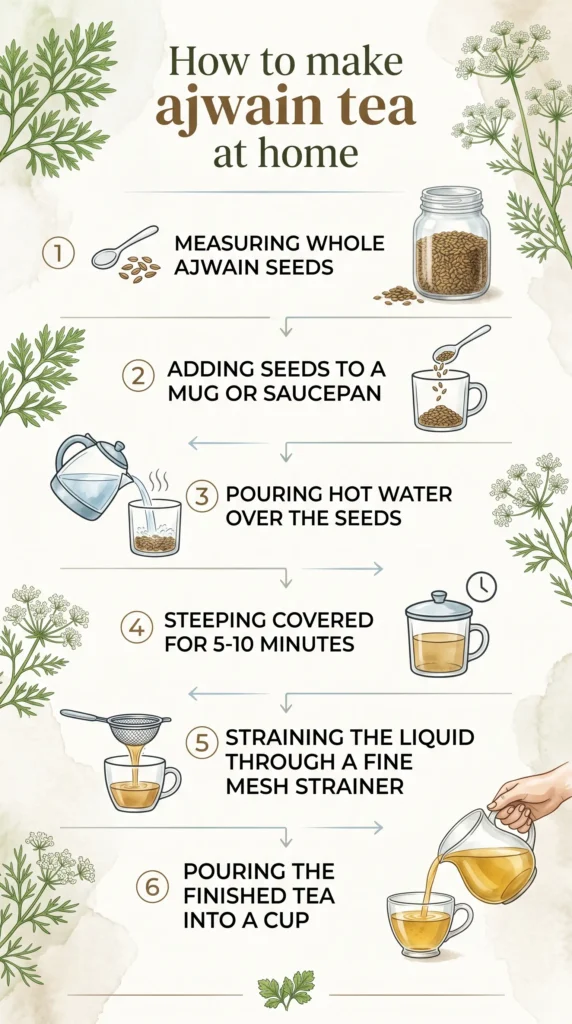
What you’ll need:
- Whole ajwain seeds (1 tsp per cup of water)
- A small saucepan or heatproof mug
- Hot or gently simmering water
- A fine mesh strainer
- Honey or lemon (optional, to taste)
Steps:
- Measure 1 teaspoon of whole ajwain seeds per cup of water you plan to make.
- For a simple infusion, add the seeds to a mug and pour hot water over them, then cover and steep for 5–10 minutes.
- For a stronger decoction, add the seeds and water to a small saucepan and gently simmer for 5 minutes, then remove from heat.
- Strain the liquid through a fine mesh strainer to remove the seeds.
- Add honey or a squeeze of lemon if desired, to balance the pungent flavor.
- Drink while warm, ideally after a meal or when digestion feels sluggish.
Shelf life: Ajwain tea is best prepared fresh for each use, but leftover brewed tea can be refrigerated for up to 24 hours.
Many people still choose pre-portioned ajwain tea bags for convenience — especially useful when traveling or brewing on the go without needing to measure loose seeds.
How to Use Ajwain Tea
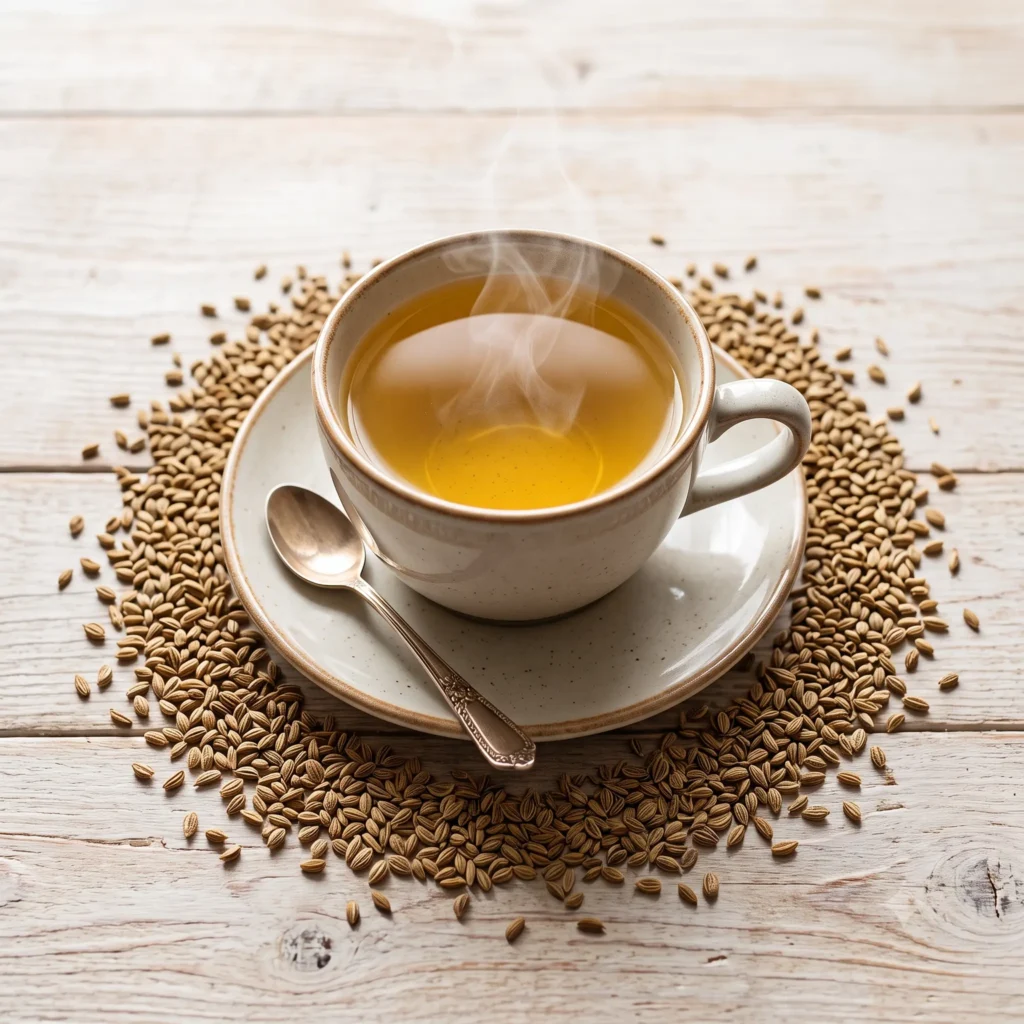
- After meals: A warm cup after a heavy meal is a traditional way to support digestion
- With honey: A spoonful of honey helps balance the tea’s pungent, slightly bitter flavor
- With lemon: A squeeze of lemon adds brightness and can make the flavor more approachable
- Tea bags: Simply steep one bag in hot water for a few minutes for a convenient, pre-measured cup
Start with a lighter brew if you’re new to ajwain’s strong, distinctive flavor, and adjust steeping time and seed quantity to taste.
Potential Side Effects & Precautions
- Generally recognized as safe in typical amounts, but excessive use may cause heartburn or stomach upset in sensitive individuals
- Not well studied in pregnancy in medicinal (concentrated) amounts; some traditional practices advise caution during pregnancy — consult a healthcare provider
- May interact with blood-thinning or blood pressure medications when used in concentrated amounts — consult a healthcare provider if you take either
- Discontinue use and consult a doctor if you notice any allergic reaction (rash, itching, difficulty breathing)
- Always consult a qualified healthcare provider before using ajwain medicinally, especially if you’re on medication or managing a health condition
What to Look for When Buying
- Format — loose seeds offer flexibility, while tea bags offer convenience and consistent portioning
- No fillers — the ingredient list should show just ajwain, with nothing else added
- Freshness & packaging — look for airtight, resealable packaging to preserve the seeds’ strong aroma
- Sourcing transparency — brands that disclose country of origin (commonly India) tend to be more trustworthy
- Manufacturing standards — GMP-certified facilities are a good sign of quality control
Where to Buy Ajwain Tea
A few reputable options currently available:
- TerraVita Ajwain (Ajowan) Seed Tea, 50 Tea Bags — no fillers, packed in a GMP-certified facility
- TerraVita Ajwain (Ajowan) Seed Tea, Loose (4 oz) — loose whole seeds, no fillers, same trusted manufacturer
- Satvi Wellness Ajwain Tea Bags — 20 biodegradable, individually pouched tea bags, travel-friendly packing
Other Ajwain Products
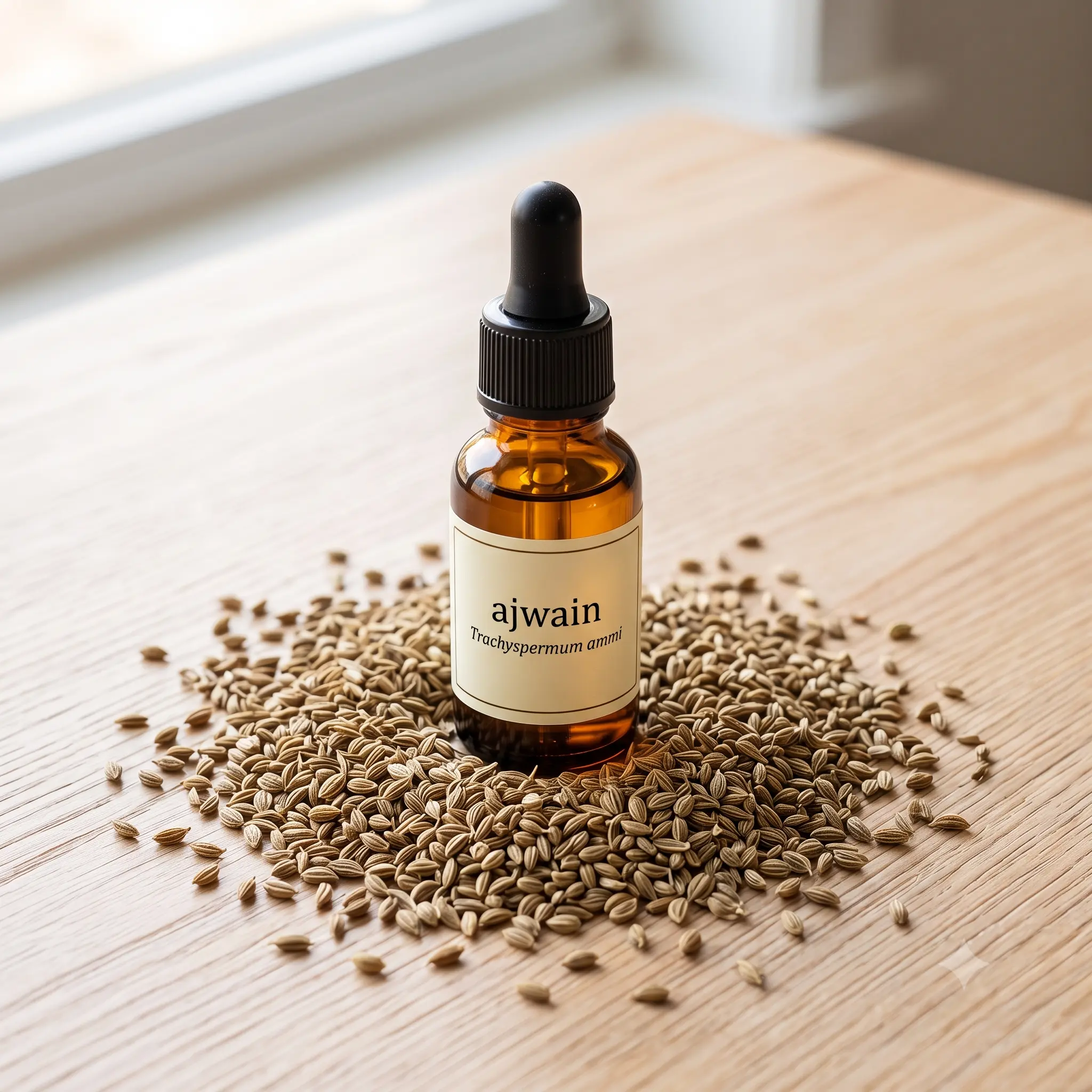
Ajwain Essential Oil
A concentrated aromatic oil traditionally used for topical comfort and aromatherapy….
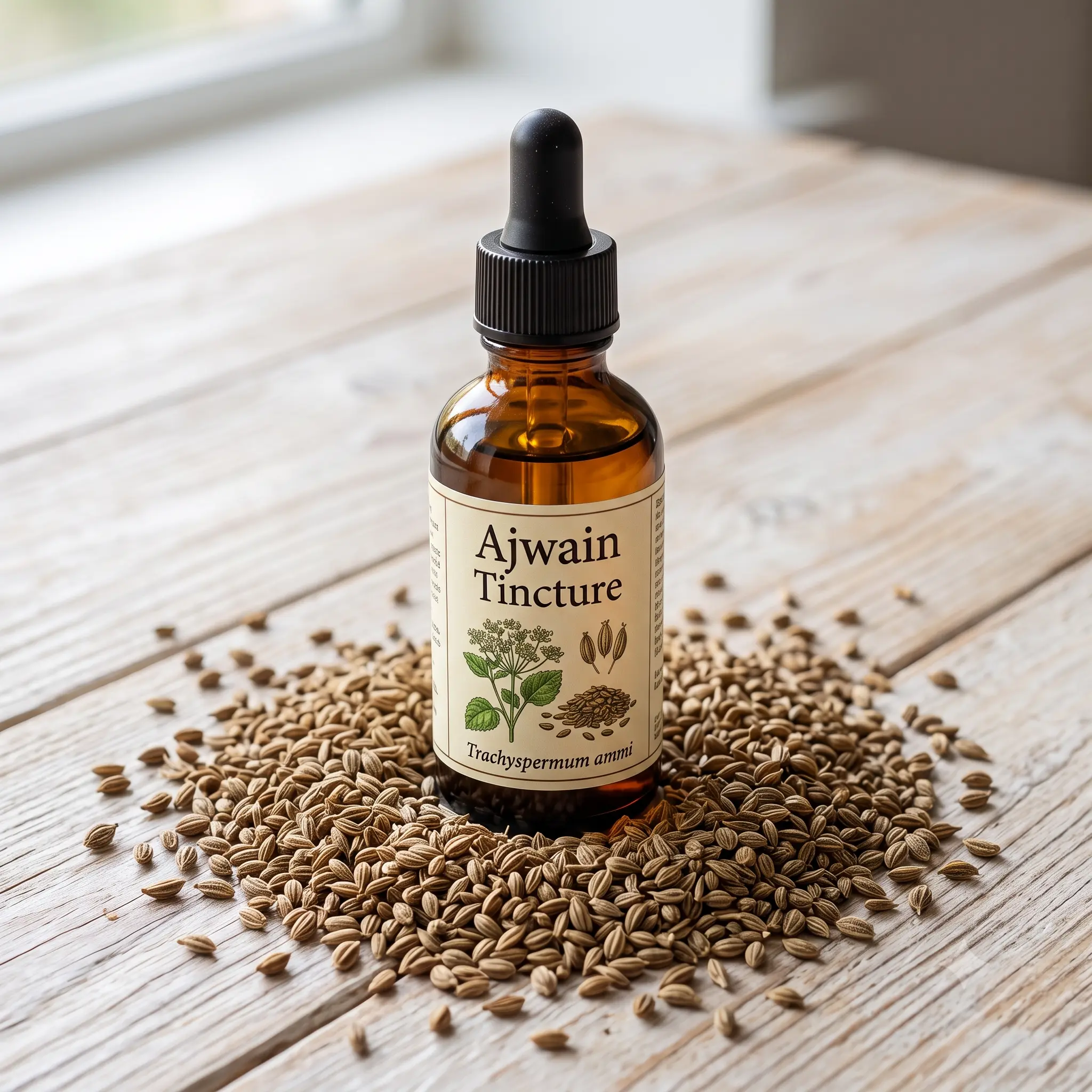
Ajwain Tincture
A concentrated liquid extract that supports healthy digestion and eases bloating….
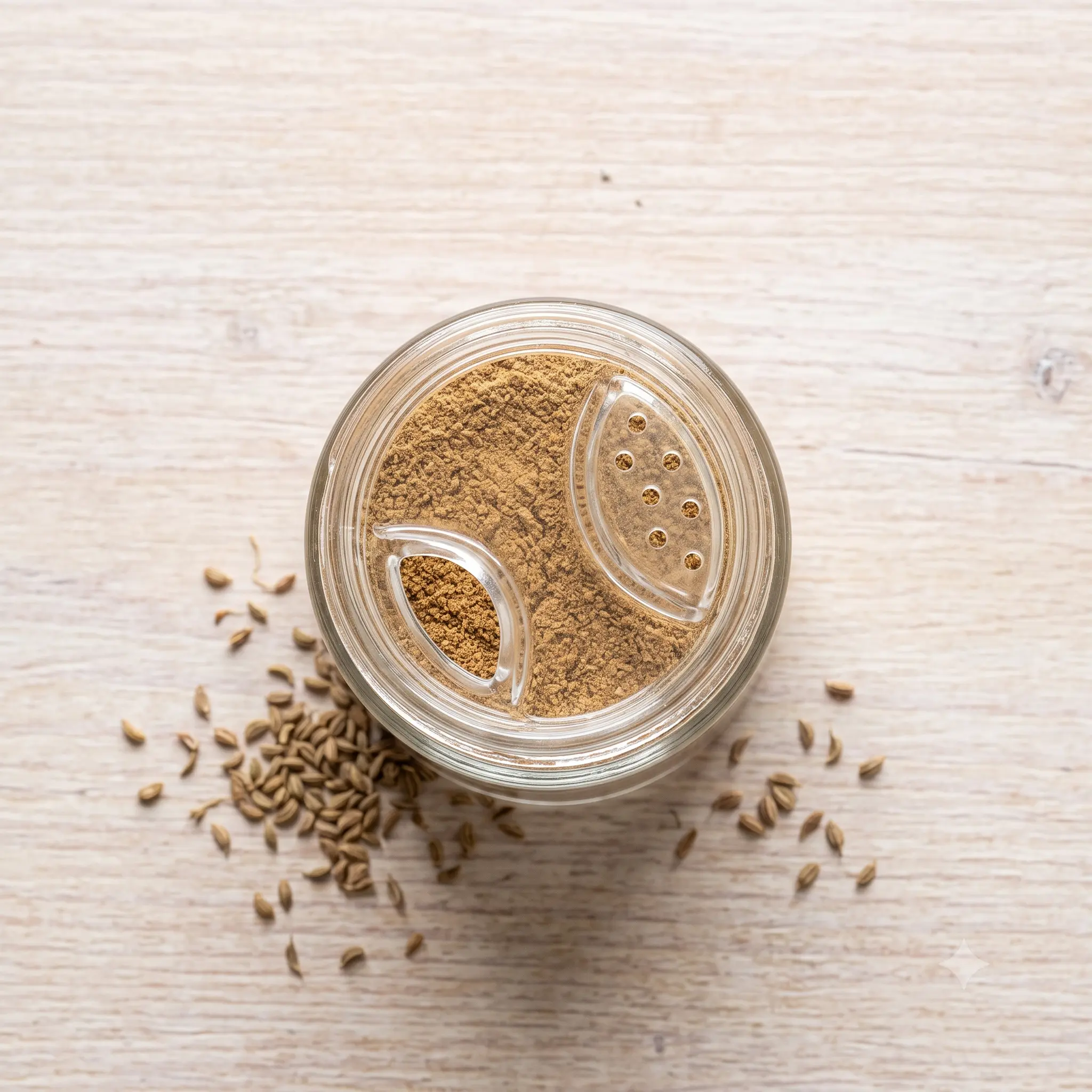
Ajwain Powder
A convenient ground spice that supports healthy digestion and eases bloating….
FAQ
Is ajwain tea the same as ajwain water? Yes, “ajwain tea” and “ajwain water” generally refer to the same preparation — seeds steeped or simmered in water — though “ajwain water” is sometimes used for a lighter, more diluted version.
Does ajwain tea contain caffeine? No, ajwain tea is naturally caffeine-free, making it suitable for any time of day.
What does ajwain tea taste like? It has a strong, pungent flavor often compared to a mix of thyme and oregano, with a warming, slightly bitter quality that mellows with honey or lemon.
Can I drink ajwain tea every day? Many people drink it occasionally after meals, but it’s best to consult a healthcare provider for personalized guidance, especially for regular or extended use.
How should I store ajwain tea? Keep loose seeds or tea bags in an airtight container away from light, heat, and moisture to preserve their potent aromatic oils.
Is ajwain tea safe for kids? Speak with a pediatrician before giving any herbal tea to children, as safety data for kids is limited.
Conclusion
Ajwain tea is a warming, traditional way to bring this centuries-old Ayurvedic digestive spice into your daily routine — whether brewed fresh from whole seeds or steeped from a convenient tea bag. If you’d rather skip the measuring, a quality pre-portioned ajwain tea is a simple, ready-to-brew alternative.
Disclaimers
These statements have not been evaluated by the FDA. This product is not intended to diagnose, treat, cure, or prevent any disease. Always consult a qualified healthcare provider before starting any new supplement.