


👉 Jump straight to Where to Buy Ajwain Powder
Ajwain powder is finely ground Trachyspermum ammi, also known as carom seeds — a plant long used in Ayurvedic and South Asian traditional practice. Ground into a fine powder, it’s an easy way to sprinkle this pungent, thyme-like spice into cooking or traditional home remedies without chewing whole seeds.
Quick Facts
| Botanical name | Trachyspermum ammi |
| Plant part used | Seeds (fruits), ground into powder |
| Traditional uses | Supporting digestion, easing occasional bloating and gas, soothing coughs |
| Typical dosage range | ¼–½ tsp powder, 1–2 times daily, or as directed on the product label |
What Is Ajwain Powder?
Ajwain, also called carom seeds, bishop’s weed, or ajowan, is a small plant in the parsley family native to the Indian subcontinent and the Middle East. Its seeds carry an intensely aromatic, slightly bitter flavor, often compared to a mix of thyme and oregano, due to their high thymol content.
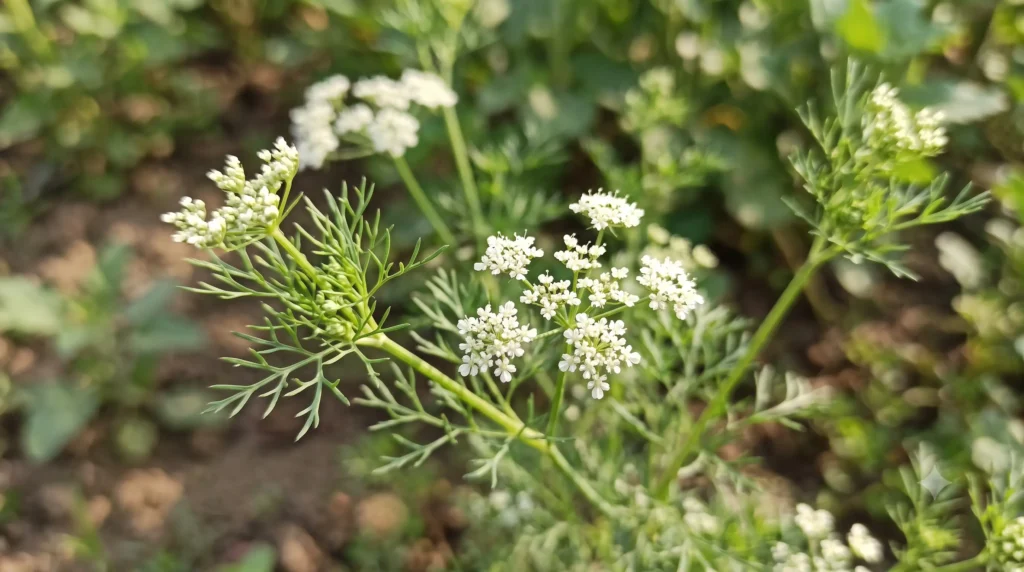
Ajwain powder is made by grinding the dried seeds into a fine powder, offering a more convenient alternative to whole seeds — no chewing or straining required. It’s widely used in South Asian home kitchens both as a culinary spice and as a folk digestive remedy, and its fine texture makes it easy to mix into batters, doughs, marinades, and simple home preparations.
Ajwain powder is commonly used in:
- Cooking — mixed into flatbread dough, batters, and spice blends
- Ajwain water/tea — stirred into hot water as a simpler alternative to steeping whole seeds
- Homemade remedies — combined with warm water or honey for traditional digestive use
- Spice blends — paired with cumin, coriander, and other Ayurvedic spices
Key Traditional Uses & Benefits
- Digestive support — traditionally used to ease occasional bloating, gas, and indigestion after meals
- Respiratory comfort — used in folk practice to soothe an occasional cough or congestion
- Warming, carminative properties — valued in Ayurvedic tradition for its warming, gas-relieving qualities
- Culinary versatility — a staple spice in Indian, Middle Eastern, and South Asian cooking, easily blended into batters and doughs
- Convenience — powder mixes more easily into liquids and recipes than whole seeds
Note: these are traditional and folk uses. Ajwain is not intended to diagnose, treat, cure, or prevent any disease.
How It’s Made (Commercial Process)
Commercial ajwain powder is typically produced by:
- Harvesting and drying the seeds of the Trachyspermum ammi plant
- Cleaning the seeds to remove chaff and debris
- Milling the dried seeds into a fine, consistent powder
- Packaging in airtight, resealable jars or pouches to preserve the powder’s strong aromatic oils
How to Make Ajwain Powder Yourself (DIY)
If you already have whole ajwain seeds on hand, grinding your own powder at home takes just a few minutes.
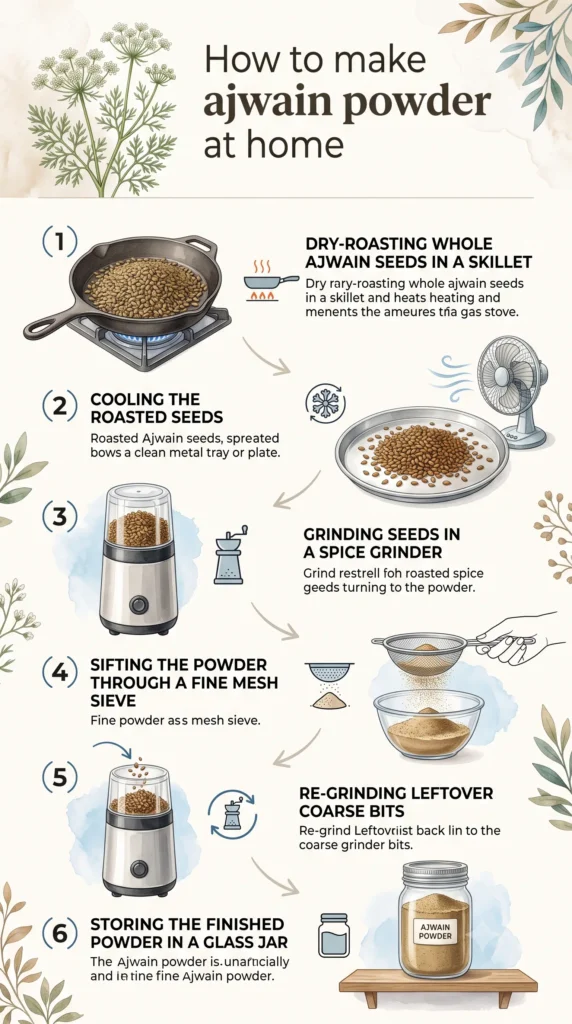
What you’ll need:
- Whole ajwain seeds
- A dry skillet (optional, for roasting first)
- A clean coffee grinder or spice grinder
- A fine mesh sieve
- An airtight glass jar for storage
Steps:
- If desired, lightly dry-roast the whole seeds in a dry skillet over low-medium heat for 1–2 minutes until fragrant, then let them cool completely (roasting enhances the aroma but is optional).
- Add the whole (or roasted) seeds to a clean coffee or spice grinder.
- Grind in short pulses until you reach a fine, consistent powder.
- Sift the powder through a fine mesh sieve to remove any coarse bits.
- Re-grind any leftover coarse pieces and sift again if needed.
- Transfer the finished powder into an airtight glass jar, away from heat and light.
Shelf life: Homemade ajwain powder keeps well for about 3–6 months when stored properly, as ground spices lose potency faster than whole seeds.
Many people still prefer buying pre-ground ajwain powder for consistent fineness and convenience, especially for everyday cooking use.
How to Use Ajwain Powder
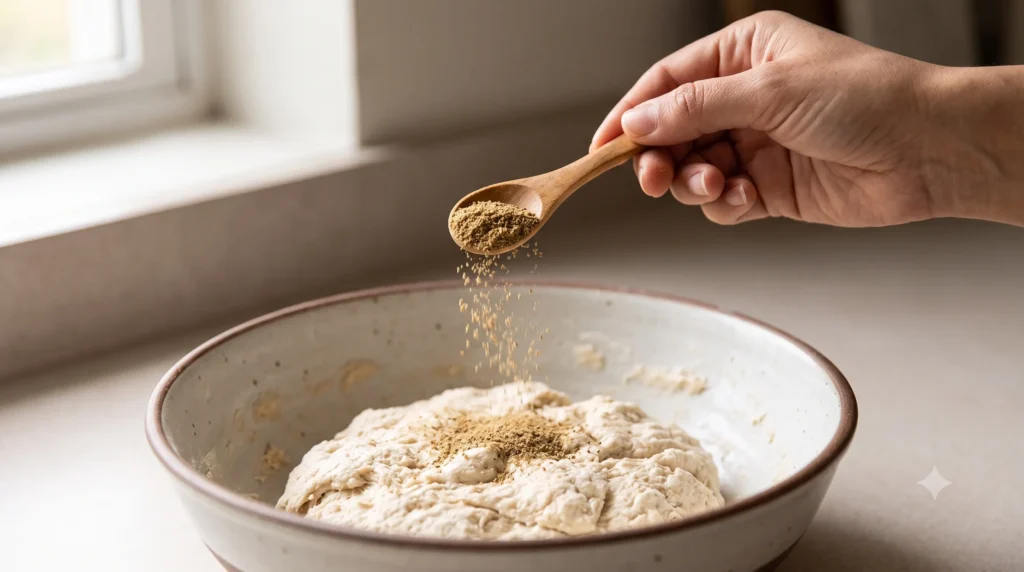
- In cooking: Mix into flatbread dough, batters, or spice blends for flavor and traditional digestive support
- In warm water: Stir ¼ tsp into a cup of warm water as a simple alternative to steeping whole seeds
- With honey: Mix a small pinch with honey for a traditional home remedy approach
- In spice blends: Combine with cumin, coriander, and other spices for a custom seasoning mix
Since powder is more concentrated and disperses more readily than whole seeds, start with a smaller amount and adjust to taste.
Potential Side Effects & Precautions
- Generally recognized as safe in typical culinary amounts, but excessive use may cause heartburn or stomach upset in sensitive individuals
- Not well studied in pregnancy in medicinal (non-culinary) amounts; some traditional practices advise caution during pregnancy — consult a healthcare provider
- May interact with blood-thinning or blood pressure medications when used in concentrated, non-culinary amounts — consult a healthcare provider if you take either
- Discontinue use and consult a doctor if you notice any allergic reaction (rash, itching, difficulty breathing)
- Always consult a qualified healthcare provider before using ajwain medicinally, especially if you’re on medication or managing a health condition
What to Look for When Buying
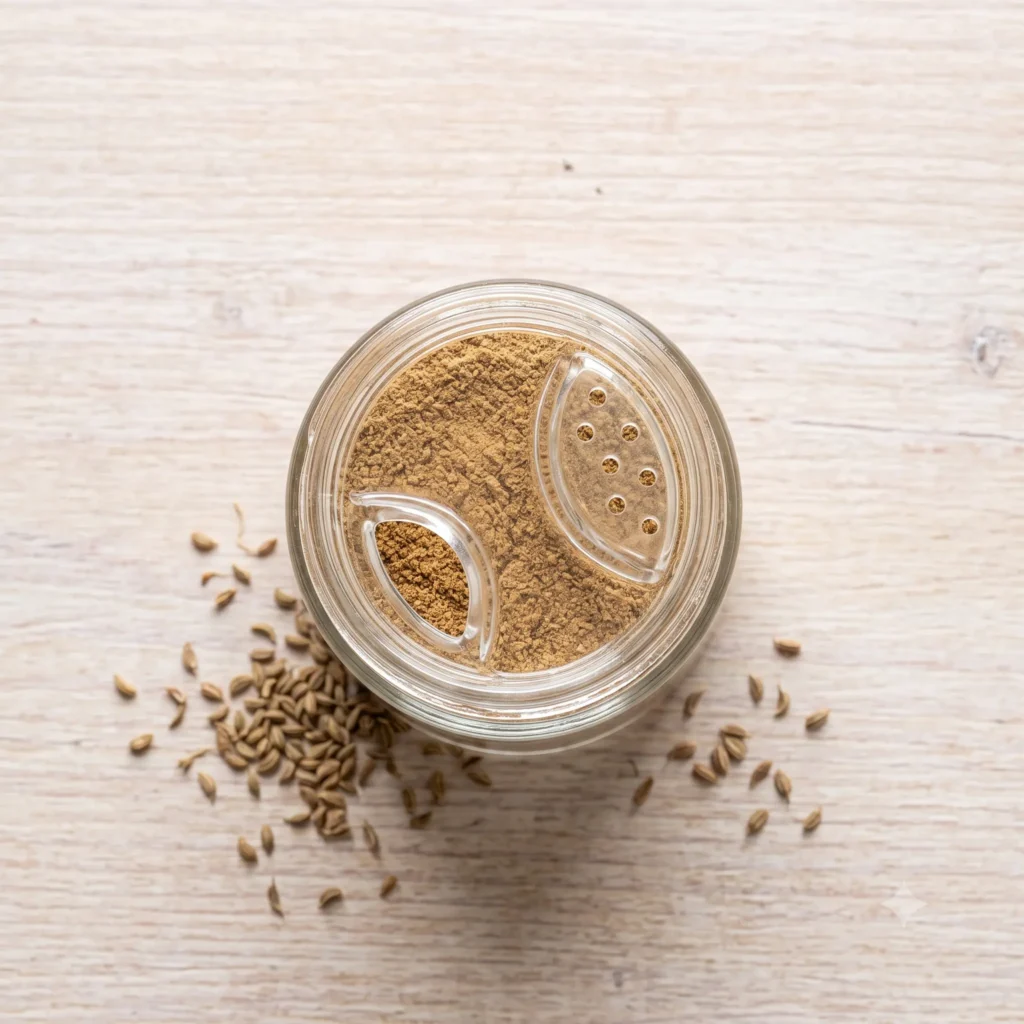
- Freshness & packaging — look for airtight, resealable containers or dual-sifter jars to preserve the powder’s strong aroma
- No additives — the ingredient list should show just ground ajwain, with no fillers or anti-caking agents
- Fine, consistent texture — a well-milled powder should be smooth and free of coarse seed fragments
- Sourcing transparency — brands that disclose country of origin (commonly India) tend to be more trustworthy
- Organic options — where available, organic certification reduces exposure to pesticide residues
Where to Buy Ajwain Powder
A few reputable options currently available:
- Pride of India Ajwain Seed Powder (8 oz Dual Sifter Jar) — made from fresh carom seeds, convenient sifter jar for controlled use
- FOODHERBS Carom Seed Powder (200g) — no chemical pesticides, artificial additives, or preservatives
- BSD Organics Ajwain/Omam/Carom Powder (50g) — smaller size, good for trying the powder before committing to a larger jar
FAQ
What’s the difference between ajwain powder and whole ajwain seeds? Powder is finely ground and blends easily into batters, doughs, and warm water, while whole seeds are typically chewed directly or tempered in hot oil for cooking.
Can I make ajwain water using powder instead of whole seeds? Yes — stirring ¼ teaspoon of ajwain powder into a cup of warm water is a quick alternative to steeping whole seeds.
Does ajwain powder need to be roasted before use? No, but roasting the whole seeds before grinding is a common traditional step that enhances the powder’s aroma and flavor.
What does ajwain powder taste like? It has a strong, pungent flavor often compared to a mix of thyme and oregano, with a slightly bitter, warming quality — even more concentrated than whole seeds due to its fine texture.
How should I store ajwain powder? Keep it in an airtight container away from light, heat, and moisture, as ground spices lose potency faster than whole seeds.
Is ajwain powder safe for kids? Small culinary amounts are generally considered safe, but consult a pediatrician before giving concentrated or medicinal amounts to children.
Conclusion
Ajwain powder is a convenient, finely ground way to bring this traditional Ayurvedic digestive spice into everyday cooking or simple home remedies. Whether ground fresh at home from whole seeds or purchased ready-to-use, it’s a versatile addition to a well-stocked spice cabinet.
Disclaimers
These statements have not been evaluated by the FDA. This product is not intended to diagnose, treat, cure, or prevent any disease. Always consult a qualified healthcare provider before starting any new supplement.