

Recipe Details
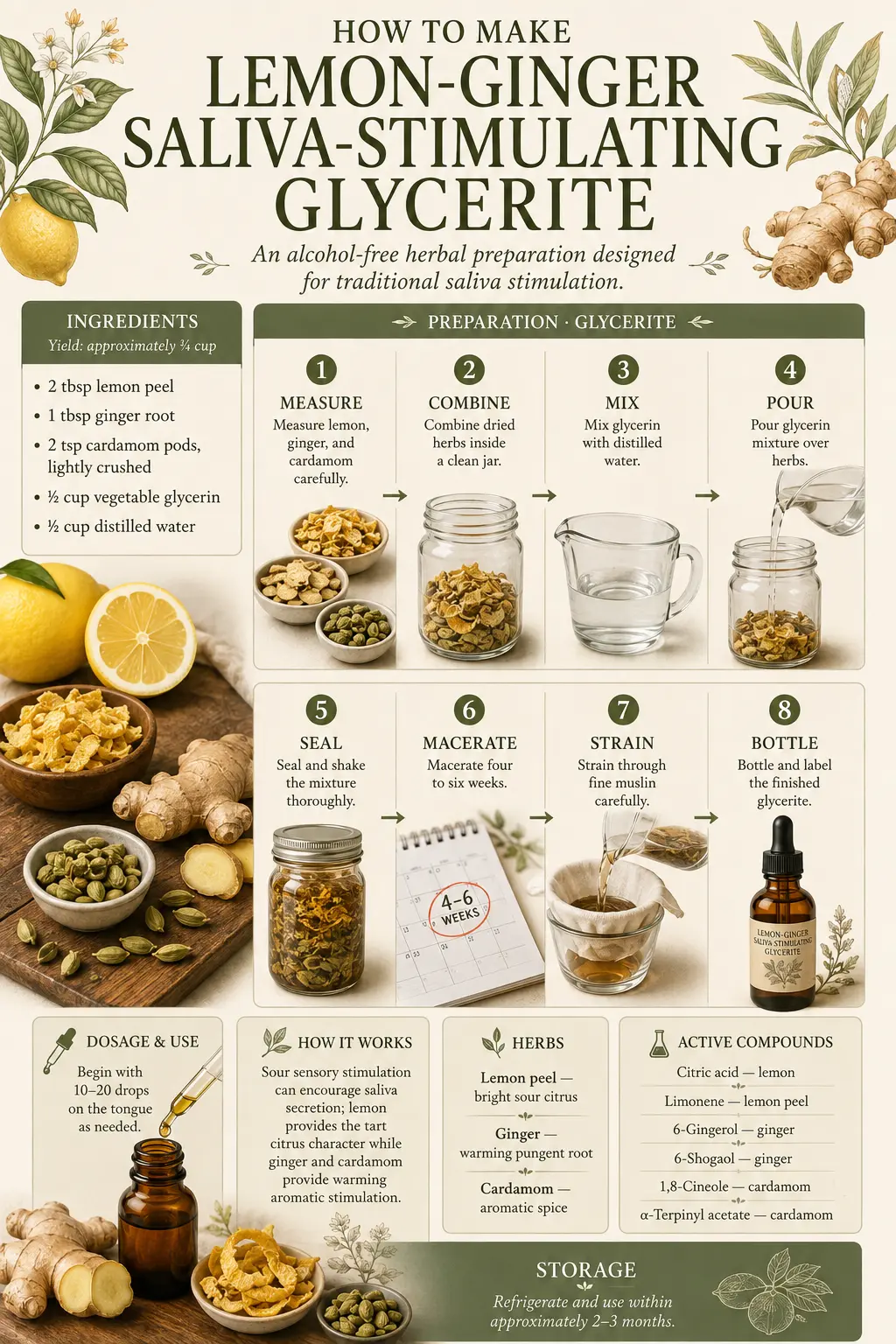
Preparation Type: Glycerite
Ingredients
Cardamom pods — 2 teaspoons, lightly crushed
½ cup vegetable glycerin
½ cup distilled water
Preparation
- Combine the dried lemon peel, ginger, and cardamom in a clean glass jar.
- Mix the vegetable glycerin and distilled water.
- Pour the glycerin mixture over the herbs.
- Make sure the plant material is thoroughly wetted.
- Seal the jar.
- Store in a cool, dark place for 4–6 weeks, shaking gently several times per week.
- Strain through muslin.
- Bottle in a clean amber dropper bottle.
Yield
Approximately ¾ cup glycerite, depending on absorption and straining losses.
Dosage & Usage
Begin with 10–20 drops on the tongue as needed.
Allow the flavor to stimulate the mouth naturally, then swallow or dilute in a small amount of water.
Because this is a concentrated homemade glycerite, start with a small amount rather than treating it like a beverage.
Precautions & Contraindications
- Lemon and ginger can feel irritating in mouths with ulcers, mucositis, reflux-related sensitivity, or significant oral soreness.
- Stop if the preparation causes burning or irritation.
- People with citrus allergies should avoid lemon peel.
- Use food-grade vegetable glycerin.
- Glycerites are alcohol-free, but that does not automatically make them appropriate for every person or every medication regimen.
- Persistent or medication-related xerostomia should be evaluated rather than managed exclusively with herbal preparations. NIDCR notes that more than 400 medicines can contribute to dry mouth. (NIDCR)
Health Conditions & How It Works
Reduced Saliva Flow
Sour tastes can stimulate salivary secretion, and NIDCR specifically recommends sugarless gum or candy to stimulate saliva in people with dry mouth; citrus-flavored options are among those mentioned. (NIDCR)
Lemon peel supplies the bright citrus character, while ginger and cardamom contribute warming and aromatic sensations. This glycerite is therefore better described as a sensory saliva-stimulating preparation than as a treatment for reduced salivary gland function.

Herbs Used in This Recipe
- Lemon Peel — Provides the characteristic sour-citrus aromatic character that makes the preparation useful as a sensory saliva stimulant. (Mountain Rose Herbs)
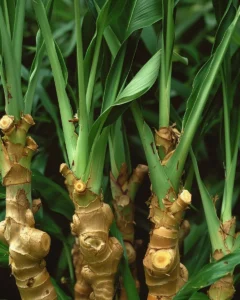
- Ginger Root — Adds warming pungency and is traditionally used in digestive and aromatic preparations.
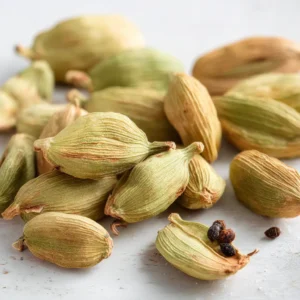
- Cardamom — Adds a sweet, aromatic spice note that makes the preparation more pleasant on the tongue.
Active Compounds
- Citric acid — Lemon — Provides the characteristic tart taste responsible for the sensory sourness of lemon.
- Limonene — Lemon peel — A major citrus volatile contributing to lemon’s characteristic aroma.
- 6-Gingerol — Ginger — A characteristic pungent phenolic compound of fresh ginger.
- 6-Shogaol — Ginger — A pungent ginger constituent particularly associated with dried or heated ginger.
- 1,8-Cineole — Cardamom — An aromatic volatile constituent found in cardamom.
- α-Terpinyl acetate — Cardamom — A major aromatic constituent contributing to cardamom’s characteristic fragrance.
Ready-to-Use Product
Exact lemon-ginger-cardamom glycerites are relatively uncommon.
- Grether’s Sugarfree Ginger Lemon Pastilles — a non-alcoholic product containing ginger, lemon, glycerine, and citric acid, specifically marketed for dry mouth and saliva stimulation. (Grether’s USA)
- Biotène Moisturizing Mouth Spray — alcohol-free moisturizing oral spray containing glycerin and xylitol. (Haleon HealthPartner)
- MouthFlora Dry Mouth Spray — alcohol-free glycerin-containing oral spray designed for dry-mouth comfort. (MouthFlora)
Variations & Substitutions
- Lemon peel → lemon peel powder: use approximately 1 tablespoon, although the glycerite will be more difficult to filter.
- Cardamom → fennel seed: use 2 teaspoons lightly crushed fennel seed for a sweeter, less sharp aromatic profile.
Storage & Shelf Life
Store in a tightly closed amber bottle in a cool, dark location.
Because homemade glycerites contain water and lack commercial preservatives, refrigeration is recommended. Use within approximately 2–3 months and discard if mold, fermentation, cloudiness, or an unusual odor develops.
FAQ
Why use glycerin instead of alcohol?
Alcohol can be undesirable in a dry-mouth preparation because NIDCR recommends avoiding alcohol-containing oral products when the mouth is dry. (NIDCR)
Why does lemon belong in a dry-mouth formula?
The sour sensory stimulus can encourage saliva production, which is why citrus flavors are commonly used in saliva-stimulating products and recommendations.
Can I take more if my mouth still feels dry?
More is not necessarily better. If dry mouth persists despite simple measures, the underlying cause should be evaluated.
Can I use fresh ginger?
Yes, but the additional water introduced by fresh ginger makes homemade glycerite preservation less predictable. Dried ginger is preferable for this recipe.
References
NIDCR — Dry Mouth and Older Adults (NIDCR)
Grether’s USA — Sugarfree Ginger Lemon (Grether’s USA)
Haleon — Biotène Moisturizing Mouth Spray (Haleon HealthPartner)
Mountain Rose Herbs — Lemon Peel (Mountain Rose Herbs)
Disclaimer
Educational purposes only. This glycerite is a traditional sensory saliva-stimulation preparation and is not a treatment for salivary-gland dysfunction or the underlying cause of xerostomia.