

Recipe Details
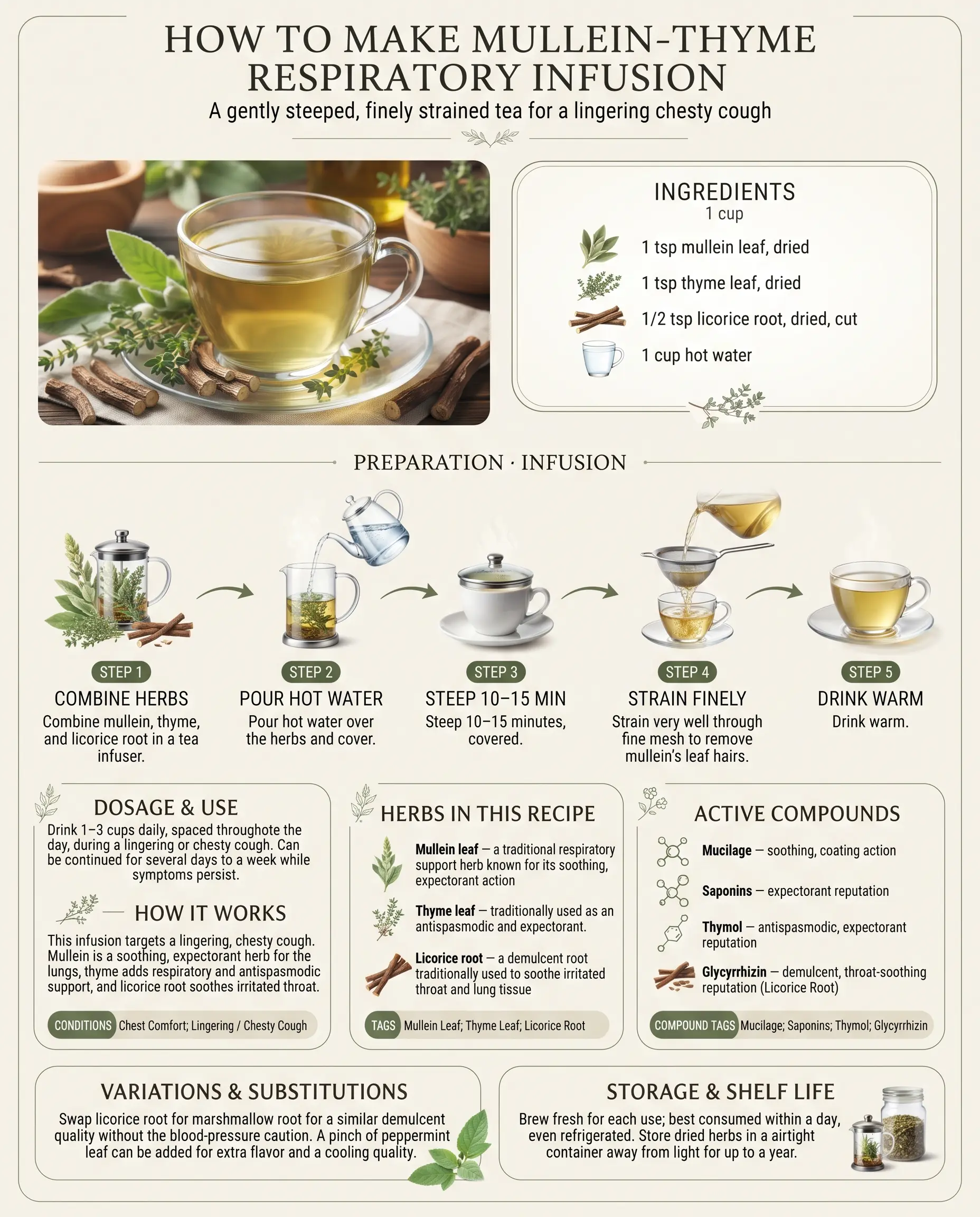
Preparation Type: Infusion
Ingredients
1 tsp mullein leaf, dried
1 tsp thyme leaf, dried
1/2 tsp licorice root, dried, cut
1 cup hot water
Preparation
- Combine mullein, thyme, and licorice root in a tea infuser or strainer.
- Pour hot water over the herbs and cover.
- Steep 10–15 minutes, covered.
- Strain very well through a fine mesh strainer or coffee filter to remove mullein’s fine leaf hairs.
- Drink warm.
Yield: 1 cup
Dosage & Usage
Drink 1–3 cups daily, spaced throughout the day, during a lingering or chesty cough. Can be continued for several days to a week while symptoms persist.
Precautions & Contraindications
Mullein leaf carries fine hairs that can cause mechanical irritation in the mouth and throat if not thoroughly strained — always filter through a fine mesh strainer, coffee filter, or several layers of cheesecloth. Licorice root should not be used long-term or in large amounts by anyone with high blood pressure, liver disorders, edema, or heart disease. Avoid if allergic to plants in the Lamiaceae family (thyme) or Scrophulariaceae family (mullein). Consult a healthcare practitioner before extended daily use.
Health Conditions & How It Works
This infusion targets a lingering or chesty cough, the kind that sticks around after the acute phase of illness has passed. Mullein has a long tradition as a soothing, expectorant herb for the lungs, traditionally used to ease irritation and support the clearing of mucus. Thyme adds its own traditional respiratory and antispasmodic reputation, while licorice root contributes a demulcent, throat-soothing quality that rounds out the blend.


Herbs Used in This Recipe
Mullein leaf — a traditional respiratory support herb known for its soothing, expectorant action on the lungs.
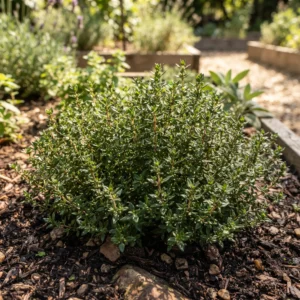
Thyme leaf — traditionally used as an antispasmodic and expectorant, supporting mullein’s respiratory focus.
Licorice root — a demulcent root traditionally used to soothe irritated throat and lung tissue.


Active Compounds
- Mucilage — a soothing, gel-forming compound class traditionally associated with mullein’s demulcent, coating action on irritated tissue (Mullein)
- Saponins — compounds traditionally tied to mullein’s expectorant reputation, thought to support mucus movement (Mullein)
- Thymol — a volatile oil traditionally associated with thyme’s antispasmodic, expectorant reputation (Thyme)
- Glycyrrhizin — the primary sweet compound in licorice root, traditionally tied to its
Ready-to-Use Product
Leckar Cough Season Herbal Tea — an herbal tea blend built on mullein, thyme, and echinacea for cough-season respiratory support, closely aligned with this formula’s mullein-thyme foundation
Variations & Substitutions
Swap licorice root for marshmallow root if avoiding licorice’s blood-pressure caution — marshmallow offers a similar demulcent quality without the same contraindications. A pinch of peppermint leaf can be added for extra flavor and a cooling, opening quality alongside the mullein and thyme.
Storage & Shelf Life
Brew fresh for each use; this infusion is best consumed within a day and doesn’t store well beyond that, even refrigerated. Store the dried herbs themselves in an airtight container away from light for up to a year.
FAQ
Why does mullein leaf need to be strained so carefully?
Mullein leaves are covered in tiny, fine hairs that can cause a scratchy, irritating sensation in the mouth and throat if they end up in the finished tea — straining through fine mesh, a coffee filter, or several layers of cheesecloth removes them.
How long can I drink this tea during a lingering cough?
A few days to about a week of regular use is reasonable for most adults; if the cough persists well beyond that, it’s worth checking in with a healthcare practitioner rather than continuing indefinitely.
Why is this a gentle infusion instead of a stronger extraction like a tincture?
Mullein’s soothing, mucilaginous qualities are best drawn out with a gentle hot-water steep — a high-alcohol tincture extracts different compounds and isn’t considered the ideal format for this particular traditional use.
Can I add honey to this tea?
Yes, a spoonful of raw honey pairs well with mullein-thyme tea and adds its own traditional throat-soothing quality, though it shouldn’t be given to children under one year old.
References
Mountain Rose Herbs: Mullein Leaf, US Grown Organic
Mountain Rose Herbs: Thyme Leaf Organic
Disclaimer
This content is for educational purposes only and has not been evaluated by the FDA. It is not intended to diagnose, treat, cure, or prevent any disease. Consult a qualified healthcare practitioner before using herbal preparations, particularly if pregnant, nursing, or taking medication.