

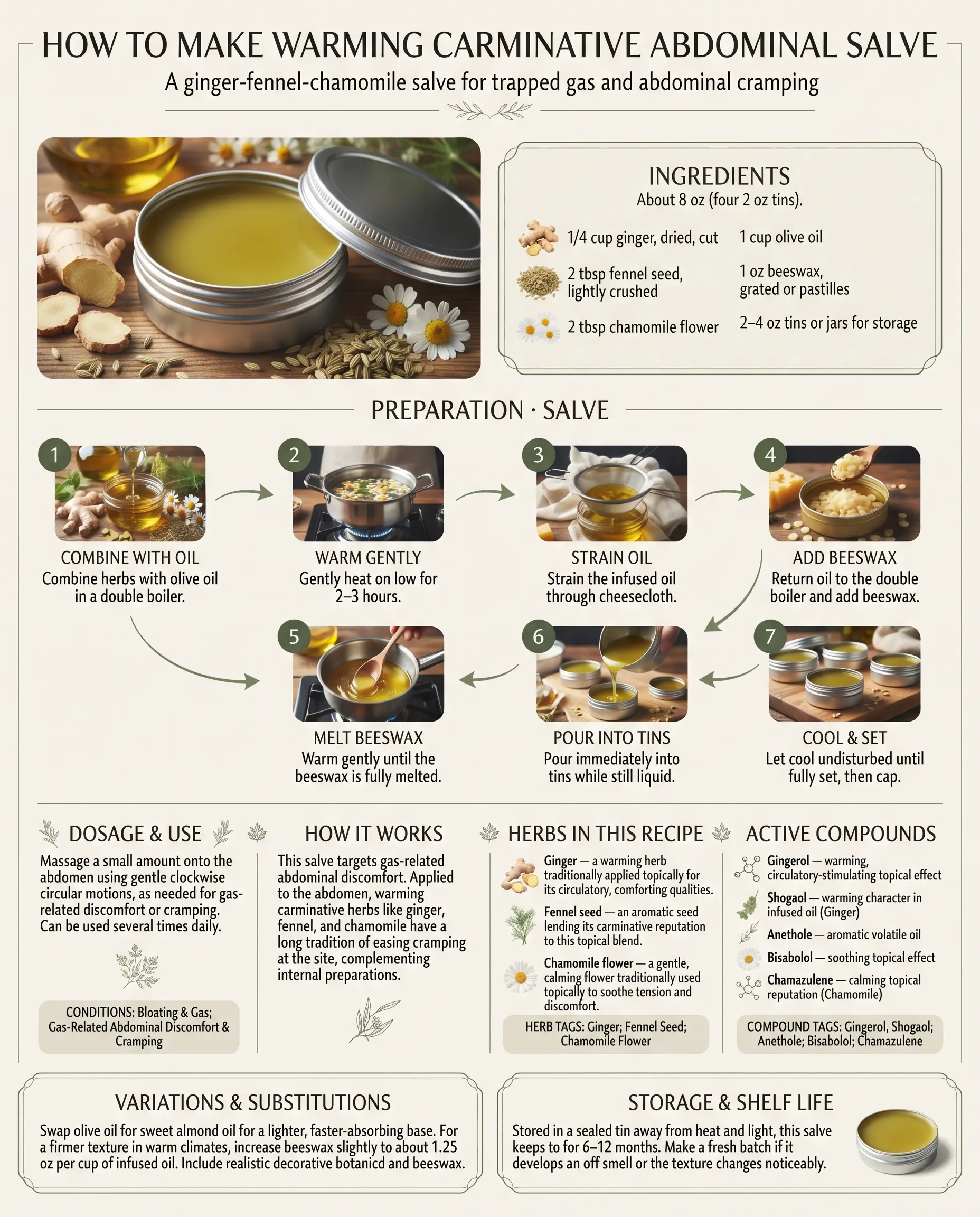
Recipe Details
Preparation Type: Salve
Ingredients
1/4 cup ginger, dried, cut
2 tbsp fennel seed, lightly crushed
2 tbsp chamomile flower
1 cup olive oil
1 oz beeswax, grated or pastilles
2–4 oz tins or jars for storage
Preparation
- Combine ginger, fennel seed, and chamomile with olive oil in a double boiler.
- Gently heat on low for 2–3 hours, keeping the oil warm but never simmering or smoking.
- Strain the infused oil through cheesecloth into a clean, heatproof measuring cup, pressing to extract as much oil as possible.
- Return the strained oil to the double boiler and add the beeswax.
- Warm gently until the beeswax is fully melted, stirring to combine.
- Pour immediately into tins while still liquid.
- Let cool undisturbed until fully set, then cap.
Yield: About 8 oz (four 2 oz tins)
Dosage & Usage
Massage a small amount onto the abdomen, using gentle clockwise circular motions, as needed for gas-related discomfort or cramping. Can be used several times daily.
Precautions & Contraindications
For external use only — do not ingest. Always perform a patch test on a small area of skin before broader use, and discontinue if irritation occurs. Avoid applying to broken or irritated skin. Not for use near the eyes or mucous membranes. If pregnant, nursing, or unsure about topical use, consult a healthcare practitioner before applying.
Health Conditions & How It Works
This salve targets gas-related abdominal discomfort and cramping — trapped gas that causes localized tightness or ache. Applied directly to the abdomen, warming carminative herbs like ginger, fennel, and chamomile have a long tradition in topical folk use for easing cramping and discomfort at the site, working alongside (rather than replacing) internal preparations like teas or tinctures.


Herbs Used in This Recipe
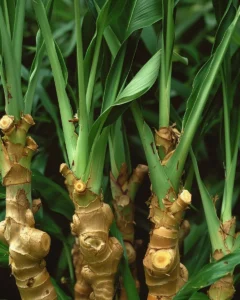
Ginger — a warming herb traditionally applied topically for its circulatory, comforting qualities.
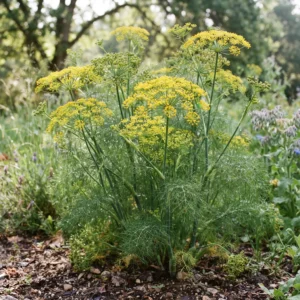
Fennel seed — an aromatic seed that lends its carminative reputation to this topical blend.
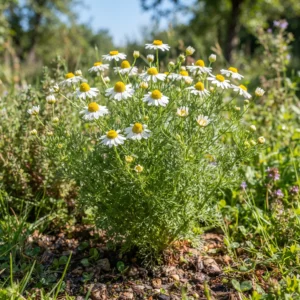
Chamomile flower — a gentle, calming flower traditionally used topically to soothe tension and discomfort.
Active Compounds
- Gingerol — traditionally associated with a warming, circulatory-stimulating topical effect (Ginger)
- Shogaol — contributes to ginger’s warming character in infused-oil preparations (Ginger)
- Anethole — an aromatic volatile oil carried into the infused oil from fennel (Fennel)
- Bisabolol — traditionally associated with soothing, calming topical effects (Chamomile)
- Chamazulene — a compound formed during chamomile processing, traditionally linked to its calming topical reputation (Chamomile)
Ready-to-Use Product
Herb Stop Tummy Soothe Roll-On Oil Blend — a pre-made essential-oil roll-on built with ginger, fennel, and chamomile among its digestive-supportive oils, designed for the same abdominal application as this salve.
Variations & Substitutions
Swap the olive oil for sweet almond oil if you prefer a lighter-textured, faster-absorbing base — almond oil infuses well with the same herbs. For a firmer, more balm-like texture that holds up in warm climates, increase the beeswax slightly, to about 1.25 oz per cup of infused oil.
Storage & Shelf Life
Stored in a sealed tin away from heat and light, this salve keeps for 6–12 months. If it develops an off smell or the texture changes noticeably, it’s time to make a fresh batch.
FAQ
Why infuse the oil for hours instead of quickly?
A slow, gentle heat infusion draws the oil-soluble aromatic and warming compounds out of the dried herbs — rushing it with high heat risks scorching the herbs and degrading those compounds.
Can this salve be used alongside the tea or oxymel recipes above?
Yes, this topical preparation is designed to complement internal preparations like the teas or oxymel in this series, applied directly to the area of discomfort while the internal herbs work systemically.
Why do I need to patch test a salve made from food-safe herbs?
Even gentle culinary herbs can occasionally cause skin sensitivity when concentrated in an infused oil, so a small patch test helps confirm your skin tolerates the blend before wider application.
References
Mountain Rose Herbs: Beeswax Pastilles Profile
American Botanical Council: HerbalGram
Disclaimer
This content is for educational purposes only and has not been evaluated by the FDA. It is not intended to diagnose, treat, cure, or prevent any disease. Consult a qualified healthcare practitioner before using herbal preparations, particularly if pregnant, nursing, or taking medication.