


👉 Jump straight to Where to Buy Agrimony Powder
Agrimony powder is a finely ground form of Agrimonia eupatoria, a tall, yellow-flowered herb long used in European folk herbalism. Ground into a fine powder, it’s an easy way to stir this mildly bitter, earthy herb into food, drinks, or homemade capsules — a versatile step up from loose cut herb.
Quick Facts
| Botanical name | Agrimonia eupatoria |
| Plant part used | Leaves and flowering tops (aerial parts) |
| Traditional uses | Supporting digestion, gentle liver support, soothing the throat |
| Typical dosage range | 1 tsp to 1 tbsp (roughly 1–3 g) daily, or as directed on the product label |
What Is Agrimony Powder?
Agrimony, sometimes called “sticklewort” or “church steeples,” is a rose-family herb native to Europe, Asia, and North Africa, historically valued for centuries in traditional folk herbalism and once even known as a battlefield remedy in the Middle Ages.
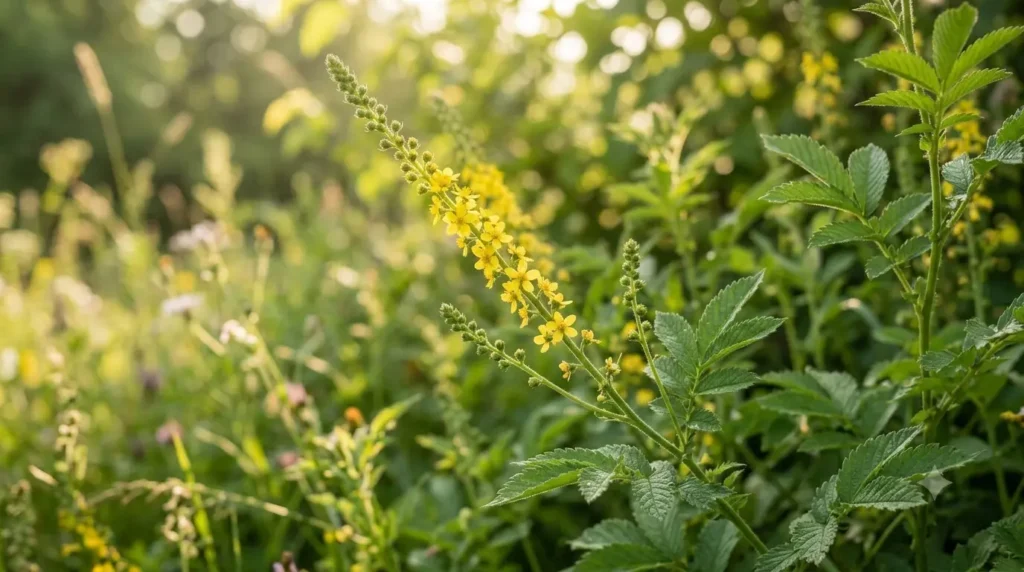
Agrimony powder is made by drying the leaves and flowering tops of the plant and grinding them into a fine, consistent powder — finer than cut and sifted dried herb, and easier to mix directly into liquids, food, or capsules. Unlike a tea (which requires steeping and straining) or a tincture (which is alcohol- or glycerin-extracted), powder can be incorporated into a wider range of preparations without any special equipment.
Powder is commonly used to make:
- Stirred drinks — mixed directly into water, juice, or smoothies
- Homemade capsules — encapsulated for a convenient, tasteless option
- Topical pastes — mixed with water or honey for occasional external use
- Culinary/wellness blends — combined into custom herbal mixes
Key Traditional Uses & Benefits
- Digestive support — traditionally used to ease occasional bloating and support healthy digestion
- Liver support — long used in folk herbalism as a gentle liver tonic
- Throat comfort — traditionally used to soothe an occasional scratchy throat
- Astringent properties — historically valued for its mild astringent, toning qualities
- Versatility — fine powder blends more easily into drinks, food, and capsules than cut herb
Note: these are traditional and folk uses. Agrimony is not intended to diagnose, treat, cure, or prevent any disease.
How It’s Made (Commercial Process)
Commercial agrimony powder is typically produced by:
- Harvesting the aerial parts of the plant during flowering, when its beneficial compounds are most concentrated
- Drying the leaves and flowering tops using low-heat dehydration to preserve color and potency
- Milling the dried herb into a fine, consistent powder
- Packaging in resealable, light-blocking containers to protect freshness
How to Make Agrimony Powder Yourself (DIY)
If you have dried agrimony herb on hand (or dry your own from fresh), turning it into powder is simple.
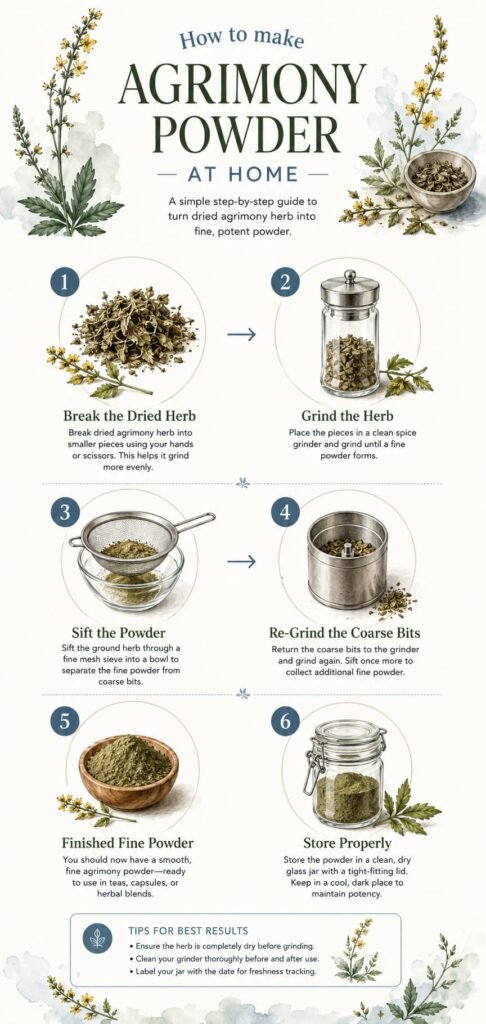
What you’ll need:
- Dried agrimony leaves and flowering tops
- A clean coffee grinder, spice grinder, or high-powered blender
- A fine mesh sieve
- An airtight glass jar for storage
Steps:
- Break the dried agrimony herb into smaller pieces by hand to make grinding easier.
- Grind in short pulses in a clean coffee or spice grinder until you reach a fine, consistent powder.
- Sift the powder through a fine mesh sieve to remove any coarse fibers or stem pieces.
- Re-grind any leftover coarse bits and sift again until fully processed.
- Transfer the finished powder into an airtight glass jar.
- Label the jar with the date, and store away from heat and light.
Shelf life: Homemade agrimony powder keeps for roughly 6–12 months when stored properly, though it’s most potent within the first few months.
While making your own is rewarding, many people still choose commercially prepared powder for consistent fineness, lab-verified purity, and time savings.
How to Use Agrimony Powder
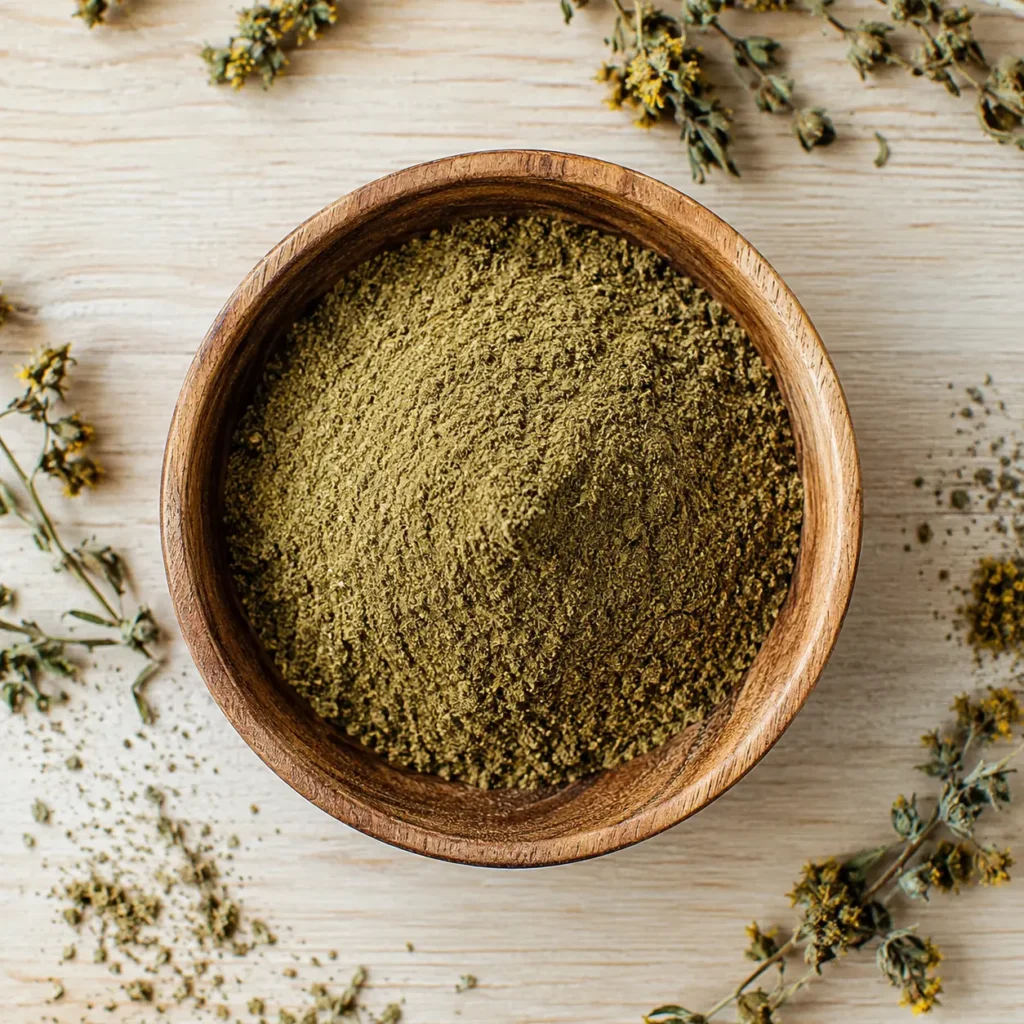
- In water or juice: Stir ¼–½ tsp into a glass of water or juice
- In smoothies: Blend ¼ tsp into your morning smoothie
- In capsules: Fill empty vegetable capsules for a tasteless, convenient option
- Topically: Mix a small amount with water or honey to form a paste for occasional use on the skin
Because powder is more concentrated by volume than loose cut herb, start with a smaller amount than you might use for tea, and adjust based on the specific product’s suggested serving size.
Potential Side Effects & Precautions
- Generally well-tolerated, but its astringent properties may cause mild stomach upset in sensitive individuals if taken in excess
- May interact with blood-thinning or diabetes medications — consult a healthcare provider if you take either
- Contains natural vitamin K, which may be relevant for those on anticoagulant medications — discuss with your provider
- Not well studied in pregnancy or breastfeeding; avoid unless guided by a healthcare provider
- Discontinue use and consult a doctor if you notice any allergic reaction (rash, itching, difficulty breathing)
- Always consult a qualified healthcare provider before starting any new herbal supplement, especially if you’re on medication or managing a health condition
What to Look for When Buying
- Organic certification — reduces exposure to pesticide residues
- Fineness/consistency — a well-milled powder should be smooth and free of coarse fibers
- Sourcing transparency — brands that disclose growing origin and harvest practices tend to be more trustworthy
- Freshness & packaging — look for resealable, light-blocking containers to preserve potency
- Wild-harvested vs. cultivated — both are common; wild-harvested herb should still come from a reputable, sustainably managed source
Where to Buy Agrimony Powder
A few reputable options currently available:
- Penn Herb Co. Agrimony Herb Powder, Organic (4 oz) — certified organic, finely milled
- Penn Herb Co. Agrimony Herb Powder (4 oz) — wild-harvested, sold by a long-established herb retailer
- Ecuadorian Rainforest Agrimony Powder — available in bulk quantities, ideal for regular users or small herbal businesses
Other Agrimony Products
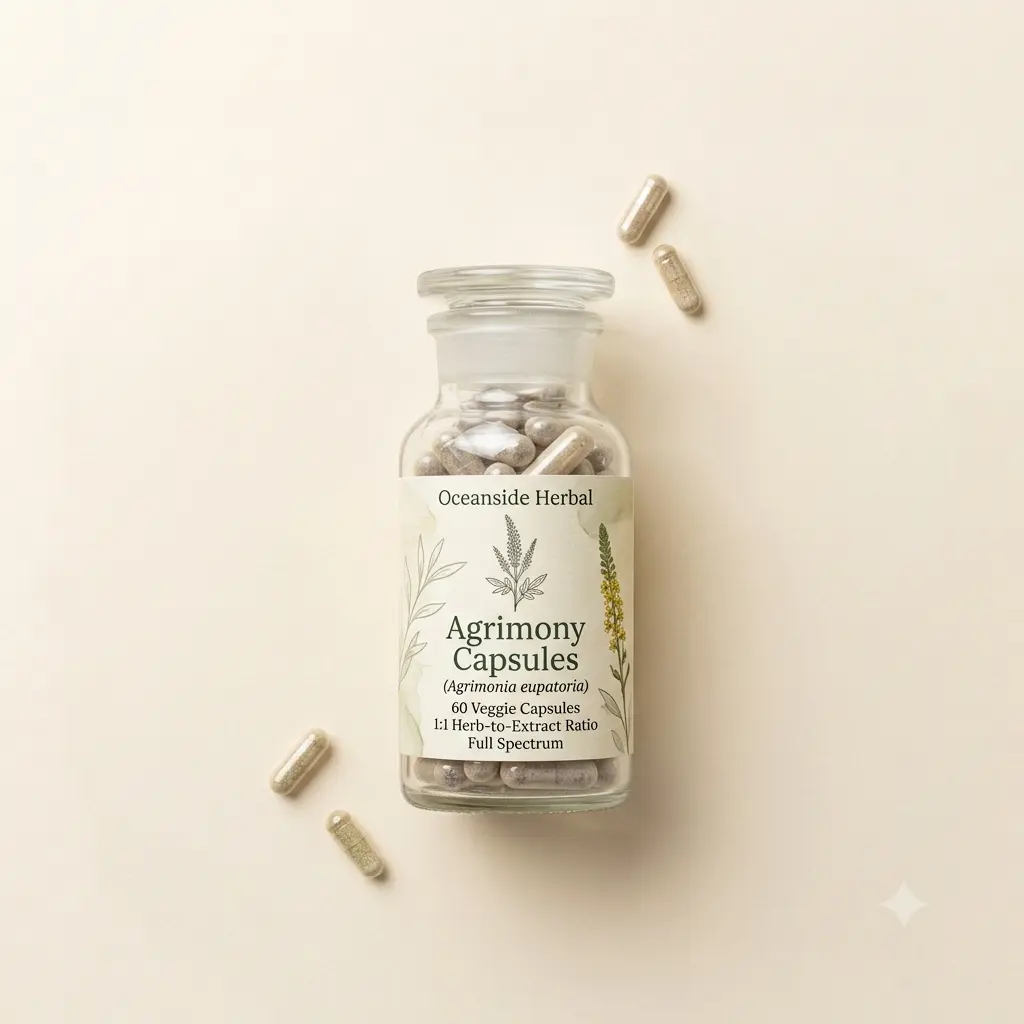
Agrimony Capsules
A convenient, tasteless way to support healthy digestion and gentle liver function…
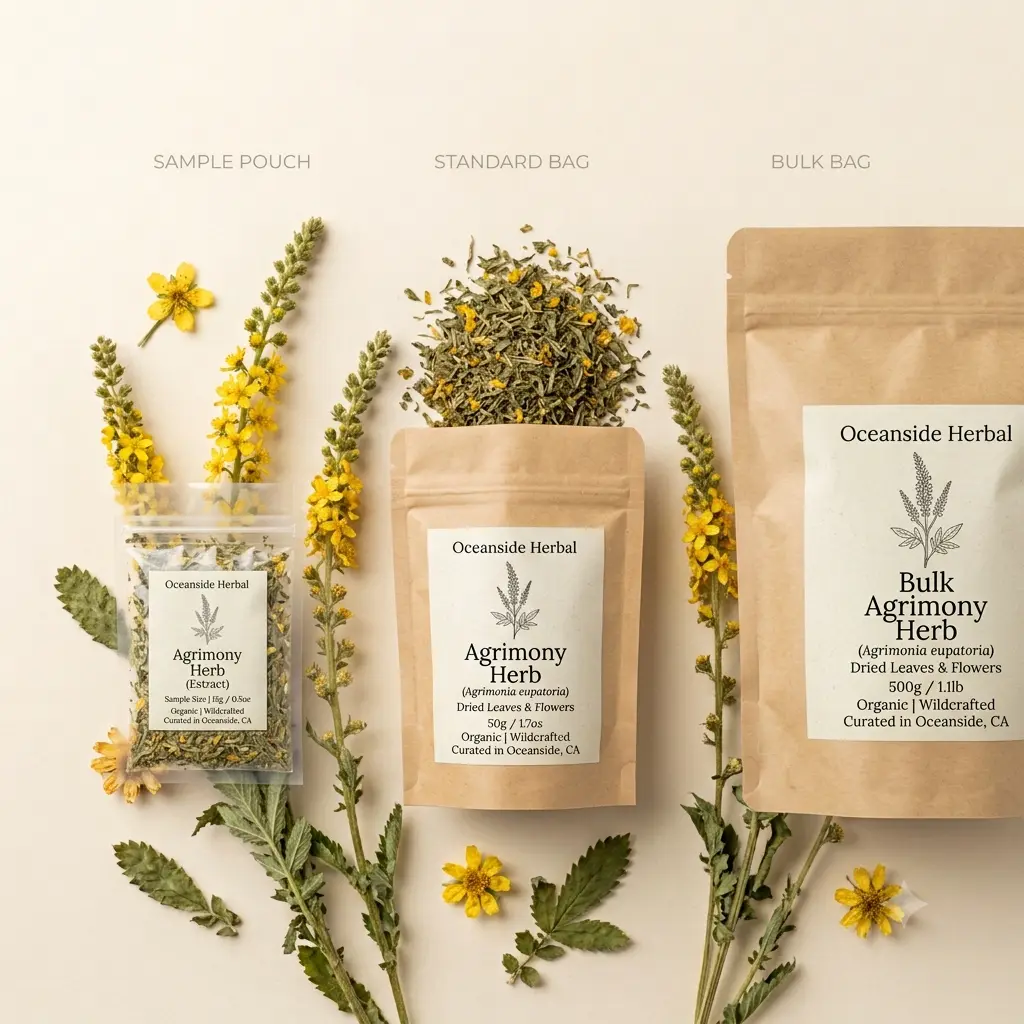
Dried Agrimony
A versatile raw herb that supports healthy digestion and gentle liver function…
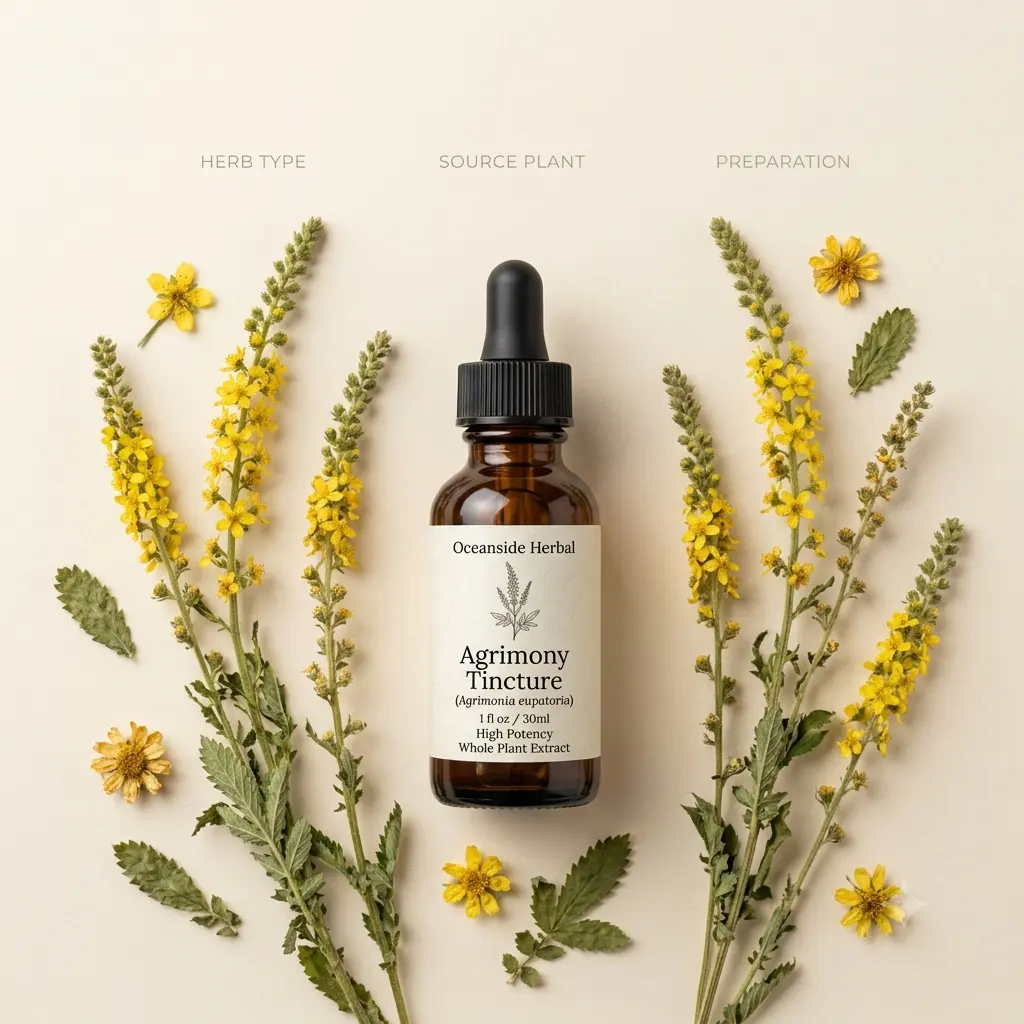
Agrimony Tincture
Supports healthy digestion and gentle liver function in concentrated liquid form….
FAQ
What’s the difference between agrimony powder and cut & sifted dried agrimony? Powder is finely ground and dissolves or blends more easily into liquids and capsules, while cut & sifted herb is chopped into larger pieces best suited for steeping as tea.
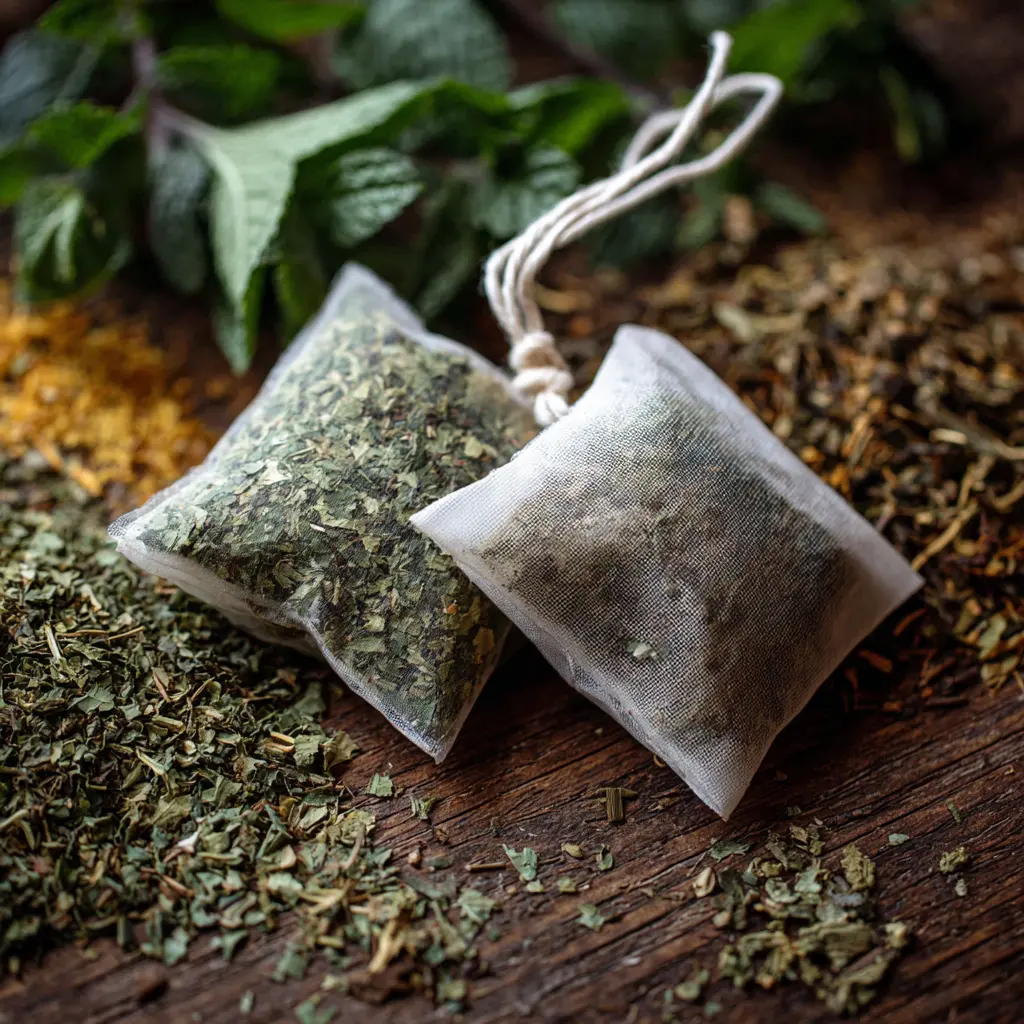
Can I use agrimony powder to make tea? Yes, though it will be cloudier and grittier than tea made from cut herb — many people prefer straining it through a fine cloth or using a tea bag if brewing powder.
Can agrimony powder be used to make capsules? Yes — it’s one of the most common uses for agrimony powder, since the fine texture packs easily into empty capsule shells.
How should I store agrimony powder? Keep it in an airtight glass container away from light, heat, and moisture to preserve its flavor and potency.
How much agrimony powder should I take? A general guideline is ¼–½ teaspoon per use, but always check the specific product’s label, since potency can vary by brand and freshness.
Is agrimony powder safe for kids? Speak with a pediatrician before giving any herbal preparation to children, as safety data for kids is limited.
Conclusion
Agrimony powder is a versatile, finely milled way to bring this traditional digestive and liver-supporting herb into drinks, smoothies, or homemade capsules. Whether ground at home from dried herb or purchased ready-to-use from a trusted supplier, it’s a simple addition to a well-stocked herbal cabinet.
Disclaimers
These statements have not been evaluated by the FDA. This product is not intended to diagnose, treat, cure, or prevent any disease. Always consult a qualified healthcare provider before starting any new supplement.