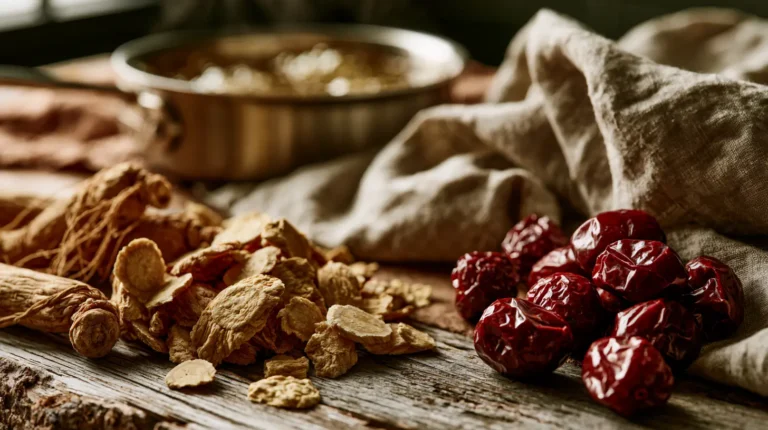
Using whole herb or powdered herb skips extraction entirely, delivering the full plant matrix — fiber included — rather than isolating specific compounds into a liquid. It’s the simplest way to use an herb, and often the best choice when you want the complete nutritional and fiber profile of the plant.
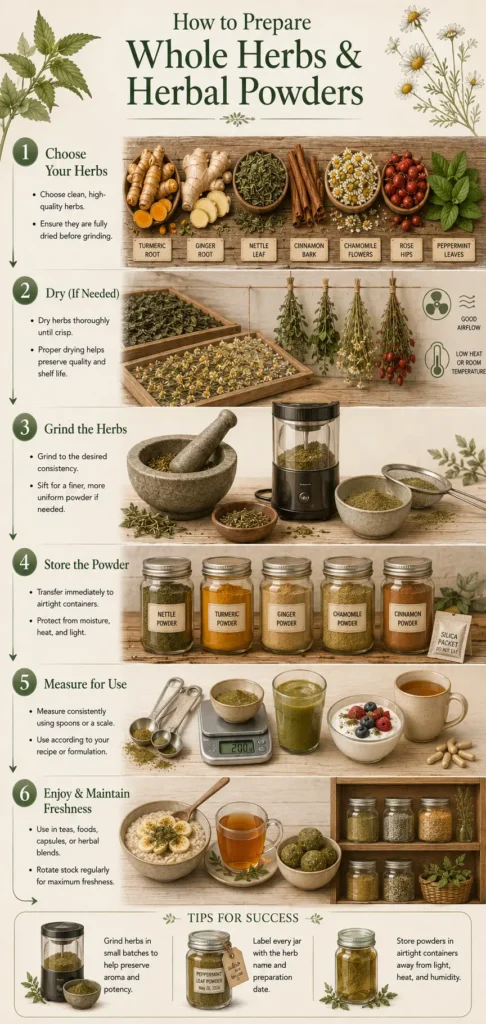
- Choose fully dried herb for the longest shelf life and easiest handling.
- Grind into a fine powder using a spice grinder or high-powered blender, if a powdered form is desired.
- Encapsulate using a capsule machine and empty capsules, or stir the powder directly into smoothies, oatmeal, or other foods.
- Store in an airtight, light-blocking container in a cool, dry place (or the freezer for longer-term storage).
- Use whole dried herb as-is in cooking, or rehydrate for use in other preparations.
Secret Tips
- Grind only what you’ll use within a few weeks — powdered herb has far more surface area exposed to air, light, and moisture than whole dried herb, so it loses potency noticeably faster.
- Store bulk powder in the freezer in an airtight container to significantly extend its usable shelf life.
- A coffee or spice grinder dedicated solely to herbs (not shared with actual coffee or spices) helps avoid cross-contamination of flavors.
- When encapsulating, work in a clean, dry, low-humidity environment — moisture is the main enemy of powdered herb’s shelf life.
Herb Examples Best Suited to Whole Herb/Powder Use
- Moringa — a highly nutritive leaf commonly used in powdered form for smoothies and food.
- Nettle Leaf — often powdered and encapsulated for its mineral-rich, full-spectrum nutritional profile.
- Spirulina — a nutrient-dense algae almost always used in whole powdered form.
- Ashwagandha — widely available and used as a powder for those who prefer capsules or food-based dosing over tinctures.
Q&A
Q: Why would I choose whole herb or powder over an extraction? A: Whole herb and powder retain the complete plant matrix, including fiber and compounds that don’t dissolve well in water, alcohol, or oil, offering a genuinely full-spectrum option.
Q: How long does dried whole herb last compared to powder? A: Whole dried herb can last 1–2 years properly stored, while ground powder is best used within 3–6 months due to its greater surface area exposure.
Q: Is powdered herb as potent as a tincture? A: Potency isn’t directly comparable, since powder delivers the whole plant (including non-extractable components) rather than a concentrated liquid extract of specific compounds.
Q: What’s the best way to store herbal powder long-term? A: An airtight, light-blocking container stored in the freezer offers the best protection against the main causes of degradation: air, light, and moisture.
Q: Can I make my own capsules at home? A: Yes — capsule machines paired with empty gelatin or vegetarian capsules make it straightforward to encapsulate your own powdered herbs at home.
Safety Tips
- Grind herbs in a clean, dedicated grinder to avoid cross-contamination.
- Store powders away from heat, light, and moisture to preserve potency and prevent spoilage.
- Consult a healthcare provider before using herbal powders or capsules medicinally, especially if pregnant, nursing, or on medication.
Disclaimer
This content is for educational purposes only and is not a substitute for professional medical advice, diagnosis, or treatment.