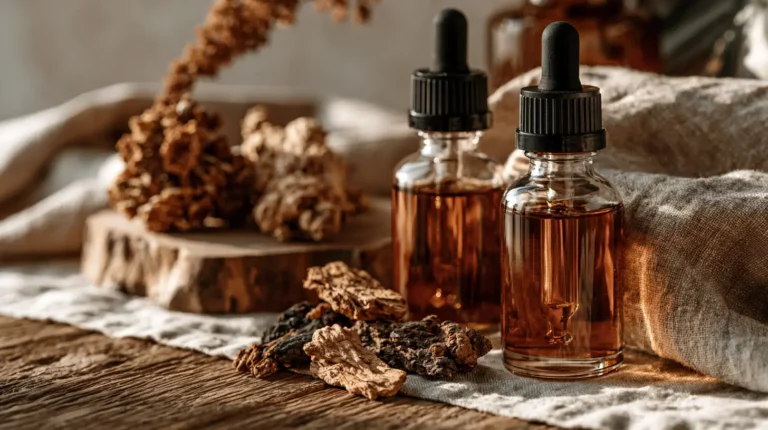
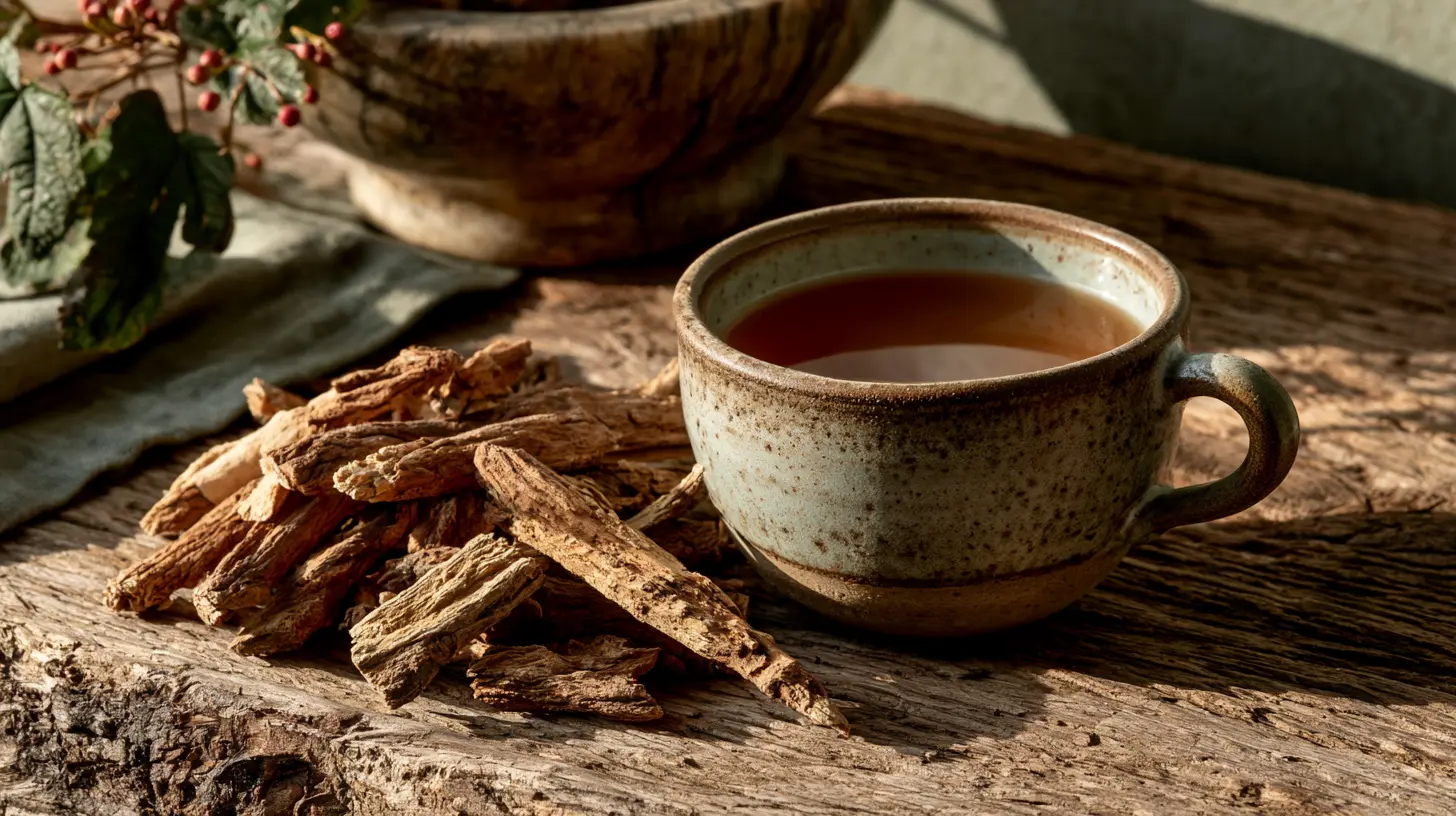
Eleuthero is a thorny shrub native to parts of northeastern Asia, including regions of Russia, China, Korea, and Japan. It is often called Siberian ginseng, but that name can be confusing because eleuthero is not a true ginseng. True ginsengs belong to the Panax genus, while eleuthero belongs to the Eleutherococcus genus.
Traditionally, eleuthero root has been used to support stress resilience, stamina, immune-season readiness, mental focus, and recovery from fatigue. It is known as an adaptogen, which means herbalists use it to support the body’s ability to respond to stress over time. It is not a quick “energy shot” herb; it is more like a steady training partner that shows up every morning.
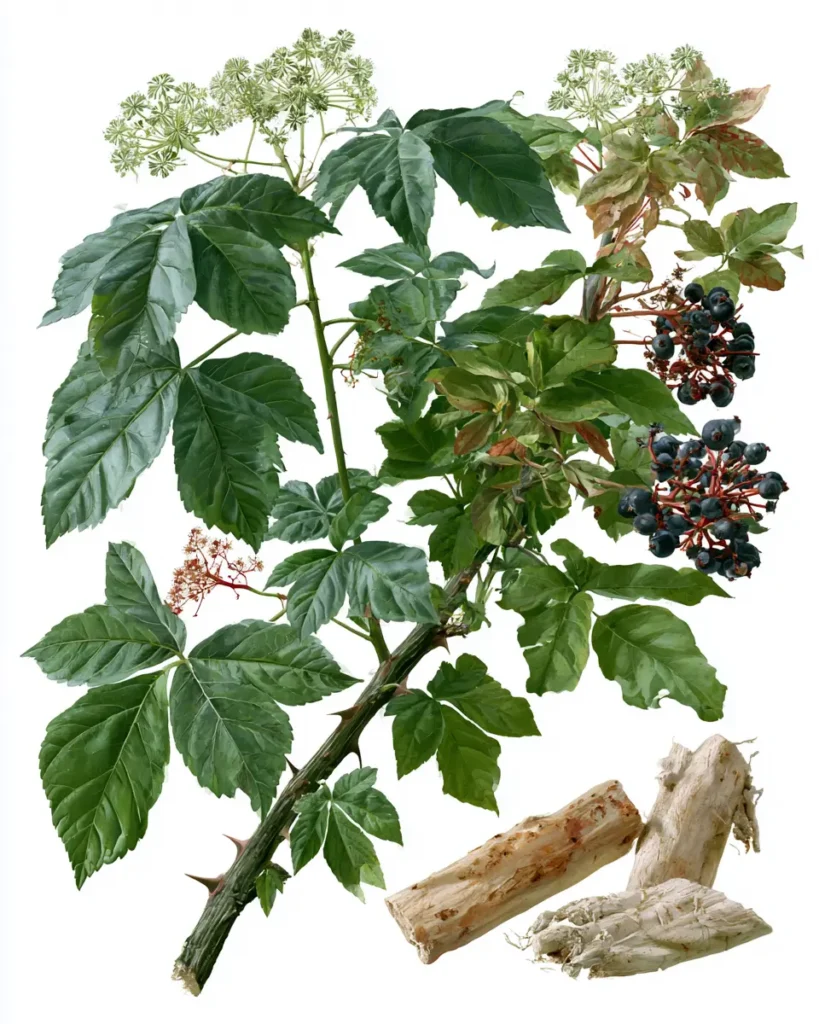
Eleuthero (Eleutherococcus senticosus)
Traditional Uses of Eleuthero
Stress Support: Eleuthero is traditionally used as an adaptogen to support resilience during physically or mentally demanding periods.
Energy and Vitality: It has been used to support stamina, endurance, and recovery from everyday fatigue.
Immune System Support: Eleuthero has a traditional role in seasonal wellness formulas, especially when stress and immune resilience overlap.
Brain and Focus: Herbalists often choose eleuthero when the goal is steady mental performance rather than sharp stimulation.
“Eleuthero is the herbal version of quiet discipline: not flashy, but very good at helping you keep going.”
Available Eleuthero Products
Dried Eleuthero Root
Dried eleuthero root is the traditional herbal material. It is usually sold cut and sifted for decoctions or as part of adaptogenic tea blends. Good root should smell earthy, woody, and slightly sweet-bitter.
Eleuthero Tea or Decoction
Eleuthero root is firm and woody, so it is usually prepared as a decoction rather than a quick infusion. Decoction means simmering the root gently in water to extract its compounds.
Eleuthero Tincture
Eleuthero tincture is a liquid alcohol-water extract. It is convenient, shelf-stable, and commonly used when someone wants flexible dosing without simmering tea.
Eleuthero Capsules
Capsules are one of the most common modern forms. They may contain powdered root or root extract. Labels may list extract ratio, serving size, and sometimes marker compounds called eleutherosides.
Eleuthero Tablets
Tablets are common in standardized herbal products. They are practical for people who want a consistent daily amount.
Eleuthero Powder
Powdered eleuthero root can be used in capsules, smoothies, or powdered blends. It is less pleasant in texture than some herbs, but it is convenient.
Eleuthero Glycerite
A glycerite is an alcohol-free liquid extract made with vegetable glycerin. It may be useful for people avoiding alcohol, though glycerites are usually milder than tinctures.
Eleuthero Combination Formulas
Eleuthero is often blended with other adaptogens such as rhodiola, ashwagandha, schisandra, licorice root, reishi, or holy basil. Combination formulas should be chosen carefully because the overall effect depends on every herb in the blend.
Key Herbal Actions
Eleuthero is known as an adaptogen, tonic, immunomodulating-supportive herb, mild stimulant, antioxidant, anti-fatigue herb, nervine-supportive herb, and restorative root.
Adaptogen
An adaptogen is an herb traditionally used to support the body’s resilience during stress. Eleuthero is one of the classic adaptogens, especially in Russian and East Asian herbal traditions.
Tonic
A tonic herb is taken over time to support overall function rather than for quick effects. Eleuthero is usually used consistently for weeks, not as a one-time remedy.
Immunomodulating-Supportive Herb
Eleuthero has been studied for immune-related effects, especially in relation to stress and seasonal resilience. This does not mean it prevents or treats infections, but it helps explain why it appears in immune-support formulas.
Mild Stimulant
Eleuthero may feel gently energizing for some people, but it is not usually as sharp as caffeine. It is better described as stamina-supporting than immediately stimulating.
Antioxidant
Eleuthero contains phenolic compounds, lignans, and other constituents that show antioxidant activity in research settings. These compounds contribute to its broad wellness profile.
Anti-Fatigue Herb
Eleuthero is traditionally used for tiredness related to stress, overwork, and recovery. This is one of its best-known uses in adaptogenic herbalism.
Nervine-Supportive Herb
Eleuthero is not a calming nervine like lemon balm or passionflower. Instead, it supports nervous system endurance and stress tolerance.
Restorative Root
Restorative herbs are used when the body feels depleted or run down. Eleuthero is traditionally chosen when someone needs gradual rebuilding rather than quick stimulation.
Active Compounds and Extraction
Eleuthero contains eleutherosides, lignans, syringin, syringaresinol, phenylpropanoids, coumarins, isofraxidin, polysaccharides, triterpenoid saponins, beta-sitosterol, daucosterol, and phenolic compounds.
Eleutherosides
Eleutherosides are a group of compounds used as quality markers for eleuthero root. They are not one single chemical but a family of constituents, including eleutheroside B and eleutheroside E.
Best extraction: Decoction, tincture, or standardized extract.
To make eleuthero decoction, use about 1 teaspoon dried root per cup of water. Simmer gently for 15–20 minutes, covered, then strain.
Syringin
Syringin, also known as eleutheroside B, is one of the key marker compounds found in eleuthero. It is often discussed in relation to the plant’s adaptogenic and anti-fatigue reputation.
Best extraction: Water decoction or alcohol-water tincture.
Syringin is reasonably extractable in water, which makes decoction a useful traditional method. Tincture may capture a broader range of compounds.
Syringaresinol
Syringaresinol, associated with eleutheroside E, is a lignan-type compound found in eleuthero. Lignans are plant compounds studied for antioxidant and stress-response-related activity.
Best extraction: Alcohol-water tincture or standardized extract.
A tincture is useful because it extracts both water-soluble and moderately alcohol-soluble compounds. Standardized capsules may be preferred when consistency is important.
Lignans
Lignans are plant compounds found in many roots, seeds, and woody plants. In eleuthero, they are part of the herb’s adaptogen-related chemistry.
Best extraction: Tincture or decoction.
A decoction pulls out many useful water-soluble compounds from the root. Tincture provides a broader extraction when prepared properly.
Polysaccharides
Polysaccharides are large carbohydrate molecules that may support immune-related activity. Many root herbs contain polysaccharides that extract well into water.
Best extraction: Decoction.
Simmering the root in water is the best home method for polysaccharides. This is one reason traditional root decoctions remain useful.
Coumarins and Isofraxidin
Isofraxidin is a coumarin compound found in eleuthero. Coumarins contribute to the plant’s complex chemistry and are studied for antioxidant and inflammation-related activity.
Best extraction: Tincture or decoction.
Alcohol-water extracts may capture coumarins well. Decoction still provides a useful traditional preparation.
Triterpenoid Saponins
Eleuthero contains saponin-like compounds, including some triterpenoid saponins. These compounds contribute to the herb’s tonic and adaptogenic profile.
Best extraction: Decoction or alcohol-water tincture.
Saponins can extract into water, especially with simmering. Avoid boiling too aggressively; a gentle simmer is enough.
Beta-Sitosterol and Daucosterol
Beta-sitosterol and daucosterol are plant sterol compounds found in eleuthero. They are part of the broader root chemistry rather than the only reason the herb is used.
Best extraction: Tincture or full-spectrum extract.
These compounds are less water-focused than polysaccharides, so tinctures and extracts may capture them more broadly.
Harvesting and Storing Right
Eleuthero root is usually harvested from mature plants in autumn after the aerial growth begins to decline, or in early spring before new growth becomes vigorous. At these times, the plant’s energy is concentrated in the root.
The root should be cleaned, cut into small pieces, and dried thoroughly in a warm, airy place away from direct sunlight. Because eleuthero is a slow-growing woody shrub, sustainable sourcing matters. Choose suppliers who identify the botanical species and provide responsibly harvested material.
Store dried eleuthero root in an airtight container away from heat, light, and moisture. Cut root is best used within about 1–2 years. Powder should be used faster, often within 6–12 months. Tinctures and fluid extracts generally keep for several years when made and stored properly.
Body Functions Eleuthero Can Support
Eleuthero can support stress support, adrenal stress response, energy and vitality, immune system, nervous system, brain, muscles and joint recovery, metabolism, circulation, and reproductive system male and female wellness indirectly through stress resilience.
Stress Support
Eleuthero is most famous as an adaptogen for stress support. It is traditionally used when long workdays, demanding schedules, training, or life pressure leave the body feeling worn down.
Adrenal Stress Response
Eleuthero does not “boost adrenal glands” in a simplistic way. Instead, herbalists use it to support healthy stress-response patterns and resilience over time.
Energy and Vitality
Eleuthero is traditionally used for stamina and everyday vitality. It may be a better fit for low, steady energy than for people who feel overstimulated or wired.
Immune System
Eleuthero appears in many seasonal wellness formulas because stress and immune resilience are closely connected. Its polysaccharides and other compounds are part of its immune-support research profile.
Nervous System
Eleuthero supports nervous system endurance rather than sedation. It may be useful when stress makes the body feel depleted, mentally tired, or less resilient.
Brain
Eleuthero is traditionally used to support focus, work capacity, and mental performance under stress. It should not be framed as a guaranteed cognitive enhancer, but it fits well in brain-support adaptogen formulas.
Muscles and Joint Recovery
Eleuthero has a traditional reputation for stamina and physical endurance. It may be used in recovery routines when fatigue and physical workload are part of the picture.
Metabolism
As a tonic adaptogen, eleuthero may support metabolic resilience indirectly through stress regulation, stamina, and recovery. It should not be described as a weight-loss herb or blood sugar treatment.
Circulation
Eleuthero is sometimes used in formulas for vitality and physical endurance, areas that naturally involve circulation. People with high blood pressure or heart conditions should use caution.
Reproductive System Male and Female
Eleuthero is not a primary reproductive herb, but stress resilience can influence reproductive wellness in both men and women. It may be included in broader vitality formulas, but it should not be used as a fertility treatment claim.
Safety and Practical Considerations
Eleuthero is often well tolerated in moderate amounts, but it is not appropriate for everyone. Because it may feel stimulating, some people should take it earlier in the day rather than in the evening.
People with high blood pressure, heart conditions, insomnia, anxiety, bipolar disorder, autoimmune conditions, bleeding disorders, diabetes, hormone-sensitive conditions, or serious chronic illness should consult a qualified healthcare professional before using eleuthero.
Eleuthero may interact with medications, including blood pressure drugs, blood thinners, diabetes medications, sedatives, stimulants, immune-suppressing drugs, digoxin, and hormone-related medications. People preparing for surgery should stop herbal supplements only under professional guidance.
Pregnant and breastfeeding people should avoid medicinal use unless guided by a qualified healthcare professional. Children, older adults, and sensitive individuals need extra care.
Possible side effects may include insomnia, nervousness, headache, digestive upset, changes in blood pressure, or skin reactions. If eleuthero makes you feel wired, restless, or unable to sleep, it is probably not the right herb or timing for you.
FAQ
Is eleuthero the same as Siberian ginseng?
Eleuthero is often called Siberian ginseng, but it is not true ginseng. True ginsengs are Panax species, while eleuthero is Eleutherococcus senticosus.
What does eleuthero taste like?
Eleuthero root tastes woody, earthy, mildly bitter, and slightly sweet. It is not delicious in the dessert sense, but it is fairly mild compared with many roots.
When is the best time to use eleuthero?
Eleuthero is usually taken in the morning or early afternoon. Because it may feel energizing, evening use may interfere with sleep for some people.
Is eleuthero tea, tincture, or capsule better?
Decoction is traditional and good for water-soluble compounds. Tincture is convenient and broad-spectrum. Capsules or tablets are easiest when consistency and portability matter.
Can eleuthero be used daily?
Eleuthero is commonly used daily for limited wellness periods, often several weeks at a time. Long-term use should be discussed with a qualified healthcare professional, especially if medications or health conditions are involved.
How should eleuthero be stored?
Store dried eleuthero root in a sealed container away from heat, light, and moisture. Powder loses freshness faster than cut root and should be used sooner.
Does eleuthero combine well with other herbs?
Yes. Eleuthero combines well with schisandra, rhodiola, ashwagandha, holy basil, licorice root, reishi, nettle, and oat straw, depending on the person and goal.
Is eleuthero safe for everyone?
No. Eleuthero may not be appropriate for people with high blood pressure, insomnia, anxiety, heart conditions, pregnancy, breastfeeding, medication use, or complex health conditions.
Can eleuthero be used for pets?
Pet use should be guided by a veterinarian or qualified animal herbalist. Adaptogenic herbs should not be given casually to pets, especially animals with heart, kidney, endocrine, or medication concerns.
How long does eleuthero take to work?
Eleuthero is usually considered a gradual tonic herb. Many people use it consistently for several weeks before judging whether it fits their body.
Disclaimer
This content is educational only. It is not medical advice, diagnosis, or treatment. Herbs may interact with medications or health conditions. People who are pregnant, breastfeeding, managing a medical condition, taking prescription medications, or preparing for surgery should consult a qualified healthcare professional before using herbs.
References
Memorial Sloan Kettering Cancer Center: Siberian Ginseng
PubMed: Eleutherococcus senticosus Review
PubMed: Adaptogens and the Central Nervous System
PubMed: Eleutherococcus senticosus and Fatigue Study
NCBI Bookshelf: Herbal Medicine Safety and Herb-Drug Interaction Considerations