


Bilberry is a small, dark-blue woodland berry closely related to blueberry, but with a richer purple flesh that stains fingers, tongues, and sometimes kitchen towels with impressive enthusiasm. Traditionally, herbalists have valued bilberry fruit for its deep color, tart flavor, and connection to vision, circulation, digestion, and antioxidant support.
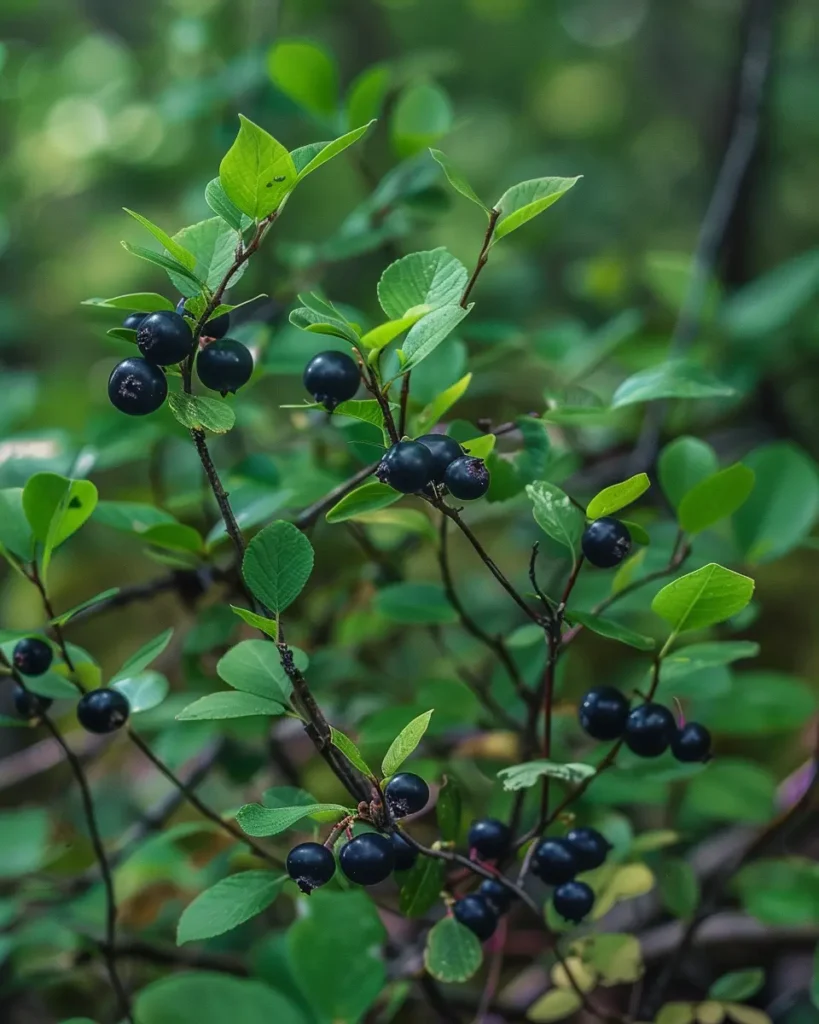
Bilberry (Vaccinium myrtillus)
Traditional Uses of Bilberry
Vision Support: Bilberry has a long folk reputation for supporting eye comfort and visual function, especially because of its anthocyanin pigments. Modern research is still cautious, but the connection between bilberry and eye wellness remains one of its best-known traditional uses.
Circulation: Herbalists often associate bilberry with healthy microcirculation, especially the tiny blood vessels that serve the eyes, skin, and extremities.
Digestive Support: Dried bilberry fruit has been traditionally used as an astringent berry, meaning it contains tannins that give a drying, puckering quality.
Antioxidant Wellness: Bilberry is rich in dark plant pigments called anthocyanins, the same family of compounds that gives many purple, blue, and red fruits their color.
“Bilberry is the little forest berry that looks like it borrowed its color from midnight.”
Available Bilberry Products
Bilberry Extract Capsules — Capsules/Tablets
A standardized extract supplement rich in anthocyanins, traditionally used to support eye health, healthy circulation, and antioxidant protection.
Buy Bilberry Extract Capsules
Bilberry Liquid Extract — Tincture/Liquid Extract
A concentrated tincture made from dried bilberries, traditionally taken diluted in water, tea, or juice for antioxidant support.
Buy Bilberry Liquid Extract
Bilberry Leaf Tea — Tea/Loose Leaf
Dried bilberry leaves brewed as an herbal tea, traditionally used to support circulation and overall vitality.
Buy Bilberry Leaf Tea
Bilberry Extract Powder — Powder
A fine powder made from bilberry fruit, easily mixed into smoothies or beverages for a concentrated antioxidant boost.
Buy Bilberry Extract Powder
Bilberry Dried Whole Berries — Raw/Dried Fruit
Whole dried bilberries for making your own teas, decoctions, or infusions, or for use in baking and culinary preparations.
Buy Bilberry Dried Whole Berries
⚠️ These are dietary supplements — not evaluated by the FDA for treating disease. Bilberry (especially the leaf) may lower blood sugar and interact with diabetes medications or blood thinners. Not recommended during pregnancy without medical guidance. Check with a healthcare provider before use, especially if you take medication or have a scheduled surgery.
Key Herbal Actions
Bilberry is known as an antioxidant, astringent, capillary tonic, nutritive berry, and mild digestive support herb.
Antioxidant
Antioxidant herbs contain compounds that help neutralize free radicals in the body. Bilberry’s deep purple-blue pigments, especially anthocyanins, are the main reason it is discussed in antioxidant research.
Astringent
Astringent herbs contain tannins that create a drying, tightening sensation on tissues. Dried bilberry fruit has traditionally been used this way, especially when a gentle, puckering fruit preparation is desired.
Capillary Tonic
A capillary tonic is traditionally understood as an herb that supports the tone and resilience of tiny blood vessels. Bilberry’s anthocyanins and flavonoids are the compounds most often connected with this traditional use.
Nutritive Berry
Nutritive herbs and foods provide plant compounds, flavor, minerals, acids, and other dietary components that support general wellness. Bilberry is not a “quick fix” herb; it is better understood as a deeply colored berry that can be part of a broader wellness pattern.
Mild Digestive Support
Because dried bilberry contains tannins and fruit acids, it has traditionally been used to support digestive tone. Fresh bilberry is more food-like, while dried bilberry is more astringent.
Active Compounds and Extraction
Bilberry contains anthocyanins, anthocyanosides, flavonoids, tannins, phenolic acids, organic acids, pectin, vitamin C, and small amounts of minerals.
Anthocyanins and Anthocyanosides
Anthocyanins are water-soluble plant pigments responsible for bilberry’s dark blue-purple color. Bilberry contains several anthocyanidin families, including delphinidin, cyanidin, malvidin, peonidin, and petunidin glycosides.
These compounds are studied for antioxidant activity, vascular function, inflammatory signaling, and eye-related research. Human studies exist, but many are small or use mixed formulas, so bilberry should be described as supportive rather than curative.
Best extraction: water, alcohol-water tincture, juice, and standardized extract.
To make bilberry tea, use 1–2 teaspoons dried berries per cup of hot water. Simmer gently for 10–15 minutes, then strain. A simmer is better than a quick steep because dried berries are dense.
For tincture, use dried bilberries at about 1 part herb to 5 parts liquid with 40–50% alcohol. Let sit for 4–6 weeks, shaking regularly, then strain.
Flavonoids
Bilberry contains flavonoids such as quercetin and myricetin derivatives. Flavonoids are plant compounds studied for antioxidant activity and support of normal vascular and cellular function.
Best extraction: alcohol-water mixtures, infusions, and concentrated extracts.
A simple tea will extract some flavonoids, while a tincture or standardized extract may capture a broader range of water- and alcohol-soluble compounds.
Tannins
Tannins are the compounds that create a drying, puckering taste. They are especially relevant to dried bilberry’s traditional use as an astringent fruit.
Best extraction: water decoction or infusion.
To prepare a tannin-rich bilberry decoction, simmer dried fruit for 10–15 minutes. Avoid long boiling if you want to preserve more delicate pigments and flavor.
Phenolic Acids
Bilberry contains phenolic acids such as chlorogenic acid. These compounds are common in many fruits and herbs and are studied for antioxidant and metabolic research interest.
Best extraction: water, alcohol-water tincture, juice, and powder.
Phenolic acids are fairly accessible in food-like preparations, so bilberry powder, juice, and tea can all contribute some of these compounds.
Organic Acids and Pectin
Organic acids give bilberry its tart flavor, while pectin is a soluble fiber found in fruits. These compounds make bilberry feel more like a food-herb than a sharp medicinal plant.
Best extraction: food use, simmered fruit, juice, powder, and syrup.
A gentle bilberry syrup can be made by simmering dried berries in water, straining, and combining the liquid with honey. Keep it refrigerated and use within a few weeks.
Harvesting and Storing Right
Bilberries are typically harvested in mid to late summer when the berries are fully dark blue-purple and soft but not mushy. Morning harvest is usually best after dew has dried, because wet berries spoil faster.
Fresh bilberries should be refrigerated and used within a few days. They can also be frozen in a single layer and then stored in sealed freezer bags for several months.
Dried bilberries should be stored in an airtight jar away from heat, moisture, and direct light. A good dried berry shelf life is usually about 1 year, though color, aroma, and flavor slowly fade.
Bilberry powder is more fragile because more surface area is exposed to air. Use powder within 6–12 months and keep it tightly sealed.
Tinctures generally keep for several years when made with sufficient alcohol and stored in a cool, dark place. Glycerites usually have a shorter shelf life, often around 1–2 years.
Body Functions Bilberry Can Support
Bilberry can support Vision, Circulation, Brain, Skin, Digestion system, Metabolism, and Immune system.
Vision
Bilberry is most famous for its traditional connection to eye wellness. Its anthocyanins are studied for antioxidant activity and possible support of the small blood vessels and tissues involved in visual function.
Research on night vision has been mixed, and strong claims are not appropriate. Bilberry is better described as a traditional eye-support berry with interesting but not conclusive human evidence.
Circulation
Bilberry’s anthocyanins and flavonoids are often discussed in relation to vascular function and microcirculation. This makes it relevant to the tiny capillaries that deliver blood to delicate tissues.
Traditional herbal language often calls bilberry a capillary-support herb. Modern research is still developing, so it should be used as part of a broader wellness plan rather than as a stand-alone solution.
Brain
Deeply colored berries are often studied for their polyphenols and relationship to cognitive wellness. Bilberry’s antioxidant compounds may help support healthy cellular function, including in tissues with high oxygen demand.
This does not mean bilberry improves memory or treats cognitive decline. It simply means bilberry belongs to a group of colorful fruits that researchers continue to study for brain and vascular health.
Skin
Bilberry may support skin wellness through its antioxidant and microcirculation-related compounds. Healthy circulation and antioxidant status both matter for normal skin appearance and resilience.
It is not a topical skin treatment in the usual herbal sense. For skin, bilberry is more often used internally as a food, powder, juice, or extract.
Digestion System
Dried bilberry fruit has a traditional role as a mild astringent digestive herb. Its tannins give a tightening quality, while its fruit acids and pectin make it still feel familiar and food-like.
Fresh bilberry is gentler and more nourishing, while dried bilberry is more concentrated and puckering. Form matters here.
Metabolism
Bilberry has been studied for metabolic and cardiovascular risk markers, largely because of its anthocyanins and other polyphenols. Some research is promising, but evidence is not strong enough to claim that bilberry changes blood sugar, cholesterol, or weight outcomes.
People using medication for blood sugar, blood pressure, or blood thinning should be cautious with concentrated extracts. Food amounts of bilberry are generally less concerning.
Immune System
Bilberry provides antioxidant polyphenols and fruit nutrients that can fit into an immune-supportive diet. In herbal terms, this is more about nourishing the terrain than “boosting” the immune system.
The fruit’s color is a clue: dark berries tend to be rich in plant compounds that support general resilience. Still, bilberry should not be presented as a treatment for infections.
Safety and Practical Considerations
Bilberry fruit is generally considered safe when eaten in normal food amounts. Concentrated extracts are stronger and should be used more thoughtfully, especially by people taking prescription medication.
Bilberry leaves require more caution than the fruit. High doses or long-term use of bilberry leaf may be unsafe, so most beginner herbal use should focus on the fruit.
People taking blood-thinning medication, diabetes medication, blood pressure medication, or multiple prescriptions should speak with a qualified healthcare professional before using concentrated bilberry supplements. Bilberry may also be best paused before surgery unless a clinician says otherwise.
Pregnancy and breastfeeding safety data are limited for concentrated bilberry products. Food amounts are different from supplement doses, but caution is still wise.
Children, older adults, and sensitive individuals should use smaller amounts and avoid strong extracts unless guided by a qualified professional. For pets, bilberry should only be used with veterinary guidance, especially in supplement form.
FAQ
What does bilberry taste like?
Bilberry tastes tart, fruity, slightly sweet, and more intense than many cultivated blueberries. Dried bilberries are chewier and more concentrated, with a stronger puckering quality.
When is the best time to use bilberry?
Bilberry can be used with meals, in tea blends, or as part of a daily berry-based wellness routine. Concentrated extracts are best taken according to label directions or professional guidance.
Is fresh or dried bilberry better?
Fresh bilberry is best as a food and offers bright flavor and moisture. Dried bilberry is better for teas, decoctions, powders, and traditional astringent preparations.
Is bilberry tea, tincture, or capsule better?
Tea is simple and traditional, especially when using dried fruit. Capsules are more convenient when someone wants a standardized extract, while tinctures are useful for a shelf-stable liquid form.
Can bilberry be used daily?
Food amounts of bilberry can usually be enjoyed like other berries. Daily supplement use is different and should be considered carefully, especially with medications or health conditions.
How should bilberry be stored?
Fresh berries should be refrigerated or frozen. Dried berries, powder, capsules, and tinctures should be kept away from heat, moisture, and direct light.
Does bilberry combine well with other herbs?
Bilberry combines well with other antioxidant-rich herbs and foods such as hibiscus, rosehip, elderberry, hawthorn berry, and green tea. For eye-support blends, it is often paired with herbs or nutrients traditionally connected to vision and circulation.
Is bilberry safe for everyone?
Bilberry fruit in food amounts is generally well tolerated. Concentrated extracts may not be appropriate for everyone, especially people using medications or preparing for surgery.
Can bilberry be used for pets?
Bilberry may appear in some pet supplements, but pet use should be guided by a veterinarian. Animals metabolize herbs differently than humans, and concentrated extracts are not the same as a small amount of berry as food.
Disclaimer
This content is educational only. It is not medical advice, diagnosis, or treatment. Herbs may interact with medications or health conditions. People who are pregnant, breastfeeding, managing a medical condition, taking prescription medications, or preparing for surgery should consult a qualified healthcare professional before using herbs.
References
NCBI Bookshelf LactMed: Bilberry
PubMed: Effects of Bilberry Supplementation on Metabolic and Cardiovascular Disease Risk
PubMed: Anthocyanosides of Vaccinium myrtillus for Night Vision
PubMed: Bilberry Extract and Eye Fatigue in Video Display Terminal Workers