Eczema-like irritation can feel dry, itchy, rough, red, cracked, scaly, or extra sensitive, especially after scratching, weather changes, stress, or product reactions.
It often makes skin act dramatically over tiny things, like soap, sweat, wool, fragrance, or one suspiciously windy afternoon.
Learn more about Eczema-like Irritation
Why It Happens
Eczema-like irritation often involves a stressed skin barrier. When the barrier loses moisture or reacts to irritants, the skin may feel dry, itchy, inflamed, and more reactive.
Main Types in Plain Language
Some irritation feels dry and flaky. Some feels hot, red, and itchy. Some appears after contact with soaps, fragrances, detergents, plants, metals, or cleaning products. Some follows sweating, cold weather, stress, or repeated scratching.
Common Triggers
Common triggers include fragrance, harsh cleansers, hot water, wool, sweating, low humidity, allergens, stress, and over-washing. Many people also flare after using too many “active” skin-care products at once. The skin does not always enjoy our enthusiasm.
How It Shows Up Daily
Eczema-like irritation may show up as itchy patches on hands, arms, neck, face, behind knees, or inside elbows. It may disturb sleep, make clothing uncomfortable, or turn a normal shower into a negotiation.
Traditional Herbal View
Traditional herbalism usually looks at the pattern first. Dry, cracked skin may call for moistening demulcents. Red, hot, itchy skin may call for cooling herbs. Rough, reactive skin may call for vulneraries, which traditionally support skin comfort and repair.
Herbalists often choose calendula, chickweed, plantain, marshmallow root, licorice, chamomile, aloe vera, oat, nettle, and violet leaf depending on the skin pattern and sensitivity level.
How Herbs Can Help Eczema-like Irritation
Herbalism usually sees eczema-like irritation as a skin-barrier, dryness, heat, and itch pattern that worsens when the skin meets triggers it cannot comfortably handle. Herbalists use demulcents for moisture, vulneraries for skin comfort, anti-inflammatory herbs for redness, astringents for weepy irritation, and nutritive herbs for longer-term support. They choose oily salves for dry patches, cool compresses for hot itch, and very plain formulas when the skin reacts to everything except being left alone. These are herbs traditionally used when eczema-like irritation happens: calendula, chamomile, oats, lavender, marshmallow root, plantain leaf, nettle, rosehips, aloe vera, licorice root, green tea, rose petals, turmeric, burdock root, dandelion root, cinnamon, flaxseed, evening primrose
“Eczema-like irritation is your skin asking for less drama, fewer fragrances, and one calm helper at a time.”
Recipes & Remedies Eczema-like Irritation
Herbal Preparations
Calendula, Chickweed, and Oat Skin-Comfort Compress
This simple compress supports itchy, dry, or irritated skin with cooling, soothing herbs. It is best for mild irritation and should not be used on infected, bleeding, or deeply cracked skin.
Ingredients
Dried calendula flowers: 1 tablespoon
Dried chickweed: 1 tablespoon
Finely ground colloidal oatmeal or very finely ground oats: 1 tablespoon
Cool or lukewarm water: 1½ cups
Clean cotton cloth: 1
Preparation Instructions
- Place calendula and chickweed in a heat-safe bowl.
- Add lukewarm water.
- Cover and steep for 15 minutes.
- Strain very well.
- Stir in finely ground oatmeal until the liquid feels slightly silky.
- Soak a clean cloth in the mixture.
- Wring out the cloth gently.
How to Use
Patch test first on a small area.
Apply the cool compress to irritated skin for 5 to 10 minutes.
Rinse gently with plain lukewarm water if any oat residue remains.
Pat dry and apply a plain fragrance-free moisturizer.
Avoid open, infected, bleeding, or weeping skin.
Food for support Eczema-like Irritation
Omega-Rich Salmon, Flax, and Sweet Potato Bowl
This nourishing bowl supports skin-barrier wellness with protein, omega-3 fats, beta-carotene, fiber, and colorful plant compounds. It will not magically silence itchy skin, but it gives the body better building materials.
Ingredients
Cooked salmon: 4 ounces
Roasted sweet potato: 1 cup cubed
Baby spinach: 1 cup
Ground flaxseed: 1 tablespoon
Olive oil: 1 tablespoon
Pumpkin seeds: 1 tablespoon
Fresh parsley: 1 tablespoon chopped
Lemon juice: 1 tablespoon
Turmeric powder: ¼ teaspoon
Salt: ¼ teaspoon, or to taste
Preparation Instructions
- Add roasted sweet potato to a bowl.
- Add spinach and cooked salmon.
- Sprinkle ground flaxseed, pumpkin seeds, parsley, and turmeric on top.
- Whisk olive oil, lemon juice, and salt.
- Drizzle the dressing over the bowl.
- Serve warm or room temperature.
How to Use
Enjoy as lunch or dinner when your skin feels dry, reactive, or depleted.
Use sardines, trout, beans, or tofu if you prefer a different protein.
Avoid salmon, seeds, or specific ingredients if you have allergies.
Check with your clinician before high-dose omega-3 supplements if you take blood thinners.
What Herbs You Need
For eczema-like irritation, herbalists often consider calendula, chickweed, plantain, marshmallow root, licorice, chamomile, aloe vera, oat, nettle, violet leaf, gotu kola, rose, burdock root, turmeric, evening primrose, flaxseed, parsley, and pumpkin seed. These herbs do not replace medical skin care, but they may support comfort, moisture, and skin-barrier routines.
Calendula
Latin name: Calendula officinalis
Key herbal actions: Vulnerary, meaning herbalists use it for skin comfort. Anti-inflammatory, meaning it may calm visible irritation. Lymphatic, meaning herbalists use it for normal fluid movement.
Key active compounds: Triterpenoids, flavonoids, carotenoids, polysaccharides.
Chickweed
Latin name: Stellaria media
Key herbal actions: Cooling, meaning herbalists use it for hot, itchy skin. Demulcent, meaning it adds a soft soothing quality. Vulnerary, meaning it supports minor skin comfort.
Key active compounds: Flavonoids, saponins, polysaccharides, minerals.
Plantain
Latin name: Plantago major or Plantago lanceolata
Key herbal actions: Demulcent, meaning it soothes dry tissues. Astringent, meaning it gently tones irritated skin. Vulnerary, meaning herbalists use it for minor skin support.
Key active compounds: Aucubin, allantoin, mucilage, tannins, flavonoids.
Marshmallow Root
Latin name: Althaea officinalis
Key herbal actions: Demulcent, meaning it moistens and soothes dryness. Emollient, meaning it softens rough skin. Cooling, meaning herbalists use it for dry heat.
Key active compounds: Mucilage polysaccharides, flavonoids, phenolic acids.
Licorice
Latin name: Glycyrrhiza glabra
Key herbal actions: Anti-inflammatory, meaning research studies it for irritation pathways. Demulcent, meaning it soothes dryness. Harmonizer, meaning herbalists use it to soften formulas.
Key active compounds: Glycyrrhizin, liquiritin, glabridin, flavonoids.
Chamomile
Latin name: Matricaria chamomilla
Key herbal actions: Anti-inflammatory, meaning it may calm irritation. Nervine, meaning it supports relaxation. Vulnerary, meaning herbalists use it for minor skin comfort.
Key active compounds: Apigenin, bisabolol, chamazulene, flavonoids.
Aloe Vera
Latin name: Aloe barbadensis Miller
Key herbal actions: Demulcent, meaning cooling and moistening. Humectant, meaning it helps attract moisture. Vulnerary, meaning herbalists use it for skin comfort.
Key active compounds: Acemannan, glucomannans, sterols, amino acids.
Oat
Latin name: Avena sativa
Key herbal actions: Demulcent, meaning it soothes dryness. Skin protectant, meaning colloidal oatmeal helps protect irritated skin. Anti-itch support, meaning it may calm itchy discomfort.
Key active compounds: Avenanthramides, beta-glucans, starches, lipids, saponins.
Nettle
Latin name: Urtica dioica
Key herbal actions: Nutritive, meaning it provides minerals. Alterative, meaning herbalists use it for long-term skin patterns. Astringent, meaning it gently tones tissues.
Key active compounds: Minerals, chlorophyll, flavonoids, phenolic acids.
Violet Leaf
Latin name: Viola odorata or Viola sororia
Key herbal actions: Demulcent, meaning it moistens tissues. Cooling, meaning herbalists use it for hot, dry irritation. Lymphatic, meaning herbalists use it for fluid movement patterns.
Key active compounds: Mucilage, flavonoids, salicylates, saponins.
Gotu Kola
Latin name: Centella asiatica
Key herbal actions: Vulnerary, meaning it supports skin comfort. Connective tissue tonic, meaning herbalists use it for skin structure. Anti-inflammatory, meaning it may calm irritation.
Key active compounds: Asiaticoside, madecassoside, asiatic acid, madecassic acid.
Rose
Latin name: Rosa damascena or Rosa centifolia
Key herbal actions: Cooling, meaning herbalists use it for heat and irritation. Mild astringent, meaning it tones delicate tissues. Emotional comfort herb, meaning it supports stress-related sensitivity.
Key active compounds: Geraniol, citronellol, flavonoids, anthocyanins.
Burdock Root
Latin name: Arctium lappa
Key herbal actions: Alterative, meaning herbalists use it for long-term skin support. Bitter, meaning it supports digestion. Nutritive, meaning it provides minerals and inulin.
Key active compounds: Inulin, arctiin, lignans, phenolic acids.
Turmeric
Latin name: Curcuma longa
Key herbal actions: Anti-inflammatory, meaning research studies it for inflammatory pathways. Antioxidant, meaning it helps protect against oxidative stress. Warming, meaning herbalists use it for sluggish patterns.
Key active compounds: Curcumin, demethoxycurcumin, bisdemethoxycurcumin, volatile oils.
Evening Primrose
Latin name: Oenothera biennis
Key herbal actions: Nutritive oil, meaning it provides fatty acids. Skin-supportive, meaning people use it for dryness routines. Barrier-supportive, meaning it may support fatty acid intake.
Key active compounds: Gamma-linolenic acid, linoleic acid, oleic acid.
Flaxseed
Latin name: Linum usitatissimum
Key herbal actions: Nutritive, meaning it provides fiber and fatty acids. Demulcent, meaning it moistens tissues. Oil-rich, meaning it supports dietary fat intake.
Key active compounds: Alpha-linolenic acid, lignans, mucilage, fiber.
Parsley
Latin name: Petroselinum crispum
Key herbal actions: Nutritive, meaning it adds plant nutrients. Antioxidant, meaning it contains protective plant compounds. Digestive, meaning it supports meal enjoyment.
Key active compounds: Apigenin, vitamin C, vitamin K, flavonoids.
Pumpkin Seed
Latin name: Cucurbita pepo
Key herbal actions: Nutritive, meaning it provides minerals and healthy fats. Skin-supportive food, meaning it adds zinc and protein. Tonic food, meaning it fits daily nourishment.
Key active compounds: Zinc, magnesium, phytosterols, vitamin E, fatty acids.
Key Herbal Products for Eczema-like Irritation
Colloidal Oatmeal Cream
Colloidal oatmeal cream contains finely milled oat particles suspended in a moisturizer. People commonly use it for dry, itchy, sensitive, or eczema-prone skin.
Pros: It supports the skin barrier and feels gentle for many people.
Cons: Some formulas contain fragrance or other irritating ingredients.
Choose this when itching and dryness dominate.
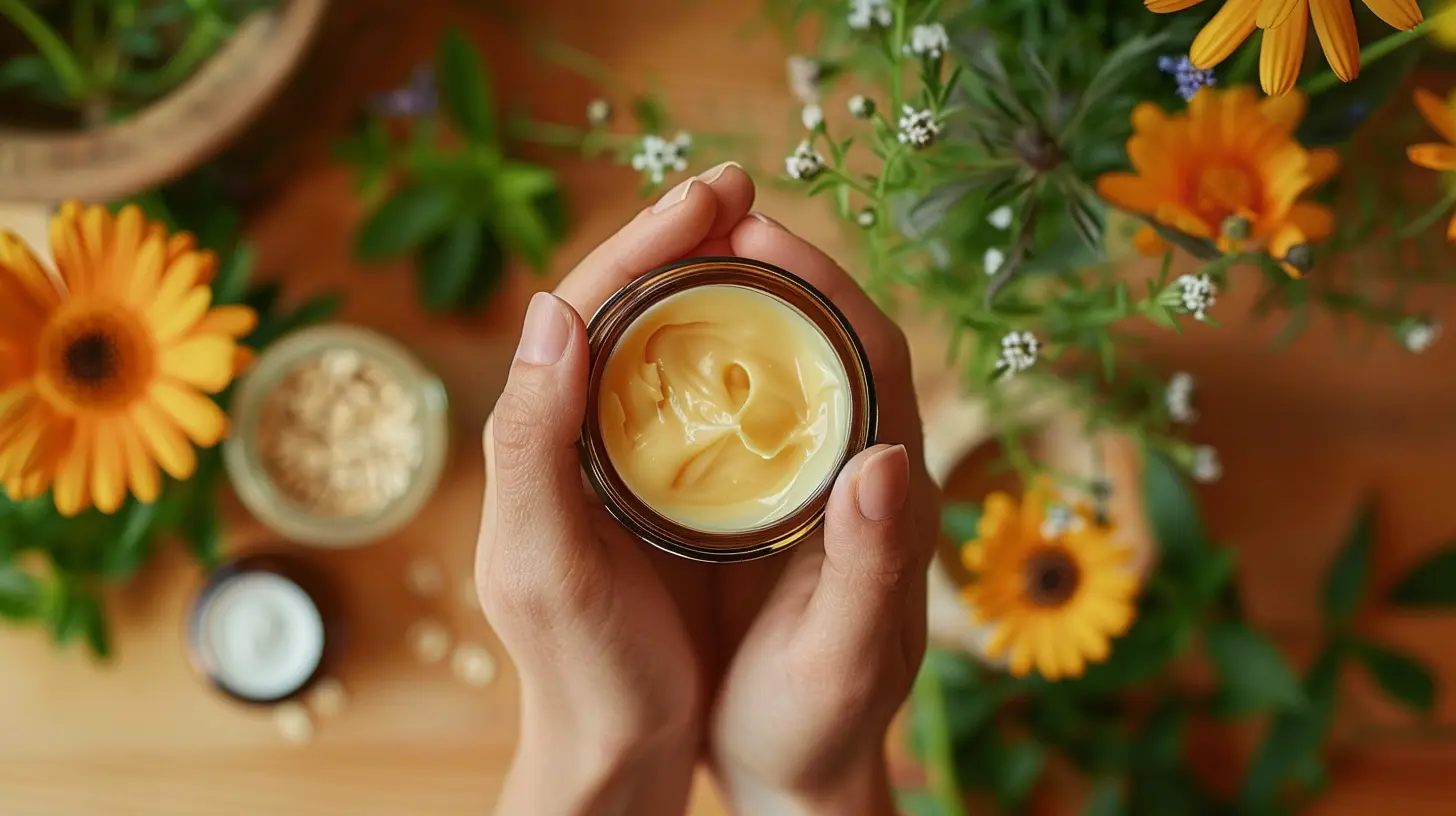
Calendula Salve
Calendula salve combines calendula-infused oil with wax or butter. People commonly use it on dry, rough, or irritated closed skin.
Pros: It feels simple, protective, and traditional.
Cons: It may feel greasy and can trap heat if applied too thickly.
Choose this when the skin feels dry, tight, and not weepy.
Aloe Vera Gel
Aloe vera gel offers a cooling, moistening topical option. People commonly use it when skin feels hot, tight, or irritated.
Pros: It feels light, cool, and non-greasy.
Cons: Some people react to aloe, and many products contain alcohol, dyes, or fragrance.
Choose this when heat and dryness dominate, but patch test first.
Plantain or Chickweed Balm
Plantain and chickweed balms use infused herbs in oil or salve. People commonly use them for itchy, irritated, outdoor-skin moments.
Pros: They suit simple first-aid style skin care.
Cons: Oil-based balms may not suit weepy or very hot irritation.
Choose this when itching and roughness appear on closed skin.
Evening Primrose Oil Capsules
Evening primrose oil capsules provide gamma-linolenic acid. People commonly use them as a fatty-acid supplement for dry skin routines.
Pros: They offer internal oil-based support.
Cons: Evidence for eczema remains mixed, and supplements can interact with medications.
Choose this only after checking safety, especially with seizure disorders, pregnancy, or blood-thinning medications.
FAQ
Is eczema-like irritation the same as eczema?
Not always. Eczema-like irritation can look similar to eczema, but other issues can mimic it. Contact dermatitis, fungal infections, psoriasis, allergies, scabies, and medication reactions may look similar.
Can herbs cure eczema-like irritation?
No. Herbs should not promise to cure eczema-like irritation. They may support comfort, moisture, and skin-barrier routines when used carefully.
Can I use herbal salve on broken skin?
Avoid homemade salves on open, bleeding, infected, or weeping skin. Oils may trap heat, moisture, or debris. Seek medical care if skin looks infected or keeps worsening.
Should I use hot water for itchy skin?
No, hot water often worsens dryness and itch. Use lukewarm water and keep baths or showers short. Apply moisturizer soon after drying the skin.
Fresh herbs or dried herbs: which works better?
Both can work well, but dried herbs offer convenience and consistency. Fresh chickweed and plantain can feel lovely in simple preparations if correctly identified. Always use clean herbs from a safe source.
How should I store homemade herbal skin products?
Store water-based preparations in the refrigerator and use them within 24 to 48 hours. Store oil-based balms in a cool, dry place. Discard anything that smells odd, grows mold, or changes texture.
Can pets use these herbs?
Do not use human herbal skin products on pets unless a veterinarian approves. Pets lick their skin and can react differently to herbs. Essential oils and strong herbs create extra risks for animals.
References
NCCIH: Skin Conditions and Complementary Health Approaches
NCCIH: 6 Tips: Complementary Health Approaches for Skin Conditions
National Eczema Association: What Is Eczema?
National Eczema Association: Daily Eczema Management
National Eczema Association: Atopic Dermatitis
PubMed Central: Colloidal Oatmeal Cream and Atopic Dermatitis
PubMed: Effects of Colloidal Oatmeal Topical Atopic Dermatitis Cream
PubMed Central: Management of Atopic Dermatitis and Colloidal Oatmeal
NCBI Bookshelf: Atopic Dermatitis
PubMed Central: Complementary and Alternative Medicine Treatments for Atopic Eczema
PubMed Central: Centella asiatica and Skin Diseases
Disclaimer
This article offers educational information only. It does not provide medical advice, diagnosis, or treatment.
Eczema-like irritation can come from eczema, allergies, infection, contact dermatitis, psoriasis, medication reactions, fungal conditions, or other causes. Please speak with a qualified healthcare professional if irritation spreads, oozes, bleeds, becomes painful, develops pus, keeps returning, or affects the face, eyes, genitals, or large areas.
Herbs may cause allergies or interact with medications, pregnancy, breastfeeding, surgery, chronic conditions, and sensitive skin. Always patch test topical herbs and avoid homemade preparations on serious or infected skin.