Rashes are changes in the skin that may look red, bumpy, dry, scaly, swollen, itchy, or irritated. They can appear suddenly, spread slowly, or show up after your skin meets something it strongly disagrees with.
Learn more about Rashes
Why Rashes Happen
Rashes can happen when the skin reacts to irritants, allergens, infections, heat, friction, medications, insects, or chronic skin conditions. The skin often uses redness, itching, swelling, or bumps to signal irritation.
Common Types
Contact dermatitis happens after skin touches an irritating or allergenic substance. Heat rash appears when sweat ducts clog. Hives often look raised and itchy. Eczema usually brings dry, itchy, inflamed skin.
Common Triggers
Common triggers include soaps, fragrances, detergents, plants, nickel, latex, wool, sweat, heat, pollen, pet dander, foods, medications, and insect bites.
How It May Show Up
A rash may itch, sting, burn, flake, ooze, crust, or feel warm. Some rashes stay local, while others spread across larger areas.
Traditional Herbal Patterns
Traditional herbalism often views rashes through heat, dryness, dampness, irritation, allergy patterns, or skin barrier weakness. Cooling herbs suit hot, angry skin. Demulcents suit dry irritation. Astringents suit weepy areas. Vulnerary herbs support irritated skin care.
Herbalists choose herbs by the rash pattern, location, and sensitivity. They also avoid applying homemade preparations to open, infected, or rapidly spreading rashes.
How Herbs Can Help Rashes
Herbalism traditionally sees rashes as surface irritation, heat, dryness, allergy sensitivity, dampness, or weakened skin barrier function. Demulcents moisten dry irritation, vulnerary herbs support irritated skin care, astringents gently tone weepy areas, and anti-inflammatory herbs calm reactive patterns. Herbalists choose between these actions by noticing whether the rash feels hot, dry, itchy, weepy, rough, or sensitive, and these are herbs traditionally used when rashes happen: calendula, chamomile, oat, plantain leaf, aloe vera, rose petals, green tea, witch hazel, marshmallow root, nettle, red clover, lavender, yarrow, licorice root, turmeric, burdock root, dandelion root
“A rash is the skin’s way of saying, ‘Something happened here, and I would like to speak with management.”
Recipes & Remedies Rashes
Herbal Preparations
Calendula, Oat, and Plantain Skin-Comfort Compress
Short description
This simple external preparation uses gentle herbs traditionally used for irritated skin. Use it only on intact skin, not open wounds, infected areas, or severe rashes.
Ingredients with exact measurements
- 1 tablespoon dried calendula flowers
- 1 tablespoon dried plantain leaf
- 1 tablespoon colloidal oatmeal or finely ground oats
- 2 cups hot water
- 1 clean cotton cloth
Step-by-step preparation instructions
- Add calendula and plantain to a heat-safe bowl.
- Pour 2 cups hot water over the herbs.
- Cover and steep for 15 minutes.
- Strain the liquid very carefully.
- Stir in colloidal oatmeal until smooth.
- Let the mixture cool completely.
- Soak a clean cloth in the liquid.
- Apply the cloth to intact irritated skin for 10 minutes.
How to use
Use once daily for mild, non-open irritation. Stop if stinging, redness, itching, or discomfort increases.
Food for support Rashes
Skin-Friendly Oatmeal Bowl with Blueberries and Flax
Short description
This gentle meal includes oats, berries, and flaxseed. It supports a simple, nourishing approach when skin feels reactive.
Ingredients with exact measurements
- 1/2 cup rolled oats
- 1 cup water
- 1/2 cup blueberries
- 1 tablespoon ground flaxseed
- 1 tablespoon pumpkin seeds
- 1/4 teaspoon cinnamon
- 1 teaspoon honey, optional
Step-by-step preparation instructions
- Add oats and water to a small saucepan.
- Simmer over low heat for 5 to 7 minutes.
- Stir until the oats soften.
- Add blueberries and cinnamon.
- Remove from heat.
- Stir in ground flaxseed.
- Top with pumpkin seeds.
- Add honey if desired.
How to use
Eat warm as breakfast or a light meal. Keep the recipe simple if food sensitivities affect your skin.
What Herbs You Need
The herbs traditionally used for rash support include calendula, chamomile, plantain, chickweed, marshmallow root, nettle, and oat. These herbs fit different patterns, so mild dry rashes need a different approach than hot, weepy, painful, or spreading rashes.
Calendula
Latin name: Calendula officinalis
Key herbal actions:
Vulnerary: traditionally supports care of irritated skin.
Anti-inflammatory tradition: used for red, reactive skin patterns.
Lymphatic tradition: traditionally supports gentle fluid movement.
Key active compounds relevant to this issue:
Triterpenoids, flavonoids, carotenoids, polysaccharides, and volatile oils.
Chamomile
Latin name: Matricaria chamomilla
Key herbal actions:
Anti-inflammatory tradition: traditionally used for irritated skin patterns.
Nervine: supports calm when itching increases stress.
Mild antispasmodic: helps relax tension in traditional use.
Key active compounds relevant to this issue:
Apigenin, bisabolol, chamazulene, coumarins, and flavonoids.
Plantain
Latin name: Plantago major or Plantago lanceolata
Key herbal actions:
Vulnerary: traditionally used for minor skin irritation.
Astringent: gently tones irritated or weepy tissues.
Demulcent: offers moistening support through mucilage.
Key active compounds relevant to this issue:
Aucubin, allantoin, mucilage polysaccharides, tannins, and flavonoids.
Chickweed
Latin name: Stellaria media
Key herbal actions:
Cooling herb: traditionally used when skin feels hot or itchy.
Demulcent: moistens dry, irritated skin patterns.
Vulnerary tradition: used in traditional skin preparations.
Key active compounds relevant to this issue:
Saponins, flavonoids, mucilage, minerals, and phenolic compounds.
Marshmallow Root
Latin name: Althaea officinalis
Key herbal actions:
Demulcent: creates a slippery texture when mixed with water.
Moistening herb: traditionally suits dry, irritated tissues.
Cooling herb: traditionally used for hot, dry patterns.
Key active compounds relevant to this issue:
Mucilage polysaccharides, pectin, flavonoids, and phenolic acids.
Nettle
Latin name: Urtica dioica
Key herbal actions:
Nutritive tonic: offers minerals and plant compounds.
Astringent: gently tones tissues through tannins.
Seasonal support herb: traditionally used during allergy patterns.
Key active compounds relevant to this issue:
Flavonoids, chlorogenic acid, caffeic acid, minerals, carotenoids, and tannins.
Oat
Latin name: Avena sativa
Key herbal actions:
Demulcent: soothes dry, irritated skin through softening compounds.
Skin protectant: colloidal oatmeal helps support the skin barrier.
Nutritive nervine: traditionally supports depleted nervous system patterns.
Key active compounds relevant to this issue:
Beta-glucans, avenanthramides, saponins, starches, proteins, and phenolic compounds.
Key Herbal Products for Rashes
Colloidal Oatmeal Bath Powder
Colloidal oatmeal is finely ground oat prepared for skin use. People commonly add it to baths or use it in creams for dry, itchy irritation.
Pros: It feels gentle, widely available, and easy to use.
Cons: It can make tubs slippery. People with oat sensitivity should avoid it.
Choose this form when dryness, itching, or roughness stands out.
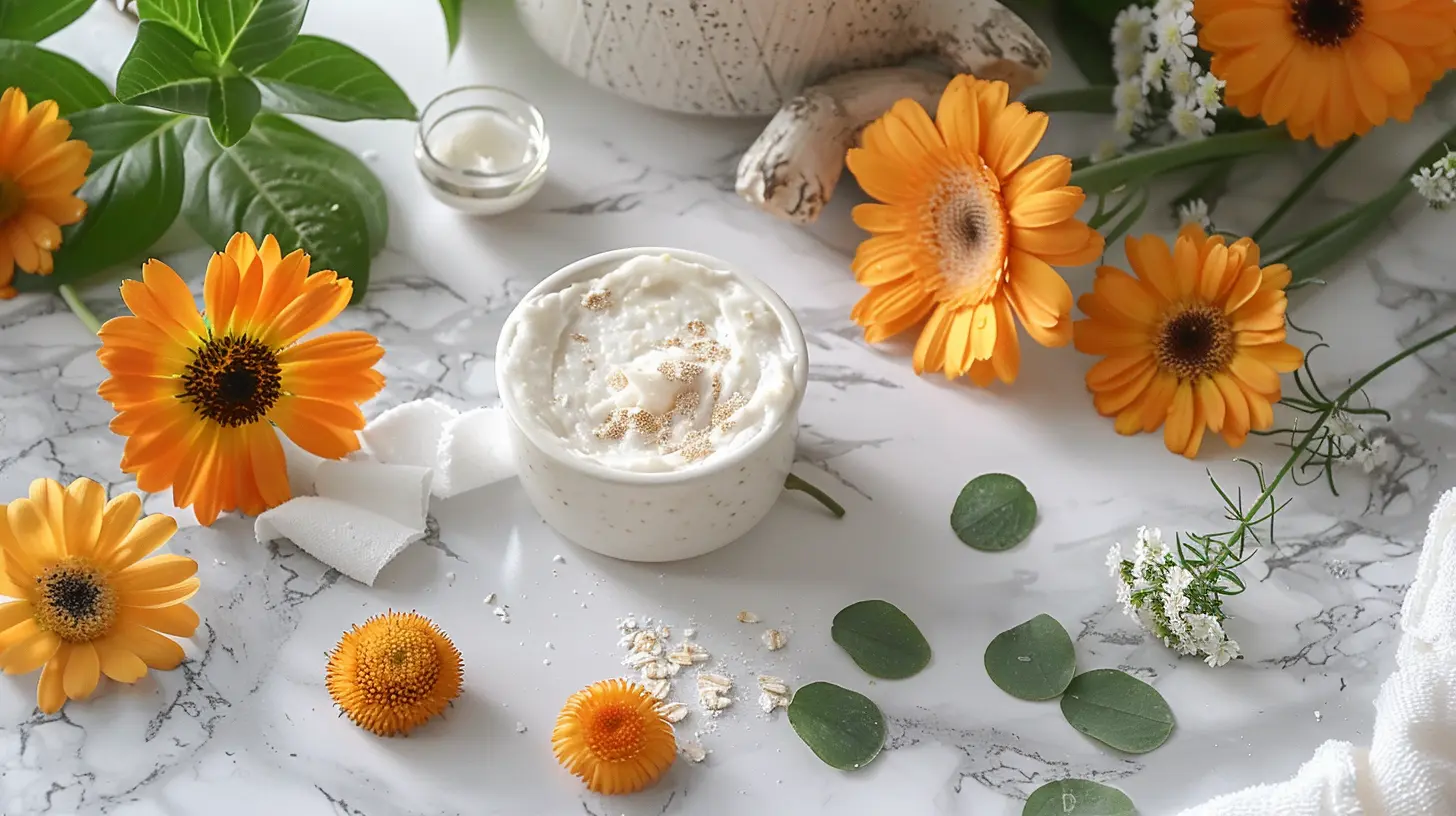
Calendula Cream
Calendula cream contains calendula extract in a topical base. People often use it for mild skin irritation and dry patches.
Pros: It is easy to apply and suits small areas.
Cons: It may bother people sensitive to daisy-family plants.
Choose this form when the skin feels dry, rough, or mildly irritated.
Chickweed Salve
Chickweed salve combines chickweed extract with oil and wax. People traditionally use it for itchy, hot-feeling skin.
Pros: It feels cooling and protective.
Cons: Greasy salves can trap heat on some rashes.
Choose this form when the rash feels dry and itchy, not infected or wet.
Plantain Balm
Plantain balm contains plantain leaf infused into oil. People often choose it for mild outdoor skin irritation.
Pros: It fits small, localized areas well.
Cons: It should not go on deep wounds or infected skin.
Choose this form when irritation stays minor and localized.
Nettle Tea
Nettle tea uses dried nettle leaf. People commonly drink it during seasonal allergy patterns.
Pros: It offers a simple internal herbal approach.
Cons: It may interact with some medications or bother sensitive digestion.
Choose this form when rashes appear alongside seasonal allergy tendencies.
FAQ
Are rashes always caused by allergies?
No. Rashes can come from irritants, infections, heat, friction, medications, insects, or chronic skin conditions. Allergy causes represent only one category.
When should I seek medical care for a rash?
Seek care for fever, pain, swelling, spreading redness, blisters, pus, red streaks, or a rash after a new medicine. Also seek care when home care does not help.
Can I put herbs on any rash?
No. Avoid homemade herbal products on open, infected, severe, or fast-spreading rashes. Use extra caution on the face, genitals, babies, and sensitive skin.
Is oatmeal good for itchy skin?
Colloidal oatmeal is widely used in skin products for dryness and itching. It helps support moisture and skin barrier comfort.
Can chamomile irritate skin?
Yes. Chamomile can bother people sensitive to ragweed, daisies, or related plants. Patch test first and stop if irritation appears.
Should I use fresh or dried herbs?
Dried herbs work well for teas, compresses, and infused oils. Fresh herbs spoil faster and may introduce more moisture into homemade products.
Can pets use rash herbs?
Do not use rash herbs on pets without veterinary guidance. Pet rashes may come from parasites, infection, allergies, or other problems.
References
MedlinePlus Medical Encyclopedia: Rashes
MedlinePlus Medical Encyclopedia: Contact Dermatitis
American Academy of Dermatology: Rash 101 in Adults
American Academy of Dermatology: Home Remedies for Rashes
NIH News in Health: Red, Itchy Rash
National Center for Complementary and Integrative Health: Chamomile
PubMed Central: Colloidal Oatmeal Cream as Add-on Therapy
PubMed: Colloidal Oatmeal Improves Skin Barrier Through Multi-Therapy Activity
PubMed: Anti-inflammatory Activities of Colloidal Oatmeal
PubMed Central: Management of Patients with Atopic Dermatitis and Colloidal Oatmeal
European Medicines Agency: Althaea officinalis Root Assessment Report
Disclaimer
This article is for educational purposes only. It does not provide medical advice, diagnosis, or treatment. Talk with a qualified healthcare professional if a rash spreads, worsens, lasts, becomes painful, or shows signs of infection. Seek urgent care for fever, trouble breathing, facial swelling, purple spots, severe pain, blistering, chemical exposure, or a rash after a new medication.