
Memory issues happen when you forget names, appointments, words, tasks, or where you put your keys again. Occasional forgetfulness can happen to anyone, especially with stress, poor sleep, distraction, or a calendar that clearly needs fewer opinions.
Learn more about Memory Issues
Why Memory Issues Happen
Memory depends on attention, sleep, mood, blood flow, nutrition, hormones, and nervous system balance. When one of these areas struggles, recall can feel slower.
Stress can make the brain prioritize survival over details. Poor sleep can affect memory consolidation. Certain medications, alcohol, dehydration, low vitamin B12, thyroid changes, depression, and infections can also affect memory.
Common Types
Some people notice everyday forgetfulness, such as missed names or misplaced objects. Others notice word-finding trouble, poor focus, slower learning, or mental fog.
Age-related forgetfulness can occur without major loss of independence. Mild cognitive impairment involves more noticeable thinking changes than expected for age.
Common Triggers
Memory may feel worse during high stress, grief, multitasking, poor sleep, illness, dehydration, low protein intake, blood sugar swings, or long screen-heavy days.
Traditional Herbal Patterns
Traditional herbalism often views memory issues through nervous system patterns. Some people need calming herbs because stress scatters attention. Others need circulatory herbs when sluggishness and coldness appear.
Herbalists may also consider digestive weakness, low vitality, or mental overwork. Therefore, herbs get chosen by the whole pattern, not by forgetfulness alone.
How Herbs Can Help Memory Issues
Herbalism traditionally sees memory issues as scattered attention, nervous system depletion, sluggish circulation, or mental fatigue. Nootropic herbs support learning and recall, nervines calm stress-related distraction, circulatory herbs support healthy blood flow, and aromatics wake up dull mental energy. Herbalists choose between these actions by noticing whether memory issues appear with stress, fatigue, coldness, fogginess, or overwork, and these are herbs traditionally used when memory issues happen: ginkgo biloba, rosemary, bacopa monnieri, ashwagandha, lion’s mane mushroom, peppermint, sage, gotu kola, green tea, lemon balm, oat straw, turmeric.
“Memory is easier to find when sleep, stress, and breakfast stop hiding it in separate drawers.”
Recipes & Remedies Memory Issues
Herbal Preparations
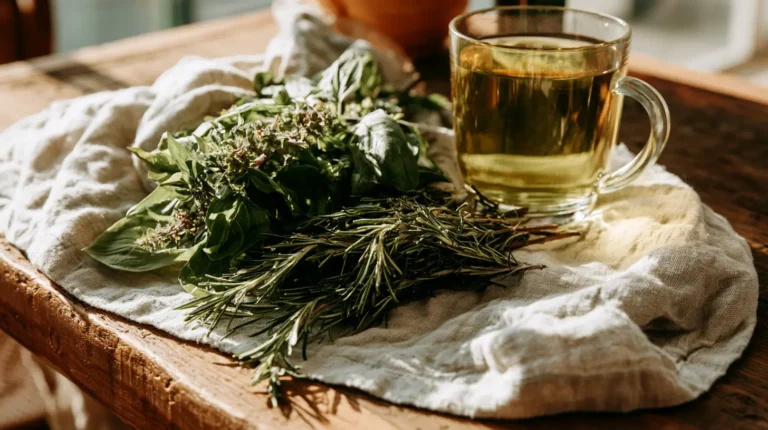
Rosemary, Lemon Balm, and Gotu Kola Focus Tea
This tea combines aromatic, calming, and traditionally brain-tonic herbs. It suits days when the mind feels busy, foggy, or slightly full of open browser tabs.
Ingredients with exact measurements
- 1 teaspoon dried rosemary leaf
- 1 teaspoon dried lemon balm leaf
- 1 teaspoon dried gotu kola herb
- 1 cup hot water
- 1 teaspoon honey, optional
- 1 thin lemon slice, optional
Step-by-step preparation instructions
- Add rosemary, lemon balm, and gotu kola to a mug.
- Pour 1 cup hot water over the herbs.
- Cover the mug to hold the aromatic oils.
- Steep for 10 minutes.
- Strain the tea into a clean cup.
- Add honey or lemon if desired.
How to use
Sip once daily during study, planning, or focused work. Avoid late evening use if rosemary feels too stimulating.
Food for support Memory Issues
Sage-Rosemary Salmon Bowl with Walnuts
This practical meal combines herbs, greens, omega-3-rich fish, and walnuts. It follows a brain-friendly food pattern without turning dinner into a science project.
Ingredients with exact measurements
- 1 salmon fillet, about 5 ounces
- 1 teaspoon olive oil
- 1/2 teaspoon dried sage
- 1/2 teaspoon dried rosemary
- 1 cup cooked brown rice or quinoa
- 1 cup baby spinach
- 2 tablespoons chopped walnuts
- 1/2 cup blueberries
- 1 teaspoon lemon juice
- 1 pinch sea salt, optional
Step-by-step preparation instructions
- Rub salmon with olive oil, sage, rosemary, and optional salt.
- Bake at 375 degrees Fahrenheit for 12 to 15 minutes.
- Add cooked rice or quinoa to a bowl.
- Add spinach while the grain stays warm.
- Place cooked salmon on top.
- Add walnuts, blueberries, and lemon juice.
How to use
Eat as a balanced lunch or dinner. Choose this meal when you want steady nourishment for focus, energy, and everyday brain support.
What Herbs You Need
The herbs traditionally used for memory issues include bacopa, gotu kola, rosemary, sage, lemon balm, ginkgo, and tulsi. These herbs do not replace evaluation for new or worsening memory changes, but they can fit traditional patterns of mental fatigue, stress, and fogginess.
Bacopa
Latin name: Bacopa monnieri
Key herbal actions:
Nootropic: traditionally supports learning, attention, and recall.
Nervine: supports the nervous system during mental strain.
Adaptogen-like tonic: supports resilience during ongoing stress.
Key active compounds relevant to this issue:
Bacosides, alkaloids, flavonoids, and saponins.
Gotu Kola
Latin name: Centella asiatica
Key herbal actions:
Nervine tonic: supports nervous system steadiness over time.
Nootropic: traditionally supports memory and mental clarity.
Connective tissue tonic: supports tissue integrity in traditional use.
Key active compounds relevant to this issue:
Asiaticoside, madecassoside, asiatic acid, and madecassic acid.
Rosemary
Latin name: Salvia rosmarinus
Key herbal actions:
Aromatic stimulant: wakes up dull, tired mental energy.
Circulatory herb: traditionally supports healthy movement and warmth.
Carminative: supports digestion when heaviness affects clarity.
Key active compounds relevant to this issue:
Rosmarinic acid, carnosic acid, camphor, and 1,8-cineole.
Sage
Latin name: Salvia officinalis
Key herbal actions:
Aromatic nootropic: traditionally supports memory and quick thinking.
Astringent: gently tones tissues and reduces excess dampness.
Digestive aromatic: supports digestion through scent and bitterness.
Key active compounds relevant to this issue:
Rosmarinic acid, salvianolic acids, thujone, camphor, and 1,8-cineole.
Lemon Balm
Latin name: Melissa officinalis
Key herbal actions:
Nervine: supports calm when stress scatters attention.
Carminative: eases digestive tension that may accompany stress.
Mild sedative: supports relaxation without feeling heavy for many people.
Key active compounds relevant to this issue:
Rosmarinic acid, citral, citronellal, geraniol, and flavonoids.
Ginkgo
Latin name: Ginkgo biloba
Key herbal actions:
Circulatory tonic: traditionally supports healthy blood flow.
Cognitive support herb: commonly used in modern memory formulas.
Antioxidant herb: contains compounds studied for oxidative stress.
Key active compounds relevant to this issue:
Ginkgolides, bilobalide, flavonol glycosides, and terpene lactones.
Tulsi
Latin name: Ocimum tenuiflorum
Key herbal actions:
Adaptogen: supports resilience during stress.
Nervine: supports calm focus.
Aromatic digestive: supports digestion when stress affects the belly.
Key active compounds relevant to this issue:
Eugenol, ursolic acid, rosmarinic acid, linalool, and flavonoids.
Key Herbal Products for Memory Issues
Bacopa Capsules
Bacopa capsules contain powdered herb or standardized extract. People commonly choose them for long-term cognitive support routines.
Pros: They offer consistent amounts and avoid bacopa’s strong bitter taste.
Cons: They may bother sensitive digestion. Effects, when present, usually need time.
Choose this form when you want a simple daily routine.
Gotu Kola Tea or Capsules
Gotu kola appears as tea, powder, tincture, and capsules. People often choose it for nervous system support and mental steadiness.
Pros: It suits people who prefer gentle tonic herbs.
Cons: The taste can seem grassy or earthy.
Choose this form when memory issues appear with stress or mental fatigue.
Rosemary Tea
Rosemary tea uses the aromatic leaf of a common kitchen herb. People often choose it for short-term focus and alertness.
Pros: It tastes familiar and works well as a simple tea.
Cons: It may feel too stimulating for some people at night.
Choose this form when mental fog feels dull, heavy, or sleepy.
Sage Extract or Tea
Sage products include tea, tinctures, and standardized extracts. People commonly use sage in memory and cognition formulas.
Pros: It has a long traditional reputation for mental clarity.
Cons: High-thujone products need caution, especially with pregnancy or seizure disorders.
Choose this form when you want an aromatic herb with traditional memory use.
Ginkgo Extract
Ginkgo products usually contain standardized leaf extract. People often choose it for circulation-focused cognitive support.
Pros: It has extensive research and wide product availability.
Cons: It can interact with blood thinners and surgery plans.
Choose this form only after reviewing medication safety with a professional.
FAQ
Are memory issues always a sign of dementia?
No. Stress, poor sleep, medications, alcohol, depression, dehydration, and distraction can affect memory. However, new or worsening memory changes deserve medical attention.
When should I seek medical help for memory issues?
Seek help when memory changes disrupt work, safety, finances, driving, cooking, or daily independence. Also seek help when family notices clear changes.
Can herbs improve memory quickly?
Some aromatic herbs may support alertness in the moment. However, many cognitive herbs need steady use and realistic expectations.
Is ginkgo safe for everyone?
No. Ginkgo can interact with blood thinners and may increase bleeding risk. Ask a healthcare professional before using it with medications.
Does memory tea taste strong?
Rosemary and sage taste aromatic and slightly sharp. Lemon balm tastes softer and more lemony, while gotu kola tastes earthy.
Should I use fresh or dried herbs?
Fresh lemon balm and rosemary work well in tea. Dried gotu kola, sage, and bacopa usually offer more consistent storage and strength.
Can pets use memory herbs?
Do not give memory herbs to pets without veterinary guidance. Pets process herbs differently, and cognitive changes need proper evaluation.
References
National Institute on Aging: Memory Problems, Forgetfulness, and Aging
Alzheimers.gov: What Is Mild Cognitive Impairment?
National Center for Complementary and Integrative Health: Ginkgo
PubMed: The Cognitive-Enhancing Effects of Bacopa monnieri
PubMed: Meta-Analysis of Randomized Controlled Trials on Bacopa monnieri
PubMed Central: Randomized Controlled Trial of Standardized Bacopa monniera Extract
PubMed Central: Salvia Sage Review of Cognitive-Enhancing Potential
PubMed Central: Systematic Review of Salvia Clinical Trials
PubMed: Effects of Centella asiatica on Cognitive Function
PubMed Central: Centella asiatica Phytochemistry and Mechanisms
PubMed Central: MIND Diet Slows Cognitive Decline with Aging
NIH Research Matters: Healthful Diet Linked to Reduced Risk of Cognitive Decline
Disclaimer
This article is for educational purposes only. It does not provide medical advice, diagnosis, or treatment. Talk with a qualified healthcare professional if memory issues feel new, frequent, worsening, or disruptive. Seek prompt care for sudden confusion, weakness, severe headache, speech trouble, head injury, or major behavior changes.