
Nausea is the uncomfortable feeling that you may vomit, even when nothing actually happens. It can feel like stomach unease, food aversion, motion sensitivity, heavy digestion, or that classic “please do not mention lunch” feeling.
Learn more about Nausea
Why It Happens
Nausea can happen when the digestive system, inner ear, brain, hormones, medications, infections, stress response, or smell sensitivity sends “something is off” signals. It may appear with stomach bugs, food poisoning, pregnancy, motion sickness, migraines, reflux, anxiety, strong odors, or certain medicines.
Main Types in Plain Language
Digestive nausea often comes with heaviness, burping, reflux, or low appetite. Motion-related nausea may worsen in cars, boats, planes, or scrolling screens. Nervous nausea often appears during stress, anticipation, or overwhelm. Infection-related nausea may come with vomiting, diarrhea, fever, or body aches.
Common Triggers
Common triggers include rich foods, alcohol, dehydration, strong smells, motion, migraines, anxiety, skipped meals, overeating, medications, pregnancy, and viral stomach infections.
How It Shows Up Daily
Nausea may reduce appetite, make smells feel too strong, and turn simple meals into negotiations. It may come in waves, especially when someone moves too quickly, eats too much, or lets the stomach get completely empty.
Traditional Herbal View
Traditional herbalism often looks at nausea through patterns of cold digestion, stagnant digestion, nervous stomach, excess heat, or irritation. Herbalists may choose warming carminatives for cold heaviness, cooling aromatics for heat, bitters for sluggish appetite, and nervines when stress tightens the gut.
How Herbs Can Help Nausea
Herbalism traditionally sees nausea as a pattern of unsettled digestion, upward-moving discomfort, nervous tension, or sensitivity to motion, smell, food, or stress. Carminatives ease gas and digestive tension, aromatics settle queasiness through scent and flavor, bitters support appetite, and nervines calm stress-related stomach unease. Herbalists choose between those actions by noticing whether nausea feels cold, hot, gassy, nervous, motion-triggered, pregnancy-related, or connected to heavy meals. These are herbs traditionally used when nausea happens: ginger, peppermint, lemon balm, chamomile, fennel, spearmint, cardamom, and meadowsweet.
“Nausea is the stomach’s way of raising one cautious eyebrow; gentle herbs help keep the conversation civil.”
Recipes & Remedies Nausea
Herbal Preparations
Gentle Ginger-Mint Nausea Tea
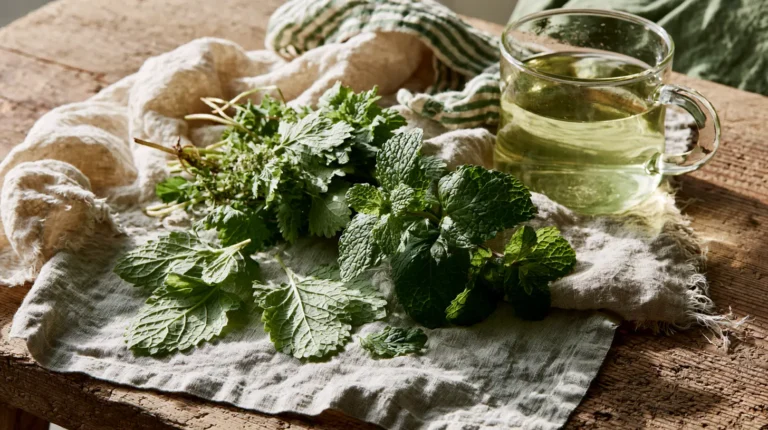
This classic tea combines ginger, peppermint, and lemon balm for a warm, aromatic cup when the stomach feels unsettled.
Ingredients with exact measurements
- 1 teaspoon freshly grated ginger
- 1 teaspoon dried peppermint leaf
- 1 teaspoon dried lemon balm
- 8 ounces hot water
- 1 teaspoon honey, optional
- 1 teaspoon lemon juice, optional
Step-by-step preparation instructions
- Add ginger, peppermint, and lemon balm to a mug.
- Pour 8 ounces hot water over the herbs.
- Cover the mug.
- Steep for 8 to 10 minutes.
- Strain well.
- Add honey and lemon after the tea cools slightly.
How to use
Sip slowly in small amounts. Start with a few tablespoons if the stomach feels very sensitive. Avoid peppermint if reflux or heartburn worsens with mint.
Food for support Nausea
Simple Ginger Rice with Banana
This gentle meal uses soft rice, banana, and ginger for a bland, easy option when appetite feels low and the stomach wants quiet food.
Ingredients with exact measurements
- 1/2 cup white rice
- 2 cups water
- 2 thin slices fresh ginger
- 1 small ripe banana, mashed
- Pinch of sea salt
- Optional: 1 teaspoon honey
Step-by-step preparation instructions
- Rinse the rice until the water runs mostly clear.
- Add rice, water, ginger, and salt to a small pot.
- Bring to a gentle boil.
- Reduce heat to low.
- Simmer for 25 to 30 minutes.
- Stir until the rice becomes soft.
- Remove the ginger slices.
- Stir in mashed banana.
- Add honey if desired.
How to use
Eat a few small spoonfuls at first. Wait and see how your stomach responds before eating more. Pair with small sips of water or oral rehydration solution if vomiting occurs.
What Herbs You Need
For nausea, traditional herbalism often uses ginger, peppermint, lemon balm, chamomile, fennel, spearmint, cardamom, and meadowsweet. These herbs may support comfort, but persistent, severe, pregnancy-related, medication-related, or unexplained nausea deserves professional guidance.
Ginger
Latin name: Zingiber officinale
Key herbal actions:
Carminative: helps ease gas and digestive tension.
Antiemetic support: traditionally used for queasiness and vomiting tendency.
Warming digestive stimulant: supports cold, sluggish digestion.
Key active compounds: gingerols, shogaols, zingiberene, paradols.
Peppermint
Latin name: Mentha x piperita
Key herbal actions:
Carminative: helps ease gas and bloating.
Antispasmodic: supports relaxation of digestive tightness.
Aromatic: uses strong volatile oils to support digestive comfort.
Key active compounds: menthol, menthone, rosmarinic acid, flavonoids.
Lemon Balm
Latin name: Melissa officinalis
Key herbal actions:
Nervine: supports calm when stress affects digestion.
Carminative: helps ease gas and stomach tension.
Aromatic: offers fragrant oils that support comfort.
Key active compounds: rosmarinic acid, citral, citronellal, flavonoids.
Chamomile
Latin name: Matricaria recutita
Key herbal actions:
Carminative: supports gas and digestive discomfort.
Nervine: traditionally used for stress-related stomach upset.
Antispasmodic: helps ease tension and cramping.
Key active compounds: apigenin, alpha-bisabolol, chamazulene, flavonoids.
Fennel
Latin name: Foeniculum vulgare
Key herbal actions:
Carminative: helps ease gas, bloating, and digestive pressure.
Aromatic digestive: supports digestion through fragrant volatile oils.
Antispasmodic: traditionally used when the gut feels tight.
Key active compounds: anethole, fenchone, estragole, flavonoids.
Spearmint
Latin name: Mentha spicata
Key herbal actions:
Carminative: supports gas and digestive comfort.
Cooling aromatic: offers a gentler mint flavor than peppermint.
Digestive comfort herb: traditionally used after meals.
Key active compounds: carvone, limonene, rosmarinic acid, flavonoids.
Cardamom
Latin name: Elettaria cardamomum
Key herbal actions:
Warming carminative: supports cold, heavy digestion.
Aromatic digestive: helps refresh the stomach after meals.
Spice tonic: traditionally used in food-based digestive formulas.
Key active compounds: 1,8-cineole, alpha-terpinyl acetate, limonene, linalool.
Meadowsweet
Latin name: Filipendula ulmaria
Key herbal actions:
Aromatic bitter: supports digestion when the stomach feels sour or heavy.
Astringent: gently tones tissues.
Cooling digestive herb: traditionally used when heat and acidity appear.
Key active compounds: salicylates, tannins, flavonoids, phenolic glycosides.
Key Herbal Products for Nausea
Ginger Tea
Ginger tea uses fresh or dried ginger root in hot water. People commonly choose it for queasy, cold, heavy, or food-related nausea. It feels simple and kitchen-friendly, but strong ginger can bother reflux or a sensitive stomach. Someone might choose tea when they want gentle warmth and easy preparation.
Ginger Capsules
Ginger capsules contain powdered ginger or ginger extract. People often choose them when they want a measured product and do not enjoy ginger’s spicy taste. Capsules may feel too strong for some stomachs and may not suit every medication situation. Someone might choose capsules when travel, pregnancy guidance, or routine dosing makes tea inconvenient.
Peppermint Tea
Peppermint tea offers a cooling, aromatic approach for gas, bloating, and stomach tension. It tastes familiar and works well after meals for many people. However, peppermint may worsen reflux in some individuals. Someone might choose peppermint when nausea comes with bloating rather than burning.
Peppermint Essential Oil Aromatherapy
Peppermint aromatherapy uses scent rather than swallowing the herb. People commonly use it when smells trigger nausea or when they cannot tolerate fluids. Essential oils need careful use and should never go directly in the mouth unless supervised by a qualified professional. Someone might choose aromatherapy when sipping tea feels impossible.
Fennel Tea
Fennel tea has a sweet, anise-like flavor and a long traditional use after meals. People often choose it when nausea comes with gas, fullness, or burping. The taste can feel too licorice-like for some people. Someone might choose fennel when digestion feels tight, bloated, and food-related.
FAQ
When should I worry about nausea?
Seek medical care if nausea comes with severe abdominal pain, chest pain, stiff neck, confusion, blood in vomit, fainting, signs of dehydration, or possible poisoning. Also get help if vomiting lasts more than 24 hours or nausea lasts more than 48 hours. Children, older adults, and pregnant people need extra caution.
Can ginger help nausea?
Ginger has the strongest traditional and research interest among common nausea herbs. Research supports ginger for some pregnancy-related nausea, while evidence for motion sickness looks less consistent. Use caution with supplements if you take medications or have a medical condition.
Is peppermint good for nausea?
Peppermint may help when nausea comes with gas, bloating, or digestive tightness. However, it can worsen reflux or heartburn in some people. Choose a mild tea first rather than strong peppermint oil.
What should I eat when nauseous?
Start with small amounts of bland food, such as rice, toast, crackers, banana, applesauce, or broth. Avoid greasy, spicy, very sweet, or strongly scented foods until your stomach settles. Small portions usually work better than large meals.
What should I drink when nauseous?
Take small sips of water, broth, diluted juice, or oral rehydration solution. Drinking too much too quickly can trigger vomiting. If vomiting continues or you cannot keep fluids down, seek medical guidance.
Are herbal nausea products safe during pregnancy?
Pregnancy-related nausea deserves medical guidance, especially if vomiting becomes frequent or causes weight loss or dehydration. Ginger has been studied for pregnancy nausea, but dose, form, and safety still matter. Ask a qualified clinician before using herbal supplements during pregnancy.
Can pets use these remedies?
Do not give nausea herbs, essential oils, or supplements to pets without veterinary guidance. Pets can react differently to herbs and oils. Ongoing vomiting or nausea signs in pets need a veterinarian.
References
MedlinePlus: Nausea and Vomiting
MedlinePlus: When You Have Nausea and Vomiting
MedlinePlus: Nausea and Vomiting in Adults
NCCIH: Ginger Usefulness and Safety
NIDDK: Viral Gastroenteritis Symptoms and Causes
NIH/PMC: The Effectiveness of Ginger in the Prevention of Nausea and Vomiting
NIH/PMC: Ginger on Human Health
User-provided article prompt
Disclaimer
This article is for educational purposes only and does not provide medical advice, diagnosis, or treatment. Nausea can come from many causes, including infections, pregnancy, medications, migraine, reflux, poisoning, dehydration, or serious abdominal conditions. Seek medical care for severe pain, blood in vomit, chest pain, stiff neck, confusion, dehydration, possible poisoning, persistent vomiting, or nausea that does not improve. Talk with a qualified healthcare professional before using herbs if you take medication, have a medical condition, are pregnant, are breastfeeding, or are preparing remedies for a child.