
Neck stiffness is the feeling that turning, tilting, or relaxing the neck takes more effort than usual. It may show up as tight muscles, limited range of motion, soreness, or that familiar “I slept like a pretzel” feeling.
Learn more about Neck Stiffness
Neck stiffness can happen when the muscles, joints, fascia, or surrounding tissues of the neck become tense, irritated, overworked, or slow to relax. It may come from posture, long screen time, stress tension, sleeping awkwardly, cold exposure, repetitive movement, exercise strain, jaw tension, dehydration, or long periods of holding the head in one position.
One common type is posture-related neck stiffness, where the neck and upper shoulders feel tight after computer work, phone use, driving, or reading. Another type is stress-related stiffness, where tension gathers in the shoulders, jaw, and base of the skull. There is also cold-and-tight stiffness, where the neck feels worse in cold weather or after exposure to drafts. Some people experience stiffness after overuse, such as lifting, gardening, exercising, or sleeping in a position their neck would like to formally complain about.
Neck stiffness may show up as difficulty turning the head, tightness across the shoulders, tension at the base of the skull, a heavy-feeling head, or discomfort when looking up, down, or side to side. Sometimes it comes with headache, jaw tightness, upper back tension, or shoulder stiffness. Sudden severe neck stiffness, fever, injury, neurological symptoms, severe headache, weakness, numbness, or stiffness that does not improve should be evaluated promptly by a healthcare professional.
Traditional herbalism tends to understand neck stiffness through patterns such as cold tension, stress-held tension, sluggish circulation, dryness, and irritation. A cold, tight pattern may call for warming herbs such as ginger, rosemary, cayenne, or cinnamon. A stress-tension pattern may call for relaxing nervines such as lavender, chamomile, lemon balm, or skullcap. A hot, irritated pattern may call for cooling, soothing herbs such as calendula, plantain, or chamomile. A deeper joint-related pattern may include turmeric, boswellia, nettle, and mineral-rich foods as broader support.
Herbalists traditionally choose herbs based on what the neck stiffness feels like. If warmth brings relief, warming compresses, massage oils, and ginger-based preparations may be preferred. If the neck feels tense from stress, relaxing herbs and calming rituals may be included. If the surrounding skin or tissues feel sensitive, gentle topical herbs may be chosen instead of strong warming herbs. If stiffness keeps returning, herbs are usually paired with movement breaks, posture changes, hydration, sleep support, and gentle stretching.
How Herbs Can Help Neck Stiffness
How Herbalism Traditionally Approaches This Issue
Herbalism typically sees neck stiffness as a pattern involving muscular tension, coldness, sluggish circulation, stress-held tightness, or irritation around the neck and shoulders. Warming herbs encourage a feeling of circulation and looseness, relaxing nervines support the nervous system when tension is stress-related, and soothing topical herbs help comfort sensitive tissues. Herbalists choose between those actions by looking at whether the stiffness feels cold and tight, tense and stress-related, sore after overuse, or sensitive and irritated; these are herbs traditionally used when neck stiffness happens: rosemary, ginger, lavender, chamomile, oat straw, turmeric, black pepper, cinnamon, cayenne, skullcap, lemon balm, arnica, calendula, peppermint, nettle, mustard seed, boswellia, garlic, parsley, plantain.
“Neck stiffness is your body’s way of saying, ‘I have been holding this posture, this stress, and possibly this entire week for too long.”
Recipes & Remedies Neck Stiffness
Herbal Preparations
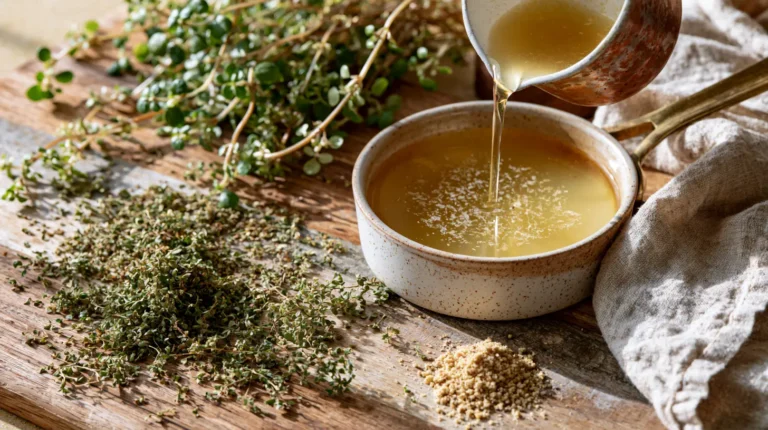
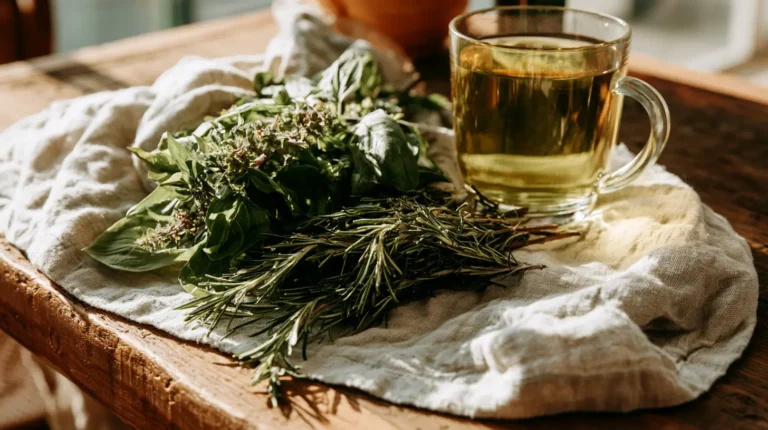
Rosemary Ginger Warm Neck Compress
This simple warm compress combines rosemary and ginger, two warming herbs traditionally used when muscles feel cold, tight, or slow to release. It is a gentle external preparation for the neck and upper shoulders, especially after desk work, cold exposure, or mild everyday tension.
Ingredients with exact measurements
1 tablespoon dried rosemary
3 thin slices fresh ginger or 1 teaspoon dried ginger
2 cups hot water
1 clean cotton cloth or small towel
Step-by-step preparation instructions
- Place rosemary and ginger in a heat-safe bowl.
- Pour 2 cups hot water over the herbs.
- Cover and steep for 15 minutes.
- Strain the liquid.
- Let the infusion cool until warm and comfortable, not hot.
- Soak the cloth in the warm herbal infusion.
- Wring out excess liquid.
- Apply the cloth to the back of the neck and upper shoulders for 10 to 15 minutes.
How to use
Use as needed for mild everyday stiffness when warmth feels good. Patch test first, avoid broken or irritated skin, and never apply a hot compress that could burn the skin. Stop if you feel burning, itching, dizziness, worsening pain, numbness, or unusual discomfort.
Food for support Neck Stiffness
Warming Turmeric Ginger Lentil Soup
This nourishing soup uses turmeric, ginger, garlic, rosemary, and black pepper in a practical food-based recipe. It is especially useful when neck stiffness is part of a broader pattern of coldness, tension, stress, or undernourished recovery.
Ingredients with exact measurements
1 tablespoon olive oil
1 small yellow onion, diced
2 garlic cloves, minced
1 teaspoon fresh grated ginger
1 cup red lentils, rinsed
4 cups vegetable broth or chicken broth
1/2 teaspoon ground turmeric
1/2 teaspoon dried rosemary
1 small pinch black pepper
1/2 teaspoon sea salt, or to taste
1 cup chopped spinach or kale
1 tablespoon lemon juice
Step-by-step preparation instructions
- Warm olive oil in a medium pot over medium heat.
- Add onion and cook for 5 minutes, stirring occasionally.
- Add garlic and ginger and cook for 1 minute.
- Add lentils, broth, turmeric, rosemary, black pepper, and salt.
- Bring to a gentle boil.
- Reduce heat and simmer for 18 to 22 minutes, or until lentils are soft.
- Stir in spinach or kale and cook for 2 more minutes.
- Turn off the heat and add lemon juice.
- Taste and adjust seasoning.
How to use
Enjoy 1 bowl as a warm lunch or dinner, especially during colder seasons or after a long day of sitting. Pair with hydration, gentle neck movement, and screen breaks. Use caution with high-dose turmeric or ginger supplements if you take blood-thinning medications, have gallbladder concerns, reflux, liver concerns, or are preparing for surgery.
What Herbs You Need
Herbs traditionally used to support neck stiffness include ginger, rosemary, lavender, chamomile, cayenne, arnica, turmeric, boswellia, nettle, oat straw, skullcap, calendula, garlic, and black pepper. The recipes above use rosemary, ginger, turmeric, garlic, black pepper, and leafy greens as practical, food-friendly, and topical options for warmth, circulation, tension support, and nourishment.
Rosemary
Latin name: Salvia rosmarinus, formerly Rosmarinus officinalis
Key herbal actions:
Warming aromatic: traditionally used to encourage warmth and movement.
Circulatory herb: used in traditional herbalism when an area feels cold, tight, or sluggish.
Digestive aromatic: supports digestion when used in food.
Key active compounds relevant to this issue: rosmarinic acid, carnosic acid, carnosol, cineole, camphor, and volatile oils.
Ginger
Latin name: Zingiber officinale
Key herbal actions:
Warming herb: traditionally used when stiffness feels cold or slow to loosen.
Carminative: supports comfortable digestion and helps reduce gas-related discomfort.
Circulatory stimulant: traditionally used to encourage a feeling of warmth and movement.
Key active compounds relevant to this issue: gingerols, shogaols, zingerone, paradols, and volatile oils.
Turmeric
Latin name: Curcuma longa
Key herbal actions:
Warming bitter: traditionally used to support digestion and overall movement.
Antioxidant-rich spice: provides plant compounds studied for inflammation-related pathways.
Digestive aromatic: supports food breakdown and digestive comfort in traditional use.
Key active compounds relevant to this issue: curcuminoids including curcumin, demethoxycurcumin, bisdemethoxycurcumin, turmerones, and volatile oils.
Garlic
Latin name: Allium sativum
Key herbal actions:
Warming culinary herb: traditionally used to support warmth and vitality.
Digestive support herb: commonly used in food traditions to support robust digestion.
Circulatory food herb: traditionally associated with movement and warmth.
Key active compounds relevant to this issue: allicin, alliin, sulfur compounds, flavonoids, and selenium-containing compounds.
Black Pepper
Latin name: Piper nigrum
Key herbal actions:
Warming spice: traditionally used to add heat and digestive stimulation.
Carminative: supports digestive comfort in small culinary amounts.
Bioavailability-supporting spice: piperine is studied for how it can influence absorption of some compounds.
Key active compounds relevant to this issue: piperine, volatile oils, chavicine, and other alkaloids.
Lavender
Latin name: Lavandula angustifolia
Key herbal actions:
Relaxing nervine: traditionally used when tension is connected with stress or overstimulation.
Aromatic relaxant: often used in baths, oils, and compresses.
Carminative: supports digestion when stress affects the belly.
Key active compounds relevant to this issue: linalool, linalyl acetate, lavandulol, cineole, and other volatile oils.
Chamomile
Latin name: Matricaria chamomilla or Matricaria recutita
Key herbal actions:
Relaxing nervine: traditionally used for tension and restlessness.
Antispasmodic: traditionally used when the body holds tightness.
Carminative: supports digestion when stress and tension are connected.
Key active compounds relevant to this issue: apigenin, bisabolol, chamazulene, luteolin, quercetin, and volatile oils.
Cayenne
Latin name: Capsicum annuum or Capsicum frutescens
Key herbal actions:
Rubefacient: used externally to create warmth and local stimulation.
Warming stimulant: traditionally used in tiny amounts when coldness and sluggishness are part of the pattern.
Digestive stimulant: used cautiously in food for warmth.
Key active compounds relevant to this issue: capsaicin, carotenoids, flavonoids, and volatile compounds.
Arnica
Latin name: Arnica montana
Key herbal actions:
Topical comfort herb: traditionally used externally for overworked muscles and minor bumps.
Vulnerary in traditional use: used externally in preparations for tissue comfort.
Warming-moving herb: often included in massage oils and gels.
Key active compounds relevant to this issue: sesquiterpene lactones such as helenalin, flavonoids, thymol derivatives, and volatile oils.
Boswellia
Latin name: Boswellia serrata
Key herbal actions:
Resinous joint-support herb: traditionally used in formulas for mobility and comfort.
Aromatic resin: used in traditional systems where stiffness and irritation are part of the pattern.
Inflammation-modulating herb in modern research context: studied for pathways related to normal inflammatory response.
Key active compounds relevant to this issue: boswellic acids including AKBA, beta-boswellic acid, acetyl-boswellic acids, and resin acids.
Nettle
Latin name: Urtica dioica
Key herbal actions:
Nutritive tonic: traditionally used as a mineral-rich daily herb.
Restorative herb: used when stiffness is connected with depletion or poor nourishment.
Alterative: traditionally used to support normal elimination and overall balance.
Key active compounds relevant to this issue: chlorophyll, flavonoids, phenolic acids, carotenoids, calcium, magnesium, potassium, and iron.
Oat Straw
Latin name: Avena sativa
Key herbal actions:
Nutritive nervine: traditionally used to nourish an overworked nervous system.
Mineral-rich tonic: used in long infusions for slow support.
Moistening herb: traditionally used when tissues feel dry, depleted, or frayed.
Key active compounds relevant to this issue: beta-glucans, avenanthramides, flavonoids, silica, magnesium, and saponins.
Skullcap
Latin name: Scutellaria lateriflora
Key herbal actions:
Relaxing nervine: traditionally used when tension is held in the nervous system.
Nervine tonic: used for longer-term support when stress and tightness overlap.
Mild antispasmodic: traditionally used when muscles feel jumpy or tight.
Key active compounds relevant to this issue: baicalin, baicalein, scutellarin, wogonin, flavonoids, and bitter compounds.
Calendula
Latin name: Calendula officinalis
Key herbal actions:
Vulnerary: traditionally used for skin and surface tissue support.
Soothing topical herb: used in compresses, oils, and salves.
Lymphatic herb in traditional herbalism: used when tissues feel congested or slow to clear.
Key active compounds relevant to this issue: triterpenoids, flavonoids, carotenoids, polysaccharides, and essential oil constituents.
Key Herbal Products for Neck Stiffness
Warming Herbal Neck Balm
A warming neck balm often contains herbs or spices such as ginger, cayenne, rosemary, or cinnamon in an oil-and-wax base. It is commonly applied externally to stiff-feeling neck and shoulder areas.
Pros: convenient, portable, and useful before gentle movement or stretching.
Cons: warming ingredients can irritate sensitive skin and should never be used near eyes, broken skin, or mucous membranes.
Best choice when: neck stiffness feels cold, tight, and better with warmth.
Arnica Gel or Cream
Arnica gel or cream is a topical product made from arnica flower extract. It is commonly used externally for overworked muscles, minor bumps, or body tension routines.
Pros: lightweight, easy to apply, and widely available.
Cons: should not be used on broken skin, irritated skin, or by people allergic to daisy-family plants. Arnica should not be taken internally unless prepared in a properly regulated homeopathic form.
Best choice when: someone wants a non-greasy topical product for occasional muscle-area support.
Magnesium Herbal Bath Soak
Magnesium bath soaks often combine Epsom salt with calming herbs such as lavender, chamomile, or rosemary. They are used externally in warm baths or foot soaks.
Pros: relaxing, easy to use, and helpful for creating a whole-body tension release ritual.
Cons: hot baths are not appropriate for everyone, and some people need to avoid soaking due to circulation issues, dizziness, skin irritation, or medical conditions.
Best choice when: neck stiffness is part of broader shoulder, back, or stress tension.
Turmeric and Boswellia Capsules
Turmeric and boswellia capsules are common supplement products used for joint and mobility support. They are more concentrated than food or tea preparations.
Pros: convenient and often standardized for key compounds such as curcuminoids or boswellic acids.
Cons: stronger interaction potential, variable product quality, and not appropriate for everyone.
Best choice when: someone wants a concentrated internal product and has checked safety with a healthcare professional.
Rosemary or Lavender Massage Oil
Herbal massage oils may include rosemary-infused oil, lavender-infused oil, or diluted essential oils in a carrier oil. They are used externally with gentle self-massage or professional massage.
Pros: supports hands-on relaxation, easy to combine with heat, and helpful for stress-held shoulder tension.
Cons: essential oils must be properly diluted, and some people react to fragrance or topical herbs.
Best choice when: neck stiffness feels connected with stress, posture, or muscle tension.
FAQ
When should neck stiffness be checked by a doctor?
Neck stiffness should be checked promptly if it follows an injury, is severe, or comes with fever, rash, confusion, severe headache, weakness, numbness, dizziness, chest pain, or trouble walking. Also seek care if stiffness keeps returning, worsens, or limits normal daily activities. Herbs and home care should not delay medical evaluation when symptoms are concerning.
Is heat or cold better for neck stiffness?
Many people prefer gentle heat when stiffness feels tight, cold, or stress-related. Cold may feel better when there is recent strain, swelling, or sharp irritation. The best choice depends on how the body responds; avoid extreme temperatures either way.
Can herbs relax tight neck muscles?
Herbs may support relaxation routines, warmth, and comfort, but they do not replace movement, posture changes, or professional care when needed. Warming herbs such as ginger and rosemary are traditionally used externally, while nervines such as lavender, chamomile, and skullcap are used when tension is stress-related. Gentle stretching and breaks from screens are often just as important as the herbs.
Are topical herbal balms safe for sensitive skin?
They can be irritating, especially products with cayenne, cinnamon, menthol, or essential oils. Patch test first on a small area and wait 24 hours before using more widely. Avoid the face, eyes, broken skin, irritated skin, and freshly shaved areas.
Can I use fresh herbs for a neck compress?
Yes, fresh rosemary and fresh ginger can be used in a compress. Fresh herbs are less concentrated by volume than dried herbs, so you may need a little more plant material. Always strain well and test the temperature before applying to the skin.
What does rosemary ginger compress smell like?
It smells warm, earthy, spicy, and herbal. Rosemary gives a piney aroma, while ginger adds a sharp warming note. It should smell fresh and pleasant, not sour or stale.
Are neck stiffness herbs safe for pets?
Do not use herbal balms, essential oils, compresses, or supplements on pets unless guided by a veterinarian. Pets may lick topical products, and many essential oils or warming herbs can be unsafe for animals. Keep herbal oils, balms, and loose herbs away from pets.
References
NCCIH: Chronic Pain and Complementary Health Approaches
NCCIH: Complementary Health Approaches for Chronic Pain
PubMed: Ginger for Osteoarthritis: A Systematic Review and Meta-Analysis
PubMed: Effectiveness of Boswellia and Boswellia Extract for Osteoarthritis Patients
PubMed: Capsaicin for Pain Management
PubMed: Lavender and the Nervous System
PubMed: Chamomile, A Herbal Medicine of the Past with Bright Future
Disclaimer
This article is for educational purposes only and is not medical advice, diagnosis, or treatment. Neck stiffness can have many causes, including muscle strain, posture, stress, injury, arthritis, nerve irritation, infection, or other health conditions. Herbs, supplements, topical products, massage, stretching, and heat may not be appropriate for everyone and may interact with medications, medical conditions, pregnancy, breastfeeding, surgery, allergies, or skin sensitivities. Always speak with a qualified healthcare professional before using herbal products, especially concentrated extracts, capsules, essential oils, strong topical warming products, or if neck stiffness is severe, sudden, persistent, or linked with other symptoms.