
Chamomile: Herbal Solution for Everyday Calm
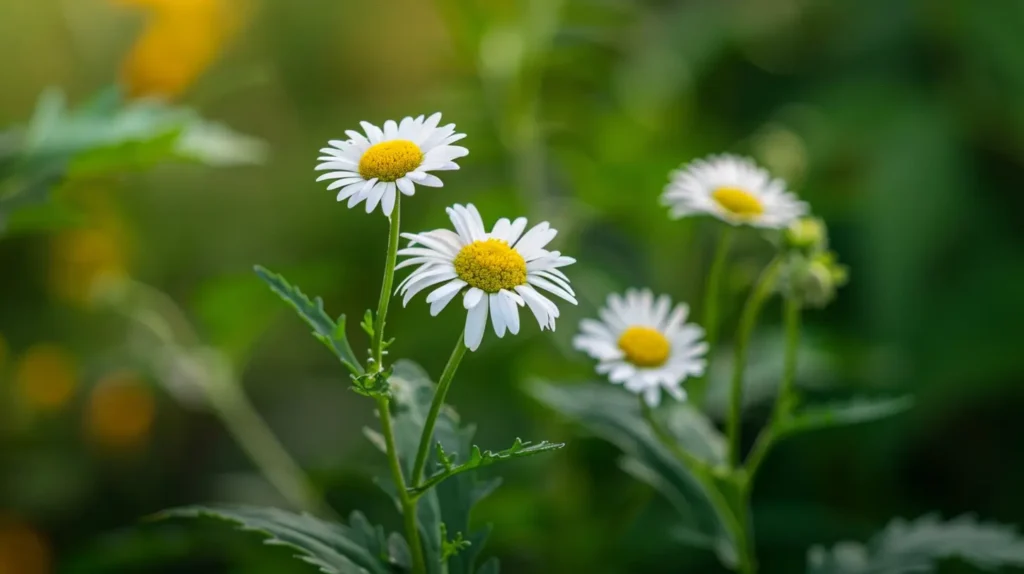
Chamomile recipes offer gentle ways to support relaxation and daily well-being. Explore simple teas, infusions, and herbal blends you can make at home.
Matricaria recutita L. (syn. Matricaria chamomilla, Chamomilla recutita)
Plant family: Asteraceae (daisy family)
Common names: German chamomile, blue chamomile, wild chamomile, “ground apple” (that apple-like scent is real).
Nervine / calming (supports relaxation), Carminative (supports comfortable digestion), Anti-inflammatory, Antispasmodic , Mild antimicrobial
Practical Uses
- Wind-down rituals: tea after dinner, bedtime blends, gentle daily comfort
- Digestive ease (traditional use): used after heavy meals or when the belly feels “knotty”
- Skin comfort (external): cooled tea as a compress; infused oil in balms; hair rinses for scalp comfort and shine
- Steam support (traditional): warm aromatic steam using an infusion (not essential oil) European Medicines Agency (EMA)
Product Forms
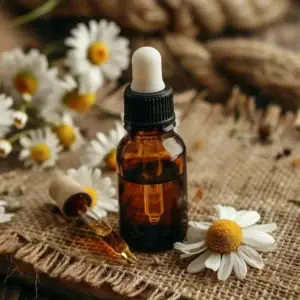
Chamomile aromatherapy oil
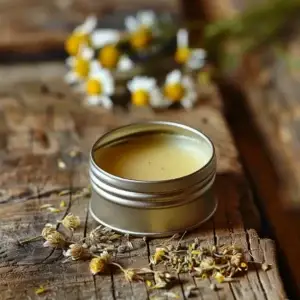
Chamomile salves
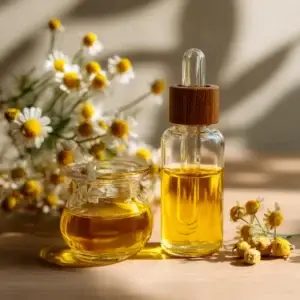
Chamomile extracts (alcohol-free glycerites)
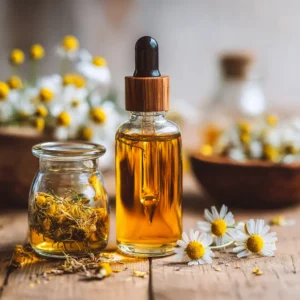
Chamomile tincture
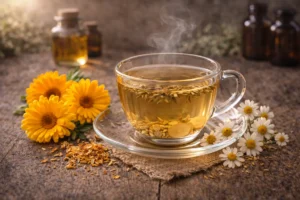
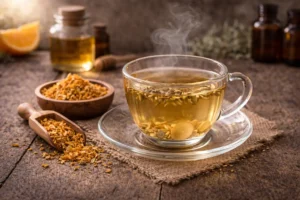
Chamomile tea is the most familiar form of this herb, prepared from dried flowers and traditionally enjoyed as a gentle, everyday infusion with a mild, calming character.
Loose dried chamomile flowers are sold for those who prefer to prepare their own teas or blends, offering flexibility in strength and use.
Chamomile tinctures are concentrated liquid extracts, commonly chosen for convenience and longer shelf life, and are traditionally prepared using alcohol to extract a wide range of plant constituents.
Chamomile glycerites are alcohol-free liquid extracts made with vegetable glycerin and are often selected for their mild sweetness and suitability for those avoiding alcohol.
Chamomile capsules or tablets contain powdered flower or extract and provide a simple, tasteless option with pre-measured amounts.
Chamomile salves, creams, and balms are topical preparations traditionally used to support skin comfort and gentle soothing in everyday care.
Chamomile essential oil and aromatherapy products are used in diffusion, massage, and bath applications, valued primarily for their soft, calming aroma and sensory qualities.
Traditional Recipes

Parts Used
Flower heads (capitula) are the classic herbal material—the part richest in aromatics and key flavonoids. European Medicines Agency (EMA)
Harvest timing tip: pick flowers when they’re fully open and fragrant; quality drops if they’re browned, damp, or over-handled.
Usage Forms & Shelf Life
Internal
- Infusion (tea): best for water-soluble flavonoids and gentle aromatics
- Shelf life: drink same day (24 hours refrigerated max; quality drops fast)
- Tincture (alcohol extract): concentrates aromatic + flavonoid fractions
- Shelf life: typically 3–5 years (cool, dark storage)
External
- Compress / rinse (strong tea): for skin/scalp comfort
- Shelf life: make fresh; use within 24 hours refrigerated
- Infused oil: for balms and salves
- Shelf life: usually 6–12 months (depends on oil freshness + storage)
- Salve / balm:
- Shelf life: often 12–24 months (formula dependent)
Active Constituents
Chamomile’s chemistry is one reason it shows up in both herbal textbooks and cosmetic labs.
Key groups (German chamomile):
- Essential oil (approx. 0.3–1.9%) with sesquiterpenes and azulenes European Medicines Agency (EMA)
- Flavonoids (up to ~6%) including apigenin and apigenin-7-glucoside European Medicines Agency (EMA)
- Coumarins (e.g., herniarin, umbelliferone) European Medicines Agency (EMA)
- Sesquiterpene lactones (e.g., matricin) European Medicines Agency (EMA)
- Spiroethers (aromatic compounds contributing to the “chamomile” profile) European Medicines Agency (EMA)
How It Works
Chamomile doesn’t rely on one superstar compound—it’s more like a good band where everyone actually practices.
- Flavonoids (especially apigenin): studied for interactions with pathways involved in relaxation and inflammatory signaling (research is ongoing; effects depend on preparation and dose). European Medicines Agency (EMA)+1
- Sesquiterpenes (like α-bisabolol) and azulenes (like chamazulene): associated with soothing activity in experimental models and topical traditions. PMC+1
- Tea vs. essential oil reality: tea pulls mostly flavonoids, mucilage-like polysaccharides, and a smaller portion of volatile constituents; the essential oil is a different “concentrate universe.” European Medicines Agency (EMA)
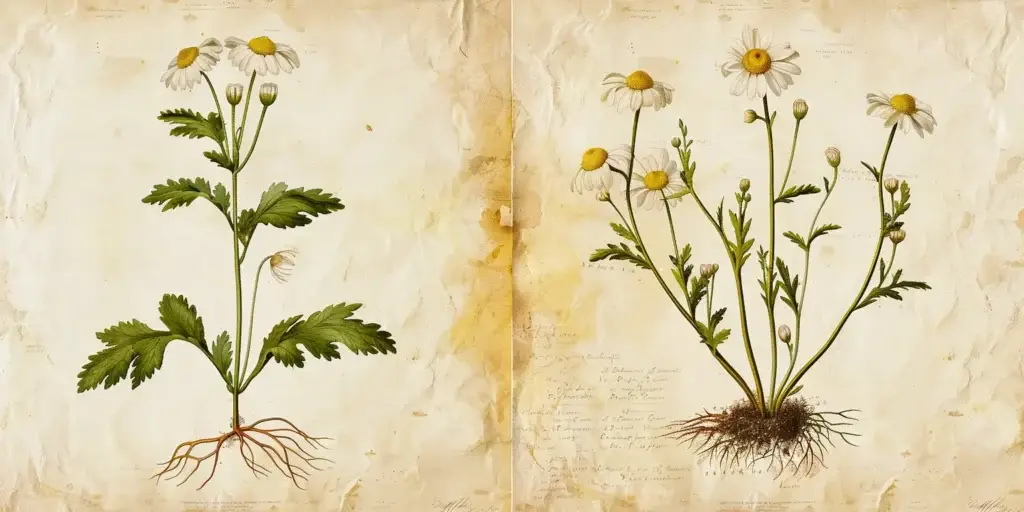
Herb Identification
Small daisy-like flowers: white rays, yellow center
Aromatic, apple-like scent when crushed
Finely divided feathery leaves
Hollow, conical receptacle (a classic ID feature) Wikipedia+1
Look-alikes (use caution):
Other “mayweed” daisies and chamomile-like plants can resemble it; the hollow receptacle helps distinguish true German chamomile. Wikipedia
If you’re foraging and you’re not 100% sure, skip it. Confident ID is the price of admission.
Selecting Quality Herb
Look for:
- Color: creamy-white petals and yellow centers; not brown or gray
- Aroma: sweet, apple-like, distinctly chamomile
- Form: whole flowers are easier to judge than powder
- Freshness cues: minimal dust, no musty smell, no clumping
Red flags:
- Flat smell, “hay-like” odor, visible moisture, or lots of stem filler
- Essential-oil claims that sound magical (plants are wonderful; marketing is… creative)
Side Effects & Contraindications
Possible issues (generally uncommon, but worth respecting):
- Allergic reactions (especially in people sensitive to Asteraceae/ragweed-like plants)
- Skin reactions with topical use in sensitive individuals
- Drug interaction caution: theoretical/possible concerns are often raised for anticoagulants and sedative herbs/meds—best handled conservatively if you’re on medications
- Pregnancy/lactation: safety data is limited; many clinicians recommend caution ScienceDirect+1
Frequently Asked Questions
Is chamomile safe for daily use?
Many people use chamomile tea daily as a gentle tradition. Individual sensitivity matters—if you’re allergy-prone (especially to the daisy family), start small and pay attention.
What does chamomile taste like?
Light, floral, and slightly apple-like. If it tastes bitter or dusty, that’s usually a quality issue, not your taste buds “doing it wrong.”
Fresh vs. dried chamomile—what’s better?
Fresh can be wonderfully aromatic, but dried is more consistent and easier to store. For most home use, good-quality dried flowers are reliable and convenient.
How long does dried chamomile last?
If stored cool, dark, and airtight, many people aim to use dried flowers within 12 months for best aroma and flavor. After that, it’s not “dangerous,” just less potent and more “herb-scented paper.”
Can pets use chamomile?
Sometimes under veterinary guidance, but it’s not a DIY herb for animals—especially cats. Also, “chamomile” can refer to different species, and at least one common type is listed as toxic by the ASPCA, so caution is smart. ASPCA
Is chamomile essential oil the same as chamomile tea?
Not even close. Tea is a dilute water extraction; essential oil is a concentrated distillate and should be treated as a different product with different safety rules.
References
European Medicines Agency (EMA), HMPC: Assessment report on Matricaria recutita L., flos and aetheroleum (2015). European Medicines Agency (EMA)
Haghi et al., phenolic compounds & pharmacopoeial standards for chamomile (European Pharmacopoeia thresholds). PMC
Srivastava et al., review on extraction, stability, and biological activity of chamomile. PMC
El Mihyaoui et al., review including geographic distribution and ethnobotanical context. PMC
ASPCA Animal Poison Control: Chamomile listing (pet safety reference). ASPCA
This information is shared for educational purposes only and reflects traditional herbal use. It is not intended to diagnose, treat, or replace professional medical care.