
Congestion is that stuffed-up, heavy, hard-to-breathe-through-your-nose feeling that can make your head feel like it has been packed with wet cotton. It often shows up with colds, allergies, sinus irritation, dry indoor air, or chesty seasonal discomfort.
Learn more about Congestion
Congestion happens when the tissues inside the nose, sinuses, throat, or chest become irritated and produce extra mucus or swelling. In a common cold, nasal congestion often appears with runny nose, sneezing, sore throat, cough, mild body aches, headache, and sometimes a low-grade fever. Cold symptoms often peak within 2 to 3 days, and stuffy nose or cough may linger for several days afterward.
There are a few common types of congestion in everyday language. Nasal congestion feels like a blocked or stuffy nose. Sinus congestion may feel like pressure around the forehead, cheeks, nose, or eyes. Chest congestion feels heavier and may come with mucus that the body is trying to move. Allergy-related congestion may come with sneezing, itchy eyes, and clear drainage.
Common triggers include respiratory viruses, seasonal allergies, dust, smoke, dry air, strong fragrances, weather changes, sinus irritation, and sometimes reflux or environmental irritants. Congestion may feel worse at night because lying down can change how mucus drains. It can also feel worse in dry rooms, after travel, or during winter heating season.
Traditional herbalism tends to understand congestion through patterns of dampness, stagnation, heat, cold, dryness, and irritation. A cold, damp pattern may feel heavy, chilly, thick, and sluggish. A hot, irritated pattern may feel inflamed, red, dry, or scratchy. A dry congestion pattern may involve blocked passages without much fluid. A mucus-heavy pattern may feel wet, rattly, or thick.
Herbs are traditionally selected based on the pattern. Aromatic herbs are often chosen when congestion feels stuck, heavy, or stuffy because their fragrant compounds bring a sense of movement. Expectorant herbs are traditionally used when mucus needs help moving naturally. Demulcent herbs are chosen when tissues feel dry, scratchy, or irritated. Warming herbs may be selected for chilly congestion, while cooling herbs may be selected when the pattern feels hot or irritated
How Herbs Can Help Congestion
How Herbalism Traditionally Approaches This Issue
Herbalism often sees congestion as a pattern of stuck mucus, swollen tissues, dryness, dampness, or irritation in the nose, sinuses, throat, or chest. The main herbal actions used include aromatics, which bring a sense of openness and movement; expectorants, which support natural mucus movement; demulcents, which soothe dry tissues; and diaphoretics, which traditionally support the body’s surface response. Herbalists choose between these actions based on whether congestion feels cold, hot, dry, damp, thick, watery, sinus-heavy, or chest-heavy. These herbs are traditionally used to support aromatic movement, throat comfort, warmth, mucus flow, digestion, and general cold-season comfort: peppermint, thyme, elderflower, yarrow, ginger, marshmallow root, plantain leaf, garlic, lemon, black pepper, mullein, sage, nettle, rosemary, lavender, horseradish, chamomile, calendula, and turmeric.
“Congestion is what happens when your nose decides to become a storage unit. A warm cup, a little steam, and the right herbs can help the whole situation feel less like rush-hour traffic.”
Recipes & Remedies Congestion
Herbal Preparations
Peppermint, Thyme & Elderflower Congestion Steam
This traditional steam uses aromatic herbs to create a warm, fragrant breathing ritual when the head feels stuffy and heavy. It is simple, practical, and best used gently, not aggressively.
Ingredients with exact measurements
1 tablespoon dried peppermint
1 teaspoon dried thyme
1 tablespoon dried elderflower
4 cups hot water
Step-by-step preparation instructions
Place peppermint, thyme, and elderflower in a large heat-safe bowl.
Pour hot water over the herbs.
Let the steam cool for 1 to 2 minutes so it feels warm and comfortable, not harsh.
Sit comfortably with your face near the bowl, keeping enough distance to avoid burning your skin.
Drape a towel loosely around the bowl and your shoulders if comfortable.
Breathe gently for 3 to 5 minutes.
Stop immediately if you feel dizzy, irritated, overheated, or uncomfortable.
How to use
Use as a short comfort practice when nasal or sinus congestion feels heavy or stuffy. Keep your eyes closed during the steam. Do not use steam with small children, people who are sensitive to heat, people whose asthma is triggered by steam, or anyone who feels worse with warm vapor. This recipe should feel pleasant and gentle, not like a heroic spa challenge.
Food for support Congestion
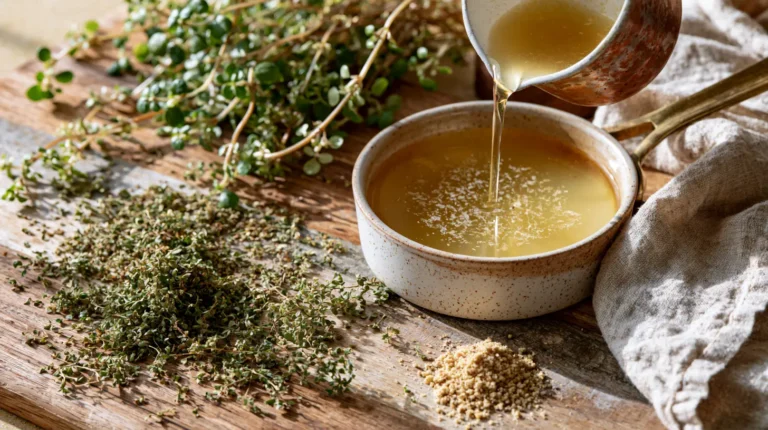
Garlic Ginger Broth with Thyme and Lemon
This warm, aromatic broth is a classic cold-season comfort food. It is light, easy to sip, and full of familiar kitchen herbs traditionally used when the head or chest feels heavy.
Ingredients with exact measurements
4 cups low-sodium chicken broth or vegetable broth
3 garlic cloves, minced
1 tablespoon fresh ginger, grated
1 teaspoon dried thyme
1 small carrot, thinly sliced
1 celery stalk, thinly sliced
1 tablespoon fresh lemon juice
1 teaspoon olive oil
1 pinch black pepper
1/4 teaspoon sea salt, or to taste
1 tablespoon chopped parsley, optional
Step-by-step preparation instructions
Warm olive oil in a soup pot over low to medium heat.
Add garlic and ginger. Stir for about 1 minute until fragrant.
Add carrot and celery. Stir for 2 to 3 minutes.
Pour in the broth.
Add thyme, black pepper, and sea salt.
Bring to a gentle simmer.
Simmer for 15 to 20 minutes, until the vegetables are soft.
Turn off the heat.
Stir in lemon juice.
Add parsley before serving if desired.
How to use
Sip warm as a light meal when congestion comes with low appetite, cold-season heaviness, or a scratchy throat. Store leftovers in a sealed container in the refrigerator for 3 to 4 days. Reheat gently and add a splash of water if needed.
What Herbs You Need
For congestion support, the main herbs and ingredients used in these recipes are peppermint, thyme, elderflower, garlic, ginger, lemon, black pepper, and parsley.
Peppermint
Latin name: Mentha x piperita
Key herbal actions:
Aromatic: contains fragrant volatile oils that create a fresh, open sensation.
Carminative: supports digestion and helps reduce occasional gas.
Cooling: traditionally used when the head feels hot, heavy, or stuffy.
Key active compounds:
Menthol, menthone, rosmarinic acid, flavonoids.
Thyme
Latin name: Thymus vulgaris
Key herbal actions:
Expectorant: traditionally used to support the body’s natural mucus-moving process.
Aromatic: brings warmth, fragrance, and movement to respiratory formulas.
Antimicrobial aromatic: valued in traditional herbalism for its strong volatile oils.
Key active compounds:
Thymol, carvacrol, rosmarinic acid, flavonoids.
Elderflower
Latin name: Sambucus nigra
Key herbal actions:
Diaphoretic: traditionally used to support the body’s natural surface response.
Relaxing aromatic: gently fragrant and often used in cold-season teas.
Cooling: traditionally chosen when congestion feels warm, irritated, or head-heavy.
Key active compounds:
Flavonoids, phenolic acids, rutin, quercetin derivatives.
Garlic
Latin name: Allium sativum
Key herbal actions:
Warming aromatic: traditionally used in cold-season foods for warmth and intensity.
Digestive-supportive: supports warmth and digestion in food traditions.
Seasonal wellness food: commonly used in traditional kitchen remedies.
Key active compounds:
Alliin, allicin, sulfur compounds.
Ginger
Latin name: Zingiber officinale
Key herbal actions:
Warming aromatic: traditionally used when the body feels cold, sluggish, or heavy.
Diaphoretic: supports a healthy surface response in traditional herbalism.
Carminative: supports digestive comfort and reduces occasional gas.
Key active compounds:
Gingerols, shogaols, zingiberene.
Lemon
Latin name: Citrus limon
Key herbal actions:
Aromatic: brightens heavy teas, broths, and syrups.
Digestive-supportive: supports appetite and freshness in food traditions.
Vitamin C-containing food: contributes vitamin C as part of a balanced diet.
Key active compounds:
Citric acid, limonene, flavonoids, vitamin C.
Black Pepper
Latin name: Piper nigrum
Key herbal actions:
Warming stimulant: traditionally used in small amounts to bring warmth and movement.
Carminative: supports digestion and reduces heaviness after meals.
Circulatory stimulant: traditionally used to encourage warmth.
Key active compounds:
Piperine, volatile oils, alkaloids.
Parsley
Latin name: Petroselinum crispum
Key herbal actions:
Nutritive: provides minerals and plant compounds in food form.
Aromatic: adds freshness and brightness to broth.
Digestive-supportive: traditionally used as a light culinary digestive herb.
Key active compounds:
Apigenin, myristicin, vitamin C, vitamin K.
Key Herbal Products for Congestion
Peppermint Tea
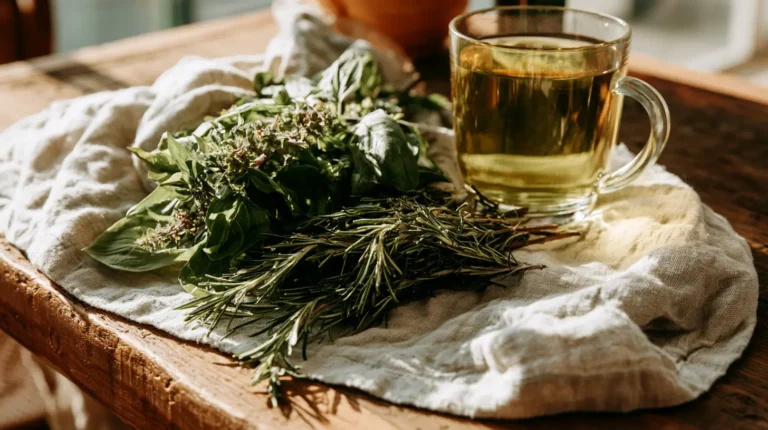
Peppermint tea is a simple aromatic infusion made from dried peppermint leaves. It is commonly used when congestion feels head-heavy, stuffy, or paired with digestive discomfort.
Pros: Easy to find, pleasant flavor, naturally caffeine-free.
Cons: May aggravate reflux in some people and may feel too cooling for those who already feel chilled.
Best choice when: Someone wants a simple tea for stuffy, heavy, or warm-feeling congestion.
Thyme Syrup
Thyme syrup is a spoonable preparation made from thyme tea combined with honey or another sweet base. It is commonly used when congestion feels mucus-heavy or chesty.
Pros: Easy to take, pleasant with honey, useful for people who dislike drinking multiple cups of tea.
Cons: Honey-based syrups are not safe for children under 1 year old and may not suit people limiting sugar.
Best choice when: Someone wants a more concentrated, throat-friendly preparation for mucus-heavy seasonal discomfort.
Elderflower Tea
Elderflower tea is a gentle floral tea traditionally used in cold-season formulas. It is commonly paired with peppermint, yarrow, or ginger.
Pros: Light flavor, pleasant aroma, works well in blends.
Cons: Mild on its own and may not feel strong enough for very thick congestion.
Best choice when: Congestion feels head-heavy, warm, or connected with early cold-season discomfort.
Herbal Steam Blend
An herbal steam blend usually contains aromatic herbs such as peppermint, thyme, eucalyptus leaf, rosemary, or lavender. It is used as a short comfort ritual rather than an internal preparation.
Pros: Quick, sensory, and useful when the nose feels blocked.
Cons: Not appropriate for everyone; steam can irritate asthma, sensitive skin, eyes, or children.
Best choice when: Someone wants a non-drinking option for short-term nasal stuffiness and can use steam safely.
Saline Nasal Rinse
Saline nasal rinse is not an herbal product, but it is one of the most common natural-style options for sinus and nasal congestion. It uses salt water to rinse the nasal passages.
Pros: Drug-free, widely used, and may help with cold or sinus congestion for some people.
Cons: Must be prepared safely with distilled, sterile, or boiled-and-cooled water; tap water should not be used.
Best choice when: Someone wants a non-herbal, practical option for nasal congestion and is comfortable following safety instructions carefully.
FAQ
Is congestion always caused by a cold?
No. Congestion can come from colds, allergies, sinus irritation, dry air, smoke, fragrance, reflux, or environmental triggers. If congestion is severe, long-lasting, one-sided, associated with high fever, or comes with facial pain that worsens, it is wise to check with a healthcare professional.
Are herbal steams safe?
Herbal steams can feel comforting for some adults, but they are not right for everyone. Avoid steam for small children, people prone to dizziness, people with asthma triggered by steam, or anyone sensitive to heat. Keep the face far enough from the bowl to avoid burns.
Can I use essential oils for congestion?
Essential oils are very concentrated and should be used cautiously. Do not put essential oils inside the nose, drink them, or use them undiluted on skin. Around children, pets, pregnancy, asthma, or chronic health conditions, it is best to ask a qualified professional first.
What does thyme tea taste like?
Thyme tea tastes savory, aromatic, and slightly earthy. Some people enjoy it with honey and lemon because that softens the strong herbal flavor. If it tastes too intense, use a smaller amount or blend it with elderflower or peppermint.
Are fresh herbs better than dried herbs?
Fresh herbs are bright and fragrant, while dried herbs are concentrated and easy to store. Either can work well if the herbs are clean, good quality, and still aromatic. As a general kitchen guide, 1 teaspoon dried thyme is similar to about 1 tablespoon fresh thyme.
How should dried congestion herbs be stored?
Store dried herbs in airtight containers away from heat, light, and moisture. Leafy and aromatic herbs are usually best used within 6 to 12 months for flavor and fragrance. If an herb no longer smells like much, it will probably not bring much to your tea or steam.
Can congestion herbs be used for pets?
Do not give congestion herbs, essential oils, steams, or herbal syrups to pets unless a veterinarian approves. Cats and dogs process many plant compounds differently than humans. Essential oils are especially risky around pets and should be handled carefully.
References
CDC: Chest Cold Acute Bronchitis Basics
NCCIH: The Common Cold and Complementary Health Approaches
NCCIH: Colds, Flu, and Complementary Health Approaches
CDC Yellow Book: Complementary and Integrative Health Approaches to Travel-Related Ailments
PubMed: Herbal Medicine for Cough — A Systematic Review and Meta-Analysis
PubMed Central: Honey for Acute Cough in Children — A Systematic Review
Disclaimer
This article is for educational purposes only and is not medical advice, diagnosis, or treatment. Congestion can have many causes, including colds, allergies, sinus infections, asthma, reflux, environmental irritation, bronchitis, or other medical conditions. Herbs, foods, steams, teas, and home preparations should not replace care from a qualified healthcare professional. Seek medical guidance if congestion is severe, persistent, recurring, associated with trouble breathing, chest pain, wheezing, high fever, severe facial pain, symptoms that worsen after improving, or if you are pregnant, breastfeeding, taking medication, managing a medical condition, or preparing remedies for children.