How These Herbs Work in the Body
During illness, the immune system increases production of inflammatory mediators and immune cells. Afterward, the body must restore balance and replenish depleted resources.
Polysaccharides in astragalus and reishi interact with immune receptors in the gut and bloodstream, influencing signaling rather than forcing activity. Adaptogenic compounds in eleuthero are studied for their role in supporting the body’s stress response system.
Mineral-rich herbs like nettle and oat straw contribute micronutrients that support enzymatic processes throughout the body. These nutrients are part of the foundation of cellular repair and energy production.
In simple terms, these herbs assist the body’s return to equilibrium. They nourish, modulate, and support rather than push.
Herbal Preparations and Recipes
Preparation form matters particularly during recovery.
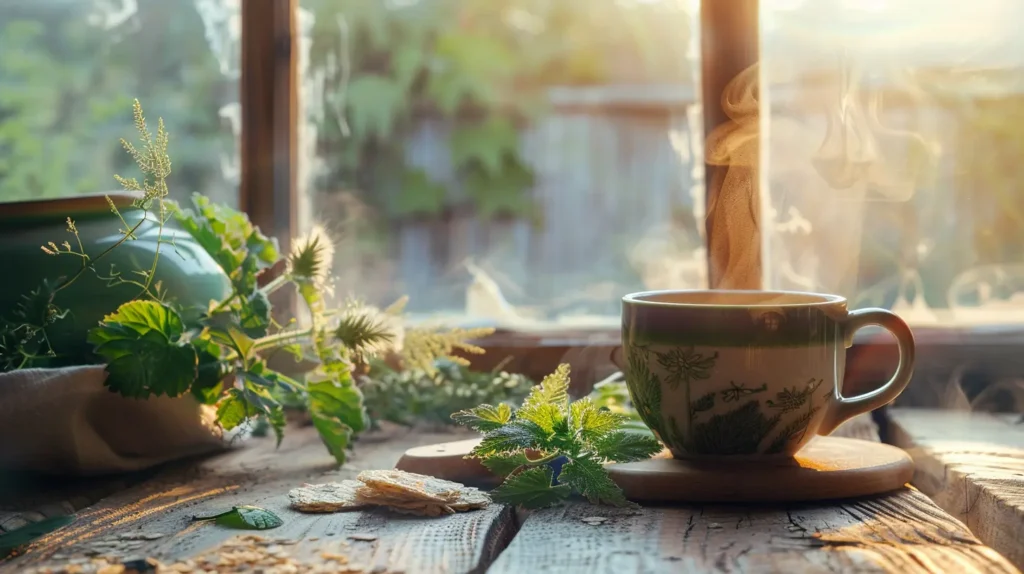
Long infusions are often chosen for nutritive herbs such as nettle and oat straw because extended steeping extracts more minerals. Decoctions are appropriate for roots and mushrooms like astragalus and reishi, where longer simmering releases polysaccharides.
Tinctures may be convenient when appetite is low, and glycerites can offer a milder alternative. Broths and soups integrate herbs into food, reinforcing the principle that rebuilding is daily work.
If you are exploring this topic further, reviewing individual herb profiles and traditional preparation guides can clarify why certain preparations are favored during convalescence. Blends designed for recovery often emphasize harmony rather than intensity.
What Is Post-Illness Recovery and Rebuilding?
Post-illness recovery refers to the phase following an acute immune challenge when symptoms have subsided but energy and resilience have not fully returned.
It is a transitional period. The visible signs of illness may be gone, but internal recalibration continues.
Why It Happens
Illness requires significant metabolic energy. The immune response is resource-intensive, involving immune cell production, inflammatory signaling, and tissue repair.
Sleep disruption, reduced appetite, dehydration, and stress during illness can contribute to nutrient depletion and fatigue. The World Health Organization emphasizes the importance of rest and nutrition during infectious recovery to support full restoration.
Recovery takes time because rebuilding takes resources.
How It Commonly Shows Up
People often describe lingering fatigue, reduced stamina, mental fog, disrupted sleep, or diminished appetite.
There may be a sense of being “almost well” but not fully restored. This is a normal part of convalescence, though it can be frustrating in a culture that favors speed.
Foundations of Support
Herbs are supportive, but foundational practices matter deeply.
Prioritizing sleep allows hormonal and immune recalibration. Nourishing foods provide the building blocks for tissue repair. Gentle movement encourages circulation without draining reserves.
Reducing unnecessary demands during recovery can make a meaningful difference. The body often signals clearly when it needs more time.
Learning More
Educational overviews of immune-supportive nutrients can be found through the NIH Office of Dietary Supplements. Traditional use information for specific herbs is available through the European Medicines Agency.
Understanding recovery as a gradual rebuilding process can shift expectations from urgency to patience.
FAQ
Is it normal to feel tired after illness?
Yes. Recovery often continues after visible symptoms resolve.
Are immune-stimulating herbs helpful during recovery?
During rebuilding, nourishing and modulating herbs are often favored over stimulating ones.
How long does recovery usually take?
It varies depending on the severity of illness, baseline health, and available rest.
Can stress delay recovery?
Yes. Ongoing stress can divert energy away from rebuilding processes.
Should digestion be supported during recovery?
Digestive strength influences nutrient absorption, which is central to rebuilding vitality.
References
National Center for Complementary and Integrative Health (NCCIH):
https://www.nccih.nih.gov
NIH Office of Dietary Supplements:
https://ods.od.nih.gov
European Medicines Agency (EMA):
https://www.ema.europa.eu
PubMed Central:
https://www.ncbi.nlm.nih.gov/pmc/
World Health Organization (WHO):
https://www.who.int
American Herbal Pharmacopoeia (AHP):
http://www.herbal-ahp.org
This content is for educational purposes only. It does not diagnose, treat, or replace professional medical care. Always consult a qualified healthcare professional regarding personal health concerns.