
Inflammatory Immune Tendency: A Traditional Herbal Perspective on Immune Over-Activation
Some immune patterns are quiet and under-responsive. Others are the opposite. If you tend to experience frequent redness, heat, swelling, reactivity, or exaggerated responses to minor triggers, traditional herbalists might describe this as an inflammatory immune tendency. It is not about weakness. It is about excess signaling, heightened alertness, and a system that may be responding a bit too vigorously.
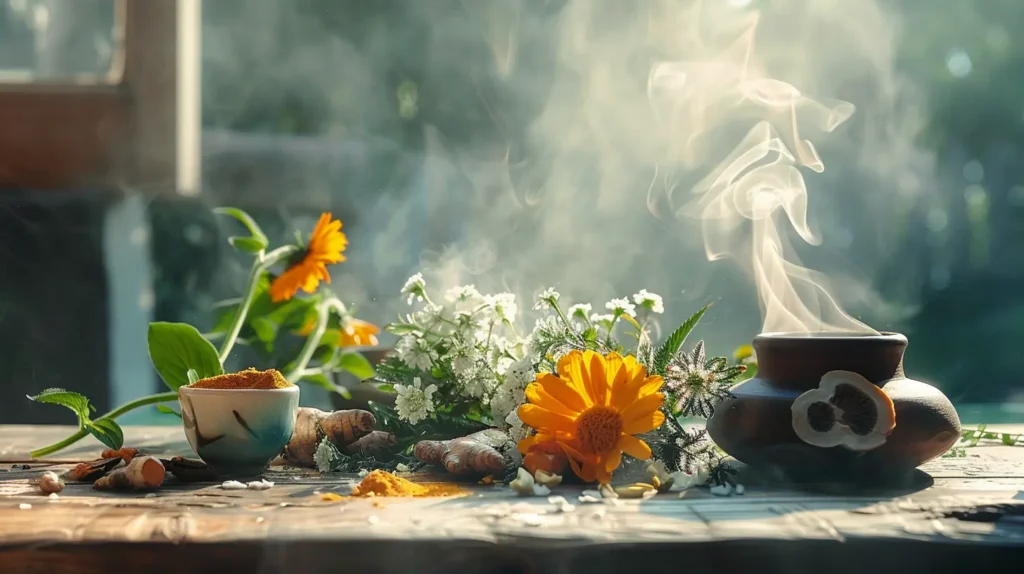
Herbal Recipes for Inflammatory Immune Tendency
Evening Nervous–Immune Infusion
Western herbalists recognized the close relationship between the nervous system...
Read More
Bitter Root Balancing Decoction
Bitter roots were traditionally used to ground and regulate rather...
Read MoreHerbal Support for Inflammatory Immune Tendency
Traditional Western herbalism rarely attempts to “suppress” inflammation outright. Inflammation is part of healthy immune function. The goal is modulation and appropriate response.
Several herbal categories are commonly considered.
Alteratives, sometimes called “blood-cleansing” herbs in older texts, include burdock root (Arctium lappa) and red clover (Trifolium pratense). These herbs are traditionally used to support lymphatic flow and metabolic processing during chronic inflammatory patterns.
Bitters such as dandelion root (Taraxacum officinale) may be included when digestion appears sluggish. Because the gut plays a major role in immune signaling, digestive support can indirectly influence inflammatory balance. Educational materials from the National Center for Complementary and Integrative Health discuss how digestive health and immune activity are interconnected.
Nervines like chamomile (Matricaria chamomilla) and lemon balm (Melissa officinalis) are relevant when immune reactivity seems linked to chronic stress. Ongoing stress influences inflammatory signaling pathways, a relationship explored in research indexed by PubMed Central.
Adaptogens such as reishi mushroom (Ganoderma lucidum) are traditionally considered when immune responses appear exaggerated rather than weak. Reishi has been studied for its beta-glucans and triterpenes, compounds associated with immune modulation.
The emphasis is not on shutting the immune system down, but on encouraging steadier, more appropriate signaling.
Herbs Used for Inflammatory Immune Tendency Support
Commonly referenced herbs in this context include turmeric , reishi mushroom, nettle leaf, burdock root, calendula, chamomile, red clover, Licorice root, lemon balm, elderberry, oatstraw, skullcap, dandelion root, cleavers, and violet.
How These Herbs Work in the Body
Inflammation involves complex communication between immune cells, cytokines, and signaling molecules. When this communication becomes excessive or prolonged, tissues may experience unnecessary irritation.
Curcuminoids in turmeric influence inflammatory mediators involved in cellular signaling. Beta-glucans in reishi interact with immune receptors in the gut and bloodstream, helping shape how immune cells respond. Flavonoids in nettle and chamomile contribute antioxidant activity, supporting balance between inflammatory and anti-inflammatory processes.
Rather than forcing suppression, these herbs tend to modulate pathways, meaning they influence direction and intensity. In traditional language, they cool heat, move stagnation, and nourish underlying vitality.
Herbal Preparations and Recipes
Preparation form significantly influences how herbs act.
Teas and infusions are commonly used for leaves and flowers such as nettle, chamomile, and calendula. These preparations extract flavonoids and water-soluble compounds that support daily balancing.
Decoctions are more appropriate for roots and mushrooms like burdock and reishi, where longer simmering releases polysaccharides and deeper constituents.
Tinctures may be chosen when broader phytochemical extraction is desired, as alcohol extracts compounds not readily soluble in water. Glycerites offer a milder alternative for certain individuals.
If you are exploring this topic further, reviewing individual herb profiles and traditional preparation guides can clarify why certain forms are selected for particular plants. Blends are often designed not for intensity, but for harmony.
What Is Inflammatory Immune Tendency?
Inflammatory immune tendency refers to a pattern in which immune responses appear heightened or easily triggered. The body may react strongly to environmental exposures that others tolerate more easily.
It reflects over-activity, not necessarily weakness.
Why It Happens
Multiple factors can contribute to inflammatory patterns. Chronic stress, disrupted sleep, environmental exposures, dietary imbalance, and digestive dysfunction may all influence immune signaling.
The immune system is closely connected to the gut and nervous system. The World Health Organization highlights how environmental and lifestyle factors influence inflammatory disease patterns globally, reinforcing the importance of holistic support.
How It Commonly Shows Up
People with inflammatory immune tendencies may notice frequent skin redness, sinus irritation, digestive sensitivity, joint warmth, or exaggerated responses to seasonal allergens.
There may also be a sense of internal heat or restlessness. These patterns often fluctuate and may worsen during times of stress.
Foundations of Support
Herbs are most effective when paired with foundational habits.
Consistent sleep supports immune regulation. Whole foods rich in phytonutrients contribute antioxidant balance. Gentle movement improves circulation and lymphatic flow.
Stress reduction practices matter. The nervous system and immune system are in constant dialogue. Calming one often steadies the other.
Learning More
Educational resources from the NIH Office of Dietary Supplements provide overviews of nutrients relevant to inflammatory balance. Monographs from the European Medicines Agency offer insight into traditional herbal uses and safety profiles.
Understanding both traditional frameworks and modern research builds perspective rather than hype.
FAQ
Is inflammation always harmful?
No. Inflammation is a normal and necessary immune process. The concern arises when it becomes excessive or prolonged.
Are cooling herbs always the answer?
Not necessarily. The individual pattern matters. Some people need nourishment and digestive support alongside cooling herbs.
Can stress worsen inflammatory patterns?
Yes. Chronic stress influences inflammatory signaling and immune balance.
Are mushrooms like reishi stimulating?
Traditionally, reishi is considered modulating rather than stimulating. It is often described as balancing immune response.
How long does it take to notice changes with herbs?
Traditional herbalism emphasizes gradual support and consistency rather than immediate dramatic shifts.
References
National Center for Complementary and Integrative Health (NCCIH):
https://www.nccih.nih.gov
NIH Office of Dietary Supplements:
https://ods.od.nih.gov
European Medicines Agency (EMA):
https://www.ema.europa.eu
PubMed Central:
https://www.ncbi.nlm.nih.gov/pmc/
World Health Organization (WHO):
https://www.who.int
American Herbal Pharmacopoeia (AHP):
http://www.herbal-ahp.org
This content is for educational purposes only. It does not diagnose, treat, or replace professional medical care. Always consult a qualified healthcare professional regarding personal health concerns.