


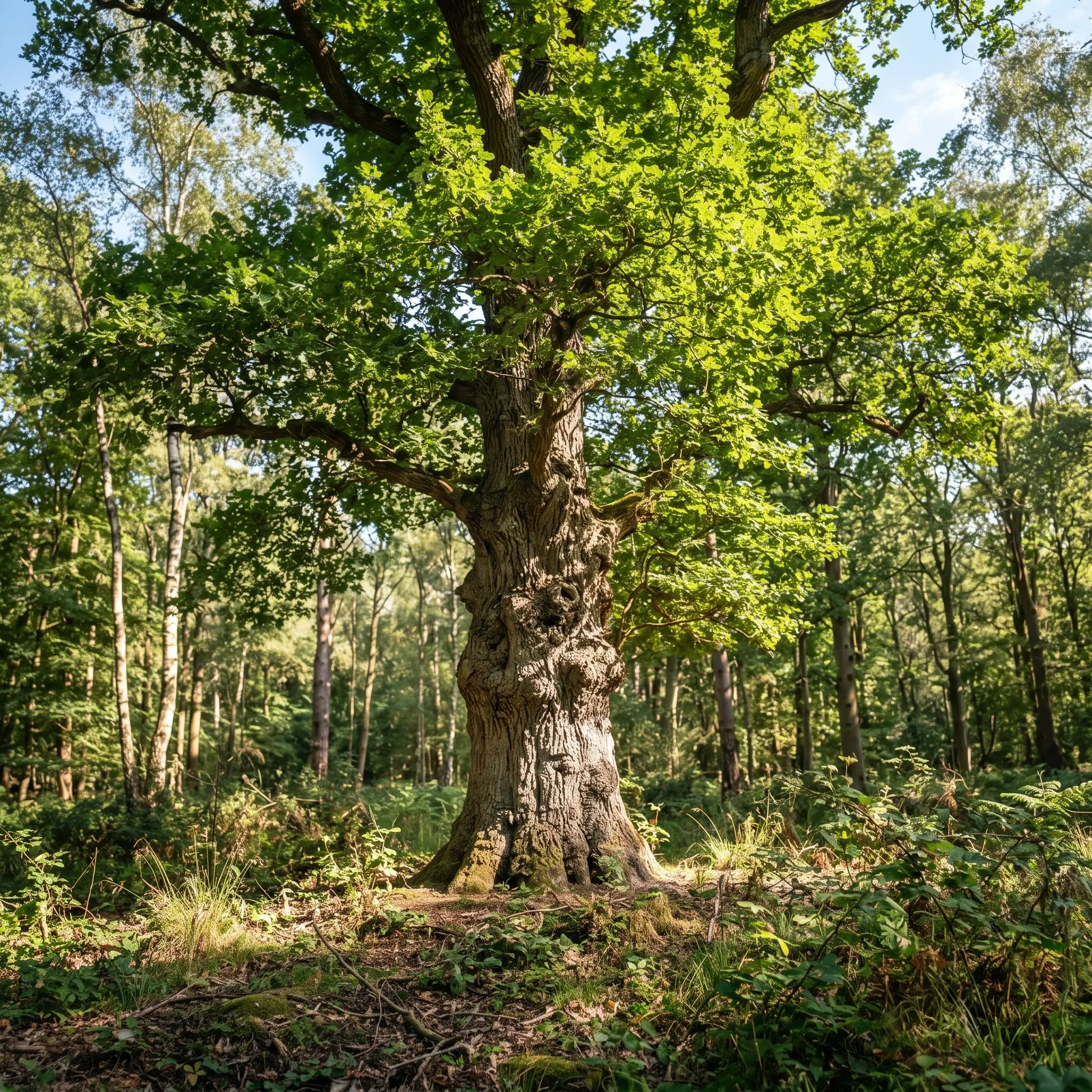
Traditionally, oak bark has been used primarily as an astringent remedy for acute diarrhea and irritated tissue, especially when bleeding gums, sore throat, or minor skin inflammation are the concern. It is commonly prepared as a decoction, gargle, compress, or bath additive.
Common Name: Oak Bark Latin Name: Quercus robur Alternate Names: English oak, white oak
- Parts used: bark
- Primary properties: astringent, antimicrobial, anti-inflammatory
- Common preparations: decoction, gargle, compress, bath additive
- Best known for: easing acute diarrhea and soothing irritated skin or mucous membranes
What It Helps With
Health conditions this herb is commonly used to support.
Related Buying Guides
Featured Recipes
Explore and try simple ways to prepare and use this herb at home.
Active Compounds
The tiny plant chemistry doing all the heavy lifting.
Key Herbal Properties
What this herb is known for, herbally speaking.




Herbal Synergies
Other herbs that pair especially well with this one — together, their combined properties work better than either herb does alone.
Health Conditions Oak Bark Helps With
- Acute diarrhea — Oak bark’s dense tannin content is the traditional basis for its long-standing reputation as a remedy for mild, acute diarrhea, taken as small, frequent sips of decoction.
- Bleeding or irritated gums — Used traditionally as a gargle or mouthwash to help tighten and soothe inflamed gum tissue.
- Sore throat — Traditionally gargled to calm throat irritation and swelling.
- Hemorrhoids — Oak bark’s astringent, anti-inflammatory reputation has made it a traditional topical remedy for hemorrhoid discomfort, often used as a compress or added to a sitz bath.
- Minor skin irritation and eczema — Applied topically as a wash or compress to help calm itchy, inflamed skin.
- Minor wounds and cuts — Traditionally used topically to help support healing and reduce minor bleeding, owing to its astringent, tissue-tightening action.
Compounds
- Tannins (including gallotannins and ellagitannins) — The dominant constituents in oak bark, making up as much as 20% of its content and responsible for its defining astringent action.
- Gallic acid and ellagic acid — Specific tannin components contributing antioxidant and antimicrobial activity.
- Flavonoid glycosides (including rutin and quercetin) — Contribute additional antioxidant and anti-inflammatory support to oak bark’s overall profile.
- Proanthocyanidins — A class of polyphenols that add to oak bark’s astringent, tissue-toning reputation.
Properties
- Astringent — Oak bark’s defining property, with its high tannin content traditionally used to tighten and tone irritated or bleeding tissue, both internally and topically.
- Antimicrobial — Traditional use includes supporting the body’s response to minor infections in the mouth, throat, and skin.
- Anti-inflammatory — Used traditionally to calm swelling and irritation in gums, throat, skin, and hemorrhoidal tissue.
- Hemostatic (mild) — Traditionally understood to help support the body’s natural ability to stop minor bleeding, owing to its tissue-tightening tannin content.
Recipes Using Oak Bark
- Oak bark decoction — The bark is simmered in water for 10 to 15 minutes, strained, and taken in small, frequent sips for acute diarrhea, or used as a base for gargles and washes.
- Gargle for sore throat or gum irritation — A cooled oak bark decoction used as a traditional gargle to soothe throat and gum tissue.
- Topical compress or bath — Oak bark decoction is soaked into a cloth for a compress or added to bathwater, traditionally used for skin irritation or hemorrhoid discomfort.
Products Featuring Oak Bark
- Dried bark for decoction — The most traditional form, used to prepare teas, gargles, and topical washes at home.
- Powdered bark — Convenient for encapsulating or mixing into topical pastes.
- Tincture or liquid extract — Offers a more concentrated, shelf-stable option, typically used according to product label guidance.
Synergies
- Chamomile — Traditionally combined with oak bark for diarrhea support, pairing complementary soothing and astringent actions.
- Ginger — Paired in traditional digestive formulas to balance oak bark’s intense astringency with warming digestive support.
- Witch hazel — Combined in topical preparations for hemorrhoids and skin irritation, both sharing a strong traditional astringent reputation.
- Marshmallow root — Paired to balance oak bark’s drying astringency with marshmallow’s soothing, moistening qualities in throat and gut formulas.
Safety & Precautions
Oak bark is generally considered safe for short-term, traditional use, but its high tannin content means a few real cautions are worth keeping in mind.
Because of its strong astringent action, oak bark is intended for short-term use, particularly for acute diarrhea; if diarrhea persists beyond a couple of days, or is accompanied by fever, blood, or signs of dehydration, medical attention should be sought rather than continuing self-treatment. Maintaining hydration during an episode of diarrhea is essential, since oak bark addresses symptoms but doesn’t replace fluid and electrolyte support. Long-term or high-dose internal use is not recommended, as excessive tannin intake may interfere with the absorption of certain nutrients, including iron, and has been associated with digestive or liver irritation in some traditional cautions. Oak bark should not be applied to broken or severely irritated skin, as it may cause further irritation, and it should never be used near the eyes. Safety data during pregnancy and breastfeeding is limited, so it’s best to consult a healthcare provider before internal use during these times. There is no well-established safety data on oak bark use in pets, and notably, acorns and oak leaves have caused toxicity in some grazing animals, so oak bark products should be kept away from pets and livestock.
Q&A
Does oak bark taste bitter?
Yes, oak bark has a strongly astringent, drying, somewhat bitter taste, similar to the puckering sensation of strong black tea or biting into an unripe persimmon.
This astringency is a direct result of its high tannin content and is actually central to its traditional use — the same tannins responsible for the taste are what give oak bark its tissue-tightening, soothing action.
Can oak bark be used daily?
Oak bark is traditionally used for short stretches, particularly during an active episode of diarrhea or throat irritation, rather than as an ongoing daily tonic.
Because of its high tannin content, prolonged daily internal use isn’t generally recommended, and it’s best reserved for occasional, short-term use rather than an everyday habit.
How is oak bark decoction different from a regular tea?
A decoction involves actually simmering the bark in water for 10 to 15 minutes, rather than simply steeping it briefly, since bark and other tough plant material need longer heat exposure to release its tannins and other compounds.
This longer preparation method is specific to bark, root, and other dense plant material, unlike leaf or flower teas, which typically just need a quick steep.
Can oak bark be used topically as well as internally?
Yes, oak bark is commonly used both ways — internally as a decoction for diarrhea, and topically as a compress, gargle, or bath addition for skin irritation, hemorrhoids, or sore gums and throat.
The same tannin-rich decoction can often serve both purposes, though topical use should avoid broken skin and the eyes to prevent further irritation.
Is oak bark safe for children?
Oak bark has a traditional history of use for mild acute diarrhea in children, generally in smaller, appropriately diluted amounts alongside proper hydration.
That said, it’s still worth checking with a pediatrician or qualified healthcare provider before giving any herbal remedy to a child, and prompt medical care should always be sought if a child’s diarrhea is severe, persistent, or accompanied by other concerning symptoms.
References
- Plants of the World Online: Quercus robur
- PubMed: Scientific Literature on Quercus robur
- National Library of Medicine: Chemical Constituents from Quercus robur
- Wikipedia: Quercus robur
- ScienceDirect Topics: Quercus robur Research
- Memorial Sloan Kettering Cancer Center: About Herbs — Oak Bark
- PubMed: Oak Bark Tannin and Antidiarrheal Research
- National Center for Complementary and Integrative Health: Oak Bark
This information is for educational purposes only and is not intended as medical advice. Consult a qualified healthcare professional before using any herb, especially if pregnant, breastfeeding, taking medications, or managing a health condition.