

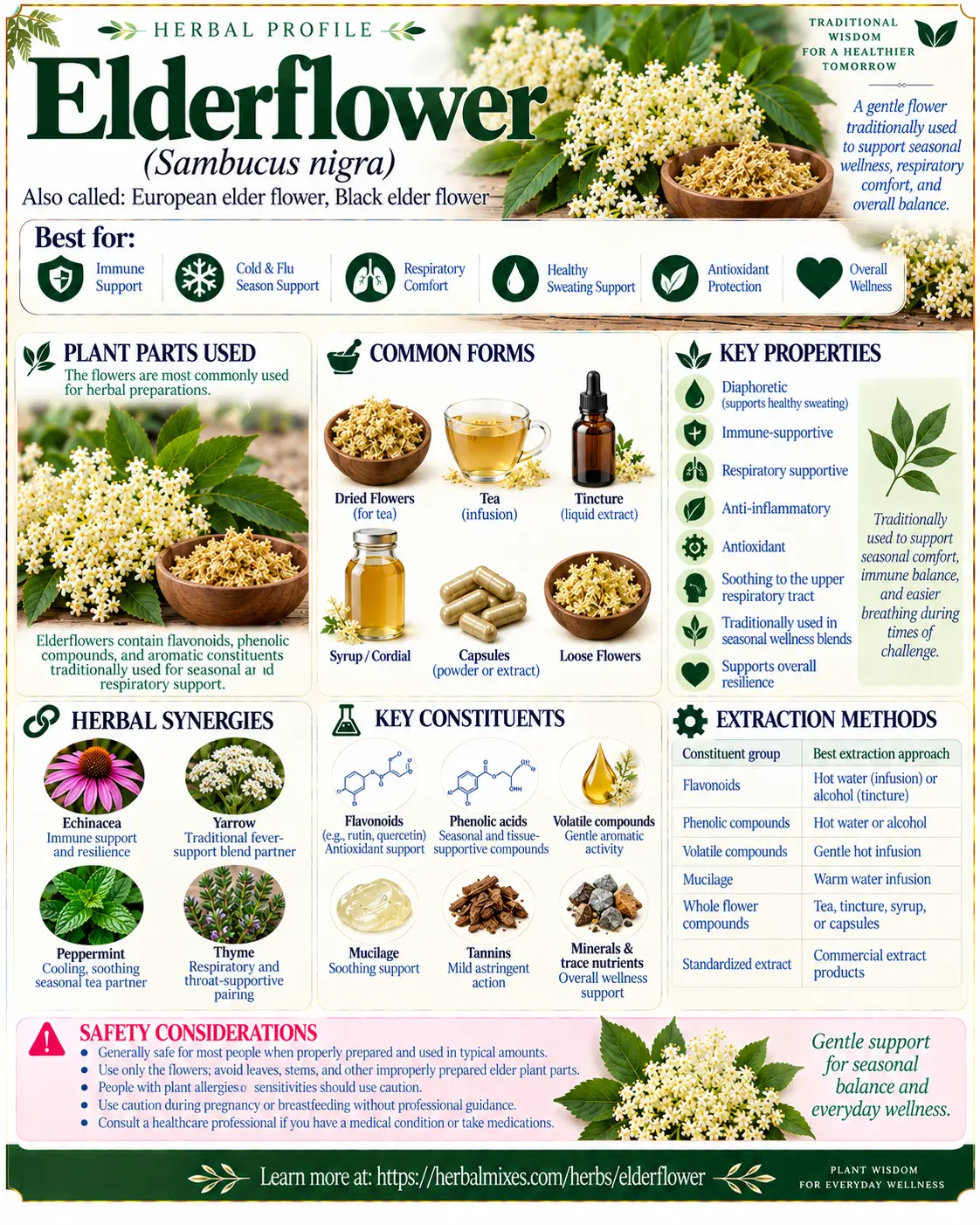
What Elderflower Is Good For
Fever Management & Diaphoretic Action — Elderflower is a premier diaphoretic herb traditionally brewed into a warm tea to gently stimulate peripheral circulation, encourage mild perspiration, and help the body naturally manage elevated temperature during seasonal chills.
Sinus & Upper Respiratory Relief — Helps tone and dry excessive mucus secretions in the upper respiratory tract, providing exceptional relief for sinus congestion, seasonal allergies, and stuffy heads.
Catarrhal & Mucus Clearance — Its active bioflavonoids help thin thick mucous secretions in the sinuses and Eustachian tubes, easing pressure and supporting clear breathing.
Skin Soothing & Complexion Care — Applied topically as a cooled infusion or lotion, it provides gentle astringent and soothing relief for irritated skin, minor rashes, and tired eyes.
Mild Diuretic & Renal Support — Encourages healthy renal clearance and fluid balance through gentle diuretic action.
Available Herbal Products
Buying Guides for Available Elderflower Products
Organic Dried Elderflower Blossoms – Delicate cream-colored dried flowers. An authentic, traditional choice for steeping into a warming fever-reducing tea or crafting seasonal herbal cordials. Seller: Mountain Rose Herbs – View Mountain Rose Herbs Elderflowers →
Elderflower Liquid Extract – Hydroalcoholic tincture. A fast-absorbing liquid format designed for convenient drop-by-drop dosing to support sinus drainage and seasonal allergy comfort. Seller: Herb Pharm – View Herb Pharm Elderflower Extract →
Sinus & Allergy Comfort Herbal Formula – Concentrated liquid extract blend combining elderflower with yarrow and peppermint. Designed to provide comprehensive upper respiratory and sinus drainage support. Seller: Wise Woman Herbals – View Wise Woman Herbals Formulas →
Organic Elderflower & Peppermint Tea Bags – Herbal tea bags combining aromatic elderflower with cooling peppermint and yarrow. Formulated to provide classic fever and sinus relief. Seller: Traditional Medicinals – View Traditional Medicinals Teas →
Herbal Synergies
Elderflower pairs especially well with Yarrow Herb, Peppermint Leaf, and Echinacea Root, depending on the goal of the formula.
Elderflower Blossoms + Yarrow Herb + Peppermint Leaf – Best for: Managing acute fevers, breaking seasonal chills, encouraging beneficial sweating, and clearing sinus congestion Elderflower and yarrow form the legendary European diaphoretic duo that opens peripheral circulation and drives a healthy, cooling sweat, while peppermint adds cooling carminative oils and enhances the formula’s palatability. Together, they create the ultimate fever-management tea. Best extraction: Covered hot infusion (tea). Steeping these aromatic herbs under a lid traps their delicate volatile oils.
Elderflower Blossoms + Peppermint Leaf – Best for: Relieving acute sinus pressure, clearing nasal congestion, and soothing upper respiratory heat Elderflower thins thick mucus secretions in the sinuses, whereas peppermint provides cooling menthol vapours that instantly open blocked nasal passages. Best extraction: Hot herbal steam inhalation or tea. Inhaling the warm steam of this blend offers rapid sinus relief.
Elderflower Blossoms + Echinacea Root – Best for: Comprehensive immune defense, stopping seasonal challenges early, and supporting lymphatic drainage Elderflower clears upper respiratory stagnation and sinus heat, while echinacea mobilizes white blood cells and lymphatic flow. Best extraction: Tincture combination or tea blend. Combines acute mucosal support with immune stimulation.
Key Herbal Properties
Diaphoretic — Stimulates peripheral blood flow and mild perspiration when consumed warm, assisting the body’s natural temperature regulation.
Catarrhal / Mucus Reducer — Tones mucous membranes and helps dry and clear excess catarrh from the sinuses, ears, and upper respiratory tract.
Anti-inflammatory (Mucosal) — Modulates inflammatory pathways in the respiratory and sinus tissues.
Diuretic (Mild) — Encourages normal urinary elimination and fluid balance.
Vulnerary (Topical) — Soothes and tones minor skin irritations and complexion issues when applied externally.




Active Compounds
Flavonoids (including Rutin, Quercetin, and Isoquercitrin) Found mainly in: Flower blossoms Potent antioxidant compounds that reduce capillary permeability, decrease inflammation, and support sinus mucosal health. Best extraction: Hot water infusion (tea) or alcohol-water extract. Flavonoids dissolve efficiently in warm water and hydroalcoholic solutions.
Volatile Oils and Triterpenes Found mainly in: Blossoms Provide the sweet, musky aroma and contribute to the plant’s diaphoretic and anti-inflammatory actions. Best extraction: Covered hot infusion or steam distillation. (Note: Always brew elderflower tea with a lid to prevent delicate volatile oils from escaping).
Mucilage and Tannins Found mainly in: Flower tissues Provide mild demulcent coating and gentle tissue-toning astringency. Best extraction: Warm water infusion. Soluble in water.
FAQ
What is elderflower best used for? Elderflower is primarily used as a warming diaphoretic tea to manage fevers and chills, and as a natural remedy to clear sinus congestion and seasonal allergies.
Why must elderflower tea be brewed covered? Because elderflower’s active volatile oils and aromatic constituents easily evaporate into the air with steam, brewing the tea in a covered cup traps those valuable compounds in your beverage.
Can elderflower help with sinus infections and allergies? Yes, elderflower is one of the premier botanical catarrhal herbs; it thins thick, sticky mucus in the sinuses and Eustachian tubes, offering wonderful relief for sinus headaches and allergy stuffiness.
Does elderflower taste good? Yes, elderflower tea has a delightfully floral, sweet, musky, and honey-like flavor profile that makes it one of the most pleasant-tasting medicinal herbal teas.
Is elderflower harvested from the same plant as elderberry? Yes, elderflowers are the creamy-white spring blossoms of the Sambucus nigra tree, which later mature into the dark purple-black elderberries harvested in late summer.
Safety & Precautions
Acute Fevers: While elderflower is wonderful for managing normal seasonal fevers, always consult a physician for extremely high, persistent, or dangerous fevers, especially in young children.
Diuretic Medications: Exercise caution if you take prescription diuretic medications, as additive fluid-balancing effects may occur.
Allergies: True allergies are rare, but individuals with severe sensitivities to plants in the Adoxaceae family should exercise mild caution.
Pregnancy & Breastfeeding: Culinary amounts, cordials, and mild teas are generally safe and traditional, but consult a qualified herbalist before using concentrated therapeutic extracts during pregnancy.
Consult a qualified healthcare professional before using elderflower therapeutically, especially if you manage underlying medical conditions or take prescription drugs.
References
National Center for Complementary and Integrative Health (NCCIH)
PubMed Central – Sambucus nigra flos (Elderflower) Flavonoids and Upper Respiratory Pharmacology
European Medicines Agency (EMA) Monograph on Sambucus nigra L., flos
World Health Organization (WHO) Botanical Monographs
Mountain Rose Herbs Elderflowers Monograph
Herb Pharm Elderflower Profile
Disclaimer
Disclaimer: This article is for educational purposes only and is not intended to diagnose, treat, cure, or prevent any disease. Herbal products can cause side effects and interact with medications. Consult a qualified healthcare professional before using herbs therapeutically, especially if you are pregnant, breastfeeding, taking prescription medications, or managing a medical condition.