

What Cat’s Claw Is Good For
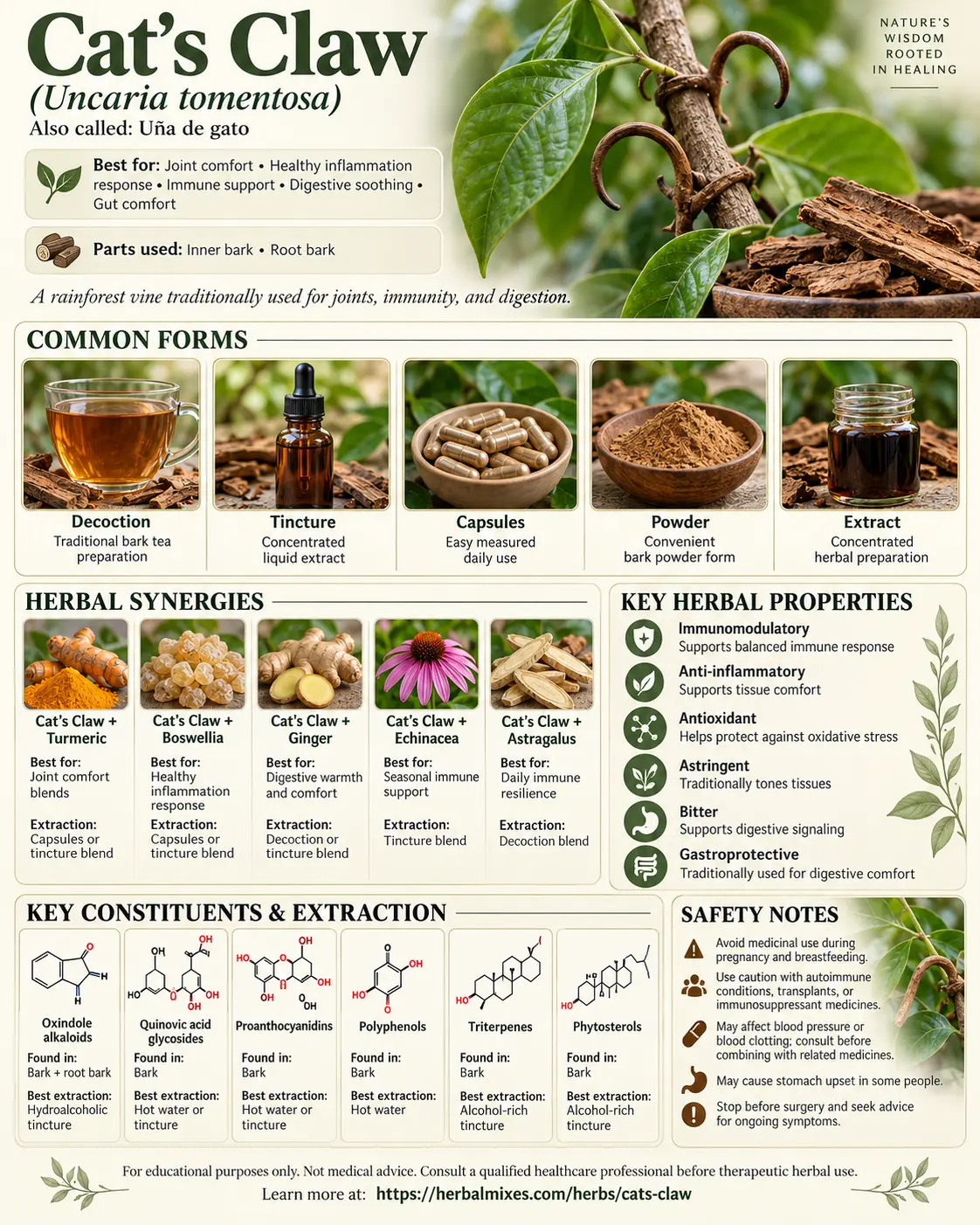
Immune Support & Modulation — Cat’s claw is globally renowned for its active oxindole alkaloids, which help stimulate and modulate immune cell activity and white blood cell function.
Inflammatory & Joint Comfort — Traditionally used to support normal inflammatory balance, helping maintain comfortable joint mobility and flexibility during seasonal stiffness.
Gastrointestinal Mucosa Support — Helps soothe and support the integrity of the digestive tract lining, making it a favorite in gut-restoration protocols.
Antioxidant & Cellular Defense — Packed with polyphenols that help neutralize free radicals and protect cells from oxidative stress.
Antimicrobial & Antiviral Defense — Widely valued in herbal protocols to support the body’s natural resilience against persistent microbial and viral challenges.
Available Herbal Products
Buying Guides for Available Cat’s Claw Products
Organic Cat’s Claw Inner Bark Cut – Dried bark pieces. An authentic, traditional choice for simmering into a long-term, nutrient-dense decoction or daily herbal tea. Seller: Mountain Rose Herbs – View Mountain Rose Herbs Cat’s Claw Bark →
Cat’s Claw Liquid Extract – Hydroalcoholic tincture. A fast-absorbing liquid format that allows for convenient daily dosing to support immune resilience and joint comfort. Seller: Herb Pharm – View Herb Pharm Cat’s Claw Extract →
Standardized Cat’s Claw Extract Capsules – Concentrated capsules. Formulated with a guaranteed percentage of active pentacyclic oxindole alkaloids (POA) for reliable immune support. Seller: Gaia Herbs – View Gaia Herbs Cat’s Claw →
TOA-Free Cat’s Claw Extract – Specialized liquid extract. Processed to isolate beneficial pentacyclic alkaloids while removing tetracyclic alkaloids that can blunt immune-modulating benefits. Seller: Nutramedix – View Nutramedix Samento →
Herbal Synergies
Cat’s claw pairs especially well with Astragalus Root, Andrographis, and Turmeric Root, depending on the goal of the formula.
Cat’s Claw Inner Bark + Astragalus Root – Best for: Comprehensive immune fortification, deep systemic resilience, and seasonal defense Cat’s claw provides powerful pentacyclic alkaloids to modulate immune cell response, while astragalus supplies deep adaptogenic polysaccharides that build core immune strength. Together, they create a robust defense formula. Best extraction: Long-simmered decoction or tincture blend. Simmering both roots together extracts their active alkaloids and water-soluble polysaccharides.
Cat’s Claw Inner Bark + Turmeric Root – Best for: Joint comfort, mobility support, and systemic inflammatory balance Cat’s claw modulates immune pathways associated with tissue stiffness, whereas turmeric delivers curcuminoids to calm inflammatory cascades in joints. Best extraction: Capsules or decoction. Both roots combine seamlessly into concentrated supplements designed for physical comfort.
Cat’s Claw Inner Bark + Andrographis Leaf – Best for: Acute immune challenges, microbial resilience, and upper respiratory support Cat’s claw supports overall immune cell activity, while andrographis provides intense bitter diterpene lactones that defend against seasonal bugs. Best extraction: Hydroalcoholic tincture combination. Both extracts yield their active bitter and alkaloid principles efficiently into alcohol.
Key Herbal Properties
Immunomodulator — Regulates and optimizes the activity of white blood cells (phagocytes and T-cells) without overstimulating them.
Anti-inflammatory — Helps modulate normal inflammatory pathways in joint and digestive tissues.
Antioxidant — Scavenges free radicals and protects cellular DNA from oxidative damage.
Antimicrobial / Antiviral — Supports the body’s natural defense mechanisms against invading microorganisms.
Astringent / Vulnerary — Tones and supports the recovery of mucosal tissues in the gastrointestinal tract.







Active Compounds
Oxindole Alkaloids (including Pentacyclic Oxindole Alkaloids – POAs like Isomitraphylline and Uncarine) Found mainly in: Inner bark The primary bioactive alkaloids responsible for cat’s claw’s immune-modulating and white-blood-cell-stimulating properties. Best extraction: Standardized extract or long-simmered decoction. These alkaloids extract efficiently in hydroalcoholic solutions and mildly acidic water decoctions.
Polyphenols and Quinovic Acid Glycosides Found mainly in: Bark Antioxidant compounds that support cellular protection and provide anti-inflammatory activity. Best extraction: Hot water infusion or alcohol-water extract. Soluble in both warm water and alcohol solvents.
Proanthocyanidins Found mainly in: Inner bark Provide astringent and antioxidant support to protect mucosal linings. Best extraction: Water decoction. Dissolves readily in simmering water.
FAQ
What is cat’s claw best used for? Cat’s claw is primarily used to support a healthy immune system, promote joint comfort, and maintain normal inflammatory balance.
Why is it called cat’s claw? It earns its name from the sharp, curved, claw-like thorns that grow along the woody vine, allowing it to hook onto and climb high jungle trees in the Amazon rainforest.
Can cat’s claw be taken every day? Yes, cat’s claw is frequently taken daily as a continuous immune-modulating tonic, especially during seasonal transitions or physical challenges.
Does cat’s claw contain tetracyclic alkaloids? Some varieties contain tetracyclic oxindole alkaloids (TOAs), which can counteract the immune-stimulating effects of pentacyclic alkaloids (POAs); many modern supplements use TOA-free extracts for optimal results.
Can cat’s claw be used during pregnancy? No, internal use of cat’s claw is strictly contraindicated during pregnancy and breastfeeding due to its traditional contraceptive and uterine-stimulating potential.
Safety & Precautions
Pregnancy & Breastfeeding: Avoid internal use entirely during pregnancy and lactation, as cat’s claw has a traditional history of preventing implantation and stimulating uterine activity.
Autoimmune Conditions: Individuals with certain autoimmune diseases or those taking immunosuppressant drugs should consult a qualified healthcare provider before use, as cat’s claw actively stimulates immune function.
Organ Transplants: Strictly contraindicated for individuals who have undergone organ transplants or tissue grafts due to its immune-stimulating properties.
Blood Thinners & Surgery: Exercise caution if you take anticoagulant medications or schedule surgery, as cat’s claw can mildly influence blood clotting and platelet aggregation.
Consult a qualified healthcare professional before using cat’s claw therapeutically, especially if you manage underlying medical conditions or take prescription drugs.
References
National Center for Complementary and Integrative Health (NCCIH)
National Library of Medicine – Oxindole Alkaloids and Pharmacological Profile of Cat’s Claw
World Health Organization (WHO) Monographs on Selected Medicinal Plants
Mountain Rose Herbs Cat’s Claw Bark Monograph
Disclaimer
Disclaimer: This article is for educational purposes only and is not intended to diagnose, treat, cure, or prevent any disease. Herbal products can cause side effects and interact with medications. Consult a qualified healthcare professional before using herbs therapeutically, especially if you are pregnant, breastfeeding, taking prescription medications, or managing a medical condition.